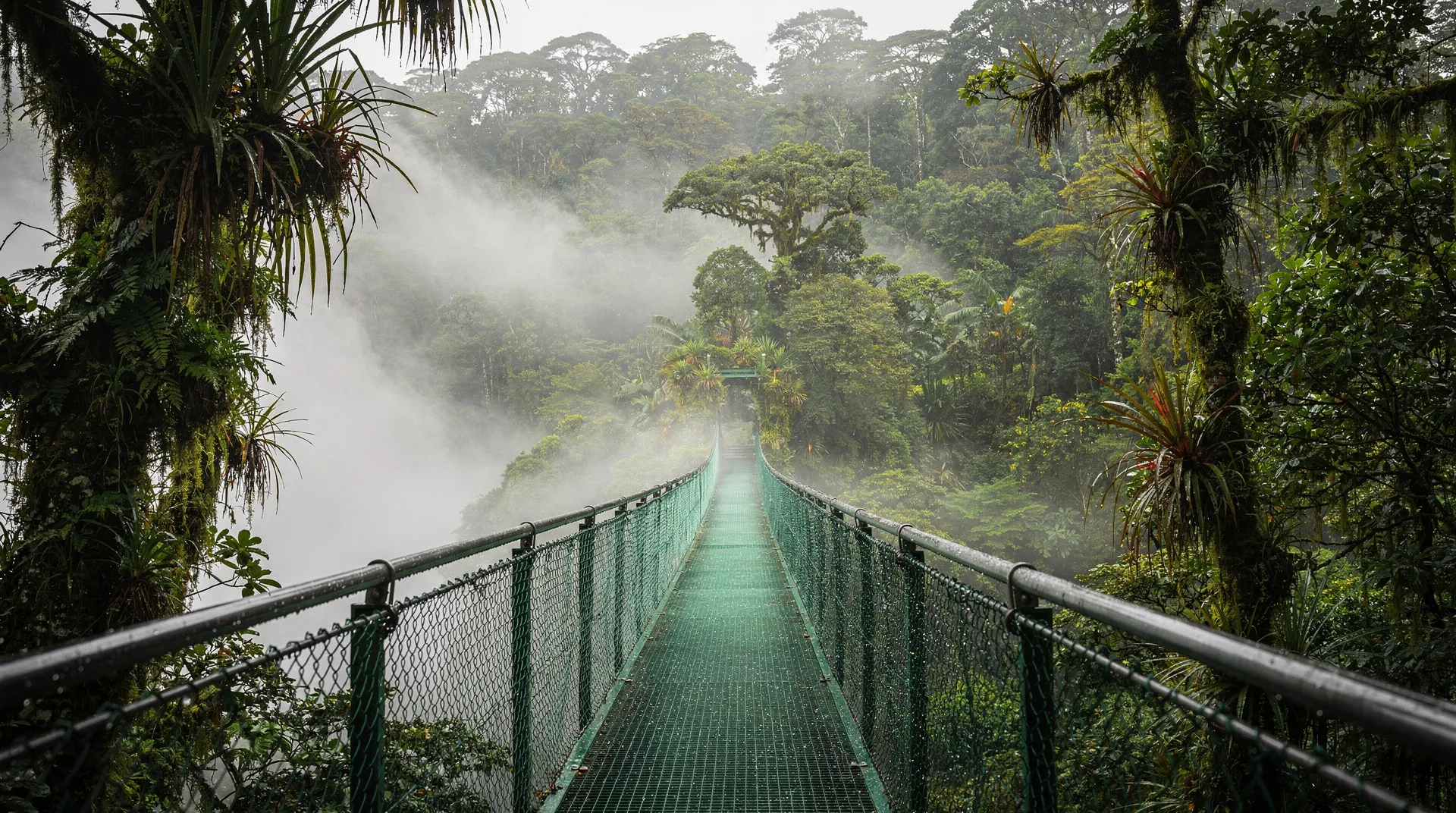
Monteverde — cloud forest, ziplines, and night wildlife above the clouds
Everything you need to plan Monteverde: cloud forest reserves, ziplines, night wildlife walks, hanging bridges, and honest tips on getting there.
Top experiences nearby
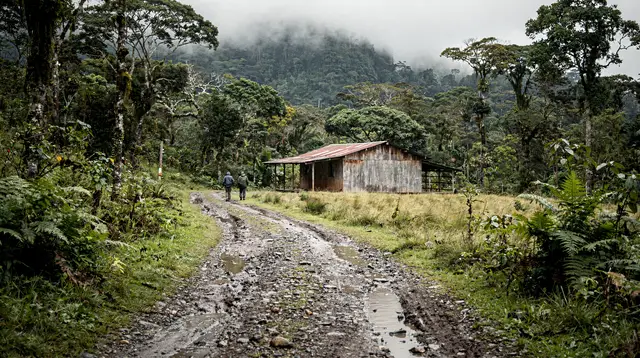
Immerse yourself in the Monteverde Cloud Forest
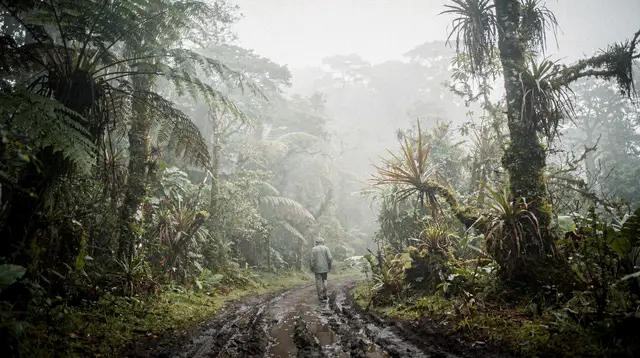
Monteverde regenerative cloud forest walk
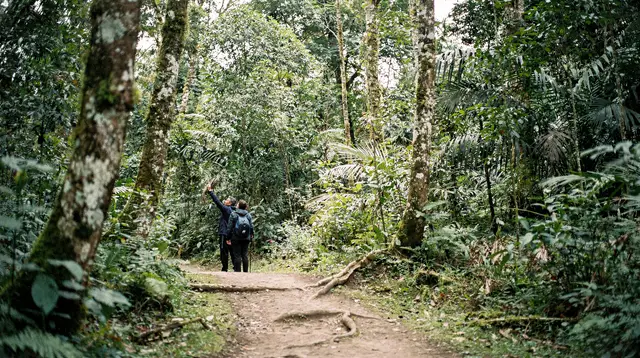
Monteverde: cloud forest and butterfly farm full-day tour
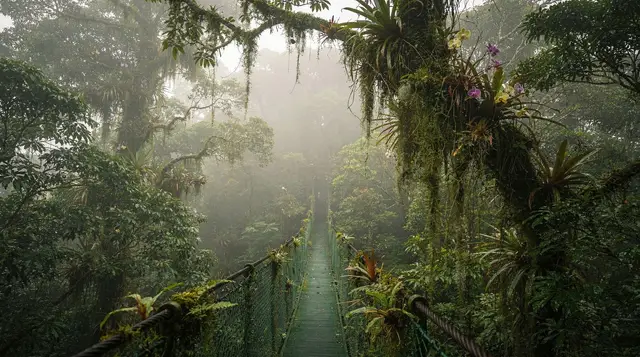
Monteverde: cloud forest reserve guided hike
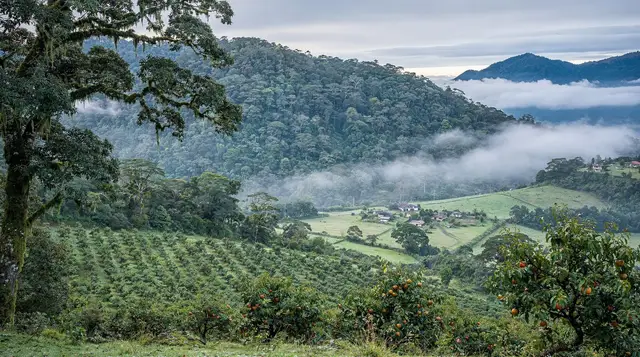
Monteverde: cloud forest guided tour (Curi-Cancha)
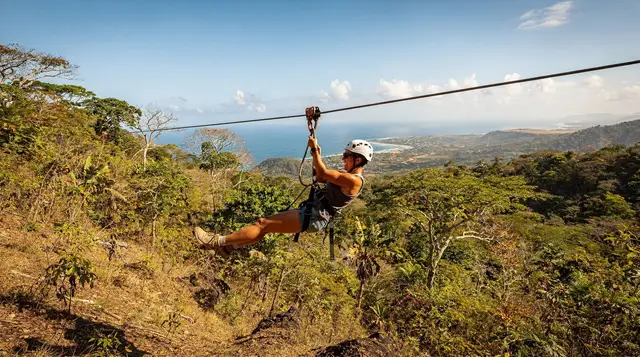
Monteverde: cloud forest canopy adventure
Quick facts
- Best time to visit
- December to May (driest); cloud forest works year-round
- Days needed
- 2 to 3 days
- Getting there
- 3 hours from La Fortuna via lake crossing; 4 hours from San José by road
- Budget per day
- USD 70–100 backpacker · USD 130–200 mid-range · USD 300+ lodge
Where the rainforest meets the clouds
Monteverde sits at 1,440 metres elevation in the Tilarán Mountains of Puntarenas Province, straddling the continental divide between the Pacific and Caribbean slopes. The result is a microclimate unlike anywhere else in Costa Rica: dense cloud forest where the trees are perpetually wrapped in mist, epiphytes colonise every surface, and the air is cool enough (16–20°C) to make you reach for a light jacket even in the dry season.
The area was largely settled by Quaker farmers from Alabama in the 1950s, who came to Costa Rica as conscientious objectors and established dairy farms and a cheese factory (the Monteverde Cheese Factory, now La Lechería, still operates and is worth visiting for the best cheese in the country). Their legacy is a community that took conservation seriously before ecotourism existed as a concept. The Monteverde Cloud Forest Biological Reserve — now privately operated — was established in 1972 and remains one of the most important protected areas in Central America.
Two distinct communities share the area: Monteverde (the older settlement, more spread out) and Santa Elena (the main backpacker hub, with most of the hostels, restaurants, and tour operators). They are about 4 kilometres apart, connected by a paved road that winds through the cloud forest. Almost every visitor bases themselves in Santa Elena.
| Where | Tilarán Mountains, Puntarenas province, 1,440m elevation |
| Cost | Around $70-100/day backpacker; $130-200 mid-range |
| Time needed | 2-3 days |
| Getting there | 3hrs from La Fortuna via lake crossing; 4hrs from San José |
| Best time | December-May (driest); March-May for quetzals |
The cloud forest reserves
There are two main reserves and several smaller alternatives, each with a different character.
Monteverde Cloud Forest Biological Reserve: The original, and the one most visitors come for. At 10,500 hectares it is the larger of the two, with trails climbing into elfin forest at the continental divide. Entry costs $27 (2026); a certified naturalist guide is worth every dollar — the forest can look uniformly green without one, but with a guide you will see sloths, emerald toucanets, three-wattled bellbirds, and possibly a quetzal in the right season. Arrive at 07:30 when the gate opens to avoid crowds and get the best wildlife sightings.
Santa Elena Cloud Forest Reserve: Smaller (310 hectares), cheaper ($17), community-owned, and often quieter than Monteverde. The trails are slightly more rugged and the views from the continental divide overlook on clear days are exceptional. Fewer tour groups come here, which works in your favour for early-morning wildlife.
Curi-Cancha Reserve: A private reserve 2 km from Santa Elena that is consistently praised for guided bird-watching, particularly for quetzals and emerald toucanets. Open 07:00–15:30, entry $25. Many serious birders prefer it to the main reserves because the guide-to-visitor ratio is better.
an immersive guided walk through the Monteverde Cloud Forest — from $55 — the most straightforward introduction to the reserve, covering $55 for 2.5 hours with a naturalist. Excellent if you have limited time and want the highlights efficiently.
For a full day combining the forest with a butterfly garden visit, the longer format makes sense:
the cloud forest and butterfly farm full-day tour — from $95 — at $95 this combines both experiences with transport, giving you a complete picture of Monteverde’s biodiversity.
If the difference between this kind of forest and the lowland jungle you may have seen elsewhere is not clear to you, the cloud forest versus rainforest guide explains why the mist, the moss and the epiphytes look so different here. Sloth fans should also read where to see sloths in Costa Rica before choosing between reserves.
Choosing a reserve
With three main options and several smaller alternatives, first-time visitors often struggle to pick. Here is the honest comparison:
| Reserve | Size | Entry | Best for |
|---|---|---|---|
| Monteverde Cloud Forest | 10,500 ha | $27 | The classic experience, most trail variety |
| Santa Elena Cloud Forest | 310 ha | $17 | Quieter, cheaper, similar wildlife density |
| Curi-Cancha | Small private | $25 | Best birding, quetzals, better guide ratio |
If you have time for only one, most first-timers should do the main Monteverde reserve. Birders on a second day should prioritize Curi-Cancha over a repeat visit to the main reserve. See the Monteverde vs Santa Elena reserve guide for a fuller trail-by-trail comparison.
Birders who want to plan a whole morning around the quetzal should read the quetzal watching guide, and the Curi-Cancha reserve guide covers that smaller private reserve in more detail.
Ziplines: why Monteverde is the benchmark
Monteverde has the best ziplines in Costa Rica. That is not a marketing claim — it is a practical observation based on infrastructure, cable length, and forest setting. The Original Canopy Tour (the company, not the activity) created the commercial zipline industry here in 1994, and the local operators have two decades of iteration and competition driving quality up.
The leading operators are Sky Adventures (12 cables, longest 750 m, with an optional Tarzan swing over the canopy) and Selvatura (15 cables, longest 1,590 m, plus hanging bridges, hummingbird garden, and butterfly observatory as add-ons). Both run from around $50–$70 for the zipline alone, or $100–$130 for combo packages.
Monteverde’s thrilling zip-line canopy tour — from $60 — at $60 for 2.5 hours, this is the most popular standalone zipline option in town. Good for first-timers and experienced riders alike.
The hanging bridges here — both Selvatura’s private bridges and the separate Monteverde Skywalk — are different from Místico in La Fortuna: longer, higher, and cutting through denser forest. If you have already done hanging bridges at Arenal, Monteverde’s offer something distinct, but if you have to choose one, prioritise whichever destination you are spending more time in.
Safety standards across Monteverde’s zipline operators are consistently high — annual equipment inspections are required by Costa Rican tourism regulation, and the established operators (Sky Adventures, Selvatura, 100% Aventura) have decades of accident-free operation. Weight limits typically run 35-125 kg, and most operators offer a tandem option for younger children who fall below the solo minimum.
For a closer look at the cable networks, the Monteverde ziplines guide and the Selvatura Park guide go operator by operator. If you are nervous about heights or equipment, zip line safety and pricing is worth a read, and zip-lining versus canyoning versus bridges helps you decide how to spend a single adventure day.
Night wildlife: the real hidden highlight
An evening walk through the cloud forest is one of Monteverde’s most underrated experiences. The diversity of nocturnal wildlife — red-eyed tree frogs on wet vegetation, sleeping hummingbirds (they go completely still, barely visible on branches), kinkajous moving through the canopy, glass frogs on leaves over streams, and various snake species — is extraordinary, and seeing it transforms your understanding of how rich this ecosystem actually is.
Multiple operators run 2-hour night walks from Santa Elena at 17:30 or 18:30. Prices are $28–$35. The walks are small-group, guided with red-light torches (to preserve natural behaviour), and consistently deliver.
Monteverde wildlife observation night walk — from $32 — at $32, one of the best-value experiences in the area. Even if you are wildlife-sceptical, the frog diversity alone justifies two hours in the dark.
Our nocturnal wildlife guide explains what to expect after dark and how to behave around the animals you meet.
Butterflies, sloths, and gardens
Monteverde has several specialist attractions worth a half-day each:
Monteverde Butterfly Garden: Three separate enclosed habitat zones, each at a different temperature, housing different species. Morpho butterflies are the obvious draw, but the glass frog vivarium is equally impressive. Entry $20.
Bat Jungle: A genuinely excellent small museum and live bat observation area. The only facility in Costa Rica where you can observe free-flying bats in near-darkness through an illuminated enclosure. $17, 1-hour guided tour included. Genuinely educational.
Frog Pond of Monteverde: 25 species of frogs in naturalistic enclosures, with knowledgeable guides and night-visit options. $22.
Monteverde suspension bridges, sloths, and butterflies combo — from $80 — at $80 this multi-attraction format saves time and money if you want to cover hanging bridges plus wildlife gardens in one go.
The butterflies and frogs guide goes deeper on these small-creature attractions, and families with younger children will find ideas in family travel tips for Costa Rica.
Horseback riding and regenerative walks
For visitors who want to slow down and experience the cloud forest community at a more pastoral pace, two options stand out from the activity calendar.
Horseback riding around Monteverde follows quiet trails through working dairy farms and forest edges that adjoin the main reserves. The terrain is gentle, the horses are well-trained for novices, and the rides typically open up views of the Gulf of Nicoya on clear days that the deeper reserve trails cannot match.
a horseback riding tour through Monteverde’s farms and forest edges — from $55 — $55 for 2 hours, suitable for beginners. A practical alternative for travellers who have already done one cloud forest walk and want a different angle on the landscape.
For travellers interested in the regenerative agriculture and conservation projects that define Monteverde’s character, several local farms now offer guided walks that combine cloud forest observation with on-site explanations of reforestation, biological corridor restoration, and small-scale carbon sequestration. These walks reach areas that the main reserves do not — second-growth forest re-establishing on former pasture, and the species succession that follows.
a regenerative cloud forest walk on a working Monteverde farm — from $50 — $45 for 2.5 hours with a community-based guide. The most informative angle on Monteverde’s broader conservation story beyond the famous reserves.
Practical logistics: money, connectivity, and packing
Money: ATMs (BAC, Scotiabank, BCR) are concentrated in Santa Elena’s town centre; the older Monteverde settlement has fewer options, so withdraw what you need before heading out to reserve-adjacent lodges. USD is widely accepted, with change typically in colones. Cards work at most restaurants and reserve entrances; smaller sodas prefer cash.
Connectivity: WiFi is reliable in Santa Elena hotels and cafés but weaker at remote lodges closer to the reserves — mention connectivity needs when booking if you plan to work remotely. Kölbi and Claro SIM cards are available from shops in Santa Elena.
Packing notes: This is the one Costa Rica destination where you genuinely need a fleece or light jacket regardless of season — mornings inside the reserves run cool and damp. Closed-toe hiking shoes with grip matter more here than almost anywhere else in the country given the mud and slick boardwalks; rubber boot rental ($5) is a reasonable backup if you didn’t pack for it.
A fuller packing checklist is in the Costa Rica packing list, and the atm and cash tips page covers money habits that apply here too.
Where to eat in Monteverde
El Jardín Restaurant (at Monteverde Lodge): The best sit-down dining in the area — creative Costa Rican cuisine with cloud forest views and an excellent local wine list. Budget $30–$45 per person.
Soda La Casita (Santa Elena): The honest, no-nonsense local option. Rice and beans, gallo pinto, fresh fruit, ceviche. Nothing above $10 and consistently good. Arrive before 12:30 for lunch.
Taco Taco (Santa Elena): A popular backpacker spot with reliably good tacos and burritos, fast service, and outdoor seating. Under $12 per person.
Sofia Restaurant (Santa Elena): Nuevo Latino cuisine done properly — slightly pricier ($25–$35 per person) but worth it for a good dinner. The casado de mariscos is excellent.
La Lechería / Monteverde Cheese Factory: Stop here for the best cheese in Costa Rica (Gouda, Edam, Palmito) and a decent ice cream. Not a restaurant but an essential visit.
Where to stay
Luxury ($200+/night): Monteverde Lodge and Gardens (formerly Costa Rica Expedition’s flagship property) has beautiful gardens, a greenhouse with hummingbird feeders, and immediate access to the reserve. El Establo Mountain Hotel has large rooms and good volcano views on clear days; it is the most prominent mid-to-luxury option in the area.
Mid-range ($80–$180/night): Arco Iris Ecolodge is a genuine ecolodge with birder-friendly gardens (quetzals have been seen from the terrace). Finca Verde Lodge is excellent for families, with good food and private trails. Hotel Belmar offers beautiful hillside views and farm-to-table dining.
Budget ($20–$60/night): Sleepers Sleep Cheaper is consistently the best-reviewed hostel in Santa Elena — clean, social, good location. Pensión Santa Elena is the old-school budget option, straightforward and reliable.
Getting to Monteverde
The road from the Interamerican Highway (Sardinal or Lagarto turn-offs) to Santa Elena is paved. The old gravel mountain road reputation is outdated — as of 2024, the main access road is tarmac all the way. You do not need a 4WD.
From San José, the drive takes 4 hours via Sardinal or 3.5 hours via Lagarto. Shuttle services (Gray Line, Interbus) run daily from San José ($55) and are popular. Direct bus service from San José (Terminal 7-10) takes 5 hours.
From La Fortuna, the lake crossing is the preferred route: a 1-hour taxi to Río Chiquito (₡15,000 / $28), a 1-hour boat across Lake Arenal ($25), and then a 45-minute shared van to Santa Elena ($8). Total: around 3 hours and $55–$65 all-in. The alternative drive around the lake takes 4.5–5 hours.
If you are weighing a rental car against a shuttle, read driving in Costa Rica and the shuttle services overview. Travellers starting from the Arenal side can look at the La Fortuna destination page for what to do before the lake crossing.
When to go
The cloud forest works year-round — the mist is part of the appeal, not a problem. The driest months are December through March (and especially January–February when Pacific winds hit the mountains hard and the forest is alive with activity). March–May is quetzal nesting season, making it ideal for birders. The rainy season (May–November) brings more moisture, richer green, and occasional afternoon downpours, but morning activities are generally fine. Avoid the two weeks around Christmas and Easter — prices jump 30% and reserves fill up.
For the wider picture across the whole country, see the best time to visit Costa Rica and the green season pros and cons.
Frequently asked questions about Monteverde
How do I get from La Fortuna to Monteverde?
The lake crossing is faster and more scenic than driving around. The sequence: taxi or shuttle to Río Chiquito dam (45–60 minutes from La Fortuna), boat across Lake Arenal (45–60 minutes, shared boat $20–$25), then a van from the Monteverde side to Santa Elena (45 minutes, $8). Book the boat in advance in high season. The full journey takes 3 hours when connections are smooth.
Do I need a guide for the cloud forest?
Yes, strongly recommended. The forest looks like a wall of green without a guide. A naturalist guide will find sloths, identify birds by sound, locate glass frogs you would walk past, and explain what you are actually seeing. Most reserves require guides for certain trail sections or offer discounted combo tickets. A 2.5-hour guided walk runs $55–$70.
Is Monteverde good for children?
Yes, with the right activities. The butterfly garden, bat jungle, and hanging bridges are excellent for ages 8 and up. The ziplines have minimum weight requirements (typically 40 kg) and some age restrictions. The night walk is fine for older children (10+) who can manage 2 hours of quiet walking. Very young children do better on the flat hanging bridge circuits than on steep forest trails.
What should I wear in Monteverde?
Layer up. Even in dry season, the cloud forest is cool (15–19°C in the morning), occasionally wet, and very muddy on trail edges. Wear light waterproof layers, long trousers, and hiking shoes with grip. Rubber boots can be rented at the reserves for $5 if your footwear is not suited to mud. Mosquitoes are less of an issue here than at sea level, but bring repellent for evening walks.
When can I see a resplendent quetzal?
Quetzals are present year-round in the Monteverde area but most reliably sighted March through June during nesting season, when males display their long tail feathers. Curi-Cancha Reserve and the upper trails of the Monteverde reserve are the best spots. Early morning (07:00–09:00) is the optimal window. A birding guide dramatically increases your chances.
How to fit Monteverde into your itinerary
Monteverde occupies the middle position in Costa Rica’s most-travelled circuit. Coming from La Fortuna (via lake crossing), a 2-night stay covers the cloud forest, one zipline session, and a night walk. Then head south toward Manuel Antonio via the Pacific coast, or turn east toward San José for onward flights. See the 10-day Arenal, Monteverde, Manuel Antonio itinerary for a complete day-by-day plan.