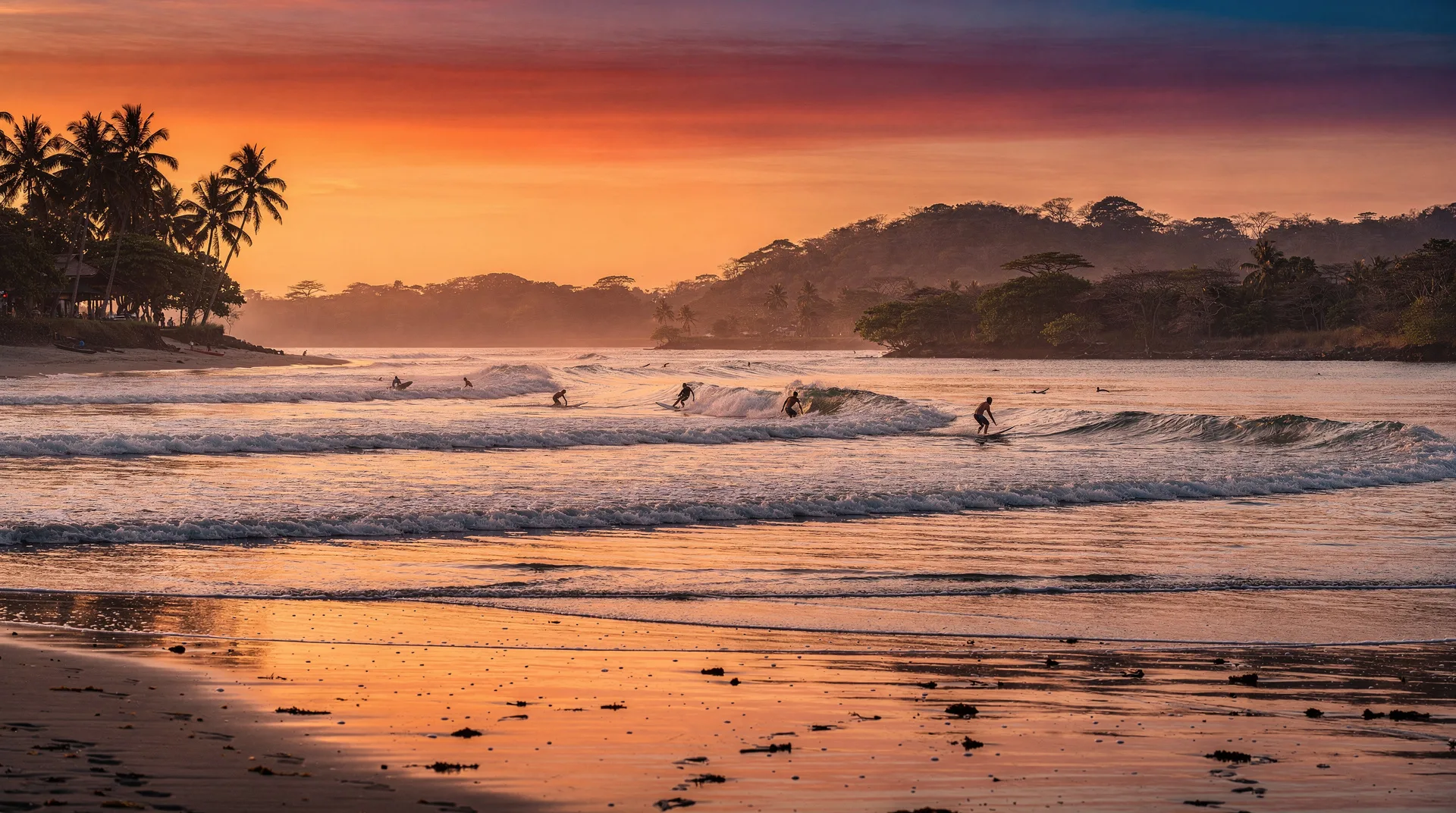
Tamarindo — Guanacaste's surf hub with sunsets worth staying for
Plan your Tamarindo trip: surf lessons, estuary wildlife tours, leatherback turtle watching, sunset sailing, and Conchal day trips. Real prices 2026.
Top experiences nearby
Tamarindo estuary boat tour with naturalist guide
Tamarindo: horseback to Conchal Beach
Tamarindo: horseback to Tamarindo Beach
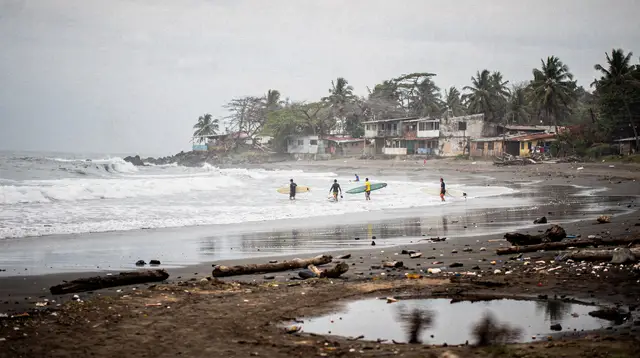
Tamarindo surf: learn and practice surfing
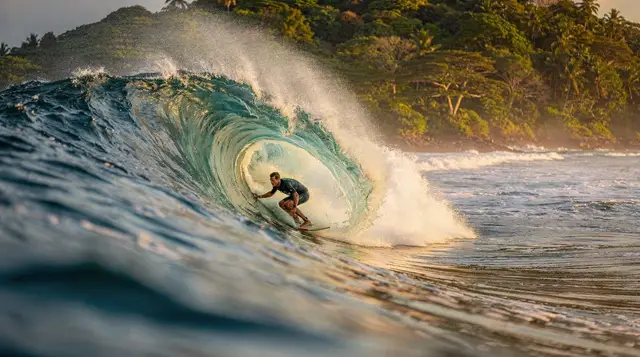
Playa Tamarindo: sunset sailing and snorkeling tour
Tamarindo: sport-fishing private charter
Quick facts
- Best time to visit
- November to April (dry season); Dec–Feb for flattest seas and best surf learning conditions
- Days needed
- 3 to 4 days
- Getting there
- 1 hour from Liberia airport (LIR); 5 hours from San José (SJO)
- Budget per day
- USD 65–100 budget · USD 120–180 mid-range · USD 300+ boutique hotel
Pacific sunsets and a beach town that knows what it is
Tamarindo is not trying to be anything it is not. A beach town on Guanacaste’s Pacific coast, it offers surf, sun, good food, and some of the most reliably beautiful sunsets in Costa Rica. It is well-developed — perhaps more so than visitors expecting a quiet fishing village might prefer — but that development brings quality: good hotels, consistent surf instruction, a broad range of restaurants, and easy access to day trips up and down the coast.
The beach itself is a long, gently curving crescent of golden sand backed by a mix of hotels, surf shops, and restaurants. The surf break in front of town produces consistent waves that work for beginners (particularly in the wet season, when swell is less powerful and the beach break is forgiving) but is rarely epic for advanced surfers. The real surf quality lies further south toward Avellanas and Negra, or north at Witch’s Rock in Santa Rosa National Park.
What Tamarindo does better than most Guanacaste towns is its compact walkability: the beach road, the restaurants, the bars, the surf schools, and the tour operators are all within easy walking distance of each other. If you want a Guanacaste beach base with genuine infrastructure and no car essential, this is the right choice.
Surfing in Tamarindo
The main beach break at Tamarindo works best at mid-tide, producing beginner-friendly waves most of the year. December through March, when the offshore winds are consistent and the swell is organised, is ideal for learning. The wet season (May–November) brings more powerful and less predictable swell — better for intermediates, slightly more challenging for beginners.
Surf schools line the beach and the main road: Witch’s Rock Surf Camp, Tamarindo Surf School, and Blue Trailz are among the most established. A 2-hour group lesson with board runs $50–$60; private lessons cost $80–$100. Board rental alone is $10–$15 per hour.
Tamarindo surf: learn and practice surfing — from $50 — at $50 for a 2-hour group lesson this is the most accessible way to start, with experienced instructors who manage the beach break safely. Solid choice for first-timers.
For day trips to better surf: Avellanas (45 minutes south) has a consistent beach break loved by intermediate surfers. Playa Negra (1 hour south) is one of the better right-hand point breaks on the Nicoya Peninsula. Both are accessible by rental car or organized day trips.
The Tamarindo Estuary and wildlife
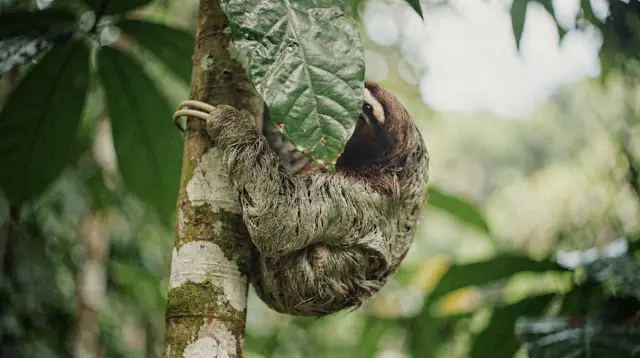
The Río Tamarindo estuary immediately south of town is one of the most accessible wildlife sites in Guanacaste. A 2.5-hour boat tour through the mangrove channels reveals crocodiles (American crocodiles are resident and large), howler monkeys moving through the canopy, various heron and egret species, and — with luck — the occasional ocelot at dusk. The estuary is only 500 metres from most hotels and the tours depart morning and evening.
Tamarindo estuary boat tour with naturalist guide — from $45 — $45 for 2.5 hours, typically departing at 07:30 or 15:30. One of the best wildlife experiences in the area and consistently underrated by visitors focused on the surf. The morning departure gives better light and animal activity.
Turtle watching at Playa Grande and Playa Tamarindo
Las Baulas National Marine Park, adjacent to Tamarindo on Playa Grande, hosts one of the most important leatherback sea turtle nesting beaches in the world. Leatherbacks nest October through March, with the peak in November and December. The nesting season is strictly regulated: SINAC controls access to the beach, numbers are limited, and guides are mandatory. Tours depart from Tamarindo ($95) after dark and can involve a wait of 1–3 hours before a turtle comes ashore.
The experience — watching a 300–500 kg animal lumber up the beach, dig a nest, and lay 60–80 eggs in silence — is unlike anything else in Costa Rica. It is not guaranteed; leatherbacks operate on their own schedule. But the tour operators are honest about that and most visitors see a turtle within one or two attempts.
Tamarindo turtle nesting tour, Guanacaste — from $95 — $95, operating October through March only. Book ahead in peak nesting months (November–January) as spots fill fast. This is a legitimate conservation programme, not a tourist show.
Horseback and day trips
Playa Conchal, 25 kilometres north, is famous for its beach of crushed shells — technically a shell rather than a sand beach — with turquoise water that photographs ridiculously well. It lies within the all-inclusive resort zone of the Westin Conchal, but the beach itself is public. A day trip from Tamarindo by car takes 30–45 minutes; the horseback version takes a scenic inland route.
horseback riding from Tamarindo to Conchal Beach — from $70 — $70 for 3 hours, crossing dry forest and arriving on the shell beach for a swim. A distinctive alternative to driving that gives you a feel for the dry Guanacaste landscape. Suitable for beginner riders.
Sunset sailing and snorkeling
Tamarindo sunsets are genuinely spectacular, particularly in the dry season when the sky clears and the light turns deep orange over the Pacific. Sailing off the beach at 15:30 and watching the sun drop into the ocean from a catamaran is one of the definitive Tamarindo experiences.
Playa Tamarindo sunset sailing and snorkeling tour — from $95 — $95 for 4 hours, including a snorkeling stop and drinks on the boat. The snorkeling around the rocky points near Tamarindo is modest — visibility varies, and you will see more at the Catalina Islands — but the sail back at sunset makes the whole thing worthwhile.
For dedicated snorkeling or diving, a day trip to the Catalina Islands (45 minutes offshore) gives access to much better underwater visibility, bull sharks and manta rays in season (November–May), and a range of reef fish. Tours depart from Flamingo or Tamarindo from $95 (snorkeling) to $135 (discover scuba).
Sport fishing from Tamarindo
The Pacific waters off Tamarindo and the wider Gulf of Papagayo produce sailfish, mahi-mahi, yellowfin tuna, and roosterfish through most of the year. Sailfish peak December through April, when offshore schools push bait to the surface and double-digit raise days are routine. While Quepos’s Marina Pez Vela is the country’s recognised tournament hub, Tamarindo offers genuinely competitive offshore charters with the advantage of a much shorter run from Liberia airport — a half-day from a flight is realistic.
a private sport-fishing charter out of Tamarindo — from $650 — full-day offshore charters for billfish run $1,200–$1,800 depending on vessel size and target species. Half-day inshore for roosterfish and snapper from $400. IGFA catch-and-release standard for billfish.
Tamarindo vs Nosara vs Samara
Guanacaste first-timers frequently ask which of the three main Nicoya beach towns to choose. The honest comparison:
| Tamarindo | Nosara | Samara | |
|---|---|---|---|
| Surf level | Beginner-friendly | Intermediate–advanced | Beginner, very gentle |
| Development | Most built-up | Restricted, low-rise | Small, Tico-majority |
| Nightlife | Best on the coast | Minimal | Minimal |
| Road access | Paved, closest to LIR | Partly dirt (4WD in wet season) | Paved via Nicoya |
| Best for | First-timers, families, nightlife | Serious surf, yoga | Families, quiet |
Choose Tamarindo if you want restaurants, a bar scene, and the shortest possible drive from Liberia airport. Choose Nosara if you already surf and want a quieter, more wellness-oriented base. Choose Samara if young children and calm water matter more than nightlife or restaurant variety — it shares Tamarindo’s easy paved access without the crowds.
Tamarindo digital nomad scene
Tamarindo has become one of Guanacaste’s established remote-work bases, driven by reliable fibre internet along the main strip, several dedicated co-working spaces, and a critical mass of long-stay expats who have normalised month-plus rentals. Furnished monthly apartments within walking distance of the beach run $1,200–$2,500; further from the water, toward the Langosta or Villareal areas, $700–$1,200 is realistic.
The trade-off against quieter Nicoya Peninsula bases like Nosara or Santa Teresa is exactly what makes Tamarindo appealing to some nomads and not others: easier logistics (paved roads, an hour from Liberia airport), more restaurant and grocery variety, but a busier, more touristic daily backdrop. Travelers planning to stay beyond the standard 90-day tourist entry should check the digital nomad visa guide first.
Where to eat in Tamarindo
Nogui’s: The institution. Open since the 1970s, this beachfront restaurant does breakfast (gallo pinto, eggs, fresh fruit) and lunch reliably and cheaply ($8–$15 per person). It is the first stop for many visitors every morning.
El Coconut: The best upscale restaurant in town — seafood forward, good cocktails, candlelit beachfront tables. Budget $35–$55 per person. Reserve for dinner in high season.
Tamarindo Fish Market: A rotating selection of fresh Guanacaste catch at honest prices. Order ceviche, whole fish, or shrimp tacos at the counter and eat at plastic tables. Nothing above $15.
Bamboo Sushi Club: Well-executed sushi with local fish in a beach setting. Popular with resident expats. $20–$35 per person.
Seasons by Shlomy: Arguably the most creative cooking in town — Israeli-born chef Shlomy blends Mediterranean techniques with local ingredients. Tasting menus from $55. Worth it for a special evening.
Where to stay
Luxury ($250+/night): Hotel Capitan Suizo, set back from the beach in gardens, is Tamarindo’s best boutique property — well-maintained pool, excellent breakfast, genuinely helpful staff. The Westin Conchal is 25 minutes north and offers a full resort experience with Playa Conchal on the doorstep.
Mid-range ($80–$160/night): Jardín del Edén has a lovely pool set among gardens and is consistently rated the best mid-range choice. Tamarindo Diria is a larger resort-style property with beach access and reliable facilities.
Budget ($25–$60/night): Pura Vida Hostel and Surf Camp is the long-standing budget favourite with good social energy. Casa Cook Tamarindo is a newer hostel with private rooms and dorms, clean and quiet by local standards.
Nightlife in Tamarindo
Tamarindo’s nightlife is genuinely the most developed on this coast, which is both its main draw for some travelers and the reason others choose a quieter alternative. Sharky’s is the long-running sports bar with pool tables and a mixed local-tourist crowd; Aqua Discoteque is the closest thing to a proper nightclub in Guanacaste, busiest Thursday through Saturday in high season; and a string of beachfront bars along the main strip run happy hours through sunset before the later crowd moves indoors.
Compared to Nosara or Samara, where the evening scene winds down by 22:00–23:00, Tamarindo’s bars and the one real club stay busy well past midnight in peak months. Solo travelers and younger groups tend to find this the town’s strongest selling point; families and travelers prioritising quiet often prefer to stay slightly outside the main strip, in Playa Langosta or Hacienda Pinilla, and visit the bars for an evening rather than base themselves in the middle of it.
Getting there and around
From Liberia airport (LIR), the drive takes 1 hour on the Interamerican Highway plus the coast road — this is why most Guanacaste visitors fly into LIR rather than San José. The airport transfer shuttle costs $80 for two people and is worth it for arriving convenience.
Liberia airport to Tamarindo transfer — from $80 — $80, the most convenient option for arrivals at LIR who do not have a rental car. Shared shuttles also run for $35–$45 per person.
From San José (SJO), the drive is 5 hours via the Interamerican Highway — too long for a single day if you have much luggage. Flying into LIR for a Guanacaste-focused trip saves 4 hours of transit. Buses from San José (Empresa Alfaro) run twice daily and take 5.5 hours.
Within Tamarindo, the main beach road is walkable. For Conchal, Avellanas, and further beaches, a rental car or booked day tour is necessary.
Connectivity: Wifi is generally reliable in hotels and cafés along the main strip. Mobile coverage from Kolbi and Movistar is strong in town and along the coast road, thinning out somewhat inland toward Santa Cruz and on the dirt sections south toward Avellanas.
Frequently asked questions about Tamarindo
Is Tamarindo touristy?
Yes, and openly so. Tamarindo is the most developed beach town in Guanacaste and feels distinctly gringo-heavy, particularly in high season (December–March). If you want a quieter, more authentically Costa Rican beach experience, Samara, Nosara, or Playa Flamingo might suit you better. If you want solid surf instruction, lots of restaurant choice, and easy logistics, Tamarindo is the practical choice.
What is the best surf beach near Tamarindo?
For beginners: Tamarindo main beach in December–March. For intermediates: Playa Avellanas (45 min south). For advanced: Playa Negra or Witch’s Rock at Santa Rosa National Park (the latter requiring a boat trip from Playa del Coco). Hacienda Pinilla, 10 km south of Tamarindo, also has three named surf breaks in a controlled access zone.
How far is Tamarindo from Conchal?
About 25 kilometres by road (35–45 minutes driving). The Westin Conchal Resort has its own beach section, but Playa Conchal itself is public. Access from Tamarindo by car: drive north to Brasilito village and walk 10 minutes to the beach.
Are leatherback turtle tours appropriate for children?
Yes, from about age 7–8 and up. The tours involve walking on dark beaches (red lights only), waiting quietly, and being supervised by SINAC rangers. Children need to be able to walk 1–2 km on soft sand and stay still and quiet when a turtle is sighted. It is one of the most memorable wildlife experiences Costa Rica offers for children who are old enough.
How to fit Tamarindo into your itinerary
Tamarindo anchors any Guanacaste beach trip. Fly into Liberia, spend 3–4 nights based in Tamarindo with day trips north (Conchal, Las Catalinas) and south (Nosara, Avellanas), then either continue south toward Jacó and Manuel Antonio, or loop back through Liberia for flights. The 7-day Guanacaste beaches itinerary uses Tamarindo as the central hub. If you are combining Guanacaste with the Arenal area, Liberia to La Fortuna to Tamarindo is a logical 10-day circuit.