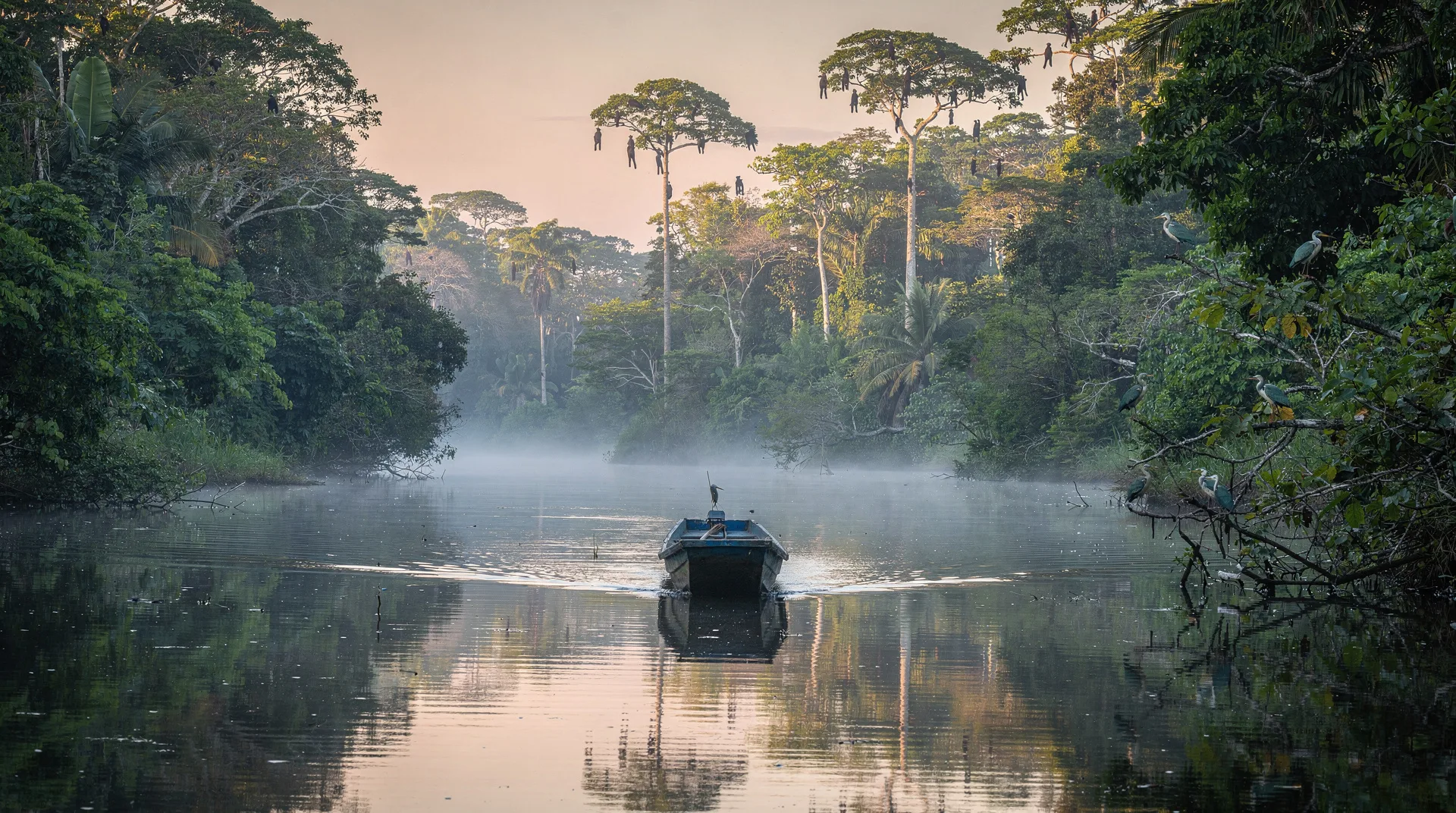
Tortuguero — canal villages, jungle waterways, and green sea turtles
Plan your Tortuguero trip: green sea turtle watching, canal boat tours, wildlife, and how to get there. No roads — this Caribbean jungle village is boat-only.
Top experiences nearby
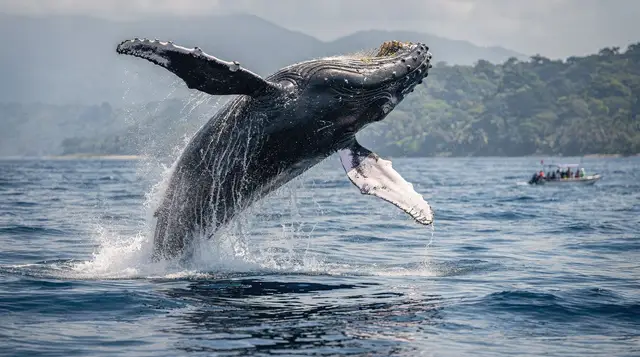
Turtle watching in Tortuguero, Costa Rica
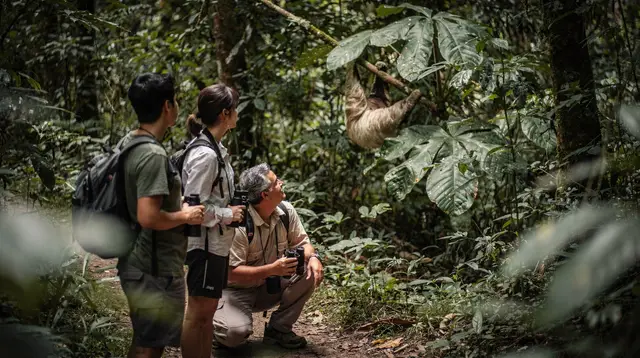
Tortuguero: sea turtle tour
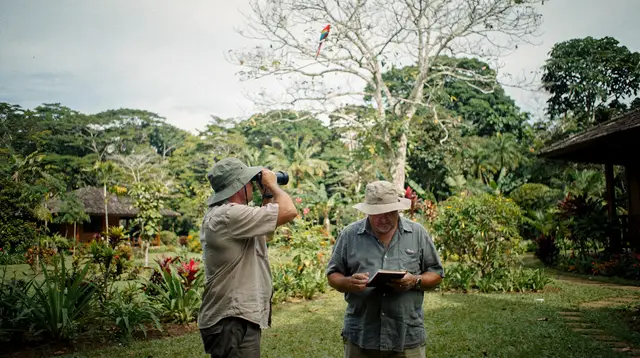
Tortuguero: turtle nesting night tour
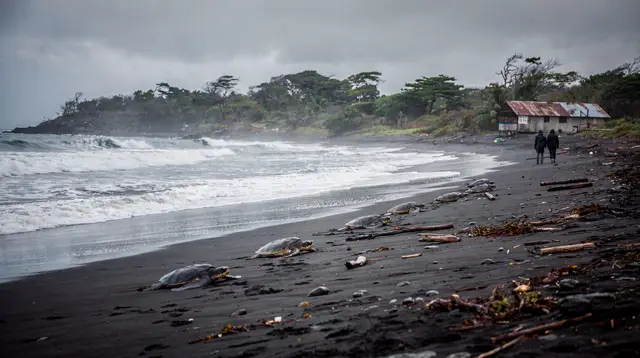
Tortuguero: turtle nesting tour on Tortuguero Beach
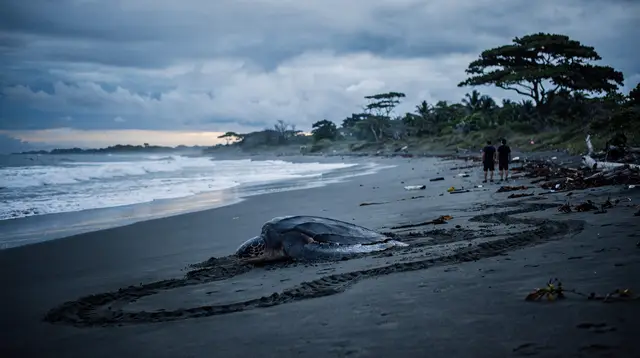
Tortuguero: turtle nesting tour in their natural habitat
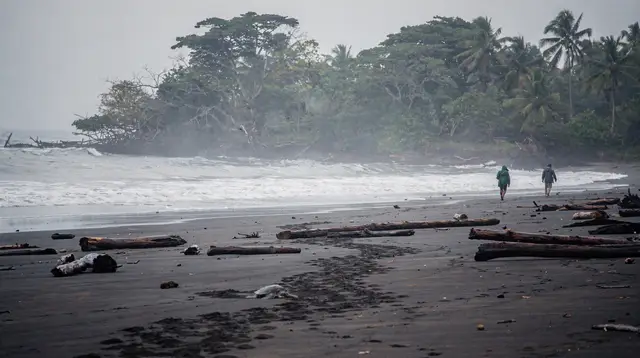
Green sea turtle nesting tour
Quick facts
- Best time to visit
- July to October for green sea turtles; Sept–Oct for relative dry on the Caribbean
- Days needed
- 2 to 3 days
- Getting there
- 4 hours from San José by bus + boat, or 50-min flight with Sansa to Tortuguero
- Budget per day
- USD 80–120 (most stays include meals); USD 200+ for lodge packages
A canal village with no roads and extraordinary wildlife
Tortuguero is one of the strangest places in Costa Rica: a village of approximately 1,000 people on a narrow sandstrip between the Caribbean Sea and the Tortuguero Lagoon, accessible only by boat or small aircraft. There are no roads into Tortuguero. You arrive by water — either a 2-hour boat journey from the port of Moín near Limón, or a series of bus-and-boat connections from San José that take 4–5 hours total. The very inaccessibility is part of what makes it feel so intact.
The village sits on the edge of Tortuguero National Park, a 31,174-hectare protected area of Caribbean rainforest threaded by 100 km of navigable waterways. The park protects one of the most important nesting beaches for green sea turtles in the Western Hemisphere — between July and October, thousands of females come ashore to nest on the 22-km beach, often several hundred a night during the August–September peak.
Beyond the turtles, the canal system inside the park is among the best places in Costa Rica to observe freshwater wildlife from a boat: spectacled caimans, basking turtles, poison dart frogs on riverside vegetation, three species of monkey, river otters, manatees (rare but present), tapirs (very rare), and an extraordinary variety of waterbirds including the great green macaw, the sunbittern, and the agami heron.
The green sea turtle nesting experience
The world-famous turtle nesting is regulated by SINAC and operates from July 15 to October 15, with peak activity in August and September. Access to the nesting beach after dark requires a licensed guide and a SINAC permit. Tours depart from the village at 20:00 and 22:00, groups are limited to 10 people, and white lights are prohibited (red-light torches only). The regulations exist to prevent disturbing nesting behaviour — they are real and enforced.
On peak nights in August–September, 200–400 turtles come ashore simultaneously. A single female lays 80–120 eggs, covers the nest, and returns to the sea in a process that takes 1–2 hours. Watching it — in near-darkness, with only the sound of the ocean and the movement of a 150-kg animal — is one of the most compelling wildlife experiences in the Americas.
turtle watching in Tortuguero, Costa Rica — from $45 — $45 for 3 hours with a licensed guide on the nesting beach. This is the standard evening format; the certified guide is required by SINAC and the price is fair for what is included. Book at least a week ahead during peak nesting (August–September) as spots genuinely fill.
Tortuguero sea turtle tour — from $50 — $50, a slightly longer format covering pre-tour education at the CCC station (Caribbean Conservation Corporation) before the beach walk. Good for travellers who want context on the conservation biology before the experience itself.
Tortuguero turtle nesting night tour — from $40 — $40 for 2.5 hours, the most compact format. Suitable if you are spending only one night and want to combine the turtle tour with an early start canal tour the next morning.
Note: leatherback turtles also nest at Tortuguero, but outside the main season — March through July. Hawksbills are seen occasionally year-round. The green turtle population is the reason most visitors come, and Tortuguero’s nesting numbers for this species are consistently among the highest recorded anywhere in the Western Hemisphere, a fact the CCC’s decades of tagging data has helped establish.
For the full season calendar, how the nesting cycle works, and what to expect on the beach, read the dedicated sea turtle nesting guide. If you want to compare with another species and coast, the leatherback nesting at Playa Grande and the Ostional olive ridley arribada on the Pacific side are very different experiences. Whichever beach you choose, the principles in our wildlife watching ethics guide apply: keep distance, keep quiet, and follow your guide.
Canal and river boat tours
The park’s waterway system is the daytime highlight. A 3–4 hour boat tour through the canals in a quiet electric motor canoe or kayak covers the main wildlife habitats: flooded forest (where howler and spider monkeys move through the canopy), open water channels (where anhingas dry their wings on snags, caimans slide from banks, and river otters hunt), and dense riverside vegetation (where the guides find sleeping sloths, basking basilisk lizards, and the occasional tapir track in the mud).
Tortuguero National Park best things to do — full day tour — from $95 — $95 for 6 hours covering canal boat tour, village visit, and a naturalist-guided walk on the Cerro Tortuguero trail. Good value for a single comprehensive day.
Tortuguero Cerro Tortuguero trail hike — from $30 — $30 for 2 hours, climbing the 119-metre hill that is the highest point in the park’s coastal strip. The view from the top — sea on one side, lagoon and forest on the other — is the best panoramic in the area. Can be combined with the canal boat tour as a half-day package.
Early mornings tend to be the quietest and most rewarding time on the water, because wildlife is active and the canals are calmer. Keep your voice low, move slowly in the boat, and let the guide position you for sightings. For tips on getting good frames from a moving boat in low light, see our wildlife photography tips, and for a broader look at what you might see, the Costa Rica wildlife overview puts the canals in context. For more on the park itself, see the Tortuguero National Park guide.
The village of Tortuguero
The village itself is small and charming in the way that only car-free settlements manage to be. The single paved path runs north to south; everything else is wooden walkways between houses, restaurants, and hotels. The main drag has a handful of restaurants, souvenir shops, the CCC research station (which sells good conservation-focused merchandise), and a bar or two.
The Caribbean Conservation Corporation station near the north end of the village is worth visiting: the turtle research programme here, started by Archie Carr in 1955, is the longest-running sea turtle research project in the world. The visitor centre explains the tagging programme and population monitoring, and staff are knowledgeable and enthusiastic.
Wildlife beyond turtles
Tortuguero’s biodiversity extends well beyond the nesting beach. The park lists 57 amphibian species, 111 reptile species, 400+ bird species, and 57 mammal species. Common sightings on canal tours include:
- All four Costa Rican primate species (howler, spider, capuchin, and squirrel monkeys)
- Green iguana and spiny-tailed black iguana
- Spectacled caiman (large individuals are common)
- Great blue heron, snowy egret, tricoloured heron, agami heron
- Ringed kingfisher, Amazon kingfisher, green-and-rufous kingfisher
- Great green macaw (the Caribbean cousin of the scarlet macaw, endangered)
- Poison dart frogs (blue jeans morph visible near the village)
- River otter (seen in the main canal, particularly at dawn and dusk)
Several of these animals are most active after dark, and a guided night walk around the village edge or lodge grounds can add frogs, insects, and other creatures that day tours miss. Our nocturnal wildlife guide explains what to look for. Travellers keen on primates can read the monkey species of Costa Rica guide before arriving, and anyone hoping for sloths will find tips in where to see sloths in Costa Rica. Serious birders should also consult bird watching by region to plan the Caribbean lowlands in context.
Tortuguero vs Sarapiquí and Puerto Viejo for the Caribbean
Travelers planning Caribbean time often weigh Tortuguero against the other two main options on this coast.
| Tortuguero | Sarapiquí | Puerto Viejo (Caribbean) | |
|---|---|---|---|
| Access | Boat/plane only, no roads | 1.5–2 hrs by road from San José | 4–5 hrs by road from San José |
| Signature draw | Green turtle nesting, canals | Rafting, birding lodges | Beaches, Afro-Caribbean culture, snorkeling |
| Days needed | 2–3 | 1–2 | 3–5 |
| Vibe | Remote, boat-only village | Rainforest lodge stop | Laid-back beach town |
Sarapiquí works better as a shorter, easier-access rafting-and-birding stop en route between San José and the Caribbean. Puerto Viejo is the choice for travelers who want beach time and Caribbean culture alongside wildlife. Tortuguero stands alone for anyone whose priority is the turtle nesting spectacle and the genuinely remote, roadless canal-village experience — nothing else in Costa Rica replicates it.
Combining Tortuguero with the rest of the Caribbean coast
Because there is no direct overland route out of Tortuguero, most itineraries treat it as a self-contained loop: in via bus-and-boat or flight, two nights in the village or a lodge, then back out the way you came, or via the Moín water taxi to connect south.
Travelers building a full Caribbean coast trip typically pair Tortuguero with Puerto Viejo and Cahuita further south — the combination covers both the wildlife-heavy northern canals and the beach-and-reef southern coast, which are different enough in character that neither substitutes for the other. Sarapiquí, on the inland route between San José and the Caribbean lowlands, makes a logical stopover for travelers driving rather than flying to Tortuguero, since the road passes close to it.
South of Puerto Viejo and Cahuita, the coast shifts toward beaches and reef; see Cahuita and our guide to the best Caribbean beaches in Costa Rica. If you are still deciding between coasts, Caribbean vs Pacific coast trip lays out the trade-offs. For a ready-made route, the 7 days quick Caribbean itinerary is a useful starting point.
Where to stay
Most accommodation in Tortuguero comes in the form of lodge packages that include meals, boat transfers, and guided activities — the standard format for the destination and generally good value given the logistics involved.
Jungle Lodge / Full-Package Lodges ($150–$300/night including meals and tours): Tortuga Lodge (operated by Costa Rica Expeditions) is the classic — a well-maintained property on the lagoon side with good food, experienced guides, and a river-facing pool. Pachira Lodge is a reliable mid-package option slightly more affordable. Mawamba Lodge is well-positioned adjacent to the beach.
Budget (staying in the village, $40–$80/night): Several small guesthouses (Miss Junie’s, Cabinas La Casona) operate in the village for budget travellers who want to book their own canal tours rather than using lodge packages. Meals are available at village restaurants for $8–$15 per person.
Getting there
There are two main routes:
By bus and boat from San José (most common): Take a bus from San José’s Gran Terminal del Caribe to Cariari (2 hours, $4). From Cariari, a connecting minivan to La Geest dock (30 minutes). Then a motorised boat through the canals to Tortuguero village (2–2.5 hours, $25–$30 one way). Total door-to-village: 5 hours. Many lodge packages include this transfer.
By small aircraft: Sansa Airlines operates 50-minute flights from San José to Tortuguero (small airstrip, luggage limits apply). Around $120 one-way. By far the most comfortable option — particularly for visitors on 2-night packages who do not want to spend 10 hours of their trip on buses and boats.
By water taxi from Moín (near Limón): 2-hour boat directly from the Caribbean port town. Useful if you are arriving from Puerto Viejo direction and want to loop the Caribbean coast without returning to San José.
If you choose to fly, the internal flights guide for Sansa and Aerobell explains how small-aircraft travel works in Costa Rica, including baggage considerations. Those staying longer on the Caribbean side can pair this trip with Limón province planning.
Connectivity and practical basics
Tortuguero village has limited but functional connectivity: most lodges and a handful of village guesthouses offer wifi, though speeds are modest and can drop entirely during heavy rain. Mobile signal is patchy — Kolbi generally works in the village center but disappears quickly on the canals and out on the beach. There is no ATM in Tortuguero village; bring sufficient cash from San José or Cariari, since card acceptance is limited to the larger lodges. Given the boat-only access, pack light and prioritise a waterproof duffel over a hard-shell suitcase, which is genuinely awkward to load and unload from a canal boat.
For what to bring beyond the basics here, see the Costa Rica packing list, and for cash planning before you leave the mainland, read the ATM and cash tips.
When to go
The turtle season (July 15–October 15) is the primary draw, with peak nesting in August–September. The Caribbean coast’s climate means Tortuguero is wetter than the Pacific year-round, but September–October is the relative dry season on the Caribbean — the ironic best weather window aligns with peak turtle season.
Outside turtle season (November–June), canal tours and wildlife watching are still excellent and less crowded. February–April is a reasonable alternative: fewer boats on the canals, good bird activity, and occasional leatherback turtle sightings.
Frequently asked questions about Tortuguero
Is Tortuguero worth the journey?
Yes, for most wildlife travellers. The canal system is genuinely one of the best river wildlife experiences in the Americas, and the turtle nesting is in a category of its own. The journey from San José (5 hours via bus-and-boat) is longer than most Costa Rica transfers, but the experience at the destination justifies it.
Can I visit Tortuguero without booking a lodge package?
Yes. You can stay in the village at small guesthouses and book canal tours and turtle tours independently through local guides. This is cheaper than lodge packages but requires more coordination. The village is small enough that you can sort most arrangements on arrival or by WhatsApp the week before.
What should I pack for Tortuguero?
Waterproof everything. The Caribbean is wet year-round, and even in the relative dry months you will encounter rain. Bring: rain jacket, waterproof bag for electronics, insect repellent (the Caribbean mosquito population is significant), rubber boots or quick-dry shoes, and binoculars. Shops in the village sell basics but at premium prices.
Are there mosquitoes in Tortuguero?
Yes, significantly so. The combination of tropical heat, standing water, and dense forest creates ideal mosquito conditions. DEET-based repellent is recommended. Covering arms and legs after sunset reduces bites. Lodges with screened rooms and air conditioning are worth the premium in this environment.
How do I get from Tortuguero to Puerto Viejo?
There is no direct overland route — Tortuguero is on an isolated coastal strip. You must return by boat to Moín (near Limón), then travel by road south to Puerto Viejo (about 2 hours from Limón). Alternatively, fly back to San José with Sansa and take a bus or shuttle south. The boat-to-Moín option takes about 3 hours total to reach Puerto Viejo.
How to fit Tortuguero into your itinerary
Tortuguero works best as a dedicated 2-night detour on a Caribbean-focused trip. From San José, take the bus-and-boat transfer (morning departure), spend 2 nights in the lodge, and then either fly back to SJO or take the boat to Moín and connect south to Puerto Viejo for the Caribbean coast. See the 10-day Caribbean coast itinerary for a full framework combining Tortuguero, Cahuita, and Puerto Viejo.