How to support local tourism after COVID
The spending choice that shapes the recovery
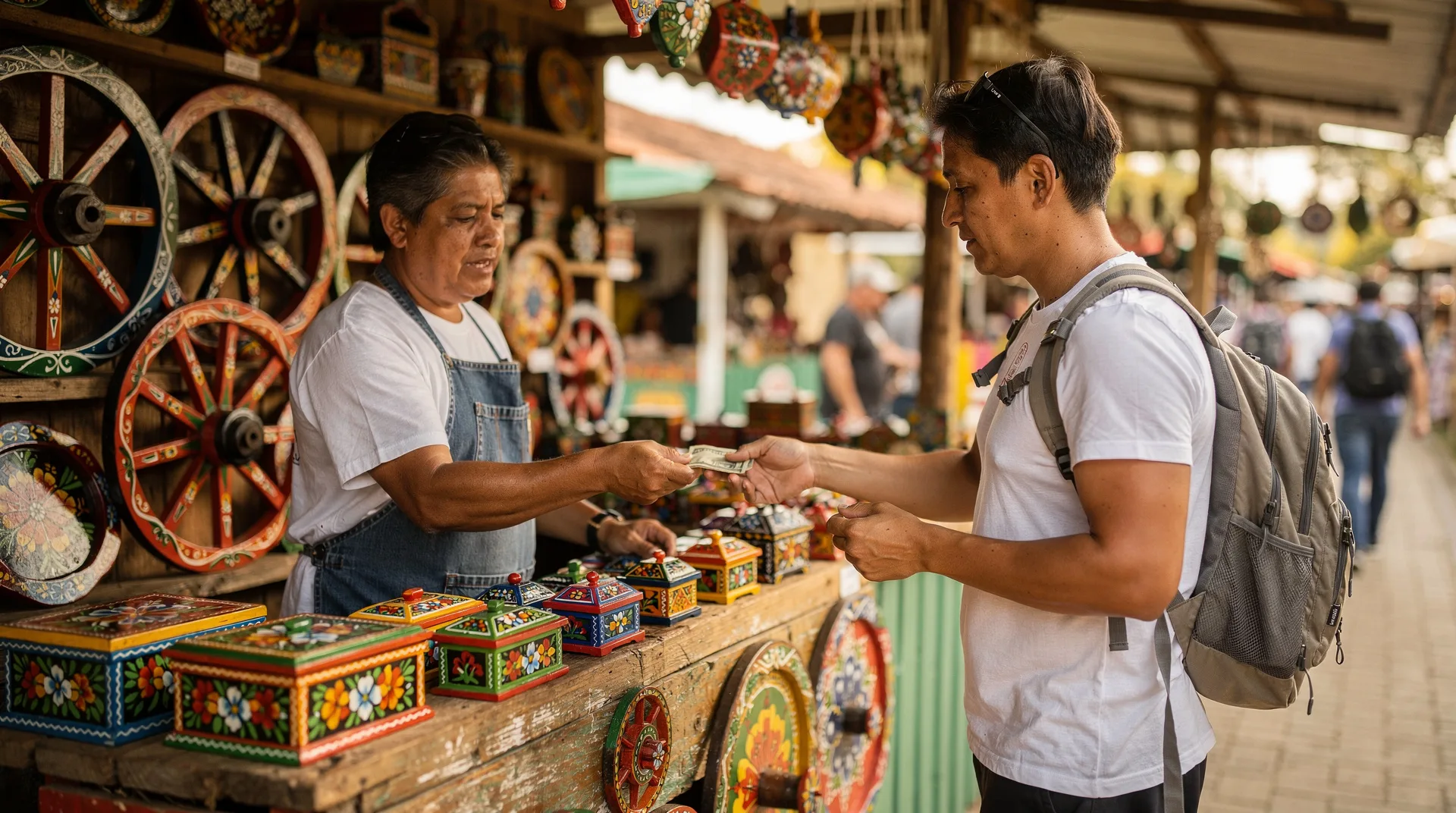
Every dollar you spend in Costa Rica lands somewhere specific. It lands in the pocket of a Tico family running a soda in Uvita, or it lands in the quarterly earnings report of an international hotel chain headquartered in a country you are not visiting. Those two outcomes feel similar on the day of your vacation. Over five years, they are completely different.
| Best signal | CST 4–5 leaf rating, verified at the ICT site |
| Best value meal | A soda — better food, almost all revenue stays local |
| Booking tip | Ask your lodge for a direct guide recommendation |
| Where the gap is biggest | Tour aggregators vs. direct local operators |
| Hardest-hit still recovering | Smaller, Tico-owned operators outside major resort zones |
The COVID-19 shutdown of 2020 made this visible in a way that good economic times tend to obscure. When tourism stopped, the communities that had built supply chains around Tico-owned, independently run businesses were better able to adapt than those where international capital dominated. The international groups could absorb losses or defer on locked-down properties. The small operators had no such cushion.
When you return to Costa Rica — and if you are reading this, you are at least considering it — the decisions you make about where to sleep, where to eat, and which tour operators to book have a direct economic impact on the recovery’s shape.
The Tico-owned accommodation question
The Costa Rican lodge tradition is one of the country’s genuine cultural assets. Family-run eco-lodges — places like Selva Verde in Sarapiquí, Lapa Rios on the Osa Peninsula, Pacuare Lodge in Turrialba, Bodhi Tree in Nosara, and dozens of smaller properties across the country — are not just accommodation. They are family projects, usually multigenerational, usually embedded in local food and employment networks.
The distinction between a Tico-owned lodge and an international-owned property is not always obvious from a booking site. A few indicators that a property is genuinely locally embedded:
The staff is local. Management positions filled by foreigners are not automatically a bad sign — expertise flows internationally — but if the entire senior staff is from outside Costa Rica, the economic multiplier to the local community is lower.
The food supply is local. Lodges that source from nearby farms — and can tell you which farms — are circulating their food expenditure locally. Ask the lodge directly. The ones doing this well are usually proud to say so.
The ownership structure is Costa Rican. This is harder to verify, but a lodge that is part of a national or international chain is likely distributing its profits differently than one where the person greeting you at arrival owns the property.
Some international chains are excellent employers and do invest significantly in communities. This is not a blanket condemnation. It is an invitation to ask questions and to preference local when the options are comparable.
The tour operator problem
This is where the gap between perception and reality in Costa Rica is largest.
The major shuttle and tour booking platforms that dominate the first page of search results for “Costa Rica tours” are not, in most cases, Tico operations. They are aggregators — often headquartered outside Costa Rica — that resell tours from local operators at a margin. The local operator gets a portion of what you paid. The aggregator keeps the rest.
This is not fraud. It is how most online tourism platforms work. But it means that the most visible option for booking a tour to Corcovado or a shuttle from La Fortuna to Monteverde is frequently not the option that returns the most value to the Costa Rican community.
Alternatives:
Book directly with local operators. If you know the name of a good guide or a reputable local tour company, contact them directly. They will typically charge you less than the aggregator price and receive more. The challenge is finding them — this is where recommendations from other travelers, guestbook reviews at your lodge, and a bit of prior research pay dividends.
Ask your accommodation. Tico-owned lodges typically have relationships with trusted local guides. The recommendation they make is usually someone they have worked with and whose quality they can vouch for.
Use GetYourGuide with awareness. GYG aggregates tours and we use it on this site because the tours listed there are vetted and the booking logistics are reliable. The operators who list on GYG are real local businesses receiving real revenue. It is not a perfect solution, but it is better than booking a tour through a reseller several layers removed from the actual guide. We mark all our GYG links as sponsored and the disclosure is at the top of this page.
A small, Tico-run cooking class in Nosara is a good example of the kind of listing worth favoring — a local family teaching visitors directly, with the full booking fee reaching them rather than a chain of resellers.
Nosara Tico family cooking class — from $95Food and farming experiences are among the easiest ways to put money directly into local hands. Around La Fortuna, a visit built around cacao is a good example: you see how the crop is grown and processed, and the people showing you are the ones who work with it. If that appeals, a local chocolate tour near Arenal — from $35 is worth a look, and our chocolate and cacao tours guide explains what to expect from this kind of outing.
Regions where the choice matters most
Not every part of Costa Rica has the same mix of local versus international ownership, and the multiplier effect above is strongest where alternatives to Tico-owned businesses barely exist. In Dominical and the smaller South Pacific towns, small surf lodges and family sodas are still the dominant business model — your spending choices there have an outsized local effect compared to, say, a large Guanacaste resort strip. The Caribbean side around Puerto Viejo and the Sarapiquí lowlands show a similar pattern: family-run cabinas and community-based tourism cooperatives that genuinely depend on direct bookings rather than aggregator traffic.
Where to eat: sodas vs. tourist restaurants
This one is straightforward. A soda — a family-run Costa Rican kitchen serving traditional casado lunches, gallo pinto breakfasts, and freshly made ceviche — circulates almost all of its revenue locally. The family cooks the food. The family or a neighbor grows part of it. The profits stay in the neighborhood.
A tourist restaurant in a beach town, serving international menus at $15-20 per main course, may or may not be locally owned. Ask. Many beach town restaurants that look like international casual dining are actually run by Costa Rican families who have adapted their menus to visitor preferences. Others are owned by foreign investors with no meaningful local supply chain.
Eating at sodas is also, in our opinion, simply better food. A casado at a family soda in Dominical or Puerto Jiménez — rice, beans, salad, plantain, and whatever protein the family decided to cook that morning — for 3,500 to 5,000 colones (roughly $6-10) is frequently more memorable than the identical dish at a tourist restaurant three times the price.
If you want help finding the right kind of kitchen, our guide to the best local sodas is a practical place to start, and the Costa Rican food overview explains the dishes you will meet on the menu. Small gestures count too: a fair tip for a guide or a driver is part of how money reaches people directly, and the tipping culture guide covers how it works locally.
ICT-certified operators
The Instituto Costarricense de Turismo (ICT) certifies tour operators and lodges through a Certification for Sustainable Tourism (CST) program. The rating runs from 0 to 5 “leaves” and evaluates environmental, social, and economic practices. A 4-leaf or 5-leaf rating means an operator has been independently audited and found to be genuinely practicing sustainable tourism.
The CST list is public and searchable on the ICT website. We check it regularly. It is not perfect — some excellent small operators have never applied, and some certified operators have let their practices slide since their last audit — but it is a useful starting signal.
The multiplier effect in practice
An economist would frame this as the local multiplier effect: money spent at a locally embedded business circulates through the local economy multiple times before leaving. Money spent at an externally owned operation exits quickly.
For Costa Rica’s coastal communities, where the economic base is almost entirely tourism-dependent, this multiplier is the difference between resilience and fragility. The 2020 shutdown demonstrated which communities had built resilience. The more of your tourism spending that reaches locally embedded businesses, the higher that multiplier becomes.
This is not a sacrifice. The best lodges, the best guides, and the best meals in Costa Rica are, in our experience, the local ones. The alignment between ethical spending and good travel is unusually strong here.
What we’d say to someone reading this in 2026
The post-COVID recovery has been uneven. The major resort zones — Guanacaste’s all-inclusive strip, parts of Manuel Antonio — recovered quickly, backed by international capital that could absorb the losses and reopen aggressively. Some of the smaller, Tico-owned operators in less trafficked areas have not fully recovered and are still carrying debt from 2020.
The spending choices you make in 2026 still matter — perhaps more than they did in 2019, when the industry was at full capacity and the marginal impact of one traveler’s choices was lower. If you are planning a trip now, the eco-tourism in Costa Rica post-2020 post has a more current picture of which operators and certifications are worth prioritizing, and our carbon neutrality overview covers the country’s broader sustainability commitments. If you’re weighing a longer stay rather than a two-week trip, the digital nomad visa post covers how extended visitors fit into the same local economy.
Timing is another lever. Travelling outside the busiest weeks spreads visitors more evenly through the year, which helps small businesses that depend on steady bookings rather than a short rush; our shoulder season deals guide shows how to plan for that. For a look at how the country got through the shutdown itself, see Costa Rica during the pandemic, and for the opposite problem, businesses that exist mainly to part visitors from their money, read our honest look at tourist traps.
Choosing smaller bases also helps. Spending a few nights in Sarapiquí or Puerto Jiménez rather than only the best-known hubs sends your budget to places where family-run businesses carry much of the load.
And if you are in doubt about any specific lodge or tour operator, ask. The honest ones will tell you exactly where their money goes.