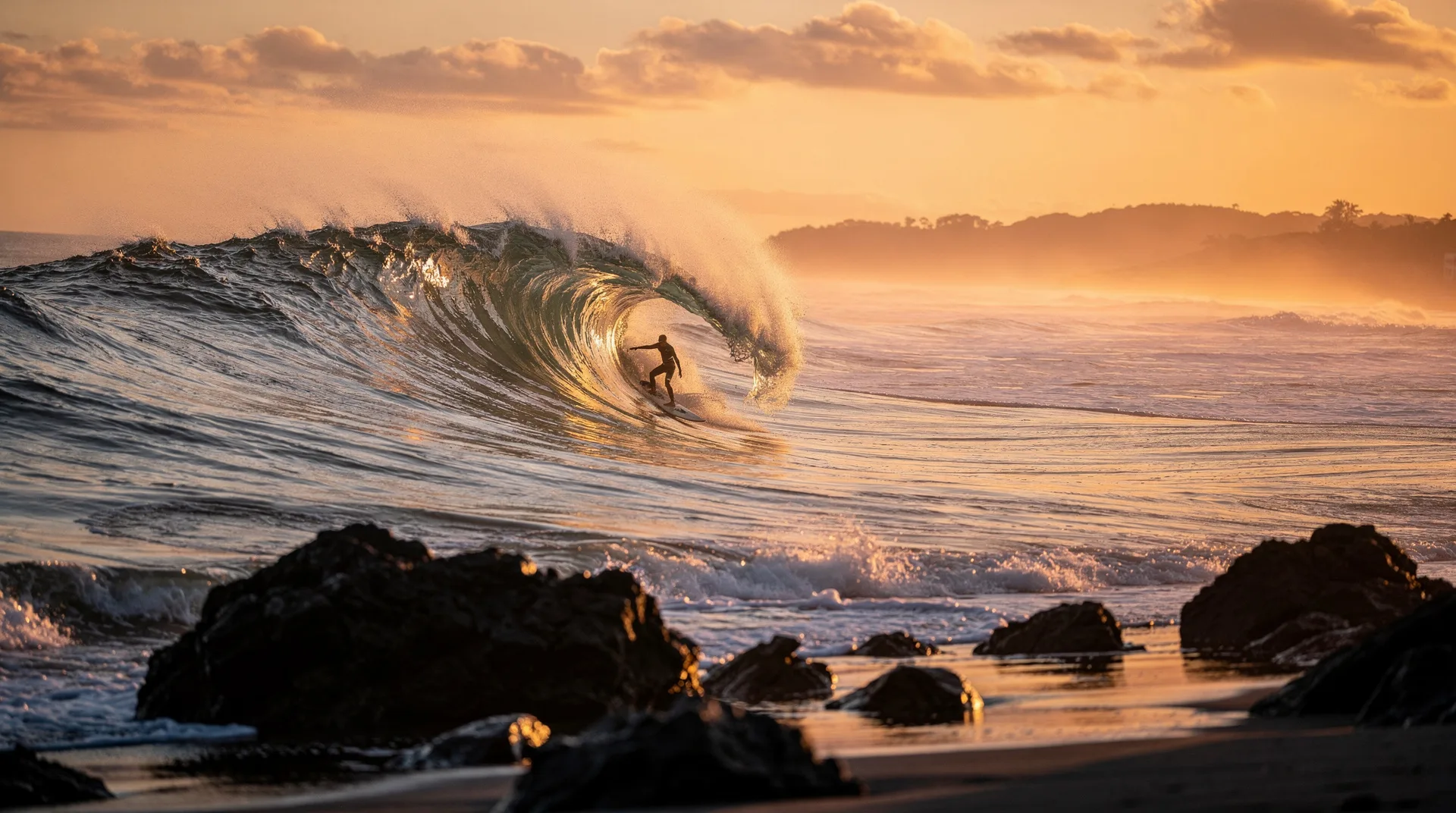
Santa Teresa — where serious surf meets the Nicoya Peninsula lifestyle
Plan Santa Teresa: consistent Pacific surf, Tortuga Island snorkeling, yoga retreats, sunset views, and the Nicoya Peninsula's laid-back lifestyle. 2026 guide.
Top experiences nearby
Quick facts
- Best time to visit
- December to April (dry season); May–July for reliable swell without peak crowds
- Days needed
- 3 to 4 days
- Getting there
- 5.5 hours from San José via Puntarenas ferry and Nicoya Peninsula
- Budget per day
- USD 75–100 budget · USD 150–250 mid-range · USD 350+ boutique
A surf town that grew into something more
Santa Teresa occupies the northwest tip of the Nicoya Peninsula, facing the open Pacific at a point where the coast bends northward and the swell rolls in unimpeded from the south. A decade ago it was primarily known as a surf destination for travellers who found Nosara too quiet and Jacó too loud. It has since grown into something more complex: a community of restaurants, yoga studios, boutique hotels, and surf camps that feels more like a stylish beach town than a rustic surf camp, while still delivering some of the most consistent waves in the country.
The beach road — more accurately a sandy dirt track — runs north from Playa Carmen through Santa Teresa and continues to Playa Hermosa and Malpais. The main concentration of restaurants and shops is in the Santa Teresa section; the surf breaks in front of each named beach have distinct characteristics that advance surfers exploit for different conditions.
The food scene here is disproportionately good for a town of this size. An accumulation of international residents — Argentine, Brazilian, Italian, French — has produced a restaurant strip that competes with San José in creativity and easily beats it in setting. Eating on an outdoor terrace while watching the surf at sunset is the signature Santa Teresa experience.
Surfing in Santa Teresa
Santa Teresa and Playa Carmen produce some of the most consistent surf on the Pacific coast of Costa Rica. The main breaks work on a combination of beach and point break depending on swell direction and sand movement. The Nicoya Peninsula’s northwest orientation maximises exposure to the southern Pacific swell (most powerful April–October) while also receiving the northwest swells of the dry season.
Playa Carmen: The most accessible break at the bottom of the main road, works for beginner-to-intermediate surfers in smaller swell. Best at mid-tide on the incoming.
Santa Teresa main break: A more powerful beach break that produces long rideable sections. Best for intermediates who can read wave sets. Works most consistently at dawn before onshore winds build.
La Lora point: A right-hand point break 1 km north of the main strip, more consistent in medium swell and significantly less crowded. Worth the walk north on the beach.
Most surf schools in Santa Teresa offer lessons for $60–$90 (group) and $100–$130 (private). Boards are available everywhere for $20/day. The instruction quality is generally high — the resident surf community has high standards and bad operators don’t last long.
surf lessons — format comparison — from $50 — if you are building a Nicoya Peninsula surf trip, getting foundational lessons at Tamarindo (gentler breaks) before attempting Santa Teresa (more powerful conditions) is the sensible progression. The technique is transferable; the power isn’t.
For a break-by-break breakdown, the Santa Teresa surf guide goes deeper than this overview. If you are still choosing between coasts, surf seasons by region and tide and surf conditions help you time the trip, and the beginner surf spots guide is the place to start if you have never stood on a board. Surfers building a longer route along the coast can use the 10-day Pacific surf trip itinerary as a framework, and the wider Nicoya Peninsula beaches guide covers the stretches between the main towns.
Tortuga Island full-day excursion
Isla Tortuga, a national biological reserve in the Gulf of Nicoya, is the most popular full-day excursion from Santa Teresa. The catamaran or speedboat trip takes 1.5–2 hours, depending on the vessel. The island’s turquoise coves and white-sand beaches provide a complete contrast to the exposed Pacific conditions, and the snorkeling around the island’s rocks and reef systems is good.
Santa Teresa Tortuga Island full-day boat tour with snorkel — from $155 — $155 for 8 hours, including the boat trip, snorkeling equipment, a beach lunch, and swimming time on the island. One of the more memorable full days you can have from the southern Nicoya Peninsula. Book 2–3 days ahead in high season.
Isla Tortuga snorkeling tour with BBQ lunch — from $135 — $135, a slightly more affordable alternative that focuses on the snorkeling and the island barbecue. Good for groups with mixed enthusiasm for the boat journey.
Yoga and wellness
Santa Teresa’s wellness scene is smaller but more varied than Nosara’s. Several boutique hotels have their own yoga shalas and teachers. Florblanca Resort is the established benchmark — a collection of open-air villas with an onsite studio running international teacher residencies and retreat programmes. Day visitors can book drop-in classes ($20). The spa at Florblanca is arguably the best on the Nicoya Peninsula.
Other studios: The Green Room (drop-in $15, consistent quality), Santa Teresa Yoga (community-focused, affordable drop-in programme), and Blue Spirit (shared with Nosara operations).
For wellness travellers, Santa Teresa offers a more socially integrated scene than the purpose-built retreat atmosphere of Nosara — yoga happens alongside surfing, cooking, and evening dinners rather than in a separate enclave.
The Santa Teresa wellness guide covers studios and retreat formats in more detail. Anyone weighing the two towns for a retreat-focused stay should also read about Nosara yoga retreats, and a week built around practice rather than surf is sketched in the 7-day yoga and wellness itinerary.
Santa Teresa vs Nosara vs Tamarindo
All three are Nicoya Peninsula surf-and-wellness towns, but they suit different priorities:
| Santa Teresa | Nosara | Tamarindo | |
|---|---|---|---|
| Surf level | Beginner–advanced, mixed breaks | Intermediate–advanced | Beginner-friendly |
| Social scene | Lively restaurant strip, beach bars | Quieter, wellness-focused | Most developed, most nightlife |
| Access | Ferry + dirt road (hard) | Dirt roads, partial flights (hardest) | Paved, closest to LIR (easiest) |
| Best for | Surfers who also want food and nightlife | Serious surf and yoga | Families, first-timers, easy logistics |
Travelers who want Nosara’s wellness culture with a livelier evening scene generally prefer Santa Teresa; those who want maximum surf consistency and quiet lean toward Nosara; anyone unwilling to tackle a ferry crossing or dirt roads should default to Tamarindo instead, at the cost of Santa Teresa’s more distinctive, less commercial atmosphere.
Digital nomads and longer stays
Santa Teresa has become, alongside Nosara and Tamarindo, one of the Nicoya Peninsula’s established digital-nomad bases. Reliable fibre internet reaches most of the main strip and several dedicated co-working spaces have opened in recent years, catering to the growing population of remote workers who combine surf mornings with afternoon work sessions. Monthly furnished rentals near the beach run $1,000–$2,200 depending on proximity and pool access; further from the water, toward Playa Hermosa or inland, $600–$1,000 is realistic.
The trade-off against Nosara is atmosphere rather than infrastructure — Santa Teresa’s longer-stay community skews younger and more social, with a livelier evening scene that some remote workers find distracting and others find is exactly the point. Anyone planning to stay beyond the standard 90-day tourist entry should check the digital nomad visa guide before signing a lease.
Where to eat
Santa Teresa’s food scene is the most diverse in the southern Nicoya Peninsula:
Koji’s Restaurant: The most acclaimed restaurant in town — Japanese-Peruvian fusion with fresh local fish and excellent cocktails. $35–$55 per person. Reserve ahead for dinner; it fills most evenings in high season.
Eat Street Food: Argentine-run street food operation with the best empanadas and anticuchos on the peninsula. Under $12. Lunch only, closes when the food runs out.
Kika: A beach bar-restaurant known for its Sunday afternoon sessions with DJs, good ceviche, and a crowd that stays through sunset. $15–$25 per person.
Burger Ranchero: Sounds unpromising but consistently delivers — house-made patties, local cheese, fresh-baked buns. Under $15.
La Cantina: The late-night option. Good pizza, cold beer, and a terrace that fills after 21:00. Under $20.
Soda Piedra Mar: The local honest option — casados and fresh fish under $10, eaten at plastic tables with a sea view.
Where to stay
Luxury ($300+/night): Florblanca Resort is the most beautiful property — 10 open-air villas in garden setting, private pools, direct beach access, exceptional spa, and a restaurant worth a visit even if you are not staying. Pranamar Oceanfront Villas and Yoga Retreat is a strong alternative with strong yoga programme and an infinity pool.
Mid-range ($130–$280/night): Casa Zen is a well-designed boutique hotel with pool, yoga, and excellent breakfast. Tropico Latino Lodge has direct beach access and good food at more manageable rates. Luz de Vida Resort (Malpais end) is quiet and well-maintained.
Budget ($40–$90/night): Hostel Tranquilo has the best social energy in town — dorms, private rooms, pool, and surf board storage. Camping Malpais (at the Malpais end) is the cheapest option, with basic facilities and direct beach access.
Getting there
Santa Teresa is the most geographically isolated of the major Costa Rica beach destinations. From San José, the standard route:
- Drive to Puntarenas (2 hours)
- Puntarenas–Paquera ferry (1 hour 20 minutes; Naviera Tambor operates 4–6 crossings daily, $2.50 per person + vehicle)
- Drive from Paquera south through Cobano to Santa Teresa (1 hour 15 minutes on paved road)
Total from San José: 5–5.5 hours. The ferry crossing schedule drives departure times; check Naviera Tambor’s timetable and arrive 30–45 minutes early in high season to guarantee space.
From Nosara (1.5 hours south), the road via Carmona and Cobano is paved and relatively straightforward with a regular car. Montezuma is 10 km south of Santa Teresa via a direct dirt track or 30 km paved via Cobano.
Sansa Airlines operates flights from San José to Tambor airport (40 minutes), from which it is a 30-minute taxi to Santa Teresa. Around $120 one way. The most comfortable option for travellers who want to skip the ferry.
For more on the crossing itself, see the ferry routes guide and the Paquera ferry improvements write-up. The internal flights guide explains how the small-plane option works, and if you are weighing a rental car for the last stretch, driving in Costa Rica and road conditions by region are worth reading first.
Sunset spots beyond the restaurant terraces
While eating on a beachfront terrace is the default sunset experience, a handful of other spots reward the short walk or drive. The rocky point at the north end of Playa Santa Teresa, near the La Lora surf break, gives an unobstructed horizon view without a restaurant tab attached — arrive 20–30 minutes before sunset to claim a rock. For a higher vantage, several hillside hotels toward Playa Hermosa allow non-guests to book a sunset drink at their rooftop or pool bar for the price of a cocktail, trading proximity to the water for elevation and a wider view of the coastline curving north toward Nosara.
Practical information
Roads: The main Santa Teresa beach road is unpaved — a sandy track in dry season, occasionally muddy in green season. 4WD is useful but a regular high-clearance car manages in dry season. Motorcycles and ATV rentals are popular ($35–$45/day) for exploring the beach breaks.
Safety: Motorcycle accidents are the main safety risk here. The beach road is driven fast by locals and inexperienced tourists. If you rent a motorcycle or quad, wear a helmet (always), don’t drink and ride, and be alert for pedestrians on the road. The sea also has riptides at several beach sections — ask the surf schools about current conditions before swimming. The beach safety guide explains how to spot a rip current and what to do if you get caught in one.
ATMs: Two ATMs in Cobano (15 minutes from Santa Teresa) — reliable but occasionally out of cash on weekends. Bring cash from San José or Puntarenas.
Connectivity: Wifi is generally good in hotels and cafés along the main strip, with fibre reaching most of the developed area. Mobile signal from Kolbi and Movistar covers the town center reliably but weakens noticeably on the beach road toward Malpais and inland toward the hills.
Frequently asked questions about Santa Teresa
Is Santa Teresa suitable for beginner surfers?
Partly. Playa Carmen has beginner-suitable sections on smaller swell days. The Santa Teresa main break is not for beginners. In practice, many first-timers have a good experience here with a proper surf school that puts them in the right conditions. Check in January–March for the softest beginner windows.
How does Santa Teresa compare to Nosara?
Santa Teresa has better surf consistency and a livelier restaurant and social scene. Nosara has a stronger yoga and wellness infrastructure and a more established eco-conscious community identity. Both are on the Nicoya Peninsula and accessible in the same trip. Travellers who prioritise yoga choose Nosara; those who prioritise surf usually prefer Santa Teresa.
Can I do a day trip to Montezuma from Santa Teresa?
Yes — Montezuma is 10 km south (30 minutes via Cobano). The Montezuma waterfall, a 25-minute walk from the village, is excellent. The town’s bohemian market atmosphere and beach are worth an afternoon. Cabo Blanco Nature Reserve (14 km south of Montezuma) is the southernmost tip of the Nicoya Peninsula and one of Costa Rica’s first protected areas. Both are covered on their own pages: Montezuma and Cabo Blanco and Mal País.
Is the Puntarenas ferry necessary or are there alternatives?
The ferry is the standard route. Some travellers drive the long way around through Nicoya (6+ hours from San José) to avoid the ferry, but this adds significant time. The ferry is reliable and the crossing is pleasant. Alternatively, fly to Tambor and taxi to Santa Teresa — 40 minutes versus 5 hours.
How to fit Santa Teresa into your itinerary
Santa Teresa works as the southern anchor of a Nicoya Peninsula circuit: Liberia or Tamarindo in the north, Nosara in the middle, Santa Teresa in the south. From Santa Teresa, you can either take the Paquera ferry back to Puntarenas (and onward to Manuel Antonio on the Pacific coast) or explore Montezuma and Cabo Blanco before departing. See the 7-day Nicoya Peninsula itinerary for a complete framework, or combine with Uvita and the southern Pacific for a longer Pacific coast swing.