Uvita — whale tails, Caño Island, and Costa Rica's wildest southern Pacific
Plan your Uvita trip: humpback whale watching, Caño Island snorkeling, Marino Ballena NP, ATV adventures, and the famous whale tail. Real prices 2026.
Top experiences nearby
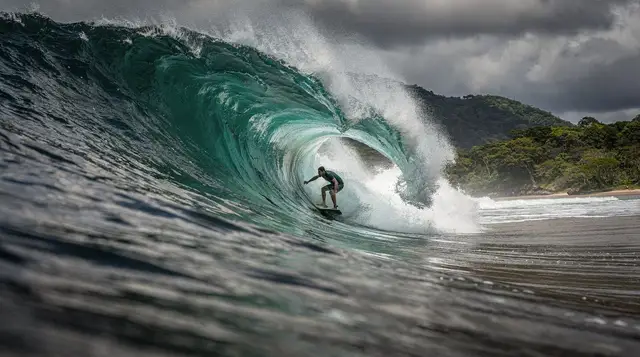
Uvita: surf some of the best waves of Costa Rica 8 days
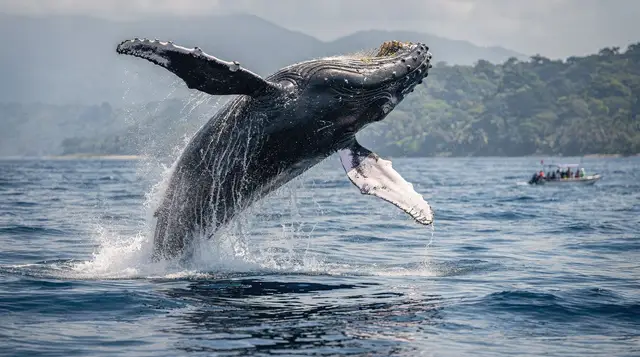
Marino Ballena: whale watching in Uvita
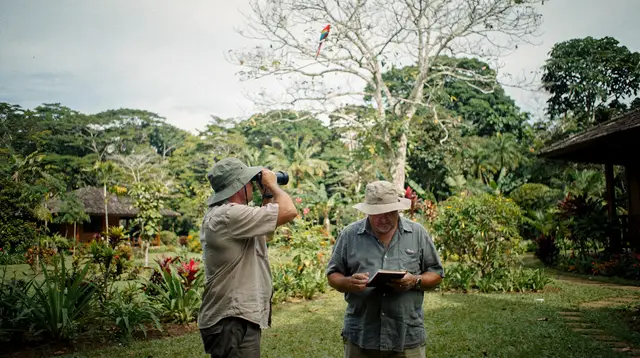
Marino Ballena: whale/dolphin watching experience
Whale watching adventure in Uvita with expert guides
Uvita: whale & dolphin watching boat trip w/ drinks
Uvita: whale watching tour in Marino Ballena
Quick facts
- Best time to visit
- Aug–Oct (south humpback season); Dec–Mar (north humpback + dry season)
- Days needed
- 2 to 3 days
- Getting there
- 3.5 hours from San José; 1.5 hours south of Manuel Antonio on the Costanera Sur
- Budget per day
- USD 70–100 budget · USD 130–200 mid-range · USD 300+ eco-lodge
Where the whale tail meets the Pacific
Uvita sits on the Costanera Sur highway on Costa Rica’s southern Pacific coast, about 3.5 hours from San José and 1.5 hours south of Manuel Antonio. It is the gateway to Marino Ballena National Park — the first marine national park in Costa Rica — and one of two places in the world (the other is Alaska) where humpback whales are present almost year-round due to two distinct migration patterns: one from the southern hemisphere (August–October) and one from the northern (December–March).
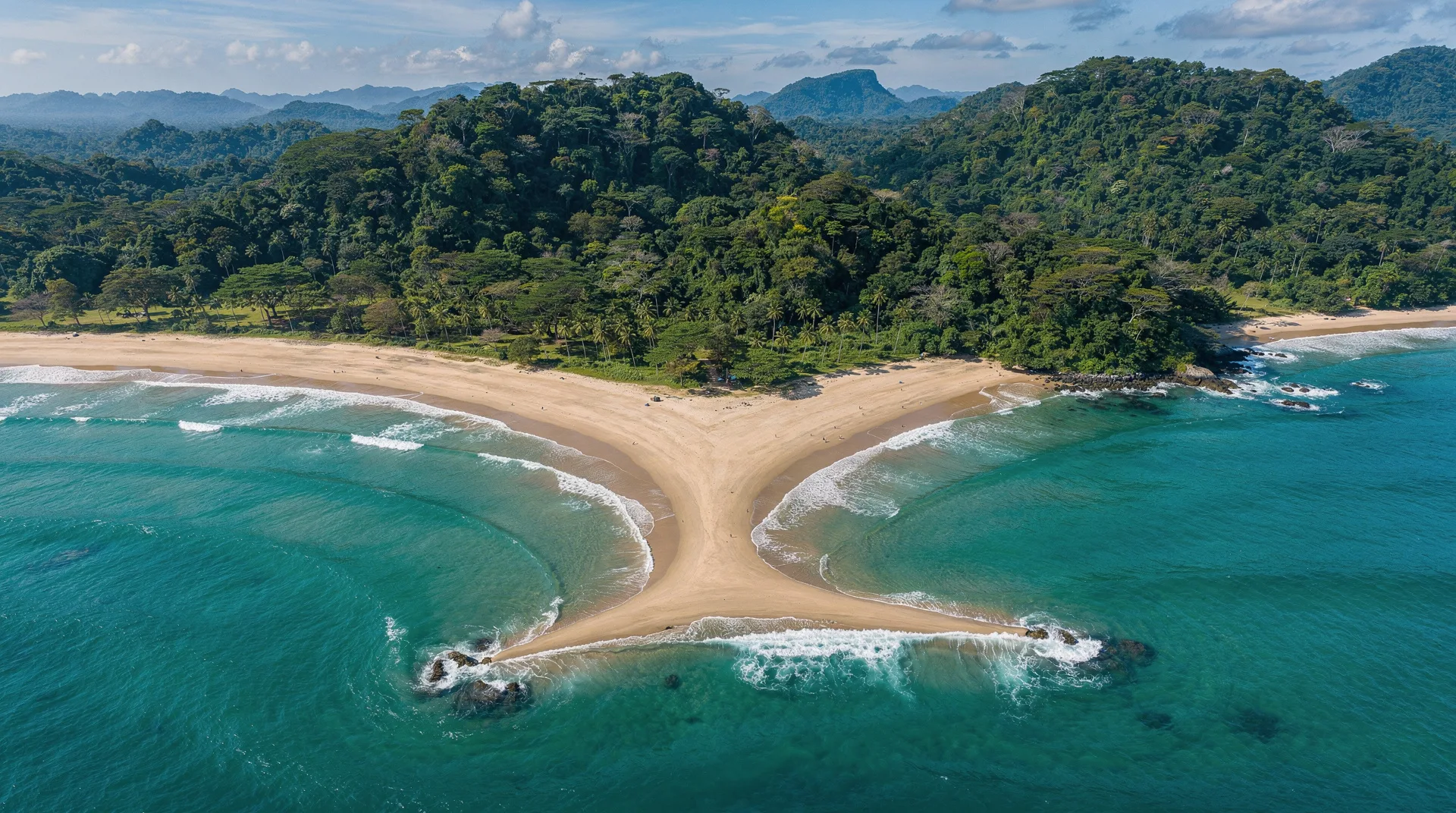
The most famous feature of Marino Ballena is the “whale tail” — a natural tombolo formation made of sand and coral that projects into the ocean in the exact shape of a whale’s fluke. Visible only at low tide, it is one of those rare natural coincidences that really does look like what it is supposed to look like. Walking out onto it at low tide, with the Pacific on either side, is a singular Costa Rica moment.
Uvita itself is a small town without the commercial development of Manuel Antonio or Jacó. The Costanera Sur runs through it; the actual beach access is 4 kilometres off the highway. There is no real town centre in the traditional sense — just a crossroads with a supermarket, a few restaurants, and tour operators. Accommodation is scattered across the hillside and beach strip. That quieter character is part of its appeal: Uvita feels like what Manuel Antonio might have been 20 years ago.
Whale watching in Marino Ballena
The whale watching here is among the best in Central America. August through October, humpbacks from the southern hemisphere arrive to mate and calve in the warm waters of Marino Ballena. December through March, a northern population arrives. There is a short overlap around November and March–April when both populations are briefly present — a phenomenon unique globally.
Whale watching tours depart from the Uvita beach launch site in small pangas (6–8 passengers). The tours run 3–4 hours and cover the marine park’s protected waters. Sighting rates during peak months (August–September and January–February) run above 90% on most days. Spinner dolphins are also reliably encountered year-round.
whale watching in Marino Ballena National Park, Uvita — from $80 — $80 for 3.5 hours, one of the most reliable wildlife experiences in Costa Rica. Tours depart at 07:00 and 13:00. Book 2–3 days ahead in peak whale season (August–October).
Marino Ballena whale and dolphin watching experience — from $78 — $78 for 3.5 hours, a similar format with slightly smaller groups. The operators in Uvita are generally professional and follow the SINAC regulations on approach distance (300m minimum for whales).
Caño Island snorkeling
Caño Island Biological Reserve, 20 km offshore from Drake Bay (accessible from Uvita by a 1.5-hour boat ride), is one of the top snorkeling and diving sites in Central America. The island sits in deep, clear water fed by Pacific currents that bring exceptional marine visibility (20–30m on good days), large pelagics including hammerhead and bull sharks, eagle rays, sea turtles, and dense reef fish populations.
The boat trip from Uvita is longer than from Drake Bay (which is the more common departure point), but tours operate from here and give the same access. Entry to the Biological Reserve costs $15 in addition to the tour price.
Caño Island snorkeling tour from Uvita — from $140 — $140 for 8 hours, including the boat trip, snorkeling at multiple sites around the island, equipment, and lunch. One of the longer but most rewarding day excursions available from the southern Pacific coast.
For an alternative that combines Caño snorkeling with the area’s marine mammal diversity:
Uvita snorkeling at Caño Island — from $135 — $135, a slightly more streamlined version that focuses on the snorkeling sites rather than dolphin search detours. Best in January–April when underwater visibility peaks.
The whale tail at low tide
The tombolo formation at Punta Uvita — the “whale tail” — is best experienced at low tide, when you can walk the full narrow sand bridge out to the fluke tip with ocean on both sides. Tide times are predictable and available from local operators or the SINAC ranger station. The walk from the park entrance takes 20–25 minutes. Entry to Marino Ballena National Park is $6 for this access.
The sunrise over the whale tail (the fluke points roughly east) is one of those Costa Rica photographs that actually lives up to the image. Arrive before dawn on a clear day for the full experience.
Waterfalls in the Uvita hills
Beyond the ATV circuits, the hills above Uvita hide several waterfalls that make good half-day add-ons for travelers not already booked on a whale or snorkeling tour. Nauyaca Waterfalls, technically closer to Dominical but a reasonable drive or organised tour from Uvita, is the best-known — a two-tier cascade with a swimmable pool reached by hiking trail, horseback, or 4WD tour. Closer to town, Cascadas Farallas offers a smaller, quieter waterfall with camping and dorm accommodation attached, popular with backpackers doing their own hiking rather than a guided tour. Both work well as a rest-day activity between the more scheduled whale watching and Caño Island excursions, which each demand an early start and a full day.
ATV adventures in the Uvita hills
The topography above Uvita — forested hills, dirt tracks connecting small farms, and occasional waterfall access — makes it excellent ATV territory. Half-day circuits cover primary and secondary forest, river crossings, and viewpoints over the Marino Ballena bay.
Uvita ATV and buggies adventure tour — from $95 — $95 for 3 hours, covering the hillside circuit with ocean views. Good for an afternoon after a morning whale watching departure, or as a standalone activity on a rest day between snorkeling trips.
Uvita vs Manuel Antonio vs Drake Bay
Southern Pacific first-timers often need to decide which of these three anchors their trip.
| Uvita | Manuel Antonio | Drake Bay | |
|---|---|---|---|
| Signature draw | Whale watching, whale tail | National park, easy access | Corcovado, Caño Island (short boat) |
| Development | Small, scattered | Most developed | Remote, limited roads |
| Distance from San José | 3.5 hrs | 3–3.5 hrs | 5+ hrs or flight |
| Best for | Whale season, quieter Pacific base | First-timers wanting convenience | Serious wildlife travelers |
Manuel Antonio is the easiest and most developed option, with the country’s most visited national park on the doorstep. Uvita trades some of that convenience for a quieter atmosphere and the best whale watching on this coast. Drake Bay goes further still into remoteness, rewarding travelers prioritising Corcovado and a shorter Caño Island crossing over easy road access. Many southern Pacific itineraries link all three in sequence, north to south.
Where to eat in Uvita
Sabor Español (on the Costanera): Unexpectedly excellent Spanish cooking in an open-air rancho setting — paella, fresh fish, and good sangria. $20–$35 per person. Book ahead for dinner.
Restaurante Exotica: The town’s most creative kitchen, doing fusion Costa Rican with Asian influences. Excellent smoothies and fresh fruit breakfasts. $15–$25 per person.
La Pizzeria di Pepino (near the beach access): Solid wood-fired pizza in a garden setting. Under $20 per person. Popular with expat residents.
Soda La Casita (Uvita crossroads): The honest local option — gallo pinto, fresh fish casados, and batidos. Under $10. Open for breakfast and lunch.
El Colibri Bar: A friendly beach bar at the Uvita beach access with cold beer, ceviche, and good music. Not gourmet but genuinely good.
Where to stay
Luxury ($200+/night): Kura Boutique Hotel is the most spectacular property in the area — a hillside lodge with just nine infinity-pool villas, each with unobstructed Pacific and Marino Ballena views. Brutally expensive and absolutely worth it for the right traveller.
Mid-range ($80–$160/night): La Cusinga Lodge is a sustainability-certified eco-lodge adjacent to private forest reserve with comfortable bungalows and ocean views. Uvita Hotel has clean rooms, a pool, and reliable service at honest prices.
Budget ($30–$70/night): Camping Uvita at the beach access is the most budget-friendly option — cabins and platforms under forest. Cascadas Farallas is a popular waterfall retreat with dorms and private rooms higher in the hills ($45–$80).
Getting there
From San José, the drive on the Costanera Sur (Route 34) takes about 3.5 hours in light traffic via Jacó and Manuel Antonio. The road is excellent and well-marked. No shuttle companies run direct San José–Uvita routes as a single service (most go via Quepos, where you may need to change). A rental car gives the most flexibility for this stretch of coast.
From Manuel Antonio (Quepos), 1.5 hours south. From Drake Bay, 3.5 hours north by road (or much less by boat). From San Isidro de El General (useful for travellers crossing from San José via the Cerro de la Muerte mountain road), about 1 hour west.
Practical basics: connectivity, cash, and safety
Uvita has ATMs at the crossroads supermarket and a couple of spots along the Costanera, generally reliable but worth backing up with cash from a bigger town given the scattered, low-density layout. Wifi is standard in hotels and lodges but can be slower at hillside properties further from the highway; mobile coverage from Kolbi and Movistar is solid along the Costanera Sur and thins out on the more remote hillside roads toward the ATV circuits.
The main practical hazard here is ocean-related rather than urban: rip currents exist on the open sections of Playa Uvita and Playa Hermosa outside the marine park’s more sheltered areas, and the whale-tail tombolo itself is only safe to walk at low tide — check tide times before heading out, since the sandbar floods quickly as the tide turns.
Going deeper before you book
Uvita rewards a bit of homework. The Marino Ballena National Park guide covers the park itself, while the Uvita whale watching season guide helps you match your dates to the migration windows. If the island is on your list, the Caño Island snorkeling guide explains what the day looks like in the water, and the guide to marine life in Costa Rica puts the sharks, rays and turtles in context.
Surfers staying in Uvita usually head north to Dominical, and the Dominical and southern Pacific surf guide is the place to start. Quepos is the nearest larger town to the north if you need a bigger selection of shops and services. Before swimming anywhere on this coast, read the beach safety guide and the tide and surf conditions guide, since the tide governs both the whale tail walk and the sea state.
For the road itself, the driving in Costa Rica guide and the rent a car or not guide will help you decide how to arrive. Travelers who want the whole southern sweep can see the 12-day South Pacific itinerary for a longer route, and anyone weighing seasons can compare with the best time to visit Costa Rica.
Seasonal guide
August–October: Peak southern humpback season. Whale watching almost guaranteed. Green season — expect rain most afternoons but mornings are typically clear. Seas can be rough; Caño Island trips occasionally cancelled. Prices 20% lower than high season.
December–March: Northern humpback season plus dry season — the combination that gives you whales, calm seas, good snorkeling visibility, and sunshine. Busiest period, highest prices.
April–July: Transition periods with fewer whales but excellent snorkeling visibility as the sea settles and the rainy season builds slowly. Good bird activity inland.
Frequently asked questions about Uvita
When is the best time for whale watching in Uvita?
August through October for southern hemisphere humpbacks (the larger population); December through March for northern humpbacks. The Marino Ballena coast is unique in hosting both populations, making it one of few places globally with a near-year-round whale season. Peak months are September and January.
How far is Caño Island from Uvita?
Approximately 55 km by boat — about 1.5 hours each way. Tours from Uvita run longer days than from Drake Bay (where the island is 20 km). The snorkeling experience is the same; the journey time is the difference. If snorkeling Caño Island is your primary goal, consider basing yourself in Drake Bay for the shorter boat ride.
Is Uvita good for surfing?
Not the town beach itself — Playa Uvita is protected by the Ballena formation and usually calm. The surf is at Playa Dominical (8 km north), which is one of Costa Rica’s most consistent beach breaks, popular with intermediates and experienced surfers. Playa Dominical also has better waves for beginners than Uvita. Day trips or a short drive north connects the two.
Can I see the whale tail at high tide?
No. The tombolo sandbar is submerged at high tide and fully exposed only at low tide. Check the day’s tide chart (available at any tour operator or the park entrance) before planning your visit to the formation. The park is open regardless of tide.
How to fit Uvita into your itinerary
Uvita is the natural southern anchor of the Central Pacific coast swing: Manuel Antonio (2–3 nights) followed by Uvita (2 nights) before either returning north to San José or continuing south to Drake Bay and the Osa Peninsula. The 7-day southern Pacific itinerary uses this exact structure. Uvita can also stand alone as a whale-watching base for visitors who fly into San José and want a wildlife-focused 3-night escape.