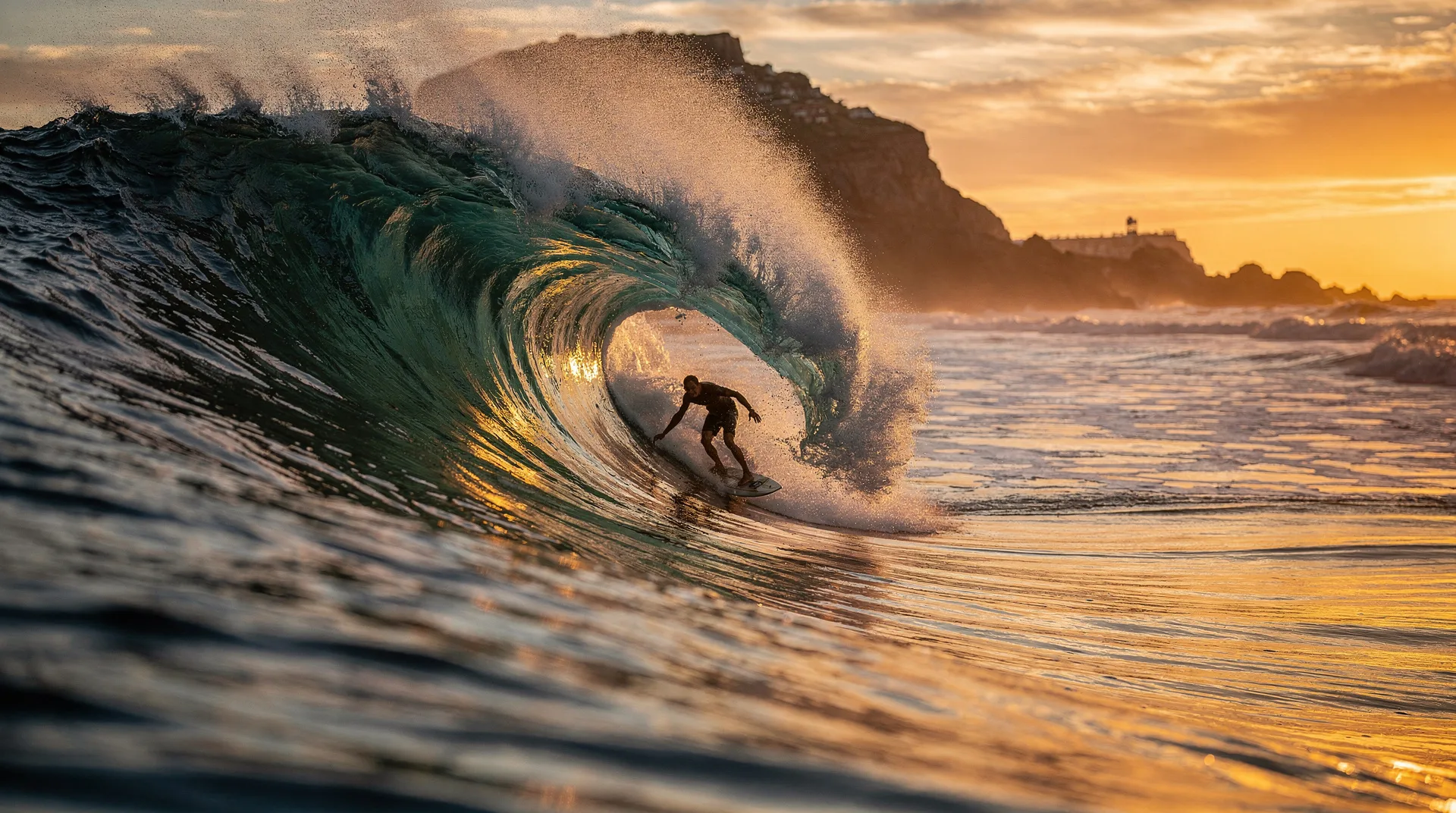
Santa Teresa surf guide: crowds, power, and the scene
How crowded is Santa Teresa surf?
Crowded during peak season (December to April), especially at the main peaks. But the beach stretches 5 kilometres and multiple breaks spread surfers considerably. With some local knowledge, it's possible to find uncrowded peaks even in high season.
Santa Teresa: the surf destination that became a lifestyle destination
Santa Teresa sits at the southern tip of the Nicoya Peninsula in Puntarenas province, about 30 kilometres south of Nosara by road and around 4 hours from San José including the Puntarenas–Paquera ferry crossing. For most of the 1990s, it was a near-secret among travelling surfers who’d heard about the long sandy point and the powerful beach break. That era is definitively over.
Today, Santa Teresa is a magnet for surf travellers, yoga practitioners, digital nomads, and the full spectrum of wellness tourism. The main road paralleling the beach is lined with restaurants, juice bars, surf shops, boutique hotels, and yoga studios. Celebrity visitors are photographed here regularly, and the accommodation ranges from $15 dorms to $800-per-night eco-villas.
None of this has diminished the actual surf. The waves remain some of the most powerful and varied on the Nicoya Peninsula. The crowd, however, is very real, and it’s the first thing any honest surf guide must address.
| Skill level | Intermediate to advanced (some beginner-friendly sections) |
| Best season | April–October (south swell), consistent power |
| Getting there | Around 5 hours from San José via Puntarenas–Paquera ferry |
| Lessons | $45–95 depending on group vs private |
| Vibe | Surf town gone lifestyle destination, busy but varied |
The breaks at Santa Teresa and Mal País
Santa Teresa main beach
The central section of Santa Teresa’s beach break is where most of the action — and most of the competition — happens. Sandbars produce left and right peaks that break with genuine power, often faster than they look from the beach. The wave is not hollow on smaller days but starts to pitch properly when the swell hits 4 feet, making it challenging for intermediate surfers to catch cleanly.
At 2–3 feet, the main beach is accessible for surfers who’ve outgrown whitewash but aren’t yet solid on overhead waves. At 5–6 feet, it becomes a shortboarding session requiring solid paddling strength and ability to navigate a busy lineup.
The crowd factor: between 8am and 1pm in peak season, the main peaks can have 30–50 surfers competing for the same sets. Locals and expat regulars control the best peaks. Visitors need to earn their place through patience and etiquette.
El Otro Lado and La Lora
Walk 15 minutes north of the main beach cluster and you’ll find quieter sandbars that pick up the same swell with fewer surfers. El Otro Lado is a right-hand section that works particularly well on south swells. La Lora is a scattered peak field that rewards exploration — some days the best wave is 500 metres from anyone else.
Playa Hermosa (south of Mal País)
Not to be confused with Playa Hermosa in Guanacaste, this southern stretch near Mal País picks up swell first on north and northwest swells. The break is more powerful and more hollow here — shortboarders and experienced longboarders only. The rock shelves around the point make the take-off zone specific and unforgiving.
Mal País point
The original draw of the area. A left-hand point break that fires on overhead north swells — rare but epic when it connects. Advanced surfers only, and it requires knowing exactly where to position on the shelf. Ask locally before paddling out on any day it’s bigger than 4 feet.
Playa Carmen
The intersection of Santa Teresa and Mal País, Playa Carmen sits at the elbow of the coastline where the swell wraps around from two directions simultaneously on the right days. This produces a chaotic but fun peak field suitable for intermediate and above. The beach here is wider and the atmosphere more relaxed than the main Santa Teresa cluster.
Surf seasons in Santa Teresa
South swell season (April to October)
The defining surf window for Santa Teresa is the south swell corridor of the green season. Consistent 4–8 foot surf from April through October, peaking in July–August with genuine overhead-plus conditions. These are the waves that built the destination’s reputation, and in this window the breaks show their full range of personality.
The green season also means afternoon rain — reliably from 2–4pm onward. Morning sessions (6am–noon) are invariably better: lighter wind, less rain probability, glassier surface. The crowds are also lighter in the green season, which partly compensates for the wet conditions.
Dry season (November to March)
Smaller, more inconsistent surf, dominated by north and northwest swells that can be 2–4 feet on good days. This is peak tourist season, which means the beach is more crowded despite often smaller surf. The vibe shifts toward wellness tourism rather than pure surf intensity.
If you’re coming specifically to surf and can only come in December–March, pick the weeks where a swell is on the forecast rather than arriving and hoping.
Surf schools and instruction
Santa Teresa has no shortage of instructors. Quality ranges from excellent to opportunistic.
Established schools: Kina Surf (strong beginner and intermediate programs, certified instructors), Zona Surf (good video analysis program), and several of the larger hotel operations run in-house surf programs. Group lessons run $45–60 per person for 2 hours.
Private lessons: $70–95 per 1.5 hours. Worth it at Santa Teresa specifically because the main break is not the most forgiving learning environment — a private coach can steer you toward the optimal section for your level on the day.
Board rentals: $20–30 per day for hard boards, $15–20 for foam. The southern Nicoya Peninsula has good board inventory at most shops, including longer boards and mid-lengths suited to smaller swell days.
Santa Teresa: Tortuga Island full-day boat tour with snorkel — from $155Getting to Santa Teresa
The most common route from San José involves a 2.5-hour drive to Puntarenas followed by the Naviera Tambor ferry to Paquera (1 hour 20 minutes, runs 4–6 times daily), and then a 1.5-hour drive south through Cóbano to the beach. Total: about 5 hours.
The ferry is the chokepoint. In peak season, long vehicle queues build up on weekends — arrive 90 minutes before your intended departure time. On busy Fridays and Sundays, the 4pm and 6pm crossings can fill completely. Foot passengers have far more flexibility than car passengers.
Internal flights: Sansa serves Tambor airport, 45 minutes south of Santa Teresa by road, from San José (roughly $90 one-way). A taxi from Tambor runs $40–50. This cuts total travel time to under 2 hours.
From Nosara: the coastal route (dry season) takes about 2 hours and includes a creek crossing that requires 4WD when wet. The inland route via Santa Cruz adds about 40 minutes but is paved throughout.
Where to stay in Santa Teresa
Santa Teresa has compressed a remarkable range of accommodation options into a relatively small beach town.
Budget: Tranquilo Backpackers and Selina Santa Teresa both offer dorms from $20–30 per night with board storage, social common areas, and proximity to the beach. Selina has the advantage of a co-working space, popular with the digital nomad crowd.
Mid-range: Casa Zenon, Mango Sunset Hotel, and Latitude 10 all sit in the $130–220 range and offer the basics done well: clean rooms, pool, breakfast, board wash-down.
Luxury: Nantipa is the standard-bearer for Santa Teresa eco-luxury — stilted teak villas in the jungle, a farm-to-table restaurant, surf butler service, and rates starting at $550 per night. Pranamar Villas is smaller and more intimate, known for its yoga program, roughly $350–450 per night.
Surf camps: Several camps offer all-inclusive weekly packages at $750–1,400. Sí Como No operates a surf camp in the area; Bodhi Surf and Yoga (based at nearby Playa Hermosa Pacific, south of Jaco) also brings students to Santa Teresa on longer programs.
Food and nightlife
Santa Teresa has the most developed food scene on the Nicoya Peninsula. Koji’s (Japanese-fusion, booking recommended), Koji’s (yes, there are now two concepts), El Mercadito for local sodas and cheap set lunches, Zwart Coffee for strong espresso and pastries, and Playa Carmen’s beach bars for end-of-session cold beer.
Nightlife exists here — unlike Nosara. Clandestina bar and the various strip of venues near Playa Carmen run late on weekends, with a music-and-socialising scene that leans international and surf-adjacent. It won’t compete with Jacó for volume but it’s energetic enough to be a real option after dinner.
Honest crowd assessment
Here’s the truth about Santa Teresa: if you show up at the main peak between 8am and noon in January, you will be competing with a busy lineup that includes a significant contingent of surfers significantly better than you if you’re an intermediate. It can be demoralising. The antidote is simple:
- Dawn patrol (6–7am) before the school groups arrive.
- Walk north or south 15–20 minutes from the main beach cluster.
- Go in May–October, when crowd pressure drops 40–50%.
- Accept that the best peaks in peak season are controlled by regulars, and respect that.
Santa Teresa is still very much worth visiting. Just go in with realistic expectations about sharing the lineup.
Rip currents and beach safety
Santa Teresa’s beach break sits between sandbars that shift with the swell, and rip currents are a genuine consideration, not a theoretical one. Between sandbars, channels of faster-moving water form and can pull swimmers and weaker surfers out beyond the break. If caught in one, swim parallel to the beach rather than fighting straight back to shore. Our Costa Rica beach safety guide covers the broader picture, and checking current tide and surf conditions before paddling out — especially at low tide when exposed rocks add hazard at the southern breaks — is a five-minute habit worth building into your routine.
Rest-day trips from Santa Teresa
A surf trip benefits from at least one non-surf day, and Santa Teresa has good options within reach. Montezuma, 30-40 minutes south, has waterfalls and a laid-back village atmosphere that makes a good change of pace. The Cabo Blanco absolute reserve area protects some of the peninsula’s last primary forest and is walkable in a morning. For surfers who want a second break without the Santa Teresa crowd factor, the beginner surf spots guide points toward gentler options elsewhere on the Nicoya Peninsula worth the drive on an off day.
If your body needs a break from paddling, a slower day on the Nicoya Peninsula can be as simple as a guided horseback ride that finishes on the beach — from $70 . Boat days are another option, and our best snorkel beaches guide and Nicoya Peninsula beaches overview help you pick where to go. Travellers wanting to stretch the trip along the coast can compare Nosara and Sámara, or follow the 10 days surf trip on the Pacific for a route that links several breaks.
Frequently asked questions about Santa Teresa surf
Is Santa Teresa suitable for beginners?
With the right instructor and on the right day, yes. A beginner lesson program run at Playa Carmen or the gentler north beach sections can absolutely work. However, Santa Teresa overall is a more advanced destination than Tamarindo or Sámara. If you’ve never surfed before, we recommend starting at Tamarindo and saving Santa Teresa for your second trip. Booking a surf lesson in Tamarindo — from $50 is an easy way to build the basics first, and the Tamarindo destination page covers where to base yourself.
What board should I use at Santa Teresa?
Intermediate surfers will do well on a 6’4”–6’10” shortboard or a mid-length on smaller days. The powerful beach break rewards volume and rails that can handle speed. Longboarders find the smaller north-swell days (November–February) pleasant but the main break can be too fast for a longboard on south swells.
How long does it take to get to Santa Teresa from San José?
Budget 5 hours including the Puntarenas–Paquera ferry. On weekends in peak season, add 60–90 minutes for the ferry queue. Flights to Tambor reduce total travel to 2 hours but add cost ($90–120 per person one-way).
Is there a rainy season problem in Santa Teresa?
Rain in the green season (May–October) is afternoon-only. Mornings are consistently good. The occasional tropical storm can produce multi-day grey spells, but these are uncommon outside of the most extreme wet-season weeks (September–October).
Where exactly is Mal País relative to Santa Teresa?
Mal País is at the southern end of the same beach, where the coastline turns the corner toward Cabo Blanco. It’s contiguous — locals use the names interchangeably. Playa Carmen sits at the junction point between the two. The original Mal País fishing village is a few hundred metres inland from the beach.
Are the waves at Santa Teresa dangerous?
Not inherently — it’s not a reef break and the main beach has no serious rocks on the main sections. However, the shore dump at 6 feet can be heavy and disorienting. Rip currents form between sandbars during larger swells. Know how to identify and escape a rip before paddling out on bigger days.
Should I bring my own board or rent?
Renting is more practical for most trip lengths. Board rental at $20-30 a day is inexpensive compared to airline oversize baggage fees, and the local shops carry a good range including boards suited to the main beach’s power. Bring your own only if you have a specific board you’re attached to or you’re staying long enough (three-plus weeks) that rental costs add up. Multi-day rental packages typically discount below the daily rate, so ask about a weekly price if you know your trip length in advance rather than paying day-by-day.
Related guides
The surf camps in Costa Rica guide covers multi-day programs at Santa Teresa alongside other Pacific coast options. Read the surf seasons by region breakdown to time your visit for the swell windows that match your level. The Santa Teresa wellness guide covers the yoga and retreat scene for travellers combining surfing with a broader wellness focus. See the Santa Teresa destination page for accommodation, transport, and food in fuller detail.