Sarapiquí River rafting: the complete guide for all skill levels
Sarapiquí difficulty levels?
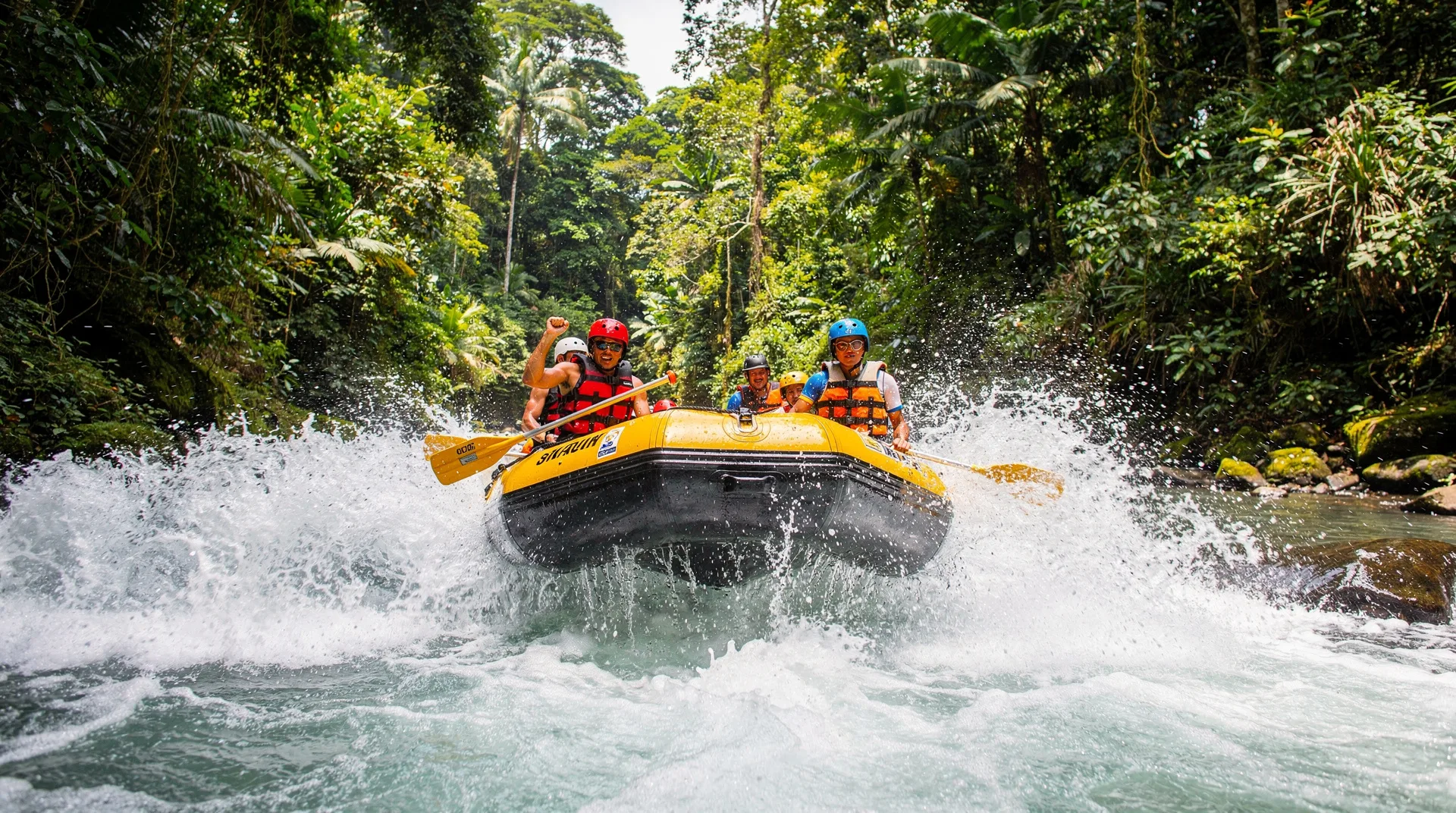
The Sarapiquí offers two main sections: the upper Class II-III section suitable for beginners and families, and the Class III-IV Jungle Run for those seeking more challenge. Both run through pristine lowland jungle.
The Sarapiquí: Costa Rica’s most accessible whitewater
The Río Sarapiquí flows north from the volcanic highlands of the Cordillera Central to the lowland Caribbean watershed, dropping through a series of rapids that range from family-friendly Class II rollers to more demanding Class III-IV technical sections. It is the river most Costa Rica visitors raft if they want whitewater without committing to the full intensity of the Pacuare.
That positioning as the “accessible” choice sells it slightly short. The Sarapiquí passes through extraordinary biodiversity — the lowland Caribbean slope is one of the most species-rich zones in Central America, and the riverbanks offer wildlife encounters (river otters, green iguanas, basilisk lizards, and frequent bird sightings including kingfishers and herons) that the Pacuare’s steep jungle canyon makes harder to observe.
This guide covers both main sections, the key operators, how to book from different base locations, and whether the Sarapiquí or the Pacuare is the right choice for your trip.
| Difficulty | Class II-III (upper) or III-IV (Jungle Run) |
| Price | Around $85-115 per person, most sections |
| Duration on water | 3-5 hours depending on section |
| From | La Fortuna (90 min) or San José (1.5-2 hrs) |
| Best for | Families, first-timers, wildlife viewing |
Two sections, two experiences
Upper section: Class II-III (the family run)
The upper Sarapiquí section is the entry point for first-time rafters, families with children from age 8-10, and visitors who want the river experience without extreme technical difficulty. The water is genuinely fun — enough current to feel the river’s power, intermittent Class II and III rapids that build excitement without requiring constant defensive paddling — but the consequences of a swim are manageable.
The scenery is the upper section’s greatest asset. Overhanging jungle presses to the water’s edge. Howler monkeys are reliably heard and often seen in the canopy above the river. The pace is comfortable enough to allow time to look around between rapids rather than being constantly focused on survival.
Running time: approximately 3-4 hours on the water. Total tour time including transport: 6-7 hours from La Fortuna or 7-8 hours from San José.
Arenal: rafting Sarapiqui River day tour Class II-III — from $85Price: $85-95 per person from La Fortuna. Includes hotel pickup, all equipment, riverside snack or lunch.
San Jose: Sarapiqui Class 2&3 rafting adventure — from $95From San José, the same trip is bookable with a longer transport leg. Price: $90-100.
The Jungle Run: Class III-IV
The Jungle Run is the more demanding lower section of the Sarapiquí, and for experienced paddlers or fit beginners seeking more intensity, it is one of the best accessible Class III-IV runs in Costa Rica.
The rapids are bigger, the holes are more consequential, and the water moves faster through narrower channels. Key features include an extended Class III corridor in the upper part of the Jungle Run section, followed by several Class IV drops — including one significant hydraulic that guides inspect from the bank before running or portaging depending on water levels.
The guide-to-guest communication is more critical here. Paddle commands need to be followed promptly, and the pre-trip briefing covers defensive swimming techniques in earnest rather than as a formality.
Running time: approximately 4-5 hours on the water. Total tour time: 6-8 hours depending on departure location.
Rafting Class 3-4 "Jungle Run": Río Sarapiquí — from $95The Jungle Run from La Fortuna is the most popular version of this trip. Price: $95-110 per person.
La Fortuna/Arenal: rafting Class III & IV at Sarapiquí River — from $105The extended Class III-IV version that runs a longer section is the most comprehensive Sarapiquí experience available. Price: $100-115.
Operators
Aventuras del Sarapiquí
The locally-based operator at Puerto Viejo de Sarapiquí is the closest to the river and has been running this section since the early 1990s. Their guides know every rapid on both sections through thousands of runs. They run smaller groups than most La Fortuna operators and have strong community ties in the Sarapiquí valley.
Booking directly with Aventuras del Sarapiquí gives you access to guides with the deepest local knowledge. The trade-off is that you need your own transport to Puerto Viejo de Sarapiquí — there is no hotel pickup from La Fortuna or San José.
Desafio Adventure Company (La Fortuna)
Desafio runs Sarapiquí trips as day trips from La Fortuna. The transport (approximately 90 minutes each way) is included in the price. The driver time is not wasted — guides use the journey to explain the river’s characteristics and cover safety briefing material, so you arrive at the put-in more prepared.
From Heredia (San José area)
Several operators run the Sarapiquí as a day trip from the San José / Heredia area, targeting visitors staying in the Central Valley who want a whitewater day without the longer drive to the Pacuare.
Sarapiqui River Rafting — from $90The Heredia-based trips typically cover the Class II-III upper section, appropriate for the broader range of visitor fitness levels typical of Central Valley hotel guests.
From San José (Sarapiquí to La Fortuna transfer)
One of the most efficient options for visitors travelling between San José and La Fortuna is the combined Sarapiquí Class III-IV rafting trip that ends at La Fortuna rather than returning to San José. You start the day in the capital, spend it on the river, and finish in La Fortuna — covering 180 km of travel while spending the day rafting.
San Jose: Sarapiqui Class 3&4 rafting to La Fortuna — from $110This option is particularly useful for visitors on a point-to-point itinerary (San José arrival → La Fortuna → Monteverde → Pacific coast) who want to convert a transport day into an adventure day.
The variant that goes the other direction — Sarapiquí rafting that delivers you to Fortuna and then onward:
La Fortuna: Sarapiqui rafting to San José — from $115Wildlife on the Sarapiquí: what you will see
The Sarapiquí’s Caribbean-slope lowland habitat is ecologically distinct from the volcanic highlands around Arenal. The river corridor passes through habitats that support:
Birds: Ringed kingfisher (dramatically large, blue-and-rufous), Amazon kingfisher, green kingfisher, great blue heron, wood stork, various egrets, purple gallinule in backwater sections, and often toucans in the canopy.
Reptiles: Green basilisk lizards (Jesus Christ lizards) that run on water when startled. American crocodiles in the lower river section — not a rafting hazard but visible from the raft on sunny morning banks. River turtles on exposed logs.
Mammals: Howler monkeys are almost guaranteed — their roar at dawn and dusk is a signature sound of the Caribbean slope. River otters are occasionally seen hunting in shallow sections. Capybaras (the world’s largest rodent) inhabit marshy edges of the lower Sarapiquí near its confluence with larger rivers.
The guides on the Sarapiquí tend to be more attentive to wildlife than guides on the more intensely technical Pacuare — the lower difficulty level allows pausing in eddies to observe animals without compromising safety.
Comparing Sarapiquí vs Pacuare
| Factor | Sarapiquí (Class II-III) | Sarapiquí Jungle Run (III-IV) | Pacuare (III-IV) |
|---|---|---|---|
| Difficulty | Easy to moderate | Moderate to challenging | Challenging |
| Min. age | 8-10 years | 12-14 years | 12 years |
| Duration on water | 3-4 hours | 4-5 hours | 5-6 hours |
| Canyon scenery | Lowland jungle | Lowland jungle | Spectacular gorge |
| Wildlife viewing | Excellent | Good | Limited (moving fast) |
| Overnight option | No | No | Yes (2-day expedition) |
| Price (day trip) | $85-95 | $95-115 | $120-140 |
Choose the Sarapiquí if: You are travelling with children under 12, want more wildlife viewing opportunity, are a first-time rafter who wants a confidence-building experience before attempting the Pacuare, or are based in San José with limited time.
Choose the Pacuare if: You want the best river canyon scenery in Costa Rica, are fit and comfortable with sustained Class III-IV difficulty, or are considering the 2-day overnight expedition. The Pacuare is unambiguously the more spectacular river; the Sarapiquí is the more accessible and wildlife-rich one.
Seasonal conditions on the Sarapiquí
The Sarapiquí’s watershed is on the Caribbean slope, which receives rainfall more evenly across the year than the Pacific side. This means the river runs reliably throughout the year with less dramatic variation than Pacific-draining rivers.
December-March: Lower water, cleaner technical lines, most accessible for beginners. Some shallow sections in the upper run.
April-November: Higher water, faster current, Class III becomes more consistently Class III-IV. June-October peak rainy season can push conditions toward the upper end of the difficulty scale.
The Sarapiquí is rarely too high to raft (unlike the Pacuare, which occasionally closes in extreme September-October flooding). This reliability makes it a good choice for visitors who want whitewater without weather anxiety.
Practical information
From La Fortuna: 90-minute drive to put-in. Most La Fortuna operators include hotel pickup.
From San José: 1.5-2 hours to the Sarapiquí valley. Day trips from the capital return by 6-7pm.
From Heredia or Alajuela: 1-1.5 hours. Closest Central Valley access.
What to bring: Swimsuit, secure water shoes, quick-dry clothes, sunscreen applied before arrival, small towel, change of dry clothes for the return. Operator provides life jacket, helmet, and paddle.
Minimum physical requirements: Can follow verbal instructions, comfortable being in moving water, no significant lower-body mobility restrictions (need to be able to sit firmly in an inflatable raft and maintain position through rapids).
Frequently asked questions about Sarapiquí River rafting
Is the Sarapiquí safe for children?
The upper Class II-III section is appropriate for children from age 8-10 with adult accompaniment. The Jungle Run (Class III-IV) is appropriate from age 12-14 depending on the child’s comfort level. Confirm minimum age at booking — operators vary by 1-2 years.
Do I need rafting experience for the Jungle Run?
No prior rafting experience is required. The pre-trip briefing covers everything you need to know. What matters more than experience is the ability to follow paddle commands promptly and willingness to commit to the effort when the guide calls for it.
How cold is the Sarapiquí?
Warmer than most visitors expect. The Caribbean lowland climate keeps the Sarapiquí at 24-27°C — comfortable for sustained immersion. Wetsuit jackets are optional and often declined except in the early morning December-February period.
Can I raft the Sarapiquí from Monteverde?
Yes, as a day trip. The drive from Monteverde to the Sarapiquí valley takes approximately 2 hours. Some Monteverde operators arrange combined cloud-forest + rafting days, though these long days are best for high-energy visitors.
What is the Sarapiquí like compared to rivers in other countries?
For reference, the Sarapiquí Class II-III section is comparable to the Middle Fork of the American River in California (a benchmark US Class II-III). The Jungle Run compares to upper-level commercial Class IV runs in the western US. For European context, it is more demanding than most Alpine raft tours, less technical than the Sjoa in Norway.
Is the Sarapiquí better than the Reventazón for a first-time rafting trip?
They’re comparable in some ways but distinct experiences. The Reventazón River offers a more open-valley scenic run with reliable Class III conditions, while the Sarapiquí edges it out on wildlife density and jungle immersion. Neither is objectively better — the choice usually comes down to which base location (La Fortuna/Sarapiquí valley vs Turrialba) fits your itinerary.
What other adventure activities pair well with a Sarapiquí day?
Visitors basing themselves in La Fortuna often combine the Sarapiquí with volcano-area activities like hanging bridges or hot springs on the same trip. For those chasing bigger adrenaline days, our extreme adventure routes guide maps out how to combine rafting with canyoning, ziplining, and other high-intensity activities across a longer itinerary.
The Sarapiquí valley beyond the river
The Puerto Viejo de Sarapiquí area — not to be confused with Puerto Viejo de Talamanca on the Caribbean coast — is a significant ecotourism destination in its own right, with the river as the anchor activity but considerable depth beyond the water.
Selva Verde Lodge: One of Costa Rica’s longest-established eco-lodges, located on the banks of the Sarapiquí river in primary and secondary forest. A 2-3 night stay at Selva Verde gives access to guided forest walks, a resident naturalist team, and the river in an immersive context. The food is excellent and the birding (from the lodge’s suspension bridges and trails) is some of the best accessible birding in the country.
La Selva Biological Research Station: One of the OTS (Organisation for Tropical Studies) research stations, La Selva has been accumulating ecological data since 1968. Day visitor tours are available for the general public and give access to research trails and a naturalist guide with genuine scientific depth. It is one of the most biodiverse areas in Costa Rica, with over 400 bird species recorded on-site.
Tirimbina Biological Reserve: A private reserve adjacent to the Sarapiquí with hanging bridges, guided night tours, and a well-regarded chocolate tour that traces cacao from cultivation through fermentation to finished chocolate. The reserve protects primary lowland forest on the Caribbean slope.
Banana plantation tours: The Sarapiquí valley is a centre of banana production for both the domestic and export market. Operator-run tours (Dole-affiliated and independent) give context on industrial-scale banana agriculture, including the environmental controversies (pesticide use, monoculture land clearance) alongside the economic importance.
Combining the Sarapiquí rafting day with a night or two at Selva Verde produces one of the most ecologically complete experiences in the country for visitors interested in both river adventure and wildlife depth.
What the safety briefing actually covers
Every commercial operator on the Sarapiquí runs a mandatory pre-trip safety briefing, and it’s worth taking seriously rather than treating as a formality. Guides cover paddle commands (forward, back, stop, get down), what to do if you exit the raft (float feet-first downstream, don’t try to stand in moving water over knee depth), and how the group repositions after a rapid. On the Class III-IV Jungle Run specifically, guides spend more time on defensive swimming technique because the consequences of an extended swim are more serious. Listen fully even if you’ve rafted before — every river and every operator’s specific commands differ slightly, and complacency is the actual risk factor, not inexperience.
Guides also cover positioning within the raft, how to hold the paddle correctly to avoid injury during impact with rocks or other paddlers, and the hand signals used when verbal commands are hard to hear over rapids. On both sections, a guide rides at the stern controlling the raft’s line through technical water, which means passenger paddling is about power and timing rather than steering — trust the guide’s calls even when the line looks counterintuitive from inside the raft.
Family trip planning on the Sarapiquí
The upper Class II-III section is genuinely one of the better family adventure activities in the country, and planning around it is straightforward. Children as young as 8-10 (confirm the specific operator’s minimum) can participate, and the guide-to-guest ratio on family trips tends to be more attentive than on adult-oriented Jungle Run departures. Pack a full change of clothes, sun protection applied before the trip (not during, to avoid it washing off into the river), and snacks for the drive, since the transport time from La Fortuna or San José can be as long as the time on the water itself.
The Sarapiquí as a route connector
The Sarapiquí valley sits at a geographical crossroads that makes it a useful connector on longer itineraries.
From La Fortuna: The drive through the Cordillera Central to Puerto Viejo de Sarapiquí (90 minutes) passes through the Venecia agricultural zone and offers views of the northern Caribbean lowlands. The rafting-as-transit option (Sarapiquí run that ends you in a different location than the start) works particularly well here — start in La Fortuna, raft the Sarapiquí, and continue to San José or the Caribbean coast.
From San José: The drive north through Braulio Carrillo National Park to the Sarapiquí lowlands (90 minutes) passes through one of the most dramatic vegetation transitions in Central America — from cool San José urban sprawl through cloud forest at 1,800 meters to hot Caribbean-slope lowland in 90 km. This dramatic altitudinal change is itself worth noting.
Connection to Tortuguero: Puerto Viejo de Sarapiquí has boat connections to Tortuguero via the river-canal system. A 3-4 hour boat journey through the lowland canal network connects the two areas without using the Limón highway — a scenic alternative for adventurous visitors.
Environmental pressures on the Sarapiquí
The Sarapiquí faces pressures typical of rivers in agricultural watersheds. The upper catchment is partially protected within Braulio Carrillo National Park, but the middle and lower river passes through zones of banana plantation, pineapple agriculture, and smallholder farming. Agricultural runoff — including fertiliser nitrogen and herbicide residue — affects water clarity and aquatic ecology in the lower sections.
The commercially rafted section sits in a zone where forest cover on the riverbanks is better preserved than the agricultural lowland downstream — partly because steep canyon walls make agricultural access difficult. The quality of the rafted section reflects this partial protection.
Responsible operators actively support watershed conservation programs. Aventuras del Sarapiquí, the local operator, participates in riparian reforestation efforts on private land adjacent to their rafting corridor.
Building the Sarapiquí into a wider trip
A rafting day works best when it sits alongside activities that use different muscles and a different pace. Around La Fortuna, the Arenal ziplines and the canyoning options near Arenal make natural companions, and the zip-lining vs canyoning vs bridges comparison helps you decide how to spread them across your days without exhausting the group.
If wildlife is what draws you to the lowland Caribbean slope, the broader Costa Rica wildlife overview and the bird watching by region guide explain what to look for and where. The Sarapiquí destination page covers the valley’s other bases and attractions, while the Tortuguero destination page is the logical next stop for anyone continuing along the canal system toward the coast.
Rafting also depends on road logistics. Before committing to a long day with early pickups, read driving in Costa Rica and the shuttle services overview so you know whether to self-drive or rely on operator transport.
Related guides
For the more intense river experience, our Pacuare River rafting guide covers Costa Rica’s premier whitewater. The rafting class comparison explains how the International Whitewater Scale translates to real-world experience. Full pricing for all Costa Rica adventure activities is in how much do adventure tours cost. For the multi-day option, see our multi-day Pacuare expeditions guide.