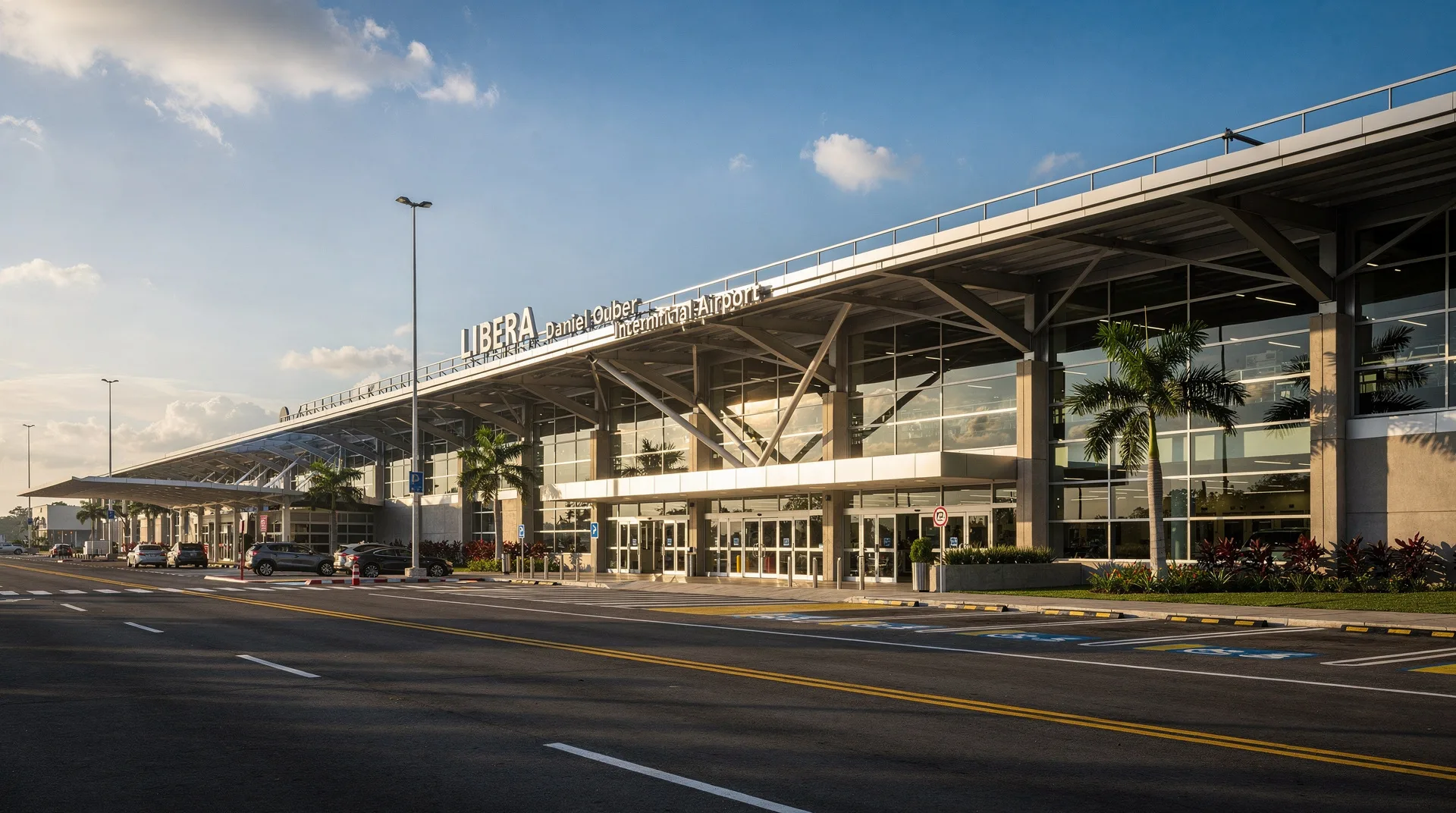
Liberia airport expansion news: new routes for 2026
The airport that has been waiting for this
Daniel Oduber Quirós International Airport in Liberia (IATA: LIR) has been the preferred entry point for Guanacaste visitors for more than a decade. Its advantage over San José’s Juan Santamaría (SJO) is geographic: if your destination is Tamarindo, Nosara, Playas del Coco, Rincón de la Vieja, or anywhere in the Guanacaste region, landing at LIR saves two to four hours of ground travel compared to flying into SJO. The road from Liberia to Tamarindo is one hour on a good paved highway. The road from San José to Tamarindo is four hours minimum.
| Airport | Daniel Oduber Quirós International (LIR) |
| 2026 change | Terminal expansion works under way, more East Coast US routes |
| Europe direct | Check airline timetables: some European carriers list Liberia flights, sometimes via San José |
| Time saved vs SJO | 2–4 hours of ground travel for Guanacaste stays |
| Peak-arrival buffer | Plan 90 min from landing to ground transport |
Despite this advantage, LIR’s route network has historically been thinner than SJO’s. Direct international service from North America has grown steadily — Delta, United, American, Air Canada, WestJet, and several charter operations have offered seasonal or year-round service from major North American hubs — but transatlantic service has remained limited, forcing most European travelers to connect through Miami, Dallas, or Houston.
The 2026 announcements change that picture meaningfully.
What is actually being announced for 2026
Let us be precise about what is confirmed versus what is planned, because airport expansion announcements have a tendency to blur these categories in ways that lead to disappointed travelers.
Confirmed new service at LIR for 2026:
Several North American carriers have added or expanded seasonal service to LIR for the 2025-2026 peak season (November through April). This follows the pattern of LIR’s gradual expansion over several years, but the 2026 additions include notably more East Coast US origin cities that previously required connections.
The infrastructure side of the expansion — a terminal extension that increases gate capacity and adds baggage claim carousels — is being carried out in phases (extra boarding area, more baggage carousel capacity). The physical expansion was funded through a concession agreement with the private operator managing LIR, and the works address the bottleneck that had developed as passenger volumes increased.
Status of European service:
European service to Liberia is limited and changes from season to season. Some carriers, such as Edelweiss from Zurich, list flights to Liberia on their official timetables, but a Zurich flight may stop in San José first, so check whether your flight is truly non-stop.
Before booking, check the current timetable of the airline on its official website; if no suitable flight exists, a connection through a US hub remains the usual alternative.
What the expanded capacity means in practice
The terminal expansion matters more than the specific route additions for the practical experience of travelers arriving at LIR.
The old LIR terminal was, by the standards of an international airport handling peak-season volumes, cramped. Immigration queues during peak winter weekends could be long. The baggage claim area was undersized relative to the number of flights arriving in close succession on Friday and Saturday afternoons.
The expansion works add boarding area and baggage carousel capacity, and earlier phases added immigration and security posts. The connection between immigration and the ground transport area had been a specific pain point, where travelers emerging from immigration had no clear path to the official taxi and shuttle area and were targeted by informal transportation touts.
For travelers planning peak-season LIR arrivals in 2026, the improvements are real. We would still recommend planning 90 minutes from landing to being in your ground transport, particularly on Saturdays in January and February, but the worst-case scenario has improved.
Liberia airport to Tamarindo (transfer) — from $80The Liberia city itself: worth a look
An underutilized opportunity for LIR arrivals is Liberia city itself. Most travelers collect their rental car and drive directly to their beach destination. But Liberia’s city center — about 15 minutes from the airport — has been invested in over the past decade and is now genuinely worth an hour or two.
The Calle Real (the old main street) has colonial-era whitewashed buildings that house a mix of museums, cafes, and the kind of hardware-and-feed-store businesses that remind you this is a working cattle town rather than a tourist invention. The Museo Guanacaste in the old city center has a small but informative exhibition on the region’s pre-Columbian history and the sabanero (cowboy) culture that still defines much of the Guanacaste interior.
For travelers arriving on late afternoon flights who want to avoid driving to the coast in the dark, Liberia offers solid mid-range accommodation — staying overnight and driving to Tamarindo or Nosara first thing in the morning is a strategy that many experienced visitors use and that the expanded airport connectivity makes easier by increasing the availability of afternoon arrival options.
Rincón de la Vieja: one-day nature pass — from $110Liberia’s proximity to Rincón de la Vieja National Park — about 45 minutes from the airport — is another underused option for the same late-arrival strategy: a morning at the park’s thermal springs and mud pools before continuing to the beach breaks up the drive and uses time that would otherwise be spent simply getting to the coast.
Which beach towns benefit most from the expansion
Not every Guanacaste destination gains equally from LIR’s growth. Tamarindo and Playa Flamingo, both under 90 minutes from the airport on paved roads, see the most direct benefit — more seasonal LIR seats mean more travelers skipping the SJO detour entirely. Nosara and Sámara, further south on rougher roads, benefit less from the airport expansion itself and more from the general uptick in Guanacaste flight capacity, since travelers to those towns were already more likely to budget extra ground-transport time regardless of which airport they landed at.
If your plans lean toward the coast around Papagayo, the beaches of Playa Hermosa, Playa Conchal and Brasilito all sit in the same northern Guanacaste cluster and make natural bases for a LIR arrival. For a broader comparison of the stretch of coast, our Nicoya Peninsula beaches guide helps you choose between them.
Before you commit to a base, it is also worth reading the airport to destination transfers guide and the notes on renting a car or not, since the right ground transport choice matters as much as the airport itself. The driving in Costa Rica guide covers what to expect on the road once you leave the terminal.
LIR vs SJO: the decision framework in 2026
With the 2026 route updates, the LIR vs SJO decision is increasingly clear:
Choose LIR if: your itinerary focuses on Guanacaste (Tamarindo, Nosara, Sámara, Coco, Flamingo, Papagayo, Rincón de la Vieja) and you are flying from a North American city with direct or convenient connecting service to LIR.
Choose SJO if: your itinerary includes multiple regions (Arenal, Monteverde, Caribbean, Manuel Antonio, Osa Peninsula) and you need the hub connectivity that SJO’s larger route network provides; or if you are flying from Europe, where direct service to SJO is more available than to LIR.
The hybrid option: some multi-region itineraries work well with an open-jaw ticket — flying into SJO and out of LIR (or vice versa) to minimize backtracking. The car rental logistics of this are simple: all major agencies serve both airports. Open-jaw tickets can cost more than round-trip same-airport tickets but can save several hours of ground transport.
For a complete analysis of which airport to use based on your specific itinerary destinations, see our airport choice tool — it was built specifically for this decision.
What we watch from here
The most significant development to track for LIR in 2026 and beyond is whether European carriers add or keep direct transatlantic service. The Papagayo Peninsula luxury resort development — multiple large all-inclusive properties targeting European premium travel — has been lobbying for direct European routes for several years, and the passenger volume projections have improved to the point where the economics are increasingly plausible.
For travelers who currently connect through a US hub or San José to reach LIR from Europe, a non-stop service would shorten the journey considerably. This would be a meaningful change for the Guanacaste luxury resort market specifically.
If you are still deciding when to go, our best time to visit Costa Rica guide and the pricing update for 2026 put the flight question in a wider context, and the five days in Guanacaste resort itinerary shows how a LIR-based trip can be laid out.
We will update this post when specific route confirmations emerge. For current flight availability from your departure city, the most reliable source is Google Flights’ “explore destinations” tool combined with direct airline booking.
For everything you need to know about visiting Guanacaste once you land, see our Guanacaste beach guide and Liberia destination page.