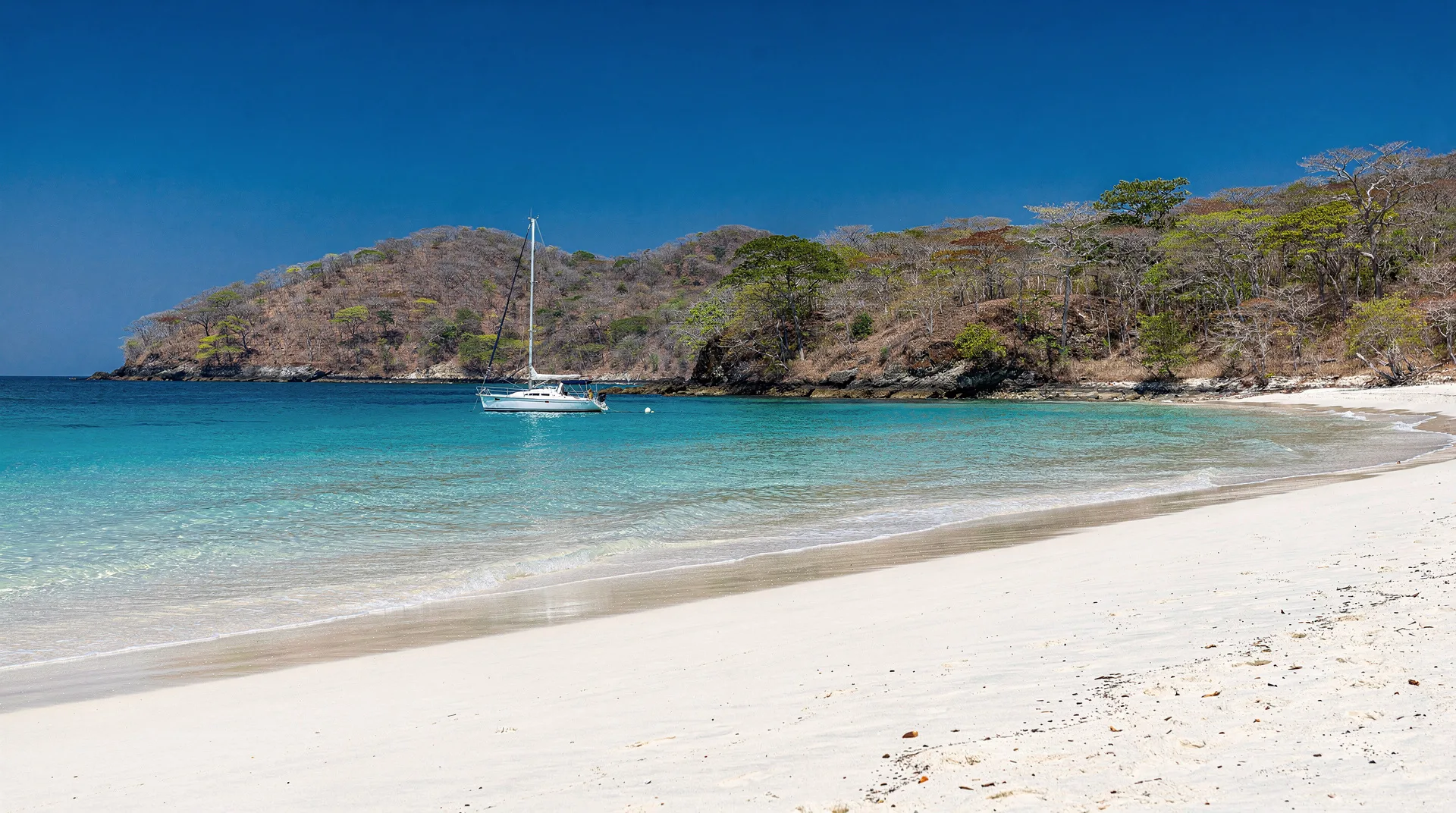
Guanacaste beach guide: orientation and comparison
Guanacaste beach orientation: which beach for what?
Coco/Hermosa for resorts, Conchal/Flamingo for white sand, Tamarindo for surf, Nosara for yoga.
Understanding the Guanacaste coast
Guanacaste is the driest province in Costa Rica. The dry season here (December through April) is not just drier than the rest of the country — it is genuinely arid, with some stretches going 5-6 months without significant rainfall. This makes Guanacaste’s beaches predictably sunny and the swimming season long, which is why the province accounts for the majority of Costa Rica’s beach resort infrastructure.
The coast runs from the Nicaraguan border in the north to the Nicoya Peninsula tip in the south — a driving distance of roughly 3.5 hours end to end. Along that route, the beach character changes significantly: northern Guanacaste beaches (Playa Brasilito, Las Catalinas, Conchal, Flamingo) tend to have calmer water in the dry season; southern Guanacaste and Nicoya (Nosara, Santa Teresa) face more open ocean and receive consistent surf.
This guide gives you a quick read on each major beach cluster so you can decide where to base yourself before doing more detailed research.
| Airport | Liberia (LIR), all beaches within 60–150 min |
| Best for resorts | Playa Hermosa, Flamingo, Las Catalinas |
| Best for surf | Tamarindo, Nosara |
| Best for white sand | Playa Conchal |
| Best time | December–April (driest, calmest seas) |
Each cluster below has its own destination page if you want more depth: Playas del Coco, Playa Hermosa, Las Catalinas, Playa Conchal, Playa Flamingo, Tamarindo and Brasilito. Read this page first to choose a base, then open the matching page to plan your days.
Playas del Coco and Playa Hermosa Guanacaste — the resort hub
Playas del Coco is the most accessible beach town in Guanacaste from Liberia airport (35 minutes, fully paved road). As a result, it has the highest concentration of tourist infrastructure in the province: dive shops, restaurants, souvenir stores, supermarkets, and a small-boat harbour used by sport fishing and tour operators.
The beach at Coco itself is grey-brown, backed by the town’s main street, and not particularly beautiful by Costa Rica standards. It is frequently cited as one of the country’s most overrated beaches. The real appeal of Coco is access: day trips to the Catalinas Islands (diving and snorkelling), the Papagayo Gulf (sailing, sport fishing), and Rincón de la Vieja National Park all depart from here.
Playas del Coco: sunset sailing and snorkeling tour — from $95Playa Hermosa, 5 km south of Coco, has a genuinely more attractive bay with cleaner water. The bay is sheltered, the bottom sandy and gradual, and several resort hotels sit directly on the beach. This is the recommended base for families wanting resort infrastructure in northern Guanacaste.
Getting there from Liberia: 35 minutes by paved road. Multiple taxi and shuttle services ($15-20 per vehicle). The nearest ATM and supermarket are in Coco town.
Las Catalinas — the pedestrian luxury village
Las Catalinas is a planned resort village on a small cove 20 minutes north of Tamarindo. The concept — no cars within the village, all destinations walkable, focus on outdoor recreation — works. The beach at Playa Danta is a 200-metre crescent of calm, clear water inside a protected cove. The resort infrastructure is excellent but expensive (rooms from $350/night).
Las Catalinas, Guanacaste: horseback riding — from $85Las Catalinas is the most architecturally coherent beach resort in Costa Rica — the village was designed from scratch rather than built by accretion, which shows in its walkability and consistency. The trade-off is price and the limited character that comes with a purpose-built resort town.
Playa Conchal — the shell beach
Conchal is 8 km south of Tamarindo, distinguished by its crushed-shell composition and notably clear water. The Westin Conchal resort dominates the beachfront property but public access is legally guaranteed at the northern end.
Tamarindo: horseback to Conchal Beach — from $70The horseback excursion from Tamarindo through the estuary to Conchal is one of the most popular activities in northern Guanacaste — 3 hours through mangrove, river crossing, and arrival on the beach from the water’s edge. It is genuinely good. Book directly with a licensed operator in Tamarindo (Casagua Horses, Guanacaste Horses) rather than through a hotel tour desk to get a better price.
Swimming at Conchal: Generally calm in the dry season, with the best conditions in the mornings before afternoon sea breezes pick up. There is no public lifeguard. The shell underfoot requires water shoes for younger children.
Playa Flamingo — yachts and white sand
Playa Flamingo sits on a north-facing bay 15 km north of Tamarindo. The beach is genuinely white — calcite sand, not the grey volcanic material common on Pacific coasts — and the bay is calm. The town of Flamingo has grown into a mid-to-upmarket resort destination with a marina used by sport fishing charters and sailing yachts.
The marina is Flamingo’s main logistical hub for offshore activities: snorkelling trips to the Catalinas, sport fishing charters ($600-1,200 for a full day), and sunset sailing. Restaurants along the marina strip are the best in the northern Guanacaste — Coco Loco, Angelina’s, and the Fish Tacos truck at the marina parking have local reputations.
Stay: Margaritaville Beach Resort ($150-250, directly on beach, family-friendly). Sugar Beach Hotel ($100-160, northern end of the bay, quieter) offers excellent value. The Flamingo Beach Resort ($130-200) has been the bay’s anchor property for years.
Tamarindo — surf and infrastructure, overdevelopment acknowledged
Tamarindo is the commercial hub of northern Guanacaste beach tourism — the highest concentration of surf schools, restaurants, nightlife, tour agencies, and accommodation in the province. The beach itself is a reliable left and right beach break suitable for beginners, and the estuary to the south offers wildlife boat tours through mangrove.
Guanacaste: ATV and zipline adventure with beach hopping — from $165Honest assessment of Tamarindo: The town has been developed to the point where the original beach village character is largely gone. The main road through town turns into a gridlock on peak-season weekends. Hotels and restaurants are good and plentiful, but the overall atmosphere is transactional rather than authentic. Choose Tamarindo if you want surf access, nightlife, and easy logistics. Choose Nosara or Santa Teresa if you want character.
The surrounding area: Within 20-30 km of Tamarindo are Playa Avellanas (quiet, good surf), Playa Negra Guanacaste (not the Caribbean one — a moody surf break for intermediate surfers), Ostional Wildlife Refuge, and Playa Junquillal (see hidden beaches guide). The surrounding area offers more character than the town itself.
Nosara — the successfully protected surf town
Nosara’s community association has legally restricted development to protect the 200-metre forest buffer above the beach, and the result is a beach town that looks very different from Tamarindo. Playa Guiones is a 6-km stretch of surf with no buildings visible from the beach, backed by forested dunes. The restaurants and yoga studios are 2-3 km inland.
Nosara is covered in detail in the Nicoya Peninsula beaches guide. From a Guanacaste beach orientation perspective, it is the best answer to “I want surf and wellness without the overdevelopment.”
Playa Grande — leatherback country
Playa Grande is the beach directly north of Tamarindo, separated by the Tamarindo estuary. It is part of the Las Baulas National Park — the most important nesting site for leatherback sea turtles in the Pacific. The beach is closed to tourists at night from October through February, when rangers manage turtle monitoring. During the day, the beach is accessible and has good surf (right-hand beach break, intermediate level).
There are no beach vendors, no restaurants on the beach, and no accommodation directly on the shoreline due to park regulations. Hotel Las Tortugas (from $80) is the classic stay — owned by a pioneer of leatherback conservation in Costa Rica.
Brasilito — the village alternative to Flamingo
Brasilito is a small fishing village 1 km north of Playa Conchal. It has not been developed into a resort, which makes it the most local-feeling beach community in the Conchal-Flamingo area. The beach at Brasilito is grey-brown and faces a wide, shallow bay; it is used primarily by fishing boats and local families. The attraction of staying in Brasilito is proximity to Conchal (10-minute walk) with genuinely lower prices ($50-80/night guesthouses versus $400/night at the Westin).
Beach accessibility from Liberia airport
All northern Guanacaste beaches are within 60-90 minutes of Liberia (LIR) airport, which receives direct international flights from Miami, Atlanta, Dallas, New York, Los Angeles, Toronto, and several European cities. This makes LIR the right airport for a pure Guanacaste beach trip.
| Beach | Distance from LIR | Road type |
|---|---|---|
| Playas del Coco | 35 min | Fully paved |
| Playa Hermosa | 45 min | Fully paved |
| Conchal / Brasilito | 1 hr | Paved to Filadelfia, then paved |
| Flamingo | 1 hr | Paved |
| Las Catalinas | 1 hr | Paved |
| Tamarindo | 1 hr 15 min | Paved |
| Nosara | 2 hr 30 min | Paved to Nicoya, then gravel 20 min |
| Junquillal | 2 hr | Paved to Santa Cruz, then gravel |
Frequently asked questions about Guanacaste beaches
Which Guanacaste beach is best for first-timers?
Tamarindo offers the most infrastructure and activity options for first-time visitors to Costa Rica. Playa Hermosa Guanacaste offers a calmer, more resort-oriented experience. Las Catalinas is excellent for families with budget flexibility. The choice depends on whether you want surf and activity or calm swimming and resort comfort.
Is Guanacaste beach water clear?
Northern Guanacaste bays (Conchal, Flamingo, Las Catalinas, Hermosa) have the clearest water in the province, particularly in the dry season. The central Guanacaste beaches (Tamarindo, Avellanas) have slightly lower visibility due to river outflow and surf turbulence. Nosara’s open ocean water is clear but has swell. Visibility is consistently best in January through April.
Are there jellyfish in Guanacaste?
Portuguese man-of-war (agua mala) occasionally arrive in Guanacaste bays after strong winds, particularly in February and March. They are visible from the beach — blue-purple float, long tentacles — and you can avoid swimming when they are present. The sting is painful but rarely medically serious for adults. Keep children out of the water if any are sighted.
How crowded are Guanacaste beaches in high season?
December 24 through January 6 and Semana Santa (Easter week) are the two periods of extreme crowding. Conchal, Flamingo, and Tamarindo all hit capacity — hotels book out months in advance, parking lots fill by 9am, and beaches are crowded by midday. February is busy but manageable. November and May are the least crowded months with good weather.
Can I day-trip between Guanacaste beaches?
Absolutely. With a rental car, a day itinerary covering Conchal (morning snorkel), Flamingo marina lunch, and Las Catalinas walk is entirely feasible. The Brasilito-Conchal-Flamingo strip is 3 km end-to-end and walkable. The ATV and zip-line beach-hopping tour from Brasilito covers multiple beaches in one excursion:
Guanacaste: ATV and zipline adventure with beach hopping — from $165Which Guanacaste beach is quietest?
Brasilito is the most local-feeling option in the Conchal-Flamingo area, and Las Catalinas, despite its polish, keeps a low-key feel because it was designed for walking rather than crowds. For genuinely quiet sand, the beaches just beyond the main clusters — Playa Junquillal south of Tamarindo, or Playa Avellanas — see far fewer visitors; our hidden beaches guide covers these in detail.
Do I need a rental car to enjoy Guanacaste beaches?
Not strictly, but it helps. Shuttles connect Liberia airport to the main beach towns reliably, and once based in a town like Tamarindo or Playas del Coco, you can walk or taxi locally. A rental car becomes worthwhile if you want to combine several beach clusters, visit Rincón de la Vieja inland, or reach Nosara’s partly unpaved road independently.
Comparing the main Guanacaste beach clusters
| Cluster | Best for | Vibe | Price level |
|---|---|---|---|
| Playas del Coco / Hermosa | Access, resorts | Convenient, less scenic beach itself | $$ |
| Las Catalinas | Walkable luxury | Polished, purpose-built | $$$ |
| Conchal / Brasilito | White sand, snorkelling | Quiet, mixed local/resort | $$–$$$ |
| Flamingo | Boating, marina dining | Mid-to-upmarket, active | $$ |
| Tamarindo | Surf, nightlife | Busy, developed | $$ |
| Nosara | Surf, wellness | Protected, laid-back | $$–$$$ |
Choosing by travel style
Travelling with children changes the shortlist: calm, sheltered bays matter more than surf or nightlife, and our best family beaches guide compares the options across the country. If surf is the priority, the Tamarindo surf guide and the Nosara surf guide explain which break suits which level, and surf seasons by region helps you time the trip.
Whatever beach you pick, read the beach safety guide before swimming, since many Guanacaste beaches have no lifeguard. If you want to see turtle nesting near Tamarindo, the Playa Grande leatherback guide covers how to do it responsibly. And if you are still deciding how to get around between clusters, the rent a car or not guide lays out the trade-offs.
Where to fit Guanacaste in your itinerary
The 5-day Guanacaste resort itinerary uses Papagayo or Playa Hermosa as the base. For a complete Guanacaste-focused trip covering inland attractions too, the guanacaste-province destination page covers the full province including Rincón de la Vieja and Palo Verde. For the Nicoya Peninsula beaches south of Nosara, see Nicoya Peninsula beaches.