Nicoya Peninsula beaches: Nosara, Santa Teresa, and Sámara compared
Nosara, Santa Teresa, Sámara — which?
Nosara for yoga, Santa Teresa for surf scene, Sámara for families.
The Nicoya Peninsula: a geography lesson that changes your itinerary
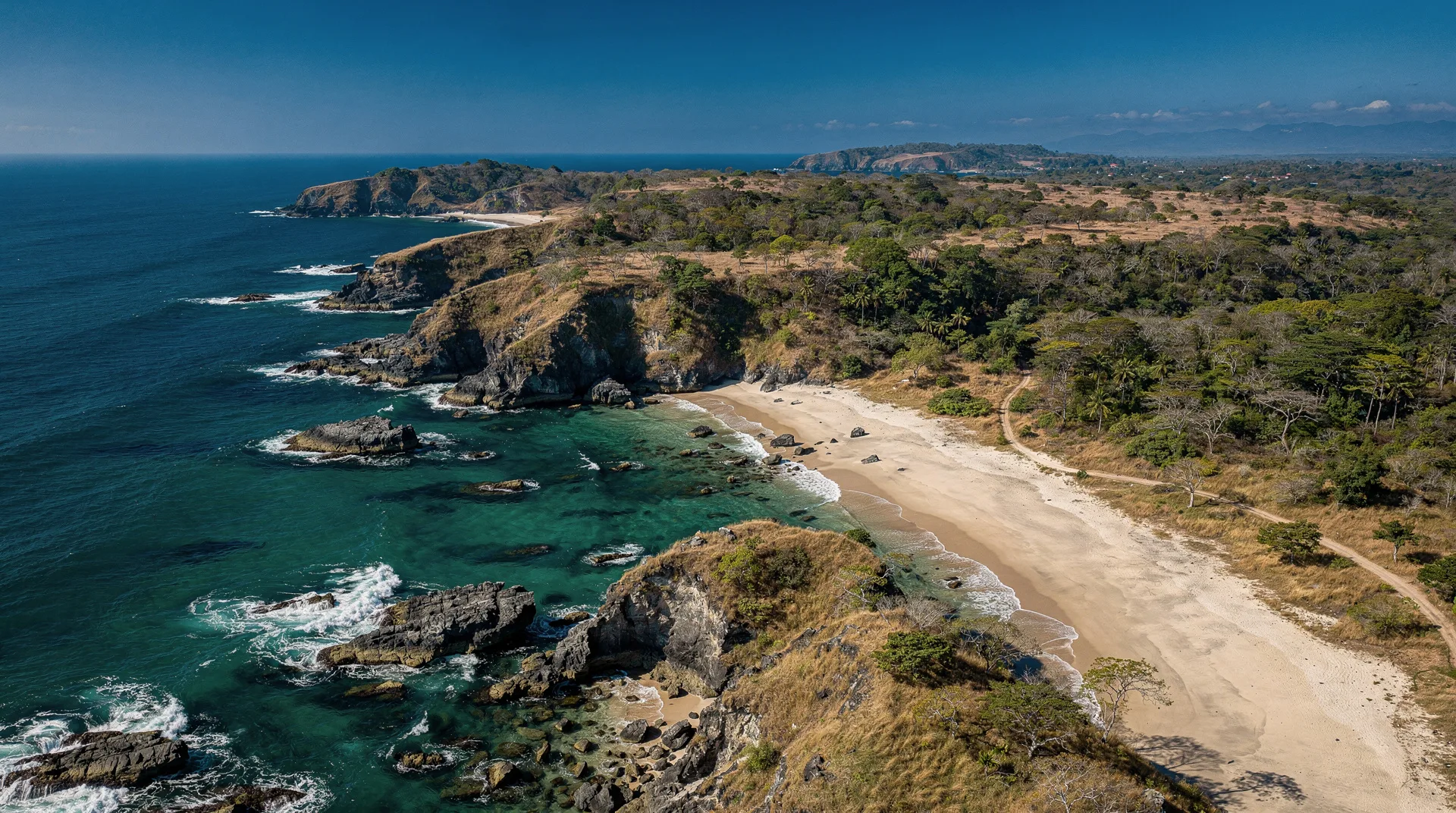
The Nicoya Peninsula juts south into the Pacific from central Guanacaste, forming the western boundary of the Gulf of Nicoya. The beaches on the outer, ocean-facing coast of the peninsula — Nosara, Sámara, Santa Teresa, Mal Pais — face the open Pacific and receive full exposure to southern and western swells. This makes them different in character from the more sheltered northern Guanacaste beaches like Conchal and Flamingo.
Getting to the Nicoya Peninsula takes longer than many visitors expect. From Liberia airport, Nosara is 2.5 hours (mostly paved, with 20 km of gravel at the end). Santa Teresa is 4-5 hours from San José via the Puntarenas ferry. There is no quick access route. The effort filters out day-trippers and creates beach communities that have retained more character than the north Guanacaste coast.
This guide compares the three main Nicoya Peninsula destinations so you can make a direct choice rather than reading separately about each.
| Where | Western Nicoya Peninsula, Guanacaste/Puntarenas border |
| Getting there | 2.5–5 hours from Liberia or San José depending on beach |
| 4WD needed | Yes, May–November on unpaved sections |
| Best for | Nosara: yoga/surf. Santa Teresa: surf lifestyle. Sámara: families |
| Cost level | Moderate (Sámara) to high (Nosara, Santa Teresa) |
Nosara — yoga capital, protected surf, and the 200-metre rule
Nosara has two beaches worth knowing: Playa Guiones (the 6-km surf beach south of the village) and Playa Pelada (a sheltered pocket beach north of the village, better for swimming). The village itself sits 3 km inland from Guiones.
The defining characteristic of Nosara is the community association’s legally enforced 200-metre development restriction above the high-tide mark on Guiones. This means no buildings are visible from the beach — just forested dunes and then the tree line. On a coast where Tamarindo has surrendered its village character to development, Guiones looks as it did twenty years ago from the waterline.
Surf: Playa Guiones is a year-round break that peaks from April to October on south swells, producing chest-to-overhead waves on better days. The wave is best described as a classic beach break with multiple peaks and both left and right options. The surf camp industry here is one of the best in Central America — Safari Surf School, Nosara Surf School, and Coconut Harry’s all run week-long adult programmes ($800-1,200 including accommodation).
Yoga: Nosara’s yoga scene is internationally recognised. Bodhi Tree Yoga Resort ($120-250/night) hosts retreats from internationally known teachers year-round. Blue Spirit ($200-400, ocean-view rooms) is one of Central America’s finest wellness resorts. Nosara Yoga Institute has run 200-hour and 500-hour teacher training programmes for over two decades. See the Nosara yoga retreats guide for detail.
Nosara catamaran sunset charter — from $135Non-surf activities: The Nosara catamaran sunset charter runs from the local beach and includes snorkelling in the bay and a sunset watching segment — a good non-surf activity for partners of surfers.
Lagarta Lodge: The cliffside property above Playa Pelada ($180-280/night) has the best view of any hotel in the Nicoya Peninsula — looking across the estuary to the open ocean with macaws and monkeys in the garden below.
Getting there: The most reliable route from Liberia is via Nicoya (1.5 hours paved), then 20 km of gravel road to Nosara. From San José, the route goes via the Tempisque bridge and Nicoya — 3.5-4 hours total. Sansa operates daily flights from San José to Nosara airstrip (20-minute flight, $90-140).
Honest assessment of Nosara: The success of Nosara as a wellness and surf destination has pushed prices significantly. A mid-range hotel runs $120-160/night, restaurants are priced at European levels, and the community can feel insular if you arrive without existing connections. That said, Nosara remains genuinely beautiful and delivers on its promise. The main road into Guiones turns to deep gravel after rain — a 4WD is not optional from May through November.
Santa Teresa — the surf lifestyle capital
Santa Teresa is the most viscerally alive beach community on the Nicoya Peninsula. The main road runs parallel to the beach through 8 km of surf shops, restaurants, yoga studios, craft markets, and beach bars — but unlike Tamarindo, the development is scattered through forest rather than concentrated on a strip, and the beach itself is never more than 200 metres away.
The surf here is more powerful than Nosara. Playa Santa Teresa picks up swell from a wide southwest arc and produces heavy, fast waves on better days — hollow sections at the Santa Teresa main peak, longer walls at Carmen (the southern end) and Mal Pais (2 km further south). The surf is best from April to October.
Santa Teresa: Tortuga Island full-day boat tour with snorkel — from $155The Tortuga Island boat trip from Santa Teresa is the most popular non-surf day activity: a full-day excursion by panga to Isla Tortuga in the Gulf of Nicoya, with snorkelling, beach time, and lunch included.
Where to stay:
- Nantipa Boutique Beach Hotel: The finest hotel in Santa Teresa and one of the top 10 boutique hotels in Costa Rica. Ocean-facing suites from $380/night, private pool, exceptional restaurant. Appropriate for honeymoons and luxury travellers.
- Pranamar Oceanfront Villas: Beachfront rooms and villas from $200/night, strong yoga and wellness programme, pool.
- Florblanca Resort: Established luxury villa property from $350/night, known for its spa and cooking classes.
- Casa Punto de Vista: Budget-conscious surfer accommodation $50-80/night.
Getting there: The standard route is San José to Puntarenas by car (1.5 hours), Naviera Tambor ferry to Paquera (1 hour 20 min, 4-6 sailings daily), then 1.5-hour drive to Santa Teresa. Total: 4.5-5 hours from San José. Sansa flies to Tambor (30 km from Santa Teresa, 20-minute taxi).
Honest assessment of Santa Teresa: The road into Santa Teresa is the main logistical challenge. The stretch south of Cobano has improved dramatically since 2022 but sections remain deeply rutted in the green season. A 4WD is essential May through November and strongly recommended in December. The town has no hospital — the nearest is in Paquera (1 hour) or San José.
Sámara — the safest and most livable beach town
Sámara is the right choice for families, first-time Costa Rica visitors wanting a calm beach, and anyone who wants a genuine Costa Rican town feel rather than an expat-bubble resort.
The beach at Sámara is protected by an offshore reef that reduces wave energy to manageable levels inside the bay. The water is shallow and calm — perfect for children and non-swimmers. The town behind the beach has supermarkets, a pharmacy, a clinic, and numerous restaurants ranging from Tico sodas to upscale Italian. It is the most livable community on the Nicoya Peninsula.
What Sámara lacks: The surf at Sámara is inconsistent (the reef protection that creates calm water also limits the surf quality). There is no established yoga retreat scene. The beach, while beautiful and clean, is not as dramatically scenic as Guiones or Santa Teresa. If you are chasing surf improvement or a specific wellness lifestyle, Nosara or Santa Teresa serve you better.
Stay: Hotel Fenix ($70-100), Villas Playa Sámara ($90-140, studio apartments with kitchenette), Tico Adventure Lodge ($80-130). All-inclusive: Sámara Tree House Inn ($60-90).
Playa Carrillo: 5 km south of Sámara, accessed by paved road — one of the most beautiful small beaches on the Nicoya Peninsula. See the hidden beaches guide for detail.
Getting there: From Nicoya city, 35 minutes by paved road. From San José, 3.5-4 hours via the Tempisque bridge. Sansa flies daily to Carrillo airstrip (5 km from Sámara, 15-minute flight).
Head-to-head comparison
| Factor | Nosara | Santa Teresa | Sámara |
|---|---|---|---|
| Surf quality | Excellent (beach break) | Excellent (powerful) | Mediocre |
| Swimming safety | Good (Pelada) | Moderate (shore break) | Excellent |
| Family suitability | Moderate | Low-moderate | High |
| Yoga and wellness | Exceptional | Very good | Basic |
| Price level | High | High | Moderate |
| Authenticity | Medium (expat-heavy) | Medium | High |
| Road access | Gravel final stretch | Rough in green season | Fully paved |
| Medical access | Limited | Very limited | Basic clinic |
| Nightlife | Low-key | Moderate | Low-key |
Frequently asked questions about Nicoya Peninsula beaches
Is Nosara or Santa Teresa more developed?
Both have significant expat and tourist infrastructure, but in different ways. Nosara’s development is wellness-oriented — yoga studios, health food cafes, high-end hotels. Santa Teresa’s is surf and lifestyle oriented — surf camps, beach bars, boutique restaurants. Neither has the generic mass-market resort development of northern Guanacaste. Sámara is the least developed of the three.
Can I visit all three in one trip?
Yes, but the distances require planning. Nosara to Sámara is 35 km by dirt road (1 hour). Sámara to Santa Teresa requires going back to Nicoya and south through Cobano (2.5-3 hours). A circuit of all three is possible in a 10-day trip but leaves limited time at each. Most visitors choose one and commit to it for 4-5 days.
When should I visit Nicoya Peninsula beaches?
Dry season (December-April) for the most reliable weather. For surf, the April-October south swell season is best at Nosara and Santa Teresa. The green season brings lush scenery and lower prices (20-40% cheaper) at the cost of some afternoon rain and occasional road difficulty.
Are there good restaurants at Nicoya Peninsula beaches?
Yes — particularly at Nosara and Santa Teresa, which have strong restaurant scenes. Koji’s at Santa Teresa (Japanese-fusion), La Esquina de Buenos Aires (Argentine steakhouse, Santa Teresa), and Café de Paris (breakfast and French pastry, Santa Teresa) have regional reputations. Nosara’s Restaurant La Luna, La Dolce Vita, and the resort restaurants at Bodhi Tree and Harmony Hotel all deliver quality. Sámara is more modest — Restaurante Gusto and Soda La Palapa are reliable.
How do I get from one peninsula beach to another without a car?
Shared shuttles (Interbus, Caribe Shuttle) operate between Nosara, Sámara, and the Nicoya bus hub. However, services are infrequent — typically once daily — and require advance booking. Cycling between Sámara and the surrounding beaches (Carrillo, Buena Vista) is viable. Between Nosara and Sámara on the unpaved road, a mountain bike is needed. A rental car or shared taxi is the practical solution for moving between Nosara, Sámara, and Santa Teresa within the peninsula.
Do I need to rent a 4WD for the Nicoya Peninsula?
For Nosara and Santa Teresa, yes, treat a 4WD as close to mandatory, especially from May to November when the unpaved final stretches turn to deep mud and rutted gravel. A standard sedan can usually manage the fully paved route into Sámara year-round, but if your trip includes any of the other two beaches, book a 4WD for the whole rental period rather than trying to swap vehicles partway through.
Is the Nicoya Peninsula safe?
Yes, by Costa Rican standards these are low-crime beach towns, though petty theft from parked cars and unlocked rooms does happen, particularly in Santa Teresa’s busier surf season. Use hotel safes, don’t leave valuables visible in rental cars at trailheads or beach parking, and take normal precautions walking alone on quiet stretches after dark. Road safety is a bigger practical risk than crime — drive cautiously on the unpaved sections, especially at night.
Where to fit Nicoya Peninsula beaches in your itinerary
For a surf-focused trip, see the 10-day Pacific surf itinerary that routes Tamarindo-Nosara-Santa Teresa. For a honeymoon or couples trip, the 10-day honeymoon Nicoya and Arenal itinerary pairs Santa Teresa or Nosara with a volcano finish. For a family trip using Sámara as the base, the 7-day family beaches itinerary can be adapted with Sámara replacing Manuel Antonio for the beach segment.
See the individual destination guides for Nosara, Santa Teresa, and Sámara for booking and accommodation detail.
Money and connectivity on the peninsula
Cash matters more here than almost anywhere else in Costa Rica. Nosara and Santa Teresa have ATMs in the village centres, but they run out of cash on busy weekends and holidays — carry more colones or USD than you think you need, especially for Sámara’s smaller sodas and taxi drivers who often can’t process cards. Wifi is reliable at hotels and cafes in all three towns, but mobile data coverage thins out on the gravel roads between beaches; download offline maps before driving between Nosara and Sámara. Power cuts happen occasionally in the green season storms — nothing that disrupts a trip, but worth knowing if you’re relying on a laptop for remote work.
Which beach for which traveller
Surfers who want the most consistent, highest-quality wave with a built-in camp culture should look hardest at Santa Teresa or Nosara — see the dedicated surf guides for break-by-break detail beyond the overview above. Anyone assembling a wider Pacific-coast beach trip should cross-reference the best Pacific beaches guide and, if surf quality is the deciding factor, the best surf beaches guide.
Families weighing Sámara against other kid-friendly options will want the best family beaches guide, and travellers who haven’t ruled out northern Guanacaste yet should read the Guanacaste beach guide before committing to the extra travel time the Nicoya Peninsula demands. Wellness-focused visitors comparing Santa Teresa against Nosara for a retreat base should also check the Santa Teresa wellness guide.