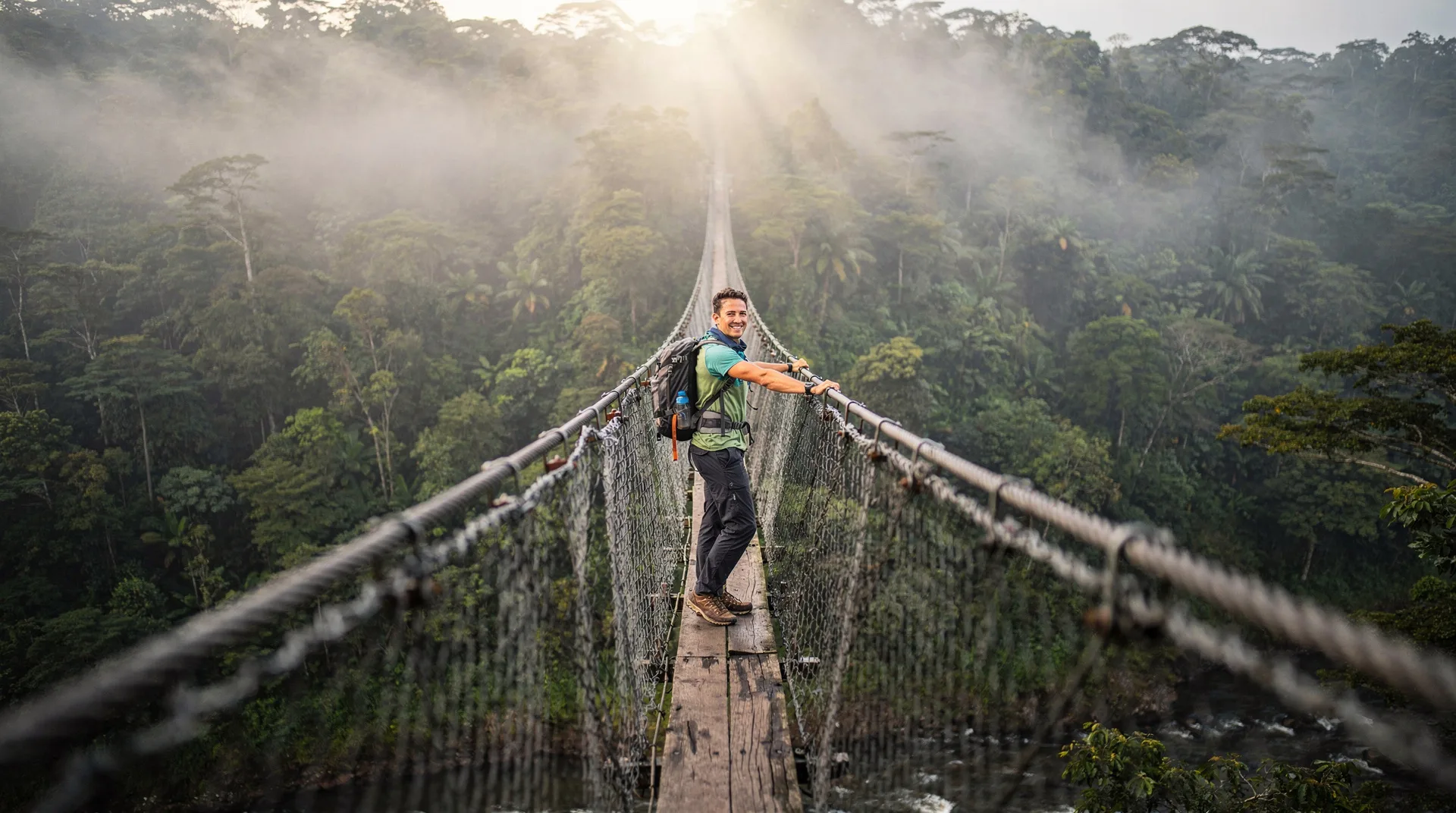
Extreme adventure routes in Costa Rica: the 7-10 day adrenaline circuit
Multi-day adventure trips?
The definitive circuit: Pacuare 2-day expedition plus canyoning in Arenal plus Corcovado trek. Budget 7-10 days. Costs $700-1,200 per person excluding flights and accommodation between activities.
Building the ultimate Costa Rica adventure itinerary
Costa Rica has one of the highest concentrations of adrenaline-grade experiences per square kilometre of any country in the world. The challenge is not finding adventure — it is sequencing the best experiences into a coherent trip that does not burn you out or leave you spending half the time on buses between disconnected locations.
This guide proposes three multi-day adventure circuits at different durations and budget levels. Each is built around the country’s three standout extreme experiences: Pacuare River multi-day rafting, Arenal canyoning, and a Corcovado National Park overnight trek.
| Length | 7-10 days |
| Cost | $700-2,200/person depending on version and accommodation |
| Fitness needed | Good general fitness; upper body strength for canyoning |
| Best season | Late November-March (dry season, best access) |
| Booking | Corcovado guide + Pacuare lodge months ahead for peak season |
The three anchor experiences
Pacuare River: Costa Rica’s defining water adventure
The Pacuare is among the top ten whitewater rivers in the world by most expert rankings, including a famous National Geographic citation. The section between Tres Equis and Siquirres is 28 kilometres of Class III-IV rapids through a pristine jungle canyon. No road reaches the canyon for most of its length — the jungle presses down to the water’s edge, and the noise of the river is constant.
The two-day overnight expedition is the gold-standard version of this experience: you camp or stay in a riverside lodge, raft both days (including the more technical upper section on day one and the longer canyon section on day two), and eat riverside meals while the sounds of the jungle replace traffic and wifi.
La Fortuna: rafting Pacuare & shuttle to SJO or Puerto Viejo — from $140Operators for the Pacuare multi-day include Ríos Tropicales, Desafio Adventure Company, and several smaller specialists. The shuttle package (raft one direction, shuttle the other) can be combined with a San José to La Fortuna or Puerto Viejo transfer, making the rafting section a legitimate transport leg rather than a pure side trip.
Pacuare River rafting (from Turrialba) — from $120The Turrialba-based single-day Pacuare trip is the entry point — still spectacular, still Class III-IV, but without the overnight immersion.
Arenal canyoning: the most technically demanding half-day in the country
Waterfall rappelling in the volcanic canyons around La Fortuna delivers a qualitatively different experience from river rafting — you are on a rope, controlling your own descent, standing inside a waterfall rather than riding through it. The operators Pure Trek, Lost Canyon Adventures, and Gravity Falls each have distinct routes and characteristics (see our full canyoning guide for operator comparisons).
La Fortuna: canyoning and waterfall rappelling experience — from $110The canyoning sits in the circuit as the physical peak experience — higher personal exertion, more technical skill required, more intimate with the jungle environment than any river trip.
Corcovado: the wilderness reset
The Osa Peninsula’s Corcovado National Park is frequently called the most biologically intense place on Earth. Unlike the other two anchor experiences, Corcovado is not about speed, height, or adrenaline — it is about raw wilderness immersion that most people have never experienced. No roads, no electric light, tapirs crossing your path at dawn, scarlet macaws in every tree above Sirena Station.
2 days 1 night in Corcovado Sirena from Drake Bay — from $425The 2-day, 1-night Sirena Station experience is the minimum to genuinely access the park’s interior. Day visitors from Drake Bay can do a day trip to Sirena, but the overnight stay allows you to experience the park at dawn and dusk when wildlife activity peaks dramatically.
A guide is legally mandatory for all Corcovado visitors. Certified guide requirements were tightened in 2024 — see our Corcovado National Park guide for current booking procedures.
The 7-day core circuit
This is the minimum version of the full experience. It covers all three anchor activities with 2-3 nights in the Arenal zone and 2 nights on the Osa Peninsula.
Day 1: Arrive San José. Overnight in San José or Alajuela (near airport). Brief city orientation, rest.
Day 2: Drive or shuttle to Turrialba (2 hours from San José). Half-day single-day Pacuare rafting. Overnight in Turrialba.
Day 3: Drive or shuttle from Turrialba to La Fortuna (3.5 hours via San José or 4.5 via direct mountain road). Afternoon rest or volcano viewing.
Day 4: Canyoning in Arenal (morning half-day, return to hotel by 1pm). Afternoon: Mistico hanging bridges or hot springs.
Day 5: Drive from La Fortuna to Drake Bay (5-6 hours including ferry) or fly Sansa from San José (50 minutes — requiring a return to SJO first, not recommended on a 7-day budget). Alternatively, arrange private transfer directly via Dominical and Sierpe. Overnight Drake Bay.
Day 6: Corcovado day trip to Sirena Station from Drake Bay. 8-hour guided tour.
Day 7: Morning in Drake Bay. Return to San José. Depart or overnight San José.
Rough cost (per person, excluding accommodation and flights): Pacuare single-day $120-135 + canyoning $110-135 + Corcovado day tour $135-145 + Drake Bay boat transfers $30-40 = approximately $395-455 in activity costs. Total with accommodation at mid-range (dorms/budget hotels) runs $700-900.
The 10-day expedition circuit
The 10-day version replaces the single-day Pacuare with the 2-day expedition, replaces the Corcovado day trip with a 2-night Sirena stay, and adds a surfable beach day in between.
Days 1-3: San José arrival → Turrialba → 2-day Pacuare River expedition with lodge stay. The overnight at Pacuare Lodge or Río Pacuare Lodge is genuinely extraordinary — no road access, no wifi, river noise instead of alarm clocks.
2 days 1 night in Corcovado Sirena from Drake Bay — from $425Days 4-5: Transfer from Turrialba to La Fortuna (via shuttle or rental car). Two nights in La Fortuna. Activities: canyoning (day 4 morning), Arenal hanging bridges or ATV (day 5).
Day 6: Transfer La Fortuna to Uvita or Dominical on the southern Pacific coast (4.5 hours). Beach rest, surfing optional.
Days 7-9: Transfer from Uvita or Dominical to Drake Bay (boat from Sierpe, 1.5 hours). 2 nights at Corcovado station or Drake Bay lodge. Day 8: full day Sirena Station. Day 9: morning wildlife, afternoon return to Drake Bay/Sierpe.
Day 10: Return to San José (4 hours drive from Sierpe, or Sansa flight from Palmar Sur to SJO, 45 minutes). Depart or overnight.
Rough cost (per person, excluding accommodation and flights): Pacuare 2-day expedition $400-500 + canyoning $110-135 + Corcovado 2-day guide fee $250-300 + transfers $100-150 = approximately $860-1,085 in activity costs. Total with mid-range accommodation runs $1,500-2,200.
The budget-conscious 7-day version
For those who want the circuit but need to contain costs:
- Replace the Pacuare 2-day expedition with a single-day Pacuare trip from San José ($130-135)
- Use shared shuttles between locations instead of private transfers
- Stay in quality hostels and guesthouses rather than eco-lodges ($25-60/night)
- Do a day trip to Corcovado from Drake Bay rather than overnight ($135-145)
- Replace Gravity Falls canyoning ($135) with Pure Trek ($110)
Budget total (per person, 7 days, excluding flights): Activity costs $380-430 + accommodation (7 nights at $40/night average) $280 + food ($30/day x 7) $210 + transport (shared shuttles) $150 = approximately $1,020-1,070 per person total.
The three circuit versions compared
| 7-day core | 10-day expedition | Budget 7-day | |
|---|---|---|---|
| Pacuare | Single-day rafting | 2-day expedition + lodge | Single-day rafting |
| Corcovado | Day trip to Sirena | 2-night Sirena stay | Day trip to Sirena |
| Estimated cost | $700-900 | $1,500-2,200 | $1,020-1,070 |
| Best for | First adventure trip to Costa Rica | Repeat visitors wanting depth | Cost-conscious adventure travellers |
Solo travellers and safety on the circuit
The circuit is entirely manageable solo — rafting and canyoning groups mix independent travellers with couples and small groups routinely, and Corcovado’s mandatory guide requirement means you’re never navigating the park alone regardless of how you booked. The main solo consideration is transport logistics between Turrialba, La Fortuna, and Drake Bay, where shared shuttles are more cost-effective than a rental car for a single traveller.
Review our safety in Costa Rica guide for general precautions, and confirm your travel insurance explicitly covers whitewater rafting, canyoning, and guided trekking before booking — this matters more on a solo trip where you have no travel companion to assist if something goes wrong.
Sequencing the circuit for maximum recovery
A genuine mistake first-timers make with this circuit is stacking the three anchor experiences back to back without recovery days, which turns an exhilarating trip into an exhausting one. Pacuare’s overnight rafting is physically demanding but the lodge stay itself is restful — treat the arrival day and departure morning as recovery time built into the activity, not extra days to fill.
Canyoning is the shortest anchor activity (half a day) but produces the most delayed muscle soreness, particularly in shoulders and forearms; scheduling a low-key hanging-bridges walk or hot springs evening the following day rather than another high-intensity activity noticeably improves how the rest of the trip feels. Corcovado’s trekking demands are cumulative — heat and humidity fatigue builds across the two days rather than hitting immediately, which is why the transition out of Drake Bay on day 9 or day 10 should be treated as a rest day with minimal additional activity, not a travel day squeezed for one more excursion.
Alternative circuit: swapping Corcovado for Tortuguero
Travellers less drawn to overnight jungle trekking sometimes swap the Corcovado leg for a Tortuguero canal expedition instead, trading raw wilderness immersion for a gentler boat-based wildlife experience with turtle nesting season (July-October) as a specific draw. This version keeps the Pacuare and Arenal anchors unchanged but replaces the Drake Bay transfer with a run to the Caribbean coast via Ruta 32 and a canal boat into Tortuguero village.
The trade-off is honest: Tortuguero delivers excellent wildlife viewing with far less physical demand, but it does not replicate Corcovado’s density of large mammal sightings or its reputation as the country’s most biologically intense single destination. For travellers who want the circuit’s adrenaline anchors (Pacuare, canyoning) without a demanding trek, this substitution is a legitimate way to keep the trip’s intensity more even across all ten days.
The logistics also work in your favour: Tortuguero is reachable from La Fortuna via San José without the boat-and-flight complexity of reaching Drake Bay, which can shave a full transit day off the circuit if time is tighter than budget. This makes the Tortuguero variant a reasonable choice for a tighter 8-9 day version of the circuit rather than the full 10 days.
Operators to know
Ríos Tropicales: Costa Rica’s largest rafting operator, founded 1985. Runs both Pacuare day trips and the 2-day expedition with their own riverside lodge. Highest production quality and largest guide team.
Desafio Adventure Company: La Fortuna-based, covers both rafting and canyoning. Good for booking multi-activity combinations. Strong reputation for reliability.
Pure Trek: Arenal canyoning specialist with consistent safety record and maximum group size of 10.
Osa Aventura: Drake Bay-based operator specialising in Corcovado certified-guide services. Long track record at Sirena Station.
Seasonal considerations
Best overall conditions: December to April (dry season). Pacuare is lower water volume (Class III-IV but calmer), Corcovado trails are drier, and road travel between locations is easier. Arenal canyoning is less intense (lower waterfall volumes).
High water season: May-November. Pacuare Class IV-V in peak rainy season (September-October). Corcovado Sirena Station sometimes restricts access September-November due to flooding. Canyoning waterfalls at maximum volume. More dramatic, higher risk.
Sweet spot for adventure: Late November to mid-December and mid-April to late May. High water levels subsiding, jungle still vivid green, fewer crowds.
Weather strategy for the adventure circuit
The 7-10 day circuit crosses multiple climate zones, and timing your activities within each zone matters more than choosing an overall season.
Pacuare (Caribbean slope, near Turrialba): The Caribbean watershed receives rainfall year-round with peak intensity in October. The river runs at its best in December-April (cleaner Class III-IV water) and at its most dramatic in June-September (higher flow, more intense hydraulics). November and May are transitional months with good conditions in both years.
Arenal (intermediate zone): La Fortuna receives significant rainfall year-round but is drier in dry season (January-March). Canyoning and ATV tours operate in all weather — the experience changes with rainfall but does not become unsafe at any standard rainfall level. Heavy rainfall in the upper canyon can cause temporary closure of specific rappel routes, but operators adjust rather than cancel.
Corcovado (southern Pacific): The Osa Peninsula is one of the wettest places in Costa Rica (5,000+ mm annually in parts). Dry season (December-April) produces the most reliable access conditions — trails are less flooded, river crossings are lower, and the Sirena airstrip is more consistently open. September-November can bring flooding conditions that restrict access to some Corcovado trails. Check SINAC for current access status before booking.
Ideal weather window for the full circuit: Late November to late March gives you dry-season Corcovado conditions and dry-season Arenal, with the Pacuare at moderate comfortable flow. January and February are the peak tourist months but offer the most reliable conditions across all three anchors.
Self-guided vs operator-organised: the full cost comparison
Some experienced travellers consider organising the circuit independently to save money. Here is an honest comparison:
Fully operator-organised 7-day circuit: Approximately $1,400-1,900 per person including all activities, all transport (private or shared shuttle), and mid-range accommodation. This uses operators for everything — a tour company packages the logistics.
Self-organised same circuit: Activities alone cost $380-455 (as calculated earlier). Adding transport: La Fortuna-Turrialba-Drake Bay requires either a rental car ($400-600 for 7 days plus fuel and insurance) or shared shuttles ($150-200 total). Accommodation at your own choice: $40-80/night at good guesthouses ($280-560 for 7 nights). Total: $810-1,215.
The saving of $200-700 per person is real. The trade-off: you book each activity independently, you manage your own logistics between locations, and you bear the risk of missed connections. For confident independent travellers who have done similar self-organised adventure trips, the self-organised route is very manageable. For first-time Costa Rica visitors, operator packaging removes significant cognitive load.
Frequently asked questions about multi-day adventure circuits
Is the circuit manageable without a guide service or tour operator?
Yes, for experienced independent travellers. Rafting and canyoning require operator bookings regardless. Corcovado requires a certified guide by law. The logistics of shuttles between Turrialba, La Fortuna, the southern Pacific, and Drake Bay are manageable with a rental car or shared shuttle bookings. A 4WD vehicle is recommended.
What fitness level is required?
The Pacuare 2-day expedition requires good general fitness and comfort with cold water immersion. Canyoning requires upper body strength for rappelling. Corcovado requires solid hiking fitness — Sirena trails involve 8-12 km per day on uneven terrain in high humidity. The circuit is suitable for fit adults without significant injury history.
Can I do this as a couple with mixed adventure tolerance?
The Arenal section has options for different intensity levels — the hanging bridges work for a less adventure-focused partner while the canyoning covers the adrenaline slot. Corcovado appeals broadly. The Pacuare is the activity most likely to be outside a comfort zone — it requires genuine commitment to whitewater.
What about travel insurance?
Essential for this itinerary. Standard travel insurance typically excludes “extreme sports” — verify that whitewater rafting, canyoning, and guided jungle trekking are all covered explicitly, or purchase a specialist adventure sports policy. World Nomads is commonly used by adventure travellers in Costa Rica.
How do I get between Turrialba, La Fortuna, and Drake Bay?
Turrialba to La Fortuna: rental car (3.5 hours) or Desafio shuttle ($55-65 per person). La Fortuna to Drake Bay: longest leg — car to San José (3 hours), then San José to Palmar Norte (3.5 hours), then Sierpe to Drake Bay by boat (1.5 hours). Total 8-9 hours. The Sansa flight SJO-Palmar Sur ($90-120 one-way) cuts this to 3.5 hours. Private transfer La Fortuna to Drake Bay is $200-300 for a vehicle.
Packing for a 7-10 day adventure circuit
The circuit’s activity mix — river rafting, waterfall rappelling, jungle hiking — demands specific kit. The goal is minimal weight with maximum versatility.
Clothing: 3-4 quick-dry synthetic shirts (cotton stays wet too long in high humidity). 2 pairs of quick-dry trousers or convertible shorts. 1 lightweight merino layer for Arenal evenings (can drop to 18°C). Swimsuit worn under clothes for rafting and canyoning days.
Footwear: One pair of sport sandals with heel straps (for water activities and beach days). One pair of broken-in trail shoes (for Corcovado hiking — primary forest trails are root-heavy and uneven). Do not attempt Corcovado in sandals.
Bags: A 40-litre daypack for the active days. A small waterproof dry bag (5-10 litres) for phone, documents, and camera on water days. Most operators provide dry bags on the river, but having your own is insurance.
Health kit: Oral rehydration salts (critical for hot humid hiking days in Corcovado), ibuprofen or acetaminophen, blister kit for the Corcovado hike, antihistamines, and broad-spectrum antiseptic cream for minor scrapes common in canyoning and jungle hiking.
Electronics: A GoPro or equivalent waterproof action camera is the single most valuable electronics item for this trip. A small solar charger or high-capacity power bank handles the Pacuare lodge’s limited charging capacity. A waterproof phone case provides backup.
Documents: Keep travel insurance documents on your phone and in print. The Corcovado guide permit, Pacuare lodge confirmation, and ICT certification details for activity operators are worth having accessible in a single folder.
Medical considerations for the full circuit
The 7-10 day adventure circuit requires a medical baseline that goes beyond standard tourist fitness. The activities involved place specific demands:
Pacuare rafting: No specific medical contraindications beyond standard cardiovascular fitness. Cold-water immersion can exacerbate asthma — carry an inhaler if relevant.
Canyoning: Shoulder and elbow joint health is the primary concern. Active shoulder tendinitis or recent rotator cuff repair should be medically cleared before rappelling. The sustained harness load on the 60-meter Gravity Falls descent is particularly significant.
Corcovado trek: High humidity (95%+) and consistent 28-32°C temperatures place demands on cardiovascular and thermoregulatory systems. The 8-12 km daily distances on rough terrain require solid hiking fitness. Anyone with a history of heat stroke or significant cardiovascular conditions should consult a doctor specifically about the Osa Peninsula heat conditions.
Vaccinations: Standard Central America recommendations apply — hepatitis A and B (usually already covered by childhood vaccination programs), typhoid if eating from local markets, and consider rabies pre-exposure if interacting closely with wildlife. Malaria prophylaxis is not generally recommended for the standard tourist circuit but consult a travel medicine doctor for the Osa Peninsula specifically (low but non-zero risk in the Corcovado zone).
Building local expertise into your circuit
The most knowledgeable local guides for each segment:
Pacuare: The Ríos Tropicales guide team includes river specialists who have paddled the Pacuare hundreds of times. Senior guides often hold international swiftwater rescue certifications and can explain the river’s ecology and the Cabecar indigenous history while navigating.
Arenal canyoning: Lost Canyon Adventures’ owner, who built the company, frequently guides himself and brings deep knowledge of the canyon’s geology and the volcanic history that created it. This level of owner-involvement is worth seeking out if available.
Corcovado: Osa Aventura’s certified guides include naturalists with specialised knowledge in Corcovado’s wildlife identification. The difference between a basic certified guide (legally required, wildly variable in quality) and a skilled naturalist guide (expensive, transformative) is enormous in a park where a tapir or jaguar sighting depends entirely on knowing where and how to look.
Extending the circuit with nearby pages
If the circuit leaves you with a spare day or two, the surrounding regions reward it. The La Fortuna destination page lists what else the Arenal base offers beyond canyoning, and the Arenal ziplines guide helps if you want a gentler adrenaline option for a travelling partner. For the first leg, Turrialba is the natural launch point for Pacuare day trips, and the Reventazón River rafting guide is worth a look if you prefer a different river on the same side of the country.
On the Osa side, Drake Bay is where most Corcovado trips start, and the Manuel Antonio vs Corcovado comparison is a useful read if you are unsure the full wilderness leg suits you. Getting between these regions is the hardest part of the trip, so skim the internal flights guide and the shuttle services overview before locking in your sequence. If you prefer a ready-made plan, the 12-day Corcovado and Pacuare adventure itinerary follows a similar spirit with day-by-day structure.
Related guides
The Pacuare River rafting guide covers the full river context, rapid names, and operator comparison. The multi-day Pacuare expeditions guide focuses specifically on the overnight lodge experience. Our canyoning in Arenal guide details the three main Arenal operators. For pricing context across all activities, see how much do adventure tours cost.