How to see Arenal Volcano: what's still possible in 2026
Does Arenal still erupt?
Last eruptive phase ended 2010; volcano in resting phase since.
Setting honest expectations about Arenal in 2026
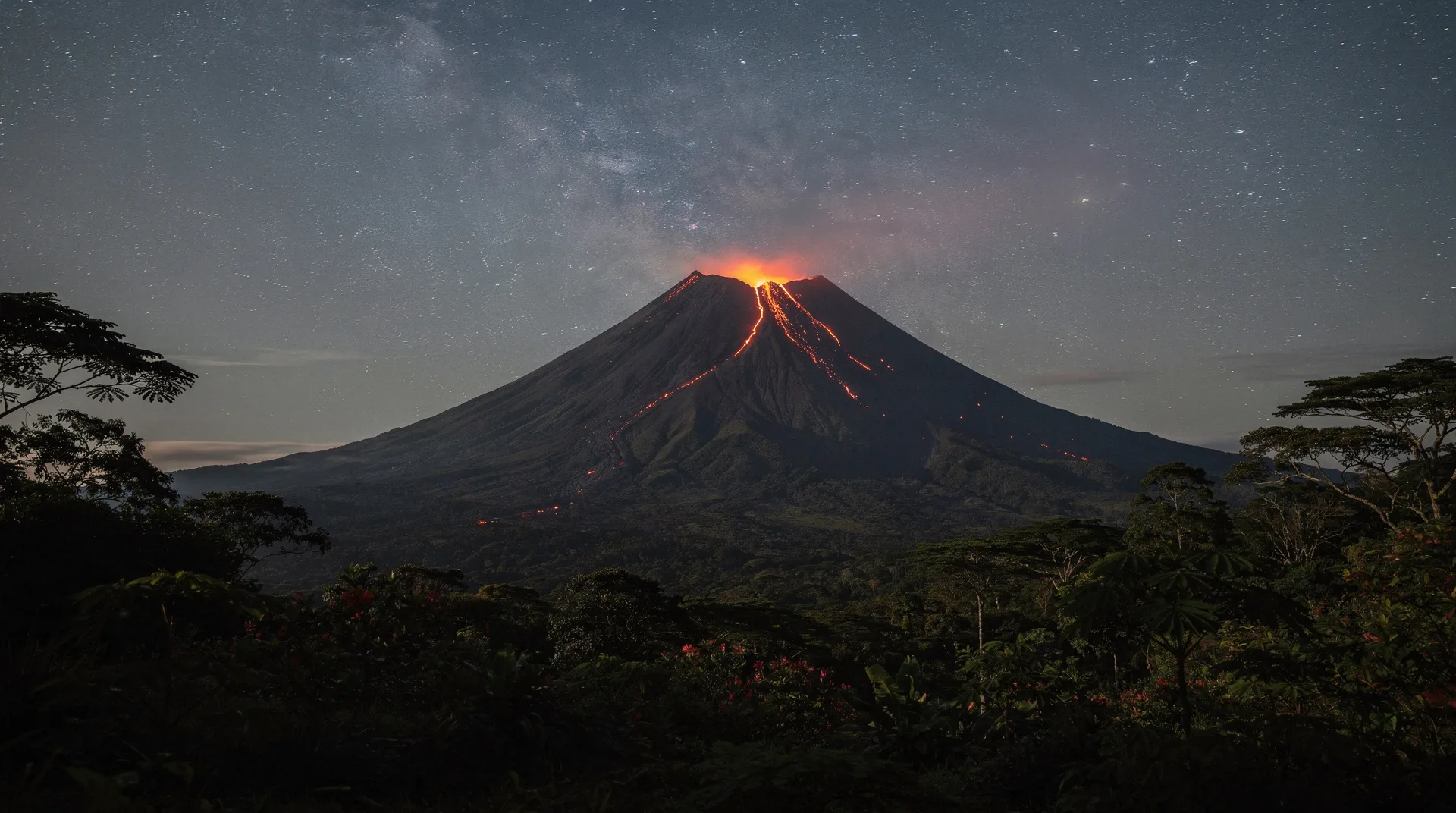
Let’s be direct about something that not every tour brochure makes clear: Arenal Volcano is not currently erupting. Its most recent major eruptive phase, which produced spectacular lava flows and pyroclastic activity, ran from the catastrophic 1968 eruption through to approximately 2010. Since then, the volcano has entered what OVSICORI (Costa Rica’s national vulcanological observatory) classifies as a resting phase.
This does not mean Arenal is dormant or dead. Seismic activity beneath the cone continues. Fumarolic emissions (steam and gas) occur occasionally, particularly after heavy rain. OVSICORI monitors Arenal continuously and would announce any significant renewed activity. But the odds of witnessing a lava eruption during a standard visit to La Fortuna in 2026 are very low.
So why visit? Because Arenal remains one of the most rewarding nature destinations in Central America — and the crater is only one part of it. The rainforest around the volcano, the hot springs heated by residual geothermal energy, the waterfalls, the hanging bridges, the lake, and the wildlife make La Fortuna a place that can easily absorb 3-4 days of activity. The volcano is the anchor of the experience, not the entirety of it.
| What you’ll see | The 1,670m cone (weather permitting), 1968 lava fields, no active lava |
| Best viewing time | 6-8am before cloud builds, or 5-7pm |
| Time needed | 3-4 days to cover volcano, hot springs, waterfall, bridges |
| Getting there | 3 hours by road from San José, or lake crossing from Monteverde |
| Entry | around $18 national park, around $26 Mistico Hanging Bridges |
What you can actually see at Arenal
The cone itself
Arenal’s 1,670-metre cone is visible on clear mornings from La Fortuna town, from Lake Arenal, and from viewpoints within the national park. The classic view — the near-perfect pyramid reflected in the lake, or rising above a blanket of cloud — is real and frequently achievable, especially before 10am.
Cloud cover is the main variable. The rainforest microclimate around Arenal means the cone can disappear behind cloud quickly after mid-morning. The two best times for cone views are: early morning (6-8am), before cloud builds, and late afternoon/evening (5-7pm), when passing storm cells occasionally create dramatic lighting with the cone visible between clouds.
The lava fields
Arenal Volcano National Park preserves the 1968 lava fields — enormous flows of black basalt that buried several villages and remain largely uncolonised by vegetation. Walking these fields on the established Coladas trail is genuinely striking. Pioneer plants — ferns, heliconias, bromeliads — have begun reclaiming the edges, but the central flow remains stark and otherworldly. This is the closest you will get to understanding Arenal’s eruptive power, and it is free with your park entry.
La Fortuna: Arenal Volcano and waterfall tour with lunch — from $110Night viewpoints: managing expectations
The most frequently oversold experience in La Fortuna is the “night volcano tour.” Multiple operators offer these, promising views of glowing lava or pyroclastic activity from viewpoints around the base. In reality, what you will see on a standard clear night is the dark silhouette of the cone — and occasionally steam plumes catching moonlight. There is no lava glow.
That said, a night tour into the Arenal rainforest offers genuinely excellent wildlife. Kinkajous, tree frogs, caiman, snakes, and sleeping birds are all findable with a skilled guide and headlamp. The experience is worthwhile — just not for volcanic drama.
La Fortuna: Arenal Volcano, lunch & hot springs morning tour — from $120 La Fortuna: hanging bridges guided tour at Mistico Park — from $55Best viewpoints around Arenal
From La Fortuna town
The town itself offers clear cone views from its central park on good mornings. The view down the main street toward the volcano is one of the most photographed perspectives in Costa Rica — especially dramatic when cloud caps the summit or when the cone turns orange at sunset.
From Lake Arenal
The northern shore of Lake Arenal provides the classic reflection shots. The drive from La Fortuna to Nuevo Arenal passes several pullouts with exceptional vista points. The lake crossing transfer (water taxi from La Fortuna to Río Chiquito, then jeep to Monteverde) also passes through some of the best angles.
From Arenal Observatory Lodge
The Arenal Observatory Lodge sits on a ridge approximately 7 km from the crater — the closest any accommodation is permitted. Built originally as a Smithsonian research station, its decks and grounds offer some of the most intimate cone perspectives available. You do not need to be a guest to visit for lunch and use the viewpoint; day visitor fees apply.
From Mistico Hanging Bridges
The Mistico Arenal Hanging Bridges park sits on the cone’s lower flank and its elevated suspension bridges offer treetop-level views toward the volcano. This is also one of the best birding and wildlife locations in the La Fortuna area — toucans, trogons, and three species of monkey are regularly spotted. See our La Fortuna destination guide for a full overview of activities.
The hot springs: still powered by Arenal
Even without active eruptions, Arenal’s geothermal activity heats a substantial underground aquifer, and that water emerges in and around La Fortuna in the form of thermal rivers and resort hot springs. The hot springs industry here exists because of the volcano — a fact that is easy to overlook when you are soaking in a luxury pool surrounded by jungle.
Tabacón Grand Spa Resort sits directly on a geothermally heated river and is widely considered the finest hot springs experience in Costa Rica. Day passes run approximately $80-100 and include access to multiple pools, waterslides, and the thermal river. The nighttime experience — pools lit by torches in the jungle — is particularly atmospheric.
Eco Termales Hot Springs is smaller, capped at around 100 guests at a time by reservation, and consequently far quieter than Tabacón or Baldí. The pools are beautifully landscaped. Many repeat visitors consider it the best value for a genuine relaxation experience.
Baldí Hot Springs is the most popular and least expensive option, with waterslides and a wider range of pool temperatures. Good for families or those on a budget.
Río Chollín is a free geothermally heated river roughly 7 km from La Fortuna center, accessed via a bridge pullout near the Tabacón road. It is warm, natural, and free — but has no facilities, no lifeguard, and can get crowded with local visitors on weekends.
La Fortuna: waterfall, Arenal Volcano and hot springs tour — from $95La Fortuna Waterfall: the other essential visit
The Catarata La Fortuna — a 75-metre waterfall plunging into a turquoise pool surrounded by jungle — is 5 km from La Fortuna center and one of the most rewarding short hikes in the country. The trail descends 500+ concrete steps (steep on the return) to a swimming pool at the base. Entry is approximately $18. Plan 2 hours including swimming time. It is worth noting that the waterfall visit is a standalone activity and not part of the national park — separate tickets, separate entrance.
The pool at the base is genuinely swimmable — cold, clear, and clean. A rope hangs from the cliff face allowing swimmers to float near the falls’ spray. The return climb (back up those 500 steps) takes 30-40 minutes and is the most physically demanding part of the La Fortuna experience. Go early — by 10am the waterfall can become crowded. The best morning light on the falls occurs between 9-11am when sun enters the canyon.
Hanging bridges: canopy access without climbing
The Mistico Arenal Hanging Bridges park offers one of the best wildlife and landscape experiences in the Arenal zone and is frequently underrated in comparison to the national park. Six suspension bridges cross the forest canopy — the longest spans 262 metres — providing views over the jungle floor and through the mid-canopy that are impossible from ground-level trails.
Arenal Volcano frames the backdrop from several bridge viewpoints. On clear mornings, the combination of rainforest canopy and volcanic cone in the distance is one of the most photographed scenes in La Fortuna. A self-guided visit takes 2-3 hours; a guided walk with a naturalist adds bird and mammal identifications that significantly enrich the experience. Entry is approximately $26 for self-guided access.
Wildlife regularly seen at Mistico: three-toed sloth (often in the cecropia trees visible from bridge #3), toucans (usually heard before seen — the Chestnut-mandibled toucan is common), howler monkeys (morning call audible throughout), and motmots.
Canyoning: the adventure alternative
For visitors who want physical challenge alongside nature, Arenal’s canyoning operations offer rappelling down active waterfalls, river swimming, and cliff jumps. The La Fortuna area has multiple operators, with Lost Canyon Adventures and Pure Trek Canyoning among the most safety-conscious. Expect 4-5 hours with a small group (maximum 8-10), full safety briefing, and wetsuits for the cooler sections.
This is a genuinely exciting activity and a credible alternative for visitors who are underwhelmed by the prospect of a non-erupting volcano. The waterfalls, canyon walls, and forest setting produce their own dramatic scenery that does not depend on volcanic activity.
Wildlife beyond the volcano: what lives around Arenal
The rainforest surrounding Arenal Volcano is one of the most biodiverse habitats in Costa Rica outside the Osa Peninsula. More than 850 plant species, 500 bird species, and 100 mammal species have been recorded in the Arenal Conservation Area. On any given nature walk, a good guide will identify:
Mammals regularly seen: Three-toed sloth, two-toed sloth, white-faced capuchin monkey, howler monkey, coati, white-nosed coati, agoutis, and on lucky mornings — tapir tracks near the lake shore.
Birds regularly seen: Keel-billed toucan, chestnut-mandibled toucan, scarlet macaw (flying overhead in pairs), blue-crowned motmot, great tinamou (heard drumming on the forest floor), multiple hummingbird species at lodge feeders.
Reptiles: Green iguana is visible in cecropia trees throughout La Fortuna town. Basilisk lizard (the so-called Jesus Christ lizard for its ability to run across water) is common near streams. Boa constrictors are present but rarely encountered.
The distinction between the national park trails and the hanging bridges park matters for wildlife: the hanging bridges deliver more bird diversity (canopy access), while the national park’s lava field trails produce different reptile and pioneer-vegetation communities.
Transport and getting around La Fortuna
La Fortuna is 3 hours from San José via the Highway 1 and then Highway 142. The drive is straightforward with signage in Spanish but adequate for most GPS-equipped travelers. The lake-crossing transfer (jeep to Río Chiquito, boat across Lake Arenal, jeep to Monteverde) is the recommended route to/from Monteverde — faster (3 hours) and more scenic than any road alternative.
Shuttle services from San José to La Fortuna run approximately $55-65 per person through Interbus and GrayLine, departing the capital around 7am and arriving by 10am. Private transfers can be arranged for approximately $120-150 one way for up to 4 passengers.
Within La Fortuna, local taxis (red plates) are affordable and the only practical way to reach the waterfall and park entrances without a rental car. Negotiate before getting in. Standard rates: La Fortuna center to park entrance ~$8, center to Tabacón ~$12.
Planning your Arenal visit: day by day
Day 1: Arrive La Fortuna, park visit in the afternoon (4pm light is excellent on the cone), hot springs in the evening.
Day 2: La Fortuna Waterfall in the morning (beat the crowds before 9am), Mistico Hanging Bridges or canyoning in the afternoon, night wildlife walk after dinner.
Day 3 (optional): Full-day to Tenorio Volcano National Park and Río Celeste (1-hour drive), return for sunset hot springs.
For accommodation, Nayara Springs (adults-only luxury with private plunge pools), Arenal Kioro, and Tabacón Thermal Resort are the top picks if budget allows. Mid-range options like La Fortuna Hotel and Arenal Backpackers Resort offer good value.
Frequently asked questions about Arenal eruptions and visits
When was the last time Arenal erupted?
The last significant lava flow occurred in 2010. Minor phreatic steam events have occurred since, but no lava or pyroclastic activity. The 1968 eruption — which killed 87 people and buried three villages — remains the most destructive volcanic event in modern Costa Rican history.
Is there any chance of seeing an eruption in 2026?
Very low. OVSICORI’s monitoring suggests Arenal remains in a resting phase. If activity resumed, it would be announced publicly. No credible tour operator can guarantee an eruption view.
Why do so many tours advertise “volcano views”?
The view of the cone — even without eruption — is genuinely impressive, and the overall destination (rainforest, hot springs, waterfall) is excellent regardless of volcanic activity. The advertising sometimes blurs the distinction between “visible volcano” and “erupting volcano.” Always read the fine print.
Can you climb to the summit of Arenal?
No. Arenal’s summit has been closed to climbers since 2012 due to the active classification. Before 2010, several tour operators offered illegal summit hikes, and there were fatalities. The park strictly enforces trail boundaries.
How many days do I need in La Fortuna?
Two nights (three days) is the minimum to experience Arenal properly — covering the national park, hot springs, and waterfall. Three nights adds capacity for the hanging bridges, canyoning, or the Río Celeste day trip. See our La Fortuna destination guide for a full breakdown of activities and logistics.
What’s the best time of year to visit Arenal?
Dry season (December to April) delivers the most consistent cone views and the most reliable daytime weather. Green season (May to November) brings more dramatic cloud formations and lush rainforest — and significantly fewer tourists. The volcano is not “better” in dry season; it’s simply more visible. Hot springs and waterfall visits are excellent year-round.
How does Arenal compare to Poás or Irazú if I want a crater lake?
If a crater lake is the priority, Poás and Irazú both deliver one; Arenal does not (its crater is not accessible or visible from any public viewpoint). Arenal wins instead on overall destination depth — hot springs, waterfalls, hanging bridges, and rainforest wildlife packed into one area. See the best volcanoes in Costa Rica guide for a full side-by-side.
Managing expectations before you book
If your primary reason for visiting La Fortuna is to photograph lava, redirect that expectation now — no operator can deliver it, and any marketing that implies otherwise is overselling a resting volcano. What you’re actually booking is a rainforest destination with an exceptional geological centrepiece: a near-perfect cone, genuinely dramatic 1968 lava fields, world-class hot springs powered by the same geothermal system, and some of the best accessible wildlife viewing in the country. Travellers who arrive with that framing consistently rate La Fortuna as a trip highlight; those chasing an eruption sometimes leave disappointed despite seeing everything the destination actually offers.
For a wider comparison of what each Costa Rican volcano can realistically deliver, our Arenal vs Poás vs Irazú guide breaks down crater lakes, access rules, and reliability by site. And if hot springs are a major part of your plan, the hot springs day pass guide covers pricing and booking windows for all six Arenal resorts.
A realistic sample itinerary for a first-time La Fortuna visit
Travellers often ask what a well-paced two-to-three-day Arenal visit actually looks like once eruption expectations are reset. A structure that works well for most first-timers:
Morning 1 (arrival day): Settle in, walk the town’s central park for the classic cone view down the main street, and confirm your evening hot spring reservation.
Day 2 morning: La Fortuna Waterfall before 9am to beat both the crowds and the heat on the 500-step climb back up.
Day 2 afternoon: Mistico Hanging Bridges for canopy-level wildlife — sloths, toucans, and howler monkeys are all realistic sightings on a guided walk.
Day 2 evening: Hot springs — this is when the geothermal water, still fed by Arenal’s residual activity, becomes the highlight of the day rather than the volcano’s summit.
Day 3 (optional): A half-day canyoning trip or the drive to Río Celeste at Tenorio Volcano National Park, an hour away, for a completely different volcanic landscape.
This pacing spreads the destination’s real strengths — waterfall, wildlife, hot springs, canyoning — across enough days that the absence of an active eruption barely registers as a gap.
Related guides
For a broader comparison of Costa Rica’s volcanoes, read our best volcanoes in Costa Rica guide and our direct Arenal vs Poás vs Irazú comparison. Photographers should visit our volcano photography tips before heading out. Our La Fortuna destination guide covers everything beyond the volcano: accommodation picks, restaurant recommendations, and transport logistics.