Rincón de la Vieja National Park: volcanic hot springs, wildlife, and Las Pailas trail
Are the Las Pailas trails open year-round?
Mostly yes, but with two important exceptions. The park is closed every Monday, and individual trails within Las Pailas sector are closed after heavy rainfall when volcanic activity or erosion creates hazard risks. Always check SINAC's official status before driving out. The park can close with minimal notice.
An active volcano with a forest full of surprises
Rincón de la Vieja is Guanacaste’s answer to Arenal — a genuinely active stratovolcano that last erupted significantly in 2019, with ongoing phreatic (steam-driven) activity and periodic ash venting. At 1,916m, it is the highest point in Guanacaste Province, and the park that surrounds it protects 14,083 hectares of tropical dry forest, premontane rainforest, wetlands, and a series of volcanic features unlike anything else in Central America.
| Where | 25km from Liberia, Guanacaste |
| Cost | $15/person entry, Las Pailas sector |
| Time needed | half to full day (2-3hr loop trail) |
| Getting there | ~45-60min from Liberia, 4WD recommended in rain |
| Best time | December-April (dry season, clearer views) |
The name translates loosely as “Corner of the Old Woman” — referring to an indigenous legend about a princess who threw her unfaithful lover into the crater. The volcano has nine craters, two of which are active. From the right position on a clear day, you can see both the Pacific Ocean to the west and (very rarely) the Caribbean coast to the east.
The park is split into two main sectors: Las Pailas (Santa María sector) and Santa Rosa (Von Seebach sector). Las Pailas is the most visited and contains the iconic volcanic features. Santa Rosa sector is quieter and primarily visited for the crater summit hike.
Las Pailas sector: the volcanic features
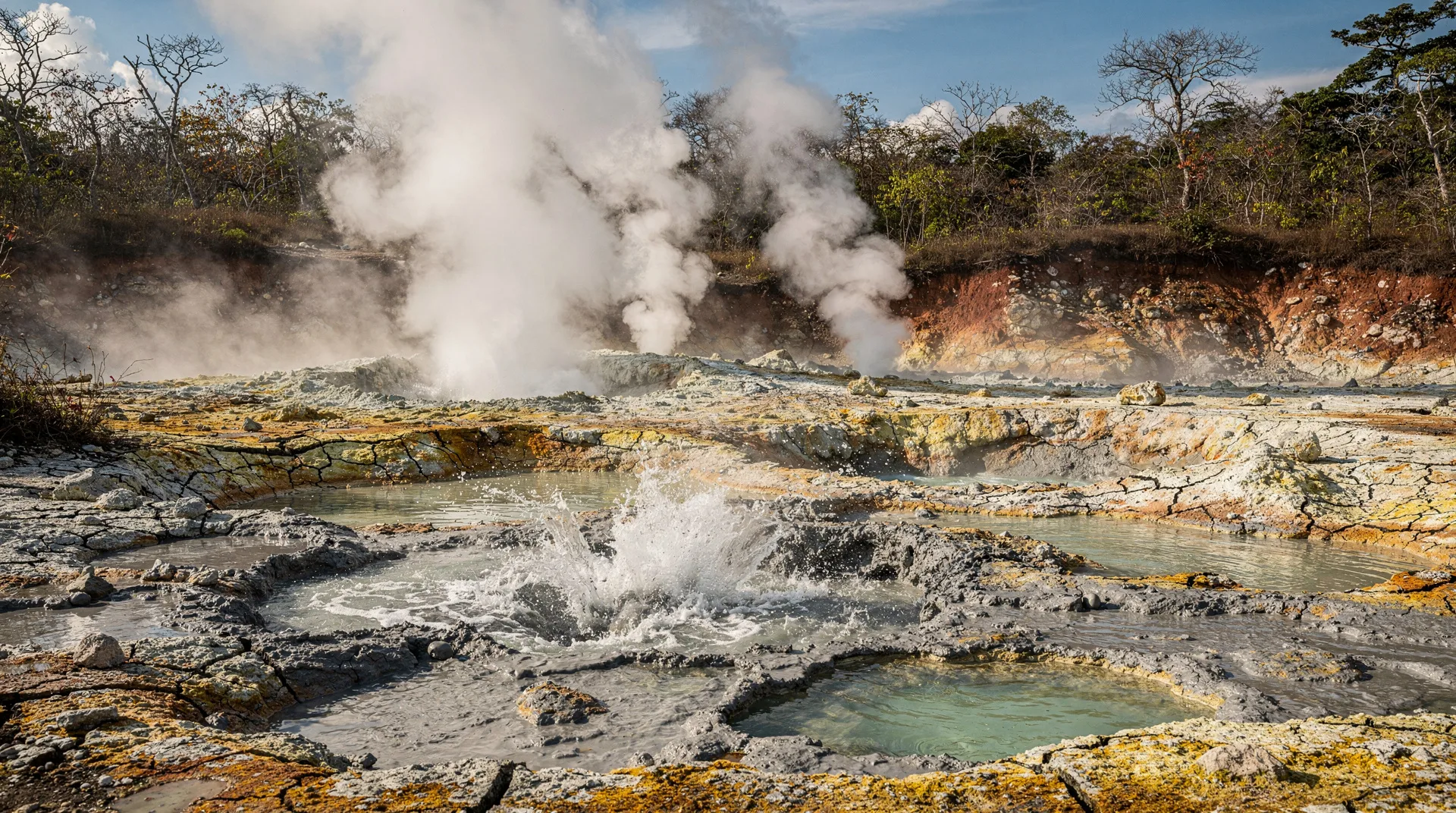
“Las Pailas” means “the cauldrons” — an apt description for the bubbling, sulfurous landscape you encounter along the main loop trail. The Las Pailas trail is a 3.8km loop that passes through dry forest, across a suspension bridge over the Río Colorado, and arrives at a series of volcanic phenomena that give this park its unique character.
Mud pools (pailas de barro): Circular pools of grey-brown volcanic mud that bubble continuously from geothermal heat. The temperature of the mud ranges from 50°C to 90°C. The pools range from small cauldrons barely a metre wide to larger basins several metres across. The smell of hydrogen sulfide is distinctive. Boardwalks and fencing keep visitors at safe distances.
Fumaroles: Vents that release steam and sulfurous gas from the ground, creating hissing columns that are particularly dramatic in morning light when temperature contrast is highest.
Hot springs: The Río Colorado carries geothermally heated water — warm-to-hot depending on the section. There are developed thermal pools at Hacienda Guachipelín (private, adjacent to the park) and natural sections of the river accessible during the trail.
La Cangreja waterfall: A 30-minute detour from the Las Pailas loop leads to a beautiful 40m waterfall that plunges into a blue-green pool — a striking contrast to the volcanic grey of the mud pools. Swimming here is allowed and popular.
Rincón de la Vieja NP: Las Pailas trail — from $90 Rincón de la Vieja: La Leona Waterfall private tour — from $135Wildlife in the park
Rincón de la Vieja sits within the Guanacaste Conservation Area, one of Costa Rica’s most important dry forest ecosystems. The wildlife list is long and varied.
Mammals: White-faced capuchin monkeys, mantled howler monkeys, white-nosed coatis (abundant and fearless near the ranger station), white-tailed deer, collared peccaries, Baird’s tapirs (present but shy), and the ocelot (rarely seen but tracked by rangers).
Birds: The park is excellent birding territory. Three-wattled bellbirds breed here in season. Turquoise-browed motmots (the national bird of both El Salvador and Nicaragua) are common. Keel-billed toucans, roseate spoonbills, wood storks, and dozens of raptor species including the white hawk.
Reptiles: American crocodiles inhabit the lower river areas. Boa constrictors, fer-de-lances, and the beautiful eyelash palm pit viper are present. Green iguana populations are dense near any water source.
Insects: The dry forest specialises in spectacular insects. Large rhinoceros beetles, atlas moths, and the extraordinary jewel-winged butterflies (Morpho species) are reliably present. Leaf-cutter ant columns cross the trails constantly.
Rincón de la Vieja: Las Pailas trail + Oropendola — from $95Watching wildlife without disturbing it
The coatis near the ranger station are bold, and it is tempting to feed them. Don’t. Fed animals lose their wariness and start approaching people for food, which ends badly for them. Our wildlife watching ethics guide explains how to keep a respectful distance, and the same principles apply to the monkeys along the trail. For a broader view of what lives where, the Costa Rica wildlife overview puts this park in context, and bird watching by region is useful if the dry-forest birds are your main reason for visiting.
Early in the day is the best window for animals. Walk slowly, stop often, and listen before you look. Most sightings in the dry forest begin with a rustle in the canopy or a movement at the edge of the trail. If you are carrying a camera, the wildlife photography tips guide covers the practical side of shooting in low light under tree cover.
Understanding the volcano before you go
The ground you walk on in Las Pailas is the visible part of a living volcanic system. The mud pools, fumaroles and warm river water all come from the same source of heat below. Knowing this changes how you read the landscape: the steam is not a special effect, it is the volcano breathing. If you want the science behind it, understanding Costa Rica’s volcanic activity explains what phreatic venting means and why parks close when readings change.
That is also why the rangers’ decisions should be treated as final. A trail that was open yesterday can be closed today, and arguing at the gate gets you nowhere. Build some flexibility into your plan, keep an alternative in mind, and treat a closure as a reason to enjoy the thermal pools or the surrounding area instead. For general precautions across the country, see safety in Costa Rica.
Entry fees and practical information
Entry fee: $15 per person per day (Las Pailas sector). Collected at the ranger station.
Opening hours: Tuesday through Sunday, 7am to 3pm (last entry). Closed every Monday.
Trail conditions: Check SINAC’s Rincón de la Vieja page before visiting, particularly May through November when rainfall can make trails slippery and volcanic activity can temporarily close specific sections. The park closes rapidly and sometimes without much advance notice when volcanic readings warrant it.
Santa Rosa sector (summit trail): A separate, much more demanding trail leads toward the active crater. This trail is frequently closed due to volcanic hazard and requires advance checking. The full summit hike (7km one way, 1,000m elevation gain) should only be attempted with a guide and on a day confirmed open.
Hacienda Guachipelín: adjacent activities
The private Hacienda Guachipelín sits on the edge of the national park and offers a package of activities in one location that complements the park visit. Their 5-in-1 adventure pass is one of the better value packages in Guanacaste — covering canopy ziplines, horseback riding, the thermal volcanic pools, a natural waterfall swim, and a floating river experience.
This is not a national park product, but it is legitimate and well-run. The thermal pools at Guachipelín use genuine geothermal water from the same volcanic system, and the infrastructure is more developed and comfortable than the natural park experience. Many visitors combine a morning in Las Pailas with an afternoon at Guachipelín.
Guanacaste: 5-in-1 Rincón de la Vieja adventure day pass — from $120Thermal spas near the park
Beyond Hacienda Guachipelín, there are several other thermal spa operations adjacent to the park:
Oropéndola Resort: A smaller operation with volcanic mud application stations, thermal pools, and a cold plunge, set in private forest. Quieter than Guachipelín.
Buena Vista Lodge: Combination of zip lines, hot springs, mud baths, and an enormous water slide that terminates in a natural pool — more entertainment-focused than ecology-focused, but popular with families.
Rincón de la Vieja NP: natural volcanic spa — from $85Getting there from Liberia
Rincón de la Vieja is 25km from Liberia, the provincial capital of Guanacaste and location of Daniel Oduber Quirós International Airport (LIR). The road from Liberia to Las Pailas sector passes through Curubandé and becomes a rough gravel track for the last 10km — a 4WD vehicle is recommended in rainy season. In dry season, a standard vehicle manages fine but slowly.
From Liberia: 45 to 60 minutes to the Las Pailas ranger station.
From Tamarindo: 1.5 to 2 hours.
From San José: 4 hours, via Highway 1 to Liberia then north to Curubandé. Some operators run day trips from Liberia that include transport, guide, and entry.
Rincón de la Vieja: one-day nature pass — from $110Whether you drive yourself or join a tour is largely a question of confidence on gravel roads. Our driving in Costa Rica guide and road conditions by region describe what to expect, and rent a car or not helps you decide whether a vehicle suits your whole trip. If you would rather leave the last stretch to someone else, a guided day trip removes the navigation and the parking questions, and a local guide will often spot animals you would walk past.
Best time to visit
December to April (dry season): The tropical dry forest is at its most dramatic in the dry season — distinctive dry-forest species shed their leaves, creating a savannah-like landscape very different from the green-season version of the park. Wildlife concentrates around water sources making sightings more reliable. Trails are drier. Views from higher elevations are clearer.
May to November (rainy season): The forest greens up quickly. Waterfalls are more impressive. The Las Pailas mud pools can be more active in wetter conditions. However, trail closures are more frequent and fog often obscures higher-elevation views.
For the wider seasonal picture, see best time to visit Costa Rica and microclimates explained, since Guanacaste behaves quite differently from the Caribbean side. The slopes of the volcano also make their own weather, so a clear morning can turn misty by midday even in the dry season. Start early, and treat the afternoon as a bonus.
Planning your day on the trail
A good visit follows a simple rhythm. Arrive as early as the park allows, walk the Las Pailas loop while the air is cool, and keep the waterfall detour for when you feel good rather than forcing it. Pack for sun and for sudden rain, and bring a change of dry clothes if you plan to swim. Our packing list for Costa Rica covers the basics, and the footwear advice above matters more here than almost anywhere else.
Afterwards, the thermal options are a natural way to finish. Our guide to the Rincón de la Vieja thermal spas compares the places mentioned above in more detail, so you can choose between a quiet soak and a lively family day out. If you are staying in the region for a few days, the Guanacaste province overview and the Guanacaste beach guide help you fill the remaining time, and Santa Rosa National Park makes a very different second park for a dry-forest day with history and coast.
Frequently asked questions about Rincón de la Vieja National Park
Is it safe to visit an active volcano?
Yes, with appropriate precautions. The park ranger system monitors volcanic activity continuously. When activity increases, specific trails and zones are closed promptly. Visitors should stay strictly on marked trails, never approach fumaroles or mud pools beyond designated viewing areas, and always check trail status before arrival.
How difficult is the Las Pailas loop?
The loop trail is rated easy to moderate. The terrain is mostly flat with some river crossings and a few uneven volcanic rock sections. It takes 2 to 3 hours at a wildlife-watching pace. Decent hiking shoes (not sandals) are recommended — the volcanic ground can be rough and the river crossing may get feet wet.
Can I see the crater?
The active crater is not accessible on the main Las Pailas loop. The separate Santa Rosa crater trail is frequently closed for safety reasons. On exceptionally clear days from elevated trail sections, you can see the crater rim, but there is no guaranteed viewpoint accessible to general visitors.
What should I wear and bring?
Sun protection (the dry forest provides limited shade), water (at least 2 litres), insect repellent, and closed-toe shoes. Long sleeves are useful near fumaroles where sulfur residue can irritate skin. If visiting the waterfall, bring swimwear.
Rincón de la Vieja vs Arenal vs Poás
| Rincón de la Vieja | Arenal | Poás | |
|---|---|---|---|
| Activity | active, phreatic venting | dormant since 2010 | active, hyperacidic crater lake |
| Reservation | not required | not required | required (SINAC, book weeks ahead) |
| Signature feature | mud pools, thermal springs | hot springs, adventure activities | crater viewpoint |
| Nearest base | Liberia (Guanacaste) | La Fortuna | San José/Alajuela |
Rincón is the natural choice if you’re already in Guanacaste and want a volcanic day without the crowds of Arenal or the reservation hassle of Poás. For a fuller comparison across all three, see best volcanoes in Costa Rica, or read about Arenal specifically if your itinerary includes La Fortuna.
Where to fit Rincón de la Vieja in your itinerary
Rincón de la Vieja works well as a full-day excursion from Liberia or as part of a 5-day Guanacaste resort circuit. See our 5-day Guanacaste resort itinerary for a practical route that pairs Rincón with beach time at Playa Hermosa or Playas del Coco. For volcano comparison, see our Arenal vs Rincón de la Vieja guide — the two volcanoes offer contrasting experiences that suit different travel styles. If you’re comparing thermal spa options beyond Guachipelín, the hot springs day pass guide covers pricing and access across Guanacaste and Arenal.