10-day eco-luxury Costa Rica: Pacuare Lodge, Nayara Springs, and Lapa Rios
The most extraordinary 10 days Costa Rica can offer
There is a tier of Costa Rica travel that sits above the standard “good hotel and day tours” category. It involves lodges accessible only by boat or helicopter, naturalist guides who know the name of every frog, meals sourced from on-site organic gardens, and the sound of the jungle replacing the sound of traffic. This itinerary operates entirely in that tier.
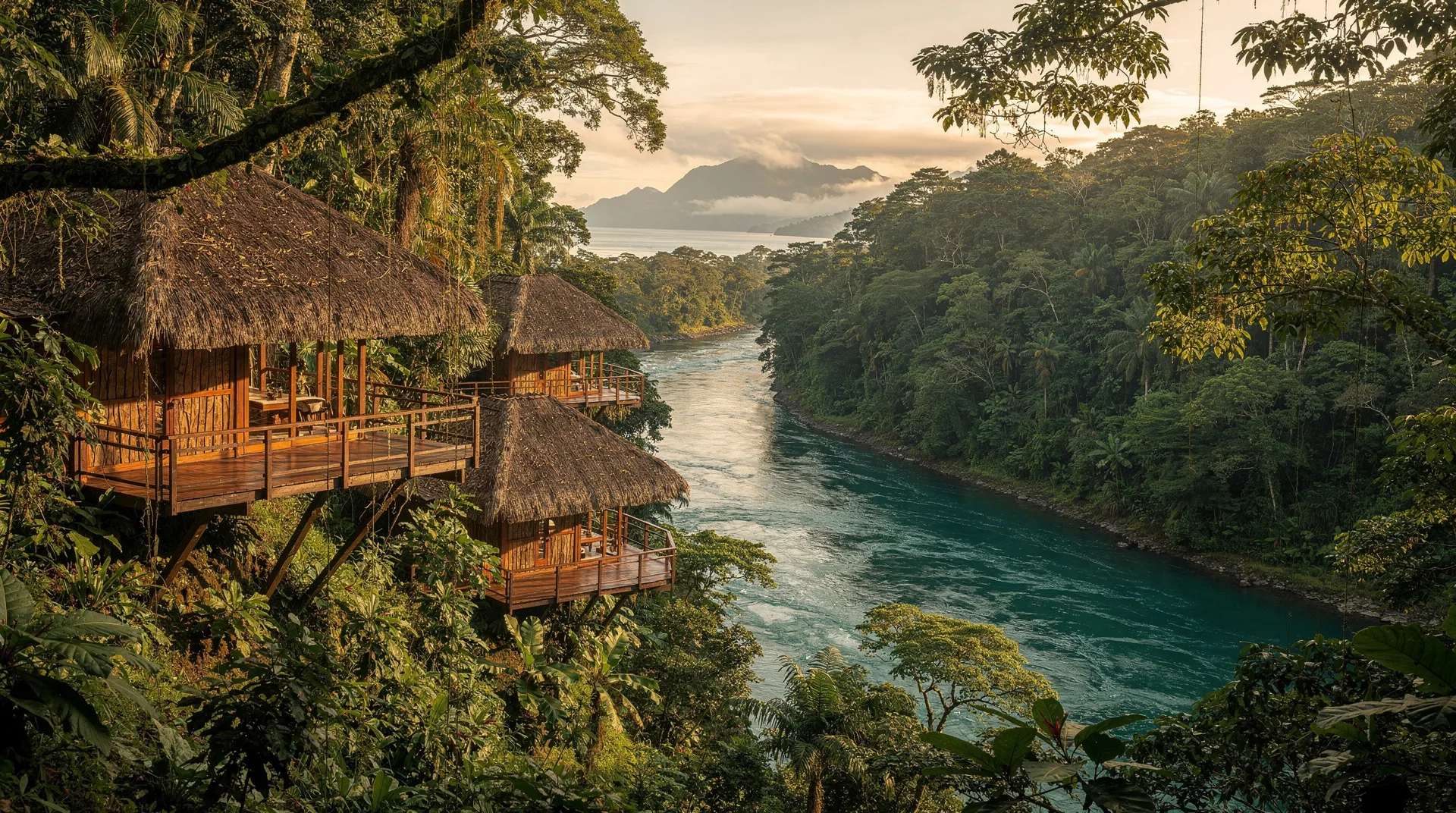
Three lodges define this route. Pacuare Lodge, reachable only by raft down the Class IV Pacuare River, sits in a pristine rainforest canyon with no road access. Nayara Springs in Arenal offers thermal pools fed by volcanic springs, each private plunge pool looking directly at the volcano. Lapa Rios on the Osa Peninsula is a 1,000-acre private nature reserve with 16 tented bungalows perched above the ocean — it has appeared consistently on lists of the world’s best eco-lodges for over two decades.
All three are genuine conservation operations, not greenwash. All three dramatically exceed what any day-tour itinerary can offer.
A private driver handles all road transfers. Internal flights cover the Osa Peninsula section. You focus entirely on the experience.
Because everything is pre-arranged through private drivers and lodge concierges rather than public shuttles, this route is unusually forgiving for travelers who dislike logistics — you show up, and someone is always waiting. The trade-off is spontaneity: unlike a self-drive itinerary, detours and schedule changes need advance notice to the lodges.
Total budget: USD 5,000–9,000 per person for 10 days, excluding international flights. This is the luxury tier — prices reflect the quality.
At a glance
| Stat | Value |
|---|---|
| Total days | 10 |
| Best for | Eco-luxury travelers, couples, honeymooners |
| With/without car | Private driver — no rental car required |
| Budget range | USD 500–900 per person per day, excluding flights |
| Best season | December–April (Osa Peninsula road access best in dry season) |
| Total transfer time | ~12 hours in private cars, boats, and small planes |
Day-by-day breakdown
Day 1: San José arrival and private transfer to Turrialba
Arrive at SJO. Your private driver — pre-booked through your lodge concierge or a reputable operator like Lost World Adventures — meets you at arrivals and transfers you to Turrialba in approximately 2 hours. The route climbs through the cloud-laced Braulio Carrillo corridor, past the active Turrialba Volcano (do not attempt to visit — access is restricted), and down into the Turrialba valley.
Check in at your Turrialba accommodation for one night. Casa Turire ($150–200/night) is the most atmospheric colonial-style property in the area, with a riverside location and spacious rooms.
Dinner at Casa Turire’s restaurant uses produce from their organic gardens. A cold Pilsen after a long day of travel on the terrace listening to the river below is an excellent introduction to Costa Rica.
Days 2–3: Pacuare Lodge — by raft, no roads
Day 2 begins at the Pacuare River put-in point. You’ll raft the first half of the Pacuare — Class III and IV rapids through a pristine canyon — and arrive at the Pacuare Lodge by early afternoon. The lodge is accessible only this way. There is no road.
Pacuare Lodge was one of National Geographic’s “Unique Lodges of the World.” The 20 bungalows are built into the forest, connected by suspension bridges, with the river sounds constant below. No television, minimal electricity in common areas, outstanding food.
Pacuare River rafting (from Turrialba) — from $120 covers the rafting portion — though Pacuare Lodge guests usually book the raft-in transfer directly with the lodge as part of their package. Confirm when booking.
Day 3 at the lodge: wildlife walks with the in-house naturalist guide (ocelot, jaguar, and puma camera traps are on the property), night hike to see tarantulas, poison dart frogs, and sleeping birds, optional rappelling down a 30-meter waterfall on site.
The lodge exit on Day 3 afternoon is by inflatable kayak down the remaining river — a gentle float through the lower canyon. Your private driver meets you at the takeout point and transfers to La Fortuna (about 3 hours).
Cost: Pacuare Lodge packages run from $450–550/night per person all-inclusive, including meals, activities, and raft-in/kayak-out. Book 3–4 months ahead for peak season.
Days 4–6: Nayara Springs, Arenal
Nayara Springs is adult-only, and unlike Nayara Hotel next door, each of the 16 villas has its own private spring-fed plunge pool and outdoor shower facing directly toward Arenal Volcano. Wake up, slide into your private thermal pool, and watch the volcano in the morning mist. Very little about this requires more description.
The Springs restaurant serves exceptional food using ingredients from their on-site garden and partnerships with Tico farmers — the breakfast spread alone is worth a visit.
Activity days from Nayara are guided rather than self-organized. Their naturalist staff takes guests to the Mistico Hanging Bridges, the La Fortuna Waterfall (which the hotel can access before public opening), and night walks.
La Fortuna: Arenal Volcano, lunch & hot springs morning tour — from $120 is available for guests who want a structured morning tour of Arenal Volcano and hot springs — complementary to the Nayara Springs experience rather than replacing it.
Day 5 option: a guided bird-watching morning in the Arenal lake zone — the lake shore attracts tiger herons, jacanas, Amazon kingfishers, and with luck, roseate spoonbills. Evening: the Nayara spa (included in most packages) features volcanic mud treatments and jungle-facing massage rooms.
Day 6: depart La Fortuna toward San José with private driver (3 hours) to position for the Osa Peninsula flight.
Cost: Nayara Springs from $600–900/night per villa, all-inclusive packages available.
Days 7–9: Lapa Rios, Osa Peninsula
Take the morning Sansa or Aerobell flight from SJO to Puerto Jiménez (50 minutes, from $100 each way). A Lapa Rios vehicle meets you at the airstrip and transfers you to the lodge — a 30-minute drive on the Osa Peninsula’s dirt roads.
Lapa Rios sits on a 1,000-acre private nature reserve that includes both primary rainforest and a stretch of Pacific coast. The 16 bungalows are thatched, open-sided, and perched on a ridge with views over the jungle canopy to the sea below. Scarlet macaws are effectively pets — they fly through the open dining area at breakfast. Howler monkeys wake you at 5 AM. The reserve shares a boundary with Corcovado National Park.
Day 8: guided Corcovado National Park day trip to Sirena Station. This is the main activity: a panga from the beach below the lodge, 45 minutes along the coast, and then a full day with a certified guide inside the park. If you’re weighing this leg against a Manuel Antonio-based itinerary instead, our Manuel Antonio vs. Corcovado comparison lays out the trade-off between convenience and genuine wilderness.
Drake Bay: Corcovado NP and Sirena Station tour — from $135 covers the Corcovado National Park and Sirena Station day tour — the exact format Lapa Rios guests use, typically with their own guide.
Sirena has an extraordinary density of wildlife even by Corcovado standards: baird’s tapirs walking within 10 meters of the station, four monkey species, coatis, peccaries, scarlet macaws nesting overhead, and on a very lucky day, a glimpse of a jaguar crossing a trail.
Day 9: morning wildlife walk in the Lapa Rios reserve with the naturalist, followed by an afternoon on the lodge’s private beach. This beach has soft Pacific waves good for gentle swimming, a hammock over the sand, and views of the Osa Peninsula coastline that no road can access.
Evening: the lodge’s sundowner ritual — cocktails on the ridge watching the sun drop into the Pacific.
Cost: Lapa Rios from $400–700/night per bungalow including meals and one guided activity per day.
Day 10: return to San José
Lapa Rios vehicle to Puerto Jiménez airstrip, Sansa flight to San José, private transfer to airport hotel or departure terminal. If your flight is the following day, the Sabana neighborhood or Escazú have several good hotels (Trapp Family Lodge, Intercontinental) within 30 minutes of the airport.
Where to stay
| Destination | Lodge | Approx. nightly rate |
|---|---|---|
| Turrialba | Casa Turire | $150–200/night |
| Pacuare Canyon | Pacuare Lodge | $450–550/night (all-inclusive) |
| Arenal | Nayara Springs | $600–900/night (villa) |
| Osa Peninsula | Lapa Rios | $400–700/night (bungalow) |
Total estimated budget
| Category | Per person (luxury) |
|---|---|
| Accommodation (10 nights) | $3,500–5,000 |
| Internal flights (SJO-PJM return) | $200–300 |
| Activities and guided tours | $400–600 |
| Private driver transfers | $400–600 |
| Food (included at lodges) | $0 (covered) |
| Total | $4,500–6,500 |
What to add or skip
Add if possible: A second night at Lapa Rios allows the overnight Sirena Station experience inside Corcovado — sleeping in the park dormitory, watching tapirs after dark, and morning birding before the day-trippers arrive. It requires advance SINAC reservation but is possible to arrange through the lodge concierge.
Consider skipping: Additional spa days in La Fortuna if Nayara’s own spa is adequate — additional bookings outside the lodge become redundant when the on-site offering is this good.
Honest note on cost: This itinerary is expensive. The three lodges are among Costa Rica’s priciest, and the private driver and internal flights add significantly. However, what you receive is correspondingly exceptional — experiences unavailable to standard itineraries regardless of price. The justification for the cost is real.
How this compares to other eco-luxury routes
Not every high-end Costa Rica lodge fits this particular route, and it’s worth knowing what else is out there before committing. Our broader eco-luxury and wellness lodges guide surveys properties across the country, including several with a stronger wellness or spa focus than Pacuare, Nayara, or Lapa Rios offer. If your priority is thermal-spring relaxation over jungle immersion, the Arenal spa resorts guide covers alternatives to Nayara Springs at a range of price points, including a few that don’t require a full lodge buyout to enjoy the pools for a day.
Weather and seasonal timing for each leg
The three legs of this trip have different weather sensitivities. Pacuare Lodge’s river access depends on rainfall upstream — the Pacuare runs reliably year-round, but heavy rain can occasionally delay the raft-in by a few hours, and the lodge builds buffer time into its schedule for this. Arenal is comfortable in any season; December–April is driest, but afternoon showers in the green season rarely disrupt the Nayara Springs experience since most of it happens on-property. The Osa Peninsula is the most weather-dependent: dirt-road access to Lapa Rios and flight reliability into Puerto Jiménez both degrade in the heaviest rainy months (September–October), so if your dates are flexible, avoid booking the Osa leg then.
Frequently asked questions about this itinerary
Is Pacuare Lodge safe for non-rafters?
Yes. The raft-in is guided by expert Class IV guides and all guests wear full safety equipment. If you genuinely cannot raft for medical reasons, the lodge can be accessed by helicopter — ask when booking. The exit by inflatable kayak on the final day is calm water and requires no paddling skill.
What is the physical level required at Lapa Rios?
The Corcovado day trip involves 4–8 km of trail walking in heat and humidity. It’s not technically challenging but does require basic fitness. Trail sections can be muddy. The on-site wildlife walks at Lapa Rios are easier — short, flat paths through the reserve. Most guests of any fitness level manage comfortably.
Can we extend to 12 or 14 days at these lodges?
Easily. Each lodge rewards an extra night — Lapa Rios in particular becomes more rewarding the longer you stay, as wildlife patterns become familiar and the naturalist guides can tailor activities to your interests. Adding 2 nights across the three properties brings total to 12 days without adding new destinations.
Is there Wi-Fi at these lodges?
Pacuare Lodge has limited Wi-Fi in common areas only — consider this a feature, not a bug. Nayara Springs has good connectivity throughout. Lapa Rios has Wi-Fi in common areas; bungalows are intentionally offline. All three operate on the philosophy that disconnecting is part of the experience.
How far in advance should I book?
Nayara Springs villas book out 4–6 months ahead in peak season (December–March). Lapa Rios books out 3–4 months ahead. Pacuare Lodge has fewer rooms and fills quickly. For a December–January trip, book by August. For April, book by January.
Related itineraries
For adventurous travelers who want similar destinations with more physical activity and less luxury spend, the 12-day adventure and Corcovado itinerary covers the same Pacuare and Osa Peninsula ground on a mid-range budget. For honeymooners who want beach romance alongside the eco-lodge experience, see the 10-day honeymoon and Nicoya itinerary.