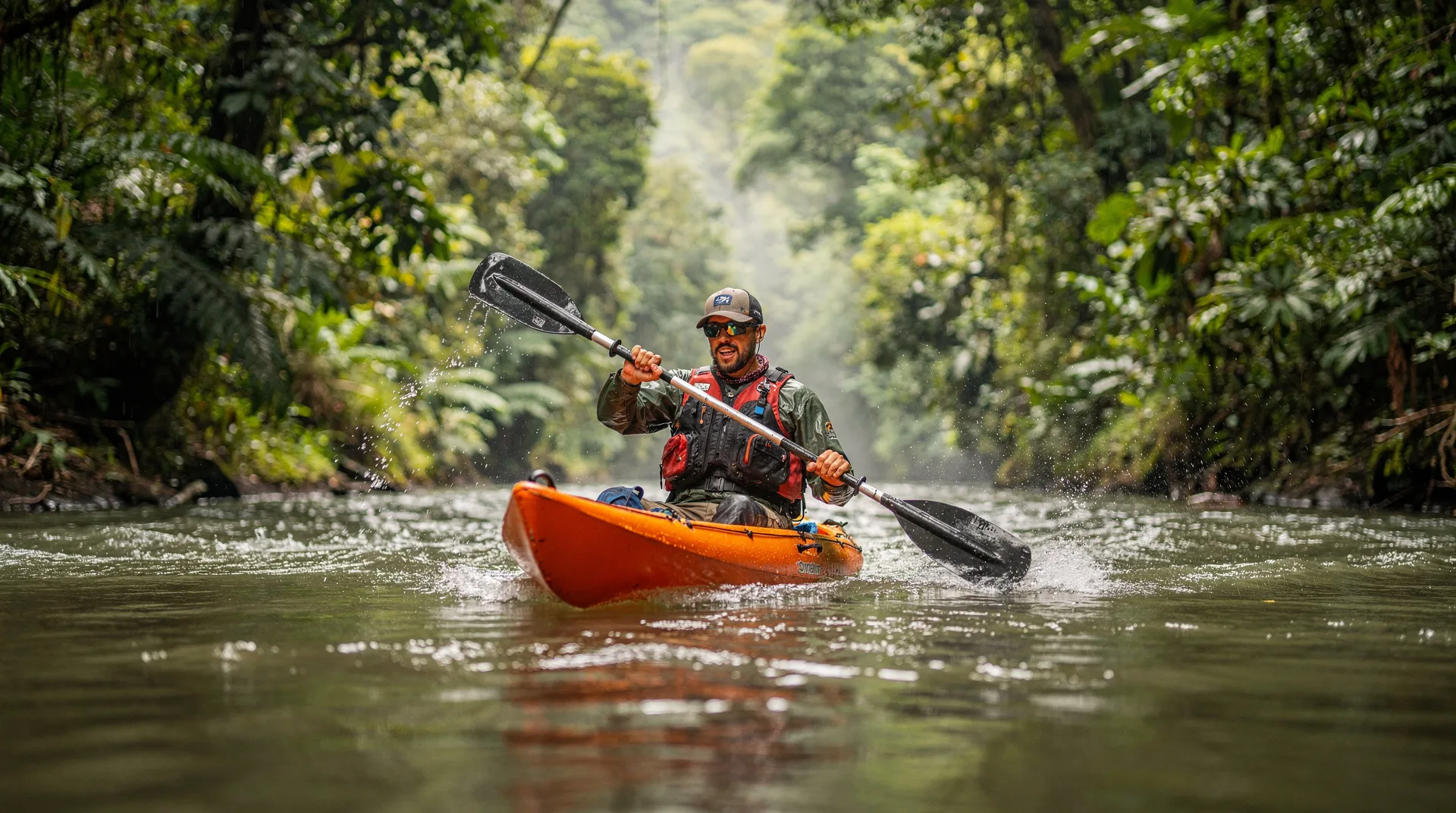
12-day adventure itinerary: Pacuare rafting, Arenal canyoning, and Corcovado
Built for people who don’t want a lounger
This is not a beach-resort itinerary. It’s built for travelers who want Pacuare River waves in their face, rappelling behind waterfalls in an Arenal canyon, and waking up at Corcovado’s Sirena Station surrounded by tapirs and scarlet macaws. If you’re measuring a trip by the intensity of experiences rather than the quality of pool loungers, this is your 12 days.
The route uses a mix of shuttle and boat transfers rather than a rental car — partly because Corcovado is only accessible by boat or small plane, and partly because after a full day of rafting the last thing you want is to drive three hours on mountain roads. Private shuttle segments give you flexibility; the Osa Peninsula’s boat logistics are handled by Drake Bay operators.
Total budget: USD 2,800–5,000 per person for 12 days, depending on Corcovado lodge choice and tour inclusions.
Before you commit, it helps to read the best time to visit Costa Rica guide and the packing list: this route moves between a river canyon, a volcanic lowland and a remote rainforest coast, so quick-dry layers and a good dry bag matter more than anything fashionable. Travel insurance that covers adventure activities is also worth sorting out before you leave home.
At a glance
| Stat | Value |
|---|---|
| Total days | 12 |
| Best for | Adventurers, active travelers |
| With/without car | Shuttle-based — no rental car needed |
| Budget range | USD 230–420 per person per day, excluding flights |
| Best season | December–April for Corcovado access (Sirena sometimes closes September–November) |
| Total drive/boat time | ~14 hours in shuttles and boats across 12 days |
Day-by-day breakdown
Day 1: San José arrival and Turrialba transfer
Fly into San José. Rather than staying in the capital, transfer directly to Turrialba — 2 hours east through the cloud-laced Braulio Carrillo corridor. Turrialba is the Pacuare rafting capital of Costa Rica, a quiet agricultural town surrounded by volcanic highlands and river canyons.
Where to eat: Soda La Feria near the central market does honest Costa Rican comida for under $10 — good black bean soup, fresh tortillas, and grilled chicken. Save the budget for the activities.
Stay: Hotel Casa Turire ($120–180/night, colonial-style riverside property, excellent base for rafting) or Turrialtico Lodge ($75–100/night, simpler but with good river views).
Days 2–3: Pacuare River — Class IV rafting
The Pacuare River is consistently ranked among the top 10 whitewater rivers in the world. It runs 28 kilometers through a pristine jungle canyon, dropping through Class III and IV rapids with names like Dos Montañas (two mountains colliding into the river) and Magnetic Rock. Between the rapids, the river slows through calm green pools where you can hear toucans and see the canyon walls rise 100 meters on either side.
One day is standard; two days with an overnight lodge in the canyon is transformative.
If you want to understand how the sections differ before choosing, the rafting class comparison explains what each grade feels like in a raft, and the multi-day Pacuare expeditions guide covers the overnight format in more depth. The base town is covered on the Turrialba destination page.
Pacuare River rafting (from Turrialba) — from $120 is the full-day Pacuare rafting tour from Turrialba — the most direct and well-organized version of this experience.
La Fortuna: rafting Pacuare & shuttle to SJO or Puerto Viejo — from $140 combines Pacuare rafting with a shuttle transfer — useful if connecting to La Fortuna or San José after the river.
For the overnight option, the Pacuare Lodge (accessible only by raft or helicopter) sits in a cleared rainforest on the riverbank — thatched bungalows, exceptional food, and the canyon completely to yourselves after other groups leave. Rates from $400/night including meals and a half-day river activity.
Day 2 (if doing overnight): second morning on the river with fewer crowds, then transfer to La Fortuna by shuttle.
Days 4–5: La Fortuna — canyoning and Arenal
Transfer from Turrialba to La Fortuna — about 3.5 hours by private shuttle. La Fortuna has a very different energy from the wildlife photography or family market — it’s an activity hub, and for an adventure traveler its canyoning and rappelling options are the highlight.
La Fortuna: canyoning and waterfall rappelling experience — from $110 is the classic La Fortuna canyoning experience — rappelling down three waterfalls (including a 40-meter cascade), swimming through pools, and traversing Tyrolean bridges through the jungle. From $110 per person, full safety gear provided.
For a closer look at how the descent works and what to expect from the guides, see the canyoning in Arenal guide; if you are still deciding between activities, zip-lining vs canyoning vs bridges lays out the differences. The wider area is described on the La Fortuna destination page, and the Arenal Volcano National Park guide is useful if you want a quieter, walking-focused hour between the big days.
Day 4: canyoning. Day 5: kayak on Lake Arenal or a morning at the Místico Hanging Bridges, then transfer by shuttle toward Drake Bay via San José.
Stay: Hotel Tierra Vista ($75–95/night, good base for activities without the resort premium) or La Fortuna Hostel ($25–35/night for budget travelers who’ll spend most of the day outdoors anyway).
Days 6–7: Transit to Drake Bay
Getting to Drake Bay is an adventure in itself. From San José, take a shuttle to Sierpe (about 4 hours south, including the drive through Palmar Norte), then a 1-hour boat down the Río Sierpe through mangrove channels and out into open Pacific swell to Drake Bay. Alternatively, take the 50-minute Sansa or Aerobell flight from SJO to the Drake Bay airstrip — $100–150 each way, saves 5 hours, and the aerial view of the Osa Peninsula is extraordinary.
Drake Bay is one of the most remote accessible communities on the Pacific coast. There’s no paved road to the outside world, electricity is limited, and after sunset the jungle sounds take over completely. It’s magnificent.
The internal flights guide explains how the small-plane option works, and the shuttle services overview helps with the road segments on the way down.
Day 7: settle in, take a short hike on the coastal trail to the village, and have dinner at your lodge. Most Drake Bay lodges are all-inclusive or semi-inclusive — confirm meal arrangements when booking.
Stay: Aguila de Osa Inn ($180–250/night, excellent wildlife opportunities on grounds) or Drake Bay Wilderness Resort ($150–200/night, friendly and well-run).
Days 8–10: Corcovado National Park
Corcovado is the wildest, most biodiverse patch of land in Costa Rica — possibly on the planet per square kilometer. The last true wilderness of the Pacific coast of the Americas, it holds 13 ecosystems, 500 tree species, all four Costa Rican monkey species, Baird’s tapir, jaguar, puma, two crocodile species, and 140 species of amphibians. A certified guide is mandatory — not optional. No solo entry allowed.
Day 8: Corcovado Sirena day trip from Drake Bay. The boat journey to Sirena Station takes 45 minutes in a panga. The station is in the heart of the park — the wildlife here is not afraid of humans, which means extraordinary close encounters with white-faced capuchins, agoutis, and the occasional tapir.
Drake Bay: Corcovado NP and Sirena Station tour — from $135 is the standard Drake Bay to Sirena day tour, including certified guide, entrance fee, and lunch. From $135 per person.
Day 9: overnight at Sirena Station. Sleeping inside Corcovado changes everything. Without day-trippers, the wildlife relaxes after 3 PM — tapirs graze near the dormitories, peccaries root near the station, and the night sounds are unlike anywhere else in the Americas. Reserve the Sirena dormitory through SINAC at least 4–6 weeks in advance.
2 days 1 night in Corcovado Sirena from Drake Bay — from $425 is the 2-days/1-night Sirena experience from Drake Bay — the most efficient way to access the overnight option.
Day 10: morning wildlife walk at Sirena (tapirs and monkeys most active at dawn), return by panga to Drake Bay, depart for San José.
To prepare for the wildlife, the wildlife watching ethics guide explains how to behave around animals that don’t flee, and the nocturnal wildlife guide is worth reading before a night inside the park.
Sirena practical note: The station closes for renovation/weather sometimes in September–October. Confirm access when booking, especially for these months.
Days 11–12: Drake Bay departure and return to San José
Drake Bay: dolphin and whale watching tour — from $120 is a dolphin and whale watching tour from Drake Bay — a good use of the final morning before your boat/flight back to Sierpe and San José. Spinner dolphins are commonly spotted in the bay, and humpback whales appear August–October and December–April.
Return to San José by flight or shuttle. Allow a full day if returning by road (4 hours Sierpe to SJO plus boat transit). If flying, a Sansa morning departure puts you in San José by 10 AM with the afternoon free.
Where to stay
| Destination | Mid-range option | Luxury option |
|---|---|---|
| Turrialba | Turrialtico Lodge (~$85/night) | Casa Turire (~$170/night) |
| La Fortuna | Hotel Tierra Vista (~$85/night) | Nayara Tented Camp (~$500/night) |
| Drake Bay | Drake Bay Wilderness Resort (~$170/night) | Aguila de Osa Inn (~$230/night) |
| Corcovado/Sirena | Sirena Station dormitory (~$50/night, basic) | N/A (dormitory only inside park) |
Total estimated budget
| Category | Per person (mid-range) |
|---|---|
| Accommodation (12 nights) | $900–1,300 |
| Food ($20–60/day) | $240–720 |
| Activities (5–7 tours) | $600–1,000 |
| Shuttles and boat transfers | $300–450 |
| Internal flight (optional, Drake Bay) | $150–200 |
| Park fees + Sirena dormitory | $100–150 |
| Total | $2,290–3,820 |
What to add or skip
Add if possible: A half-day dolphin tour in Drake Bay on arrival day — the bay frequently has large pods of spinner and bottlenose dolphins, and the local operators know their ranges.
Consider skipping: The Turrialba volcano. Volcán Turrialba remains in an active eruptive phase and access is restricted or closed most of the time. Don’t build it into your plans.
Honest reality check on Corcovado: The jaguar is there — camera trap photos confirm 20+ individuals in the park — but you will almost certainly not see one. The chances are around 2–5% even for 3-day visitors. Manage expectations accordingly. What you will see are tapirs (nearly guaranteed at Sirena), all four monkey species, scarlet macaws, and wildlife density that makes the Amazon look sparse.
How this compares to a car-based route
This is one of the few itineraries in this collection built entirely around shuttles and boats rather than a rental car, and that’s a deliberate choice, not a limitation. Corcovado has no road access at all, and after a full day of Class IV rapids or canyoning, a three-hour mountain drive is the last thing most travelers want. The trade-off is less spontaneity than a self-drive trip — you’re committing to booked transfer times rather than adjusting on the fly — but for a route this activity-dense, having someone else handle the logistics between adrenaline days is generally a relief rather than a constraint.
Frequently asked questions about this itinerary
Do I need to be a strong swimmer for the Pacuare rafting?
Basic swimming ability is recommended but not strictly required — all participants wear life jackets and helmets, and the safety protocol is excellent with experienced guides and kayakers flanking the raft. Children under 12 and people with back injuries are not permitted on the Class IV section. The Class II-III section of the Pacuare is suitable for beginners.
How far in advance must I book Sirena Station?
SINAC reservations for Sirena dormitory should be made 4–6 weeks in advance during peak season (December–April). In the rainy season (May–November), you can sometimes book 2 weeks out. Your Drake Bay lodge or tour operator can handle this for you — confirm they’ve done it as part of your booking process.
Is the Drake Bay boat crossing rough?
The Río Sierpe estuary exit into open Pacific can be very rough — a 1-meter swell can become 2–3 meters in the mouth of the river. Most panga operators are experienced and will not cross in dangerous conditions. Motion sickness tablets are advisable. The flight option bypasses this entirely.
Can I combine the Pacuare overnight lodge with this itinerary?
Yes, and it’s highly recommended if budget allows. The Pacuare Lodge (from $400/night all-inclusive) is one of Costa Rica’s most extraordinary accommodations — rainforest bungalows accessible only by raft, excellent food, and the river canyon entirely to yourselves after day-trippers leave. Add one extra day to the itinerary for the overnight option.
What is the minimum fitness level for this itinerary?
Moderate to good fitness is required. The Pacuare rafting involves sustained paddling, the canyoning involves rappelling and climbing, and the Sirena trail system involves walking 6–15 km on muddy paths in heat. You don’t need to be an athlete, but this is not a “gentle walk” itinerary. The Corcovado day trip is more manageable than the overnight option if fitness is a concern.
Related itineraries
Travelers who want the Corcovado wilderness experience with more luxury and less rafting should look at the 10-day eco-luxury itinerary, which combines Pacuare Lodge, Nayara Springs, and Lapa Rios in an exclusively high-end framework. For those who want to add Caribbean coast to this adventure theme, see the 2-week complete loop. For a comparison of Corcovado against the more accessible Manuel Antonio option, see the Manuel Antonio vs. Corcovado guide.