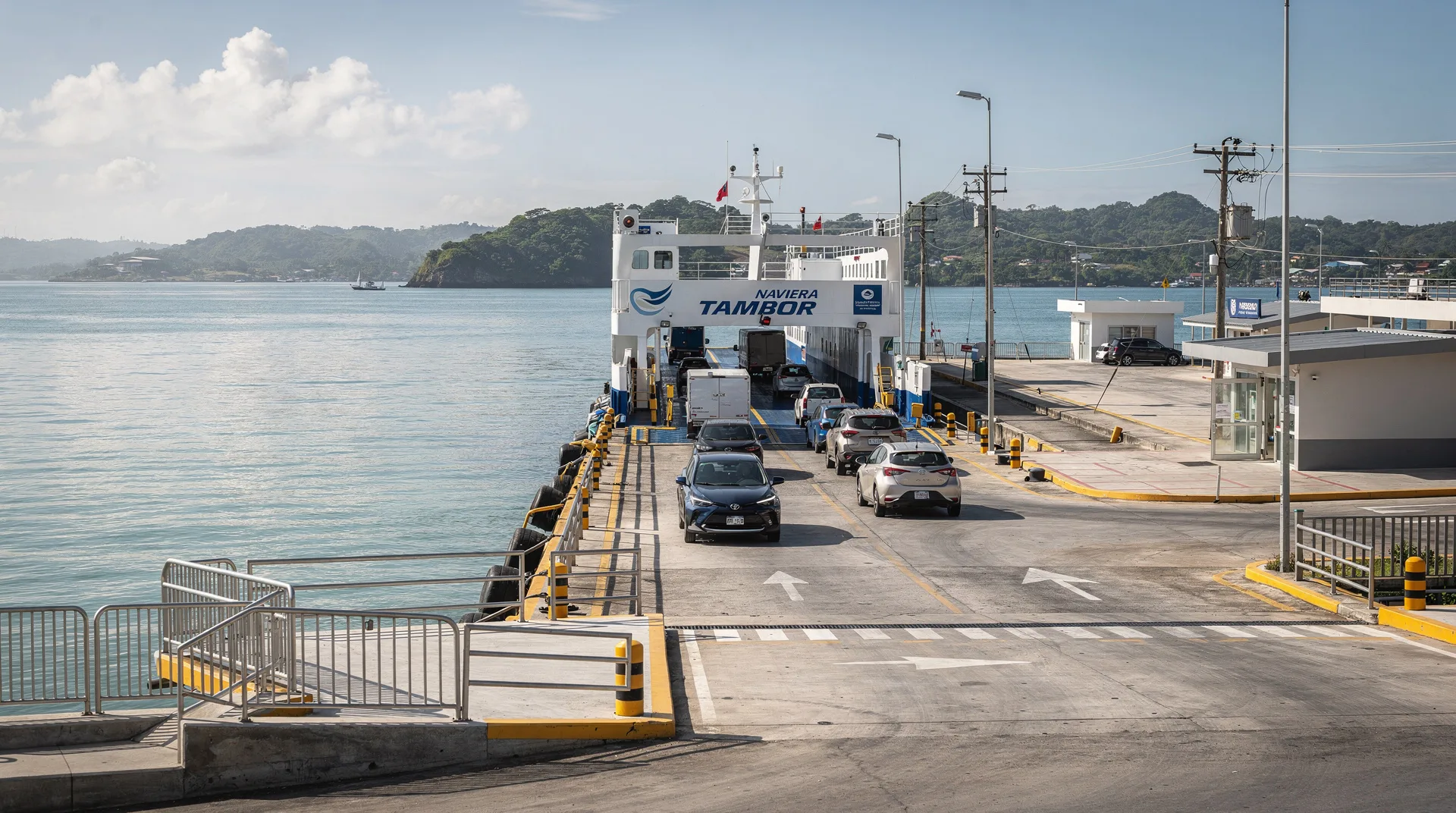
Paquera ferry improvements in 2024: what actually changed
The Nicoya Peninsula’s most important ferry just got a serious upgrade
If you are planning to drive to Montezuma, Santa Teresa, or anywhere on the southern Nicoya Peninsula, the Puntarenas-Paquera ferry is not optional — it is the route. For years, the crossing operated with aging vessels, unpredictable schedules, and a vehicle-booking system that amounted to “show up early and hope.” In 2024, Naviera Tambor changed that.
The company added a new vessel — the Naviera Rey — to the route, increasing both capacity and crossings per day. For independent travelers driving a rental car or a campervan south into the Nicoya, this is meaningful news. Here is what changed, what stayed the same, and what you need to know before you drive to the dock.
| Route | Puntarenas → Paquera (car ferry, 1hr 20min) |
| Cost | Around 11,500–15,000 CRC/vehicle each way + ~1,000 CRC/adult |
| Booking | Online up to 30 days ahead at navieratambor.com |
| Time needed | 2 hours minimum incl. queue; 3 hours on busy Fridays |
| Best for | Drivers heading to Santa Teresa, Montezuma, Cabo Blanco |
What Naviera Tambor actually added
The Naviera Rey entered service in mid-2024 and brought the fleet up to three active ferries on the Puntarenas-Paquera corridor. The most visible change is crossing frequency: where the 2023 schedule averaged four to five crossings per day in each direction, the 2024 schedule bumped to six in peak season and five in green season — with an additional late-evening option on Fridays and Sundays that covers travelers arriving on late afternoon flights into San José (SJO).
Capacity per crossing is the bigger story. The older vessels on the route, the Naviera Tempisque and Naviera Cacique, carry roughly 30-35 vehicles each depending on size. The Naviera Rey raises that to approximately 55 vehicles, a 60% increase. For high-season weekends — when the Semana Santa and Christmas queues routinely stretched 4-5 hours — this matters.
Passenger comfort improved too. The new boat has enclosed seating with functioning air conditioning (a specific complaint about the older ferries), a larger snack bar, and cleaner restrooms. The crossing itself is the same 1 hour 20 minutes regardless of vessel.
Online vehicle reservations: the real change
Before 2024, vehicle reservations on the Puntarenas-Paquera route were theoretically available but practically unreliable. The booking portal worked inconsistently, confirmation emails arrived late or not at all, and drivers who showed up with reservations were routinely told the system had no record. The practical advice was always “arrive two hours early and get in the vehicle queue.”
Naviera Tambor overhauled their reservation platform alongside the new vessel launch. The current system (navieratambor.com) allows bookings up to 30 days ahead with payment by Visa, Mastercard, or SINPE Móvil. Confirmation is near-instant by email. More importantly, the reserved-vehicle lane is now physically separated from the walk-up queue — something that was promised for years but never implemented until the new dock layout at Puntarenas was completed in September 2024.
For practical purposes: if you are traveling between December 20 and January 5, during Semana Santa, or on any Sunday between mid-December and April, book your vehicle slot at least two weeks ahead. These windows now sell out on the new system. For shoulder season and green season, same-day or next-day bookings are usually fine, but booking 48 hours ahead costs you nothing and eliminates the walk-up anxiety.
What the crossing costs in late 2024
Vehicle pricing varies by size. A standard sedan or compact SUV (rental car class) runs approximately 11,500-12,500 CRC each way (roughly $22-24 USD at late 2024 rates). A larger pickup or 4WD runs 13,500-15,000 CRC. Passenger fare is separate: adults pay around 1,000 CRC ($2) each way, children under 12 travel at half fare.
The pricing is modest enough that the main cost consideration for this route is not the ferry itself but the time involved: plan for two hours at minimum when including queue time, boarding, crossing, and disembarkation. On a busy Friday afternoon, plan for three.
The drive from San José to the Puntarenas terminal
Getting to the ferry terminal at Puntarenas from San José takes approximately 1.5 to 2 hours in normal traffic. The route via the Costanera Sur or via the Autopista General Cañas is well-paved and straightforward. The terminal entrance is on the far western end of Puntarenas city — follow signs for “Ferry Paquera” rather than the general port, which handles different routes.
Arrive at the terminal 60-90 minutes before your reserved crossing, or 90-120 minutes if you have a walk-up vehicle ticket. The vehicle line fills from left to right on the dock; attendants direct you. Once loaded, you can stay in the car or walk up to the passenger deck — the upper deck with outdoor seating is worth the climb if the weather is good.
Making use of the time around the crossing
Puntarenas is usually treated as a place to pass through, but a flexible schedule turns the wait into something useful. If you have booked an early crossing and arrive in the area the day before, the Gulf of Nicoya is right there: some travelers spend the extra day on a speedboat day trip to the islands in the gulf — from $110 , while others prefer the slower, more comfortable option of a VIP-style island cruise with lunch and time on the beach — from $120 . Either way, check the return time against your ferry slot before you commit, and do not stack the two on the same day.
If your trip also takes in the cloud forest, the same corner of the country connects with Monteverde, and a late-day departure from the Puntarenas side can be paired with a night walk in the Monteverde forest — from $30 for those who like wildlife after dark. Our nocturnal wildlife guide explains what to expect and how to behave on those walks.
For the wider picture of getting around, our ferry routes guide compares the other crossings, and the driving in Costa Rica guide covers fuel, night driving, and road etiquette. If you are still deciding whether to hire a car at all, read rent a car or not first, and for the flying alternative see internal flights with Sansa and Aerobell. Costs shift over time, so our 2026 pricing update is a good companion read.
Paquera to Montezuma and Santa Teresa after you land
From the Paquera dock, the road south to Montezuma takes about 35-45 minutes on paved road. Santa Teresa and Mal País add another 30-40 minutes from Montezuma — that section is gravel but manageable in a standard 4WD. Cobano is the main junction; fill up with fuel there as the options in Montezuma and Santa Teresa are limited and pricier.
If you are heading to Santa Teresa rather than Montezuma, the Cobano junction is where you decide — turn right for Santa Teresa, continue straight for Montezuma. The roads are signed but the signs are small.
For travelers not bringing a vehicle, the ferry operates for foot passengers as well, and there are shared taxis and shuttles from the Paquera dock to both Montezuma and Santa Teresa. Interbus and GrayLine do not run ferry-connecting shuttles from the dock, but local operators are reliable and charge $8-15 per person to either destination.
Beyond Montezuma and Santa Teresa
The Paquera crossing is also the practical route for reaching quieter corners of the peninsula beyond the two headline towns. If your itinerary includes surf as much as scenery, both Santa Teresa’s surf guide and Nosara’s surf guide are worth reading before you pick a base — Nosara sits further north and is usually reached via Nicoya town rather than this ferry, but travelers cross-referencing the two routes ask us about it often enough that it is worth flagging here. For a wider view of the coastline this ferry opens up, our Guanacaste beach guide covers the northern stretches you would otherwise need to fly into Liberia for.
Is the ferry worth it vs. flying?
Sansa operates regular flights from San José to Tambor airport, roughly 30 minutes’ flying time. If you are not bringing a rental car to the peninsula, the domestic flight is genuinely worth considering — especially for tight itineraries. The combination of driving to Puntarenas, waiting for the ferry, crossing, and driving south adds 5-6 hours to a journey that the Sansa flight covers in under an hour door to dock.
That said, if you want flexibility — the ability to stop, to go off-route, to reach spots like Cabo Blanco or Mal País on your own schedule — the vehicle ferry remains the better option. The 2024 improvements make it significantly less painful than it was. The reserved vehicle lane alone saves an hour of standing in the sun on a busy weekend.
Looking back on a genuinely useful upgrade
The Puntarenas-Paquera ferry is one of those pieces of travel infrastructure that gets taken for granted when it works and is blamed for everything when it does not. The 2024 upgrade — new vessel, working online booking, separated reserved lane — represents a meaningful step forward for the southern Nicoya Peninsula as a practical destination for independent drivers.
For itineraries that include Montezuma, Santa Teresa, or Cabo Blanco, the logistics are now reliably manageable. Book the vehicle slot, arrive with margin, and the rest of the journey south is one of the more scenic drives in the country.