Montezuma — bohemian waterfalls and Isla Tortuga at the tip of Nicoya
Montezuma offers cascading waterfalls, an artsy bohemian atmosphere, and day trips to Isla Tortuga. Guide for 2 days on Costa Rica's Nicoya Peninsula.
Top experiences nearby
Santa Teresa: Tortuga Island full-day boat tour with snorkel
From Jacó: Tortuga Island day trip with activities
From Jacó: Tortuga Island boat tour with snorkel
From Jacó: Isla Tortuga small-group adventure tour
Isla Tortuga snorkeling tour with BBQ lunch
Rio Celeste waterfall in Tenorio Volcano National Park
Quick facts
- Best time to visit
- December to April (dry season)
- Days needed
- 2 days
- Getting there
- Ferry Puntarenas–Paquera then 40 min drive south, or Tambor airstrip (Sansa/Aerobell)
- Budget per day
- USD 50 to 120
A town that chose not to grow up
Montezuma sits at the southern tip of the Nicoya Peninsula, reachable only by ferry from Puntarenas and a 40-minute drive south from Paquera, or by a 25-minute Sansa flight to the Tambor airstrip. That relative isolation has kept it small and strange in the best possible way. The town is a single unpaved main street lined with tree-root benches, outdoor restaurants, and art galleries that appear to have been running since 1995. Travelers who expected this kind of place from Costa Rica and found Tamarindo too commercialized, or Santa Teresa too Instagram-manicured, often end up staying in Montezuma longer than planned.
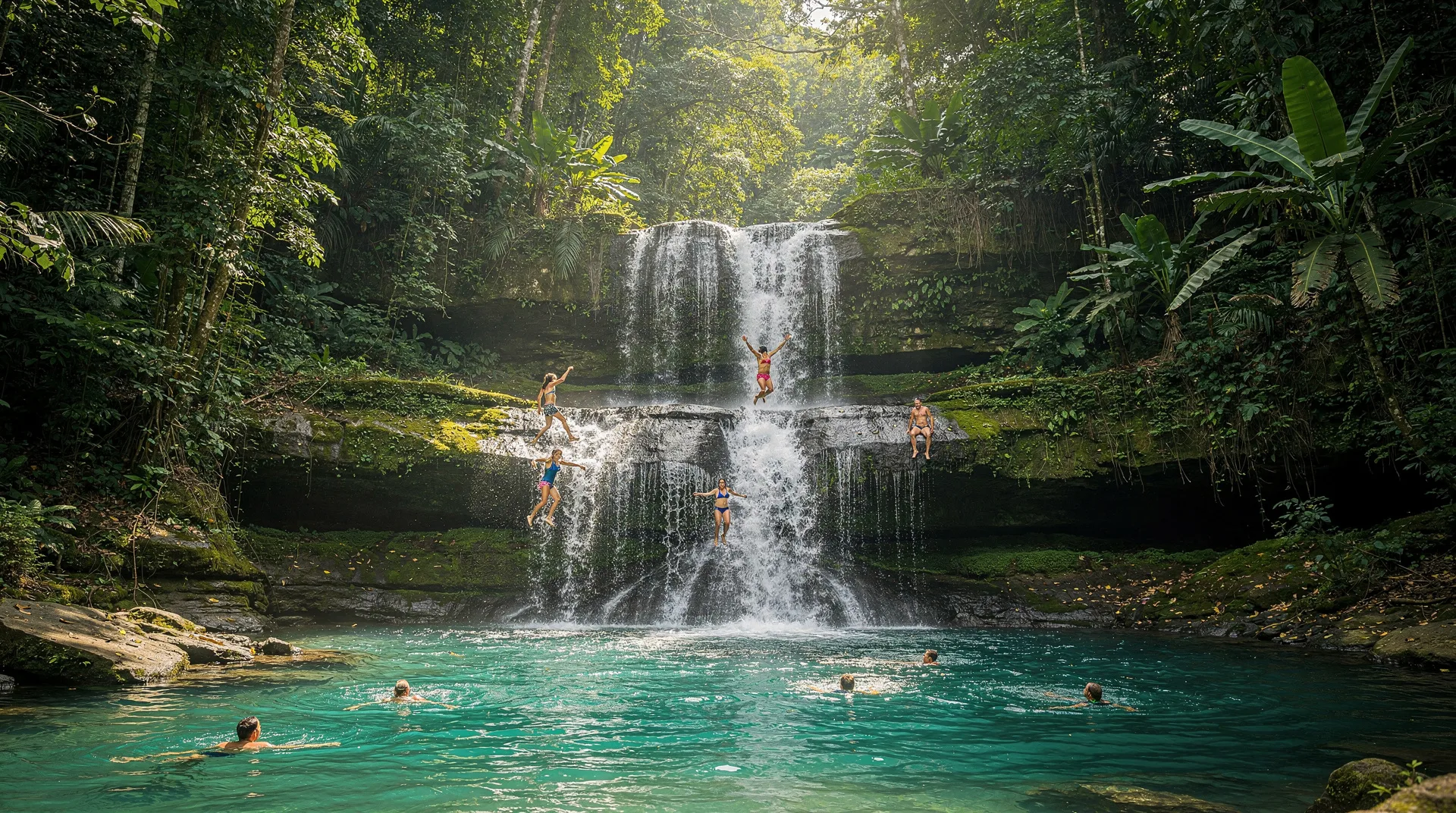
The main draw is the waterfall system just outside town — three cascades connected by a trail that most visitors can reach in under 30 minutes. The top cascade drops into a deep pool, swimmable year-round though current strengthens after heavy rain. Beyond the waterfalls, Montezuma’s main asset is Isla Tortuga, reached by organized boat tours from the beach.
| Where | Southern tip of the Nicoya Peninsula, Puntarenas province |
| Cost | Around USD 50-120/day |
| Time needed | 2 days |
| Getting there | Ferry Puntarenas-Paquera then 40min drive, or Tambor airstrip |
| Best time | December-April (dry season) |
The Montezuma waterfalls
The trail to the falls begins at the south end of town, crosses a small river, and follows a path through secondary forest. The first waterfall (about 10 minutes from town) is small but has a clear pool. The main attraction is the second and third cascades, reached after a moderate scramble over rocks — water shoes are strongly recommended. The highest pool, at the third cascade, is the jumping point: a rope swing and a ledge from which swimmers leap 5 to 6 meters into the water below. This is genuinely fun and generally safe when water levels are normal, but exercise caution after heavy rain when the current in the pool strengthens noticeably.
Entrance to the falls area is free. There is no formal guided tour because the trail is well-marked and short. Local guides can be hired informally near the trail entrance for around USD 15 to 20 if you want commentary on the flora and fauna — there is actually a lot to notice in the forest between the falls.
Isla Tortuga: the day trip highlight
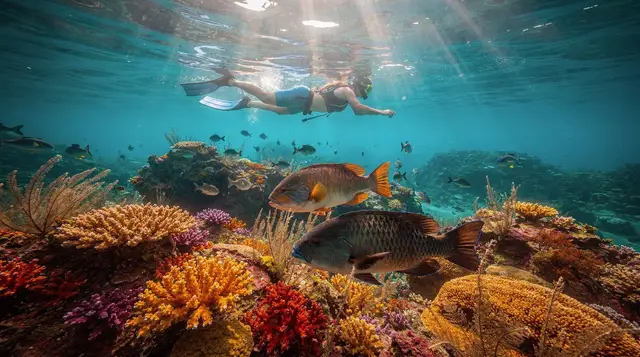
Isla Tortuga is a pair of uninhabited islands about 45 minutes by boat from Montezuma’s beach. The snorkeling around the island’s rocky points is the best available from any southern Nicoya base — visibility averages 8 to 12 meters in the dry season, with reef fish, sea urchins, and the occasional sea turtle visible.
The full-day boat tour from Santa Teresa (which passes Montezuma en route) is the standard package: snorkeling, beach time on the island’s white sand beach, and the return journey. This is one of the most photogenic experiences on the Pacific coast.
Santa Teresa: Tortuga Island full-day boat tour with snorkel — from $155From Puntarenas to the north, the VIP day trip format includes a larger vessel, better onboard facilities, and a buffet lunch.
From Puntarenas: Tortuga Island VIP tour full-day — from $120A more budget-conscious option is the snorkeling tour with BBQ lunch that runs from the broader Costa Rica coast.
Isla Tortuga snorkeling tour with BBQ lunch — from $135One honest note: Isla Tortuga is privately managed and has a USD 15 to 20 landing fee charged by the boat operators in addition to tour prices. Confirm what is included before booking.
Cabo Blanco Absolute Nature Reserve
Eleven kilometers south of Montezuma sits Cabo Blanco — Costa Rica’s first officially protected area, established in 1963 after conservationists Olof and Karen Wessberg fought to save the peninsula’s last patch of intact dry-to-humid transitional forest from logging. The reserve is smaller and less developed than the country’s better-known parks: a handful of trails through mature forest lead to isolated beaches accessible only on foot, with howler monkey troops, white-faced capuchins, and a healthy population of coatis.
It is open Thursday through Sunday only, and the relative lack of visitor infrastructure is part of the appeal — this is Cabo Blanco’s honest offer: fewer amenities, fewer people, and forest that feels genuinely wild. Access is by taxi (about USD 15 each way) or a scenic 2-hour coastal hike from Montezuma.
The beach and town
Montezuma’s town beach is rocky and not ideal for swimming — it has character but not calm water. Playa Las Manchas, 500 meters north along a coastal path, is wider and sandier. Playa Cocolito, 1 kilometer south, is a small pocket of calm water good for children. For the best swimming in the area, Sámara (100 km north) has the most reliably calm and safe waters on the Nicoya Peninsula. The main beach serves more as a backdrop than a swimming destination.
The town’s eating and drinking scene has a distinct bohemian register. Ylang Ylang Restaurant (technically in a lodge 15 minutes north by boat or 25 minutes on foot) is the best cooking in the area — open-air beachfront tables, good seafood and vegetarian options, USD 15 to 25 per person. In town, El Sano Banano is the reliable vegetarian/health food spot with good smoothies and a projector screening films nightly (a Montezuma tradition going back 25 years). Bakery Café is the breakfast stop — good coffee and homemade pastries at local prices.
Rhythm of a day in Montezuma
The town rewards a slow schedule. Mornings suit the waterfall trail, when the forest is cooler and the pools are quieter; afternoons are for hammocks, a swim at a calmer cove, or a long lunch. Evenings gather around the main street, where the restaurants and the film nights at El Sano Banano give the town its social center. If you are coming from busier coasts such as Tamarindo or Jacó, expect fewer nightclubs and more conversation under the trees.
Because the town is compact, you rarely need a vehicle once you arrive. Most of what matters, from the trailhead to the beach path to the boat departures, can be reached on foot. Taxis are useful mainly for Cabo Blanco and for connections toward Santa Teresa. Our rent a car or not guide helps you decide whether a rental makes sense for the wider Nicoya trip, and the road conditions by region page explains what to expect on unpaved stretches.
Wildlife, forest and the sea around town
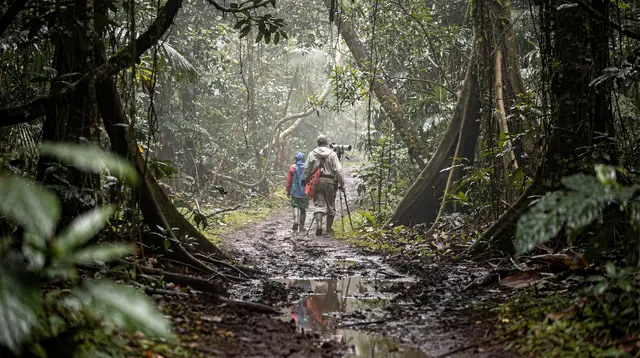
The forest around the waterfalls is a good introduction to Costa Rica’s dry-to-humid transition zone. Watch the canopy for monkeys, and the trail edges for lizards and birds. Our monkey species guide and the bird watching by region page will help you identify what you see, while wildlife watching ethics is worth a read before you get close to any animal. Keep your distance, never feed anything, and take your rubbish with you.
Out on the water, the same principles apply. Snorkelers around Isla Tortuga share the reef with fish, urchins and the occasional turtle, so avoid touching the coral or standing on it. If the underwater world appeals, the best snorkel beaches and marine life guide put the island in the context of the rest of the country, and snorkel vs dive helps you decide how deep to go.
Choosing your Isla Tortuga departure
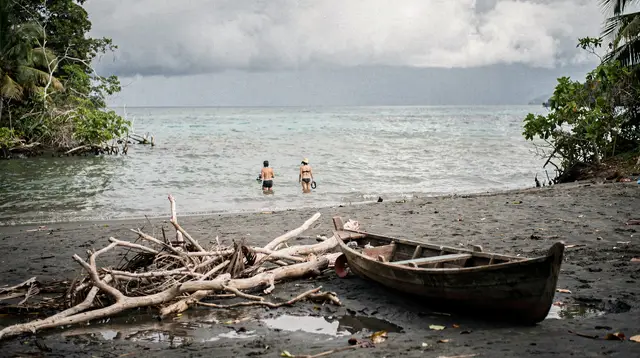
Three different starting points feed the same island, and the right one depends on where you are sleeping. Departing from the beach near Montezuma keeps your day simplest if you are staying in town: no early transfer, and you return to your own bed. The Santa Teresa departure suits travelers based on the other side of the cape, while the Puntarenas version is a larger, more organized outing that works well if you are arriving or leaving by ferry anyway. Whichever you pick, bring reef-safe sunscreen, a hat, and a dry bag for your phone, and ask what the operator provides for snorkel gear and lunch. Read beach safety before any boat day, and check tide and surf conditions if the sea looks lively.
Packing and practical habits
Light, quick-drying clothes, water shoes and a small waterproof bag cover most of what Montezuma asks of you. Bring cash for small purchases, since a bohemian town does not always favor cards; the ATM and cash tips and money and currency pages explain how to handle it. The full packing list covers insect repellent and rain layers, and safety in Costa Rica offers general common-sense advice. Travel insurance is also worth sorting before a trip with boats and rock scrambles: see travel insurance.
When to come, and what else to pair it with
The dry season is the easiest time for the trail and the boats, while the green months bring lusher forest and fewer visitors at the cost of muddier roads. Compare the trade-offs in dry season pros and cons and green season pros and cons, or consult the best time to visit overview.
Montezuma pairs naturally with its neighbors. Cabo Blanco and Mal País lie close by, and Santa Teresa adds surf and yoga; the Nicoya Peninsula beaches guide maps out the rest of the coast. For a longer plan, the 10 days surf trip on the Pacific and the 7 days yoga and wellness itineraries both fit this corner of the country, and hidden beaches is a good source of ideas for quieter sand.
Where to stay
Mid-range: Ylang Ylang Beach Resort offers the most comfortable lodging near town, with bungalows in a forest setting above the beach (USD 120 to 200 per night). El Jardín is a good mid-range option in town with comfortable rooms and a garden. Budget: Hostel Luna Llena is the central budget choice — dormitories at USD 15 to 20 and private rooms at USD 40 to 60. Camping is permitted on the beach north of town.
Getting there
The most common route is from San José to Puntarenas by bus (2 hours, USD 3), then the Naviera Tambor ferry to Paquera (1h20, USD 4 per foot passenger, USD 25 for a car), then a local bus or taxi south to Montezuma (40 min, USD 2 by bus or USD 15 by taxi). Our ferry routes guide explains the Puntarenas–Paquera crossing in detail, including current schedules and vehicle booking requirements. Total trip time: around 5 hours. Sansa and Aerobell fly from SJO to Tambor (25 min, around USD 80 to 110 one-way), saving 4 hours. A taxi from Tambor to Montezuma costs USD 20 to 25.
There is no shortage of tourist shuttles. Caribe Shuttle and Interbus operate door-to-door services from major hotels in San José and Jacó starting around USD 50 to 65 per person.
Frequently asked questions about Montezuma
Is Montezuma safe?
Yes, for typical travel risks. Petty theft occurs — do not leave valuables on the beach unattended. The waterfall trail has no significant safety issues in normal conditions, but the climbing sections between falls require care after rain. Swim in the waterfall pool only when the current is calm; local guides or signs will advise if conditions are poor.
How do Montezuma and Santa Teresa compare?
Montezuma is rawer, cheaper, and more backpacker-oriented. Santa Teresa is more developed, with better surf, more restaurants, and a younger, wealthier demographic. Both are on the southern Nicoya Peninsula and reachable from the same ferry — some travelers combine them with a taxi between the two towns (about 45 minutes on an unpaved road). If you want bohemian and cheap, Montezuma. If you want surf and scene, Santa Teresa.
Can I combine Montezuma with Cabo Blanco Reserve?
Yes. The Cabo Blanco Absolute Nature Reserve — Costa Rica’s first protected area — is 11 kilometers south of Montezuma. It’s accessible by taxi (USD 15 each way) or on foot (a 2-hour hike along the coast). The reserve has a good trail system through dry forest, white-sand beaches accessible only on foot, and howler monkey populations. Open Thursday to Sunday.
Is the road between Montezuma and Santa Teresa drivable?
Yes, but it’s unpaved and takes 45 to 60 minutes. In the dry season, a standard car handles it. In the wet season (May through November), a 4WD is recommended — some sections flood and become muddy. Taxis connect the two towns for USD 20 to 30.
How to fit Montezuma into your itinerary
Two nights is the standard allocation: Day 1 in the waterfalls and around town, Day 2 on the Isla Tortuga boat trip. From Santa Teresa, Montezuma is a logical 45-minute taxi connection, making a combined Nicoya Peninsula trip very natural. The ferry from Puntarenas also connects directly with Jacó by road (45 minutes north of Puntarenas), so a circuit of Jacó–Montezuma–Santa Teresa by public transport is feasible for backpackers.