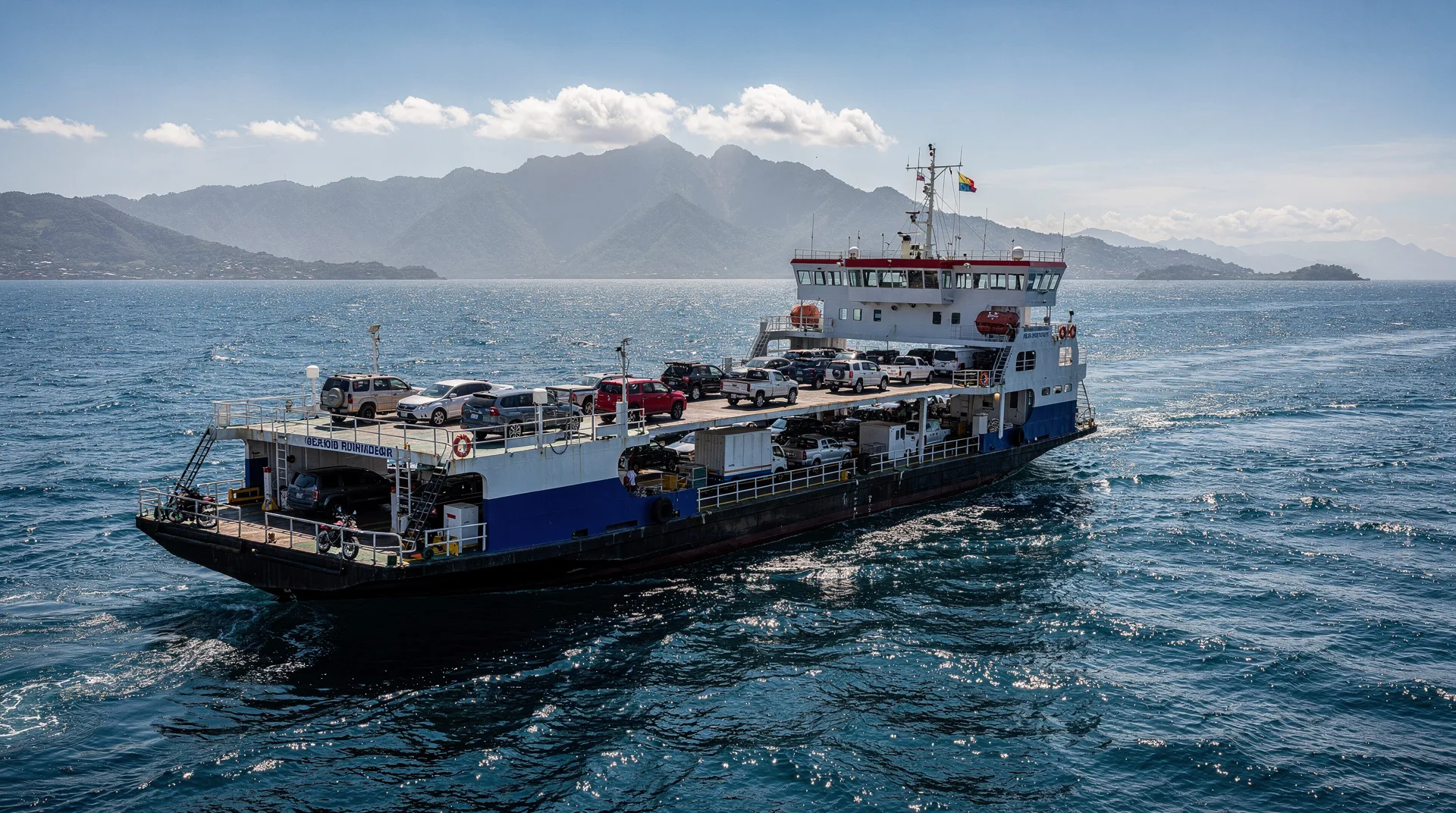
Ferry routes in Costa Rica: Puntarenas, Nicoya, and beyond
Is there a ferry from Puntarenas to the Nicoya Peninsula?
Yes — Naviera Tambor runs 4–6 sailings daily between Puntarenas and Paquera. Crossing takes 1 hour 20 minutes. Vehicles can cross; reservations essential in high season.
Costa Rica’s ferry network at a glance
Costa Rica has two main passenger and vehicle ferry crossings that are genuinely useful for tourists: the Puntarenas to Paquera crossing (operated by Naviera Tambor) and the Puntarenas to Naranjo crossing (operated by Coonatramar). Both crossings reach the Nicoya Peninsula — the large finger of land jutting down from Guanacaste that contains Santa Teresa, Montezuma, Jacó, and the southern Nicoya beach communities. A third water transport route connects Río Frío (near Caño Negro) to Tortuguero, but this is a river and canal route rather than a conventional ferry, and it requires a guide or organised tour.
The ferry question comes up most often for travellers planning to rent a car and drive between the Pacific coast and the Nicoya Peninsula. Without the ferry, the road alternative from San José to Montezuma or Santa Teresa runs approximately 5–6 hours through the Nicoya bridge (Puente sobre el Golfo de Nicoya) and then down the peninsula. With the ferry from Puntarenas to Paquera, the same journey takes approximately 3 hours total for anyone coming from the Pacific side.
| Main route | Puntarenas → Paquera (Naviera Tambor) |
| Crossing time | Around 1h20 |
| Cost (vehicle) | Around $25–30 (under 5m) |
| Reservations | Essential Dec–Apr weekends & holidays |
| Alternative | Sansa flight to Tambor (~20 min) |
The Puntarenas–Paquera ferry: Naviera Tambor
The most important and most used ferry crossing in Costa Rica for tourists is the Naviera Tambor service between Puntarenas (on the Pacific mainland) and Paquera (on the southern Nicoya Peninsula). This is a full ro-ro (roll-on, roll-off) car ferry — vehicles drive on board, cross the Gulf of Nicoya, and drive off at the other side.
Route and schedule
Crossing distance: approximately 17 nautical miles across the Gulf of Nicoya.
Crossing time: 1 hour 20 minutes.
Operator: Naviera Tambor (navierapuntarenas.com / navieratambor.com). This company has operated the route for several decades and completed improvements to its fleet around 2024, adding more capacity and a newer vessel on the route.
Daily sailings from Puntarenas (approximate times):
- 5:30 am
- 8:30 am
- 11:00 am
- 2:30 pm
- 5:30 pm
- 8:00 pm
Daily sailings from Paquera (approximate times):
- 6:30 am
- 9:30 am
- 12:00 pm (noon)
- 3:30 pm
- 6:30 pm
- 9:00 pm
The schedule changes seasonally and Naviera Tambor sometimes runs additional sailings during Semana Santa (Easter week, typically March–April) when demand peaks. Always verify the current timetable directly at navierapuntarenas.com or by calling their office before travelling, particularly during holiday periods.
Costs (2026 reference)
| Passenger or vehicle | Approximate cost |
|---|---|
| Foot passenger (adult) | $1.50–2.00 USD |
| Vehicle under 5m (standard car or SUV) | $25–30 USD |
| Vehicle 5–8m (van, minibus) | $35–45 USD |
| Motorcycle | $10–15 USD |
| Bicycle | $3–5 USD |
The vehicle cost includes all passengers in that vehicle. You do not pay separately per person if you are in a car. The passenger fare applies only to foot passengers travelling without a vehicle.
Payment
Payment is made at the terminal in Puntarenas. Cash (colones or USD) is most reliable. Credit card acceptance at the terminal is available but has been inconsistent — carry colones or USD as backup.
Reservations: when you need them and when you don’t
Foot passengers do not need reservations. Simply arrive at the terminal, purchase a ticket, and board the next available sailing. Even during high season, foot passenger capacity is rarely exhausted.
Vehicle reservations are essential during:
- December 20 – January 10 (Christmas and New Year)
- Semana Santa / Easter week (March–April)
- Long weekends (Costa Rica has several public holidays)
- Any Saturday or Sunday in December–April peak season
Without a reservation in these periods, you risk arriving at the terminal to find all slots for the next two or three sailings already full. In the worst case — Saturday afternoon before a long weekend — vehicles have waited 4–5 hours before getting a spot.
To reserve: call the Naviera Tambor reservations line or book via their website. Reservations require payment or a deposit. The booking system allows you to specify your vehicle type, licence plate, and preferred sailing time.
Outside peak periods (May–November green season, most weekdays in dry season), showing up without a reservation is generally fine. Arrive at least 45 minutes before your intended departure and you will almost certainly get on.
The Puntarenas terminal: logistics
Getting to Puntarenas
Puntarenas is 100 km from San José via Ruta 1 and Ruta 23. The drive takes approximately 1.5–2 hours from San José without traffic, longer during peak commute times.
From San José, the route is: Ruta 1 north toward Alajuela, then turn onto Ruta 23 at Palmares, and follow through Esparza to Puntarenas. The Ruta 27 Pacific motorway from San José connects to this route as well via a junction near La Cañada.
From Liberia: Approximately 2.5 hours south on Ruta 1 to the Puntarenas junction.
From Jacó or Manuel Antonio: Take Ruta 34 (Costanera) north to Caldera, then follow signs toward Puntarenas. Approximately 1 hour from Jacó.
At the terminal
The Naviera Tambor ferry terminal (muelle de ferry) is located at the western tip of the Puntarenas peninsula. The town of Puntarenas sits on a narrow sandbar, and the terminal is at the far end. GPS and Waze navigation to “Ferry Naviera Tambor Puntarenas” brings you accurately to the vehicle staging area.
Vehicle staging: Vehicles form a queue in marked lanes based on vehicle size. For sailings with reservations, there is a separate lane for pre-booked vehicles.
Arrive early: For reserved crossings, arrive at least 30 minutes before departure. For unreserved crossings, arrive at least 45–60 minutes early to assess queue length and choose your sailing accordingly.
Facilities at the terminal: There are basic snack vendors and a small waiting area. The ferry itself has a deck seating area and a basic food kiosk. The crossing is scenic — the Gulf of Nicoya has good birdwatching from the deck, and you may spot frigatebirds, brown pelicans, and occasionally dolphins.
What to do after disembarking at Paquera
The Paquera terminal (on the eastern shore of the Nicoya Peninsula) is the starting point for road journeys into the southern Nicoya. From Paquera:
To Montezuma: Approximately 40 km, 1 hour on a mostly paved road with a short unpaved section near Cóbano. Montezuma is known for its waterfalls and bohemian atmosphere.
To Santa Teresa and Mal Pais: Approximately 65 km from Paquera, approximately 1.5 hours. The road goes through Cóbano and then onto a partially unpaved stretch toward Santa Teresa. Santa Teresa is the main surfing and wellness destination on the southern Nicoya tip.
To Tambor: Approximately 15 km north of Paquera along the coast. Tambor has a small airstrip where Sansa also serves this destination directly from San José — an alternative to the ferry for travellers without a vehicle.
To Jacó from Paquera: Technically accessible via Cóbano and a ferry at the Paquera-Naranjo junction, but this routing is complex. If your destination is Jacó, the road via San José and Ruta 27 is cleaner.
The Puntarenas–Naranjo ferry: Coonatramar
Coonatramar runs a second vehicle ferry crossing from Puntarenas to Naranjo — a different point on the Nicoya Peninsula, approximately 20 km north of Paquera by road. The Naranjo terminal serves destinations in the northern half of the southern Nicoya, including Nicoya town itself.
Naranjo crossing details
Crossing time: Approximately 1 hour 10 minutes.
Schedule: 4–5 sailings daily, similar morning/afternoon/evening pattern to the Tambor service.
Vehicle cost: Approximately $25–35 depending on vehicle size.
Best for: Travellers heading to Nicoya town, the northern Santa Cruz area, or connecting onward to Guanacaste via the Nicoya Peninsula interior road.
Naviera Tambor vs Coonatramar — which to use?
For most tourists, Naviera Tambor to Paquera is the better choice. The Paquera side is closer to Santa Teresa, Montezuma, and Tambor. The Naranjo crossing puts you farther north with a longer drive to the most popular southern Nicoya destinations.
If your destination is Nosara, Sámara, or the northern Nicoya coast, the overland route via the Nicoya bridge (Ruta 21 from Liberia) or via the Tempisque Bridge is more practical than either ferry.
Water taxis and river transport
Beyond the vehicle ferries, Costa Rica has a parallel network of water taxis and river boats that connect specific points:
Tortuguero and the northern Caribbean canals
Tortuguero has no road access. The connection from the mainland uses a combination of bus (San José to Caño Blanco near Moin) and river/canal boat (approximately 1.5–2 hours through the canal system). This route is usually handled as part of an organised lodge transfer. The Tortuguero destination guide covers this logistics in detail, including both the canal boat and the Sansa flight alternative.
Río Sierpe to Drake Bay
This is a river and ocean boat route, not a vehicle ferry. From the small town of Sierpe (near Palmar Norte), a boat takes passengers up the Sierpe River and out through the mangroves to the ocean, then along the coast to Drake Bay. Journey time approximately 1 hour. Cost approximately $20–30 per person. This route is the most practical way to reach Drake Bay for most visitors — either combined with a rental car drive to Sierpe, or as part of a lodge transfer. No vehicles cross on this route.
Isla Tortuga water taxi
From Jacó and Montezuma/Tambor, water taxis serve Isla Tortuga (Tortuga Island), a popular day trip destination. These are tourist speedboats, not vehicle ferries. Several tour operators run this route as an organised excursion.
If the island is what you are after rather than the peninsula, a speedboat day trip to Tortuga Island from Puntarenas — from $110 skips the vehicle logistics entirely, and a more comfortable island cruise with a beach stop — from $120 suits travellers who would rather not drive at all. Both pair naturally with a night in Puntarenas before or after a ferry day.
Taking a rental car on the ferry
Taking a rental car on the Naviera Tambor ferry is permitted, but you should confirm with your rental agency before booking. Specifically:
- Check your rental agreement — some agencies have clauses about ferry transport or require notification.
- Check insurance coverage — vehicle theft on ferry crossings is extremely rare, but ensure your CDW covers the vehicle during the crossing.
- Make a vehicle reservation in high season — you cannot guarantee your rental car gets on the ferry without a reserved spot.
- Calculate whether the ferry makes sense — for some destinations (Nosara, Sámara), the overland route is actually faster than the ferry + peninsula road combination.
Frequently asked questions about ferries in Costa Rica
How long is the wait for the Puntarenas ferry without a reservation?
Outside peak season and weekdays in high season, typically 30–60 minutes. On busy weekends in December–April, potentially 2–4 hours. The safest approach is to arrive at the terminal and assess the queue, then decide whether to wait for the next sailing or take the one after. Waze can show you if a specific departure is heavily congested.
Can I take a motorbike on the ferry?
Yes. Motorcycles are accommodated on all Naviera Tambor crossings at a reduced rate (approximately $10–15). Motorbikes load after larger vehicles and are positioned near the front of the vehicle deck.
Is the crossing safe?
The crossing is in sheltered gulf waters and is safe in normal conditions. The Gulf of Nicoya can have choppy conditions during strong wind periods (late dry season, February–April, sees particularly windy conditions in Guanacaste that extend into the gulf). The crossing is not rough by ocean standards but can feel uncomfortable for sensitive passengers. Stay on deck rather than below if you are prone to motion sickness.
Are there night crossings?
Yes. Naviera Tambor runs an 8:00 pm sailing from Puntarenas and a 9:00 pm sailing from Paquera. These are used by local commuters and by travellers who get delayed. Night crossings are fine — the ferry has lighting and the gulf is calm. However, arriving at Paquera at 10:30 pm means driving the Cóbano road in the dark, which is not recommended if unfamiliar with the route.
What if I miss my reserved crossing?
Call Naviera Tambor immediately. If there is space on the next sailing, they will typically move you. If crossings are full, you may be held to your original reservation for the next available slot. This is another reason to arrive early — missing a reserved sailing due to traffic delays is frustrating but common.
The ferry and the itinerary decision
The Puntarenas-Paquera ferry primarily serves travellers visiting Santa Teresa, Montezuma, or Cabo Blanco, either as a standalone destination or as part of a longer circuit. If these are not on your itinerary, you likely will not use the ferry at all.
For travellers debating a rental car versus shuttles: the ferry crossing is one of the scenarios where renting a car adds genuine value. The rent a car or not guide walks through this comparison. Once you are in Santa Teresa or Montezuma, a rental car gives you the flexibility to explore the peninsula’s back roads and beaches that shuttle services do not serve.
Santa Teresa: Tortuga Island full-day boat tour with snorkel — from $155What to do while waiting for the ferry in Puntarenas
The town of Puntarenas itself is worth a brief look if you arrive with time to spare before your crossing. The main waterfront promenade (the Paseo de los Turistas) runs along the gulf side of the peninsula and has vendors selling ceviche, fresh coconut water, and paleta ice creams. This is a working-class coastal town, not a polished tourist destination, and that is part of its appeal — it gives you a glimpse of everyday Costa Rican life before the ferry carries you toward the more resort-oriented Nicoya.
The Puntarenas central market (Mercado Central) is a five-minute walk from the ferry terminal and is a reasonable place to pick up fresh fruit, snacks, and cheap lunches before the crossing. The terminal itself has basic food vendors but prices are higher and options limited.
Petrol note: If you are driving a rental car onto the ferry, fill up in Puntarenas before the crossing. There is a petrol station on the main approach road to the terminal. Once you disembark at Paquera, the next reliable fuel stop is in Cóbano (approximately 30 km from Paquera). Do not rely on finding petrol immediately on the Nicoya side.
The Nicoya Peninsula without a car
Travellers who want to reach Santa Teresa or Montezuma without a rental car have two main options:
Foot passenger on the ferry + taxi or bus on the Nicoya side. Take the Naviera Tambor ferry as a foot passenger ($2), then arrange a taxi or shared public bus from Paquera to Cóbano and onward to your destination. Public buses run from Paquera to Cóbano on a limited schedule (check TRACOPA bus schedules). Taxis from Paquera to Montezuma cost approximately $25–35; to Santa Teresa, approximately $40–50.
Shuttle service. Interbus does not serve the southern Nicoya directly from San José, but some local shuttle operators (San José-based tour operators and hotels) run shuttles that include the ferry crossing as part of a door-to-door service. These cost more than the DIY approach but eliminate all logistics. Check with your hotel about whether they offer or recommend a specific service.
Sansa flight to Tambor. Sansa flies San José to Tambor Airport (TMU) in approximately 20 minutes — a genuinely practical alternative to the ferry and drive for travellers without a vehicle. From Tambor, taxis and hotel transfers reach Montezuma (20 km) and Santa Teresa (55 km) directly. See the internal flights guide for Sansa fares and booking.
Can I buy Naviera Tambor ferry tickets online in advance?
Reservations can be made by phone or via the Naviera Tambor website, though the online booking experience is less polished than international ferry operators. For foot passengers, online booking is unnecessary. For a vehicle in peak season, call to confirm the reservation went through — email-only confirmations have occasionally been unreliable, and turning up at the terminal without a confirmed slot risks a long wait.
Is the Puntarenas–Paquera ferry the same as a cruise or scenic tour?
No — it is a functional vehicle and passenger ferry, not a tourist cruise. There is no guided commentary, though the crossing itself is scenic with reliable birdlife. Travellers looking for a leisure boat experience on the Gulf of Nicoya should look at a dedicated Tortuga Island or sunset sailing tour instead, not the ferry.
Planning the rest of the trip around the crossing
A ferry day works best when it is the only big logistical task of the day. Treat the crossing as a transition between two parts of the trip rather than something to squeeze between activities, and build in slack on either side.
Beaches and surf on the peninsula. Most travellers who cross to Paquera are heading for the southern tip, where the Santa Teresa surf guide and the Santa Teresa wellness guide cover the two things the area is known for. The nearby Cabo Blanco and Mal País destination page is the natural companion for anyone staying a few nights. For wider context on the coastline you are travelling toward, the Nicoya Peninsula beaches guide compares the stretches of sand, and the Guanacaste beach guide helps if you plan to continue north afterwards.
Timing and weather. Sea conditions and road surfaces both change with the seasons. The green season pros and cons and dry season pros and cons pages explain what to expect in each period, and the best time to visit guide helps you decide which one suits your trip. If you are weighing a long ferry-and-drive day against a short flight, the shuttle services overview and the airport to destination transfers guide show what the door-to-door options look like.
Money and practicalities. Because the terminal can be awkward with cards, the money and currency guide and the ATM and cash tips are worth reading before you leave San José. Travellers bringing a vehicle should also skim the travel insurance guide to check what is covered on the water.
Where the ferry fits in a longer route. The ferry is a natural building block in itineraries that combine beaches with the rest of the country. The 10 days surf trip on the Pacific coast and the 10 days honeymoon through Nicoya and Arenal both show how a crossing can be sequenced with other stops. Beyond Puntarenas, the Monteverde destination page and the Jacó destination page are common neighbouring stops, and a combined road and boat transfer between La Fortuna and Monteverde — from $32 is another example of water transport earning its place on a route, with the La Fortuna destination page covering the other end of that journey.
Related guides
The rent a car or not guide covers whether a vehicle makes sense for your overall trip, including the ferry logistics. The driving in Costa Rica guide explains what to expect once you disembark at Paquera. The road conditions guide details the Cóbano and Santa Teresa road surfaces. The internal flights guide covers the Tambor airstrip as an alternative to the ferry for foot passengers. For the Tortuguero canal system, see the Tortuguero destination guide.