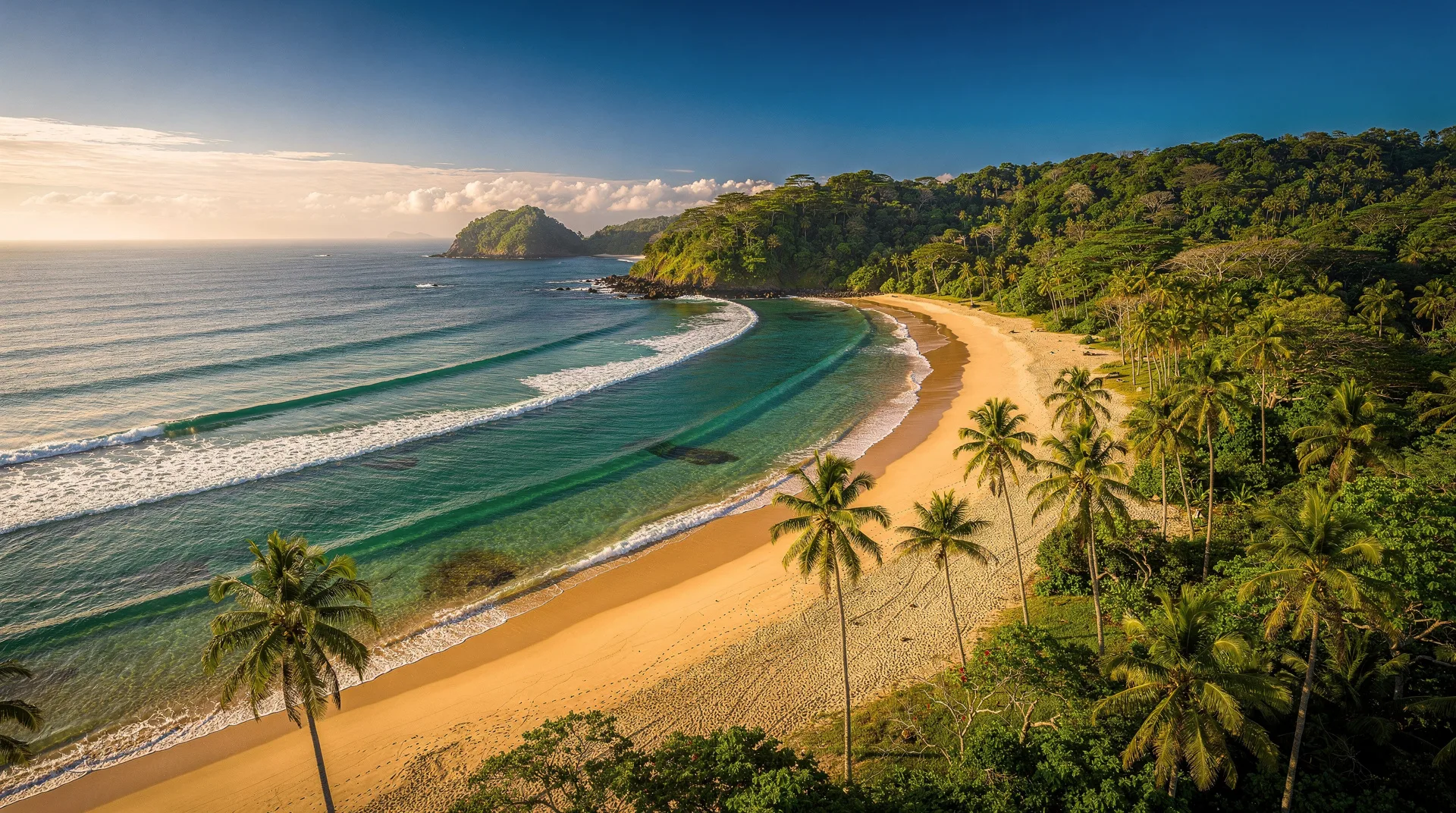
Best Pacific beaches in Costa Rica
Which Pacific beach should I pick?
Manuel Antonio for park, Tamarindo for surf, Conchal for shells.
Choosing your Pacific beach: a practical orientation
Costa Rica’s Pacific coastline runs for roughly 1,016 kilometres from the Nicaraguan border in the north to the Panamanian border in the south. That is not a single beach scene — it is a stack of completely different worlds. Guanacaste in the north is dry, resort-heavy, and reliably sunny from December through April. The Central Pacific around Jacó and Quepos is wetter, more accessible from San José, and home to Manuel Antonio National Park. The Southern Pacific below Dominical is remote, lush, and wild.
This guide ranks the best Pacific beaches by what they actually deliver — not by Instagram fame. It covers real swim conditions, honest assessments of crowds and overdevelopment, and practical logistics so you can match a beach to your trip rather than the other way around.
| Best sand/water | Playa Conchal |
| Best for wildlife + beach | Manuel Antonio |
| Best for surf lessons | Tamarindo |
| Best value/authenticity | Sámara, Nosara |
| Best time | December-April (dry), April-October (green, better surf) |
Playa Conchal — best sand quality in Costa Rica
Playa Conchal sits 8 km south of Tamarindo and earns its reputation for having one of the most unusual beaches in the country. The “sand” is actually billions of crushed seashells that have been ground down over millennia into a pale grit that shifts colours from cream to rose depending on the angle of the light.
Getting there requires either a 4WD vehicle and the willingness to ford a shallow river mouth north of Brasilito, or an organised excursion. The luxury Westin Conchal resort occupies much of the beachfront, but public access is guaranteed by Costa Rican law. Leave from Brasilito village (10-minute walk) or arrange a horseback excursion that rides through Tamarindo estuary and arrives along the shoreline.
Tamarindo: horseback to Conchal Beach — from $70Swimming is generally calm at Conchal in the dry season, though there is no lifeguard. Waters run clear and blue-green. The main annoyance is that the Westin resort’s beach chairs dominate the central stretch — walk 500 metres north or south for uncrowded public sections.
Stay nearby: Brasilito has budget-to-mid options including Hotel Brasilito ($60-90/night). The Westin Conchal starts at $400/night but includes beach access and several pools.
Manuel Antonio — the most photographed beach backed by a national park
Manuel Antonio National Park contains five beaches, the most visited of which is Playa Manuel Antonio — a 400-metre white-sand crescent that sees sloths hanging in the almond trees at the forest edge. The park enforces a daily visitor quota and closes every Tuesday; book your guided tour in advance because entry tickets sell out weeks ahead during peak season.
Manuel Antonio: catamaran cruise with a meal — from $110The beaches inside the park (Manuel Antonio, Espadilla Sur, Biesanz) are calmer than the public Playa Espadilla Norte outside the gates. Espadilla Norte is free and has lifeguards on duty, but riptides are a real hazard here — always swim between the flags and never ignore yellow or red warnings. The 2024 drowning statistics for Manuel Antonio beach remain troubling.
Tourist trap warning: men in orange vests near the park entrance offer to sell “tickets” and “guide services” for inflated rates. The ticket booth is inside the gates; a licensed guide ($50-70) can be booked through official channels. Ignore any approach from the parking lot.
The town of Quepos, 7 km north, is the practical base. Marina Pez Vela has good restaurants. For stays, Gaia Hotel commands the headland at $350+/night, while Hotel Si Como No ($160-220) has been a benchmark mid-range option for decades.
Tamarindo — surf beach with an overdevelopment hangover
Tamarindo is the most developed beach town in Costa Rica, and its reputation has suffered for it. The main beach is backed by a strip of surf shops, hostels, tour agencies, and nightlife venues. Traffic in peak season (December-March) can turn the single main road into a gridlock. A 2023 reader survey by a major surf publication found Tamarindo ranked second on visitor satisfaction for first-timers — but significantly lower for those returning after five or more years, who cited the loss of the village feel.
That said, Tamarindo delivers what it promises: consistent beginner surf, a reliable sunset, a strong community of surf schools, and good food. Playa Tamarindo itself is a reliable beach break for learners. The reef at Langosta to the south offers a step up in difficulty.
Tamarindo surf: learn and practice surfing — from $50Honest assessment: if you want a quiet beach experience, Tamarindo is the wrong choice. If you want surf lessons, nightlife, and easy logistics, it works well. Stay at La Posada del Capitán Suizo (adults-only boutique, from $180) or Cala Luna (pool villas, from $250) rather than the strip hostels if budget allows.
Nosara — yoga, surf, and the Nicoya Peninsula at its best
Playa Guiones in Nosara is a 6-kilometre arc of grey sand backed by protected forest — the local association banning development within 200 metres of the beach has preserved a stretch of coastline that Tamarindo surrendered years ago. Waves at Guiones are consistent year-round, peaking between April and October when south swells arrive reliably. The surf community here tilts intermediate and above, though several schools cater to beginners.
The Nosara vibe is wellness-forward. Bodhi Tree Yoga Resort ($120-250/night), The Harmony Hotel ($220+), and Lagarta Lodge (clifftop views, from $180) represent the lodging spectrum. There is no “strip” — restaurants, studios, and shops are scattered through the village in a way that forces you to explore.
Getting there: Nosara is 7 km of unpaved road from the main highway. A 4WD is required in the rainy season. The drive from Liberia airport takes about 2.5 hours.
Santa Teresa — the most compelling surf lifestyle beach
Santa Teresa and neighbouring Mal Pais form a 10-kilometre stretch on the southern tip of the Nicoya Peninsula that has evolved from a backpacker haunt into a lifestyle destination without losing its edge. The beach is a powerful shore break — beautiful but demanding. Riptides here are serious and the surf breaks favour experienced swimmers. The iconic Santa Teresa beach restaurant row (Koji’s, Koji’s Pool, Zwart) sits directly on the sand.
Accommodation ranges from Nantipa boutique hotel ($380-550/night) to Pranamar Oceanfront Villas ($200-380) and dozens of smaller guesthouses under $80. Road quality into the area improves every year but some sections of the Cobano road still require 4WD in green season.
Getting there: 40 minutes from Cobano, which is reached by ferry from Puntarenas (1 hour 20 min crossing) or by air with Sansa to Tambor (20 min flight). The driving route from San José takes 4.5-5 hours.
Sámara — the safest and most underrated beach in Guanacaste
Sámara is sheltered by an offshore reef that breaks the waves before they hit shore, creating one of the calmest swimming beaches on the Pacific coast. It is the first recommendation for families with young children or non-swimmers visiting the Nicoya Peninsula. The town behind the beach is genuinely pleasant — a small main street, a few good restaurants, and none of the resort-scale development that has overtaken Tamarindo.
Stay: Hotel Fenix ($70-100), Villas Playa Sámara ($90-140), or Tico Adventure Lodge ($80-130).
Getting there: 35 minutes from Nicoya town by paved road. Sansa flies to Carrillo, 5 km south.
Playa Hermosa Guanacaste — the resort alternative to Coco
Not to be confused with Playa Hermosa near Jacó (a powerful surf break), Playa Hermosa in Guanacaste sits immediately south of Playas del Coco and offers a quieter bay with good swimming and several mid-range resorts. Andaz Papagayo and Four Seasons Peninsula Papagayo operate near here and use this stretch of coast for their beach clubs.
The sunset snorkel and sailing excursion from Playas del Coco — five minutes north — is a reliable way to see sea turtles, rays, and tropical fish without going far offshore.
Jacó: snorkeling tour with white sand beach visit — from $85 San José: Tortuga Island tour with snorkeling and lunch — from $130Playa Dominical — short visit, big waves
Dominical is a half-hour south of Uvita on the Costanera highway. The beach is powerful and mostly for experienced surfers — onshore winds in the afternoon chop the surface and riptides are frequent. The appeal is the rainforest backdrop (macaws, howler monkeys) and the proximity to Hacienda Barú wildlife refuge. It is not a swimming beach for casual visitors.
Jacó — honest trade-offs
Jacó is the closest Pacific beach to San José (2 hours), which makes it the default choice for weekending Ticos and budget travellers who want surf without a long drive. The beach itself is grey volcanic sand, and the surf is reliable but not beautiful. The town has a significant nightlife scene and some of the highest reported petty theft rates on the coast.
Use Jacó for: surf lessons, day trips to Tortuga Island, and proximity to the Central Valley. Skip it if you want a relaxed, scenically beautiful beach.
Uvita and Marino Ballena — humpback territory with a beach bonus
Uvita’s Playa Blanca sits inside Marino Ballena National Park, adjacent to the famous whale tail sandbar that appears at low tide. The beach is clean, protected, and entry costs a park fee ($18 in 2026). The water is calm in the dry season and the snorkelling inside the park is decent. Uvita’s main draw is whale watching — two seasons (August-October and December-March) see humpbacks close to shore — but the beach itself is worth a morning.
Stay in Uvita: La Cusinga Lodge ($190-250, rainforest-edge), Oxygen Jungle Villas ($140-200, pool villas above the coast).
Frequently asked questions about Pacific beaches in Costa Rica
Which Pacific beach has the calmest water for swimming?
Sámara is the answer for calm swimming on the Nicoya Peninsula, sheltered by a reef. On the northern Guanacaste coast, Playa Hermosa (south of Coco) and the inner bay at Las Catalinas are reliable. Manuel Antonio’s main beach inside the park is calm but has no lifeguard.
When is the best time to visit Pacific beaches?
The dry season (December to April) offers the most reliable sunny weather on the Pacific, especially in Guanacaste which can have near-zero rain. The green season (May-November) brings afternoon showers and lush scenery — the beaches are much less crowded and prices are 20-40% lower. Surf peaks on south-facing beaches (Nosara, Santa Teresa, Dominical) from April through October.
Is it safe to swim at Pacific beaches?
Riptides are the primary risk and are responsible for the majority of drowning deaths at Pacific beaches. Always check the flag system: green (safe), yellow (caution), red (dangerous, no swimming). Ask locals before entering the water at any unfamiliar beach. Playa Espadilla Norte at Manuel Antonio, Playa Jacó, and Playa Dominical have recorded multiple drownings.
Do I need a 4WD to reach Pacific beaches?
For Conchal, Sámara, Nosara, Santa Teresa, Dominical, and Uvita: yes, a 4WD is strongly recommended especially during green season. Tamarindo, Manuel Antonio, and Jacó are accessible by 2WD. Playas del Coco and Flamingo have paved roads from Liberia.
Which Pacific beaches have lifeguards?
Lifeguards (Cruz Roja volunteers) are present at Playa Espadilla Norte (Manuel Antonio), Jacó, and Tamarindo during peak season. Most other Pacific beaches have no lifeguard service. Blue Flag beaches in Costa Rica (Bandera Azul Ecológica) indicate water quality, not lifeguard presence.
Can I visit multiple Pacific beaches in one trip?
A 10-day trip can realistically cover Guanacaste (Conchal, Tamarindo or Nosara) plus the Central Pacific (Manuel Antonio or Santa Teresa) with a car rental. Do not try to combine the far southern beaches (Uvita, Corcovado) with Guanacaste in less than two weeks — the distances require 4-5 hours of driving per leg.
What is the best Pacific beach for honeymoons?
Nantipa in Santa Teresa ($380+), the Four Seasons or Andaz in the Papagayo Peninsula ($500+), and Casa de Las Olas near Playa Dominical offer genuine honeymoon experiences. For a lower budget, La Posada del Capitán Suizo in Tamarindo delivers privacy and quality at $180-250/night.
Going deeper on each beach town
Each beach above has a dedicated page if you want more than the summary. For the shell-sand stretch, start with the Playa Conchal destination page and the neighbouring village of Brasilito. Surf-minded readers should read the Tamarindo destination page alongside the Tamarindo surf guide, and beginners can compare options in the beginner surf spots guide.
For the wildlife-backed cove, the Manuel Antonio destination page and the Manuel Antonio National Park guide explain how the park works. The quieter Nicoya towns each have their own page too: Nosara, Santa Teresa and Sámara. In the south, see Uvita and the Marino Ballena National Park guide for the whale-tail sandbar and the park’s calm water.
Safety and timing before you pick
Because riptides come up again and again on this coast, read the beach safety guide before you travel, and check the surf seasons by region page if waves are part of your plan. If you are weighing the Pacific against the other coast, the Caribbean versus Pacific beaches comparison lays out the trade-offs, and hidden beaches in Costa Rica covers quieter alternatives when the famous spots feel too busy.
Where to fit Pacific beaches in your itinerary
See our 7-day Arenal and Manuel Antonio itinerary for a first-timer’s route that balances beaches with volcano and wildlife experiences. For a beach-focused Nicoya loop, the 10-day honeymoon Nicoya and Arenal itinerary pairs Santa Teresa and Nosara with a Arenal finish. If Guanacaste is your base, the 5-day Guanacaste resort itinerary uses Playa Hermosa or Papagayo as anchor and adds day trips to Conchal and Rincón de la Vieja.
For surf-specific beach selection, see our best surf beaches guide. For family beach decisions, see best family beaches. Guanacaste’s full beach map is covered in the Guanacaste beach guide.
How the Pacific coast’s regions actually differ
It’s worth being explicit about the three-way split, since travellers frequently underestimate how different Guanacaste, the Central Pacific, and the Southern Pacific are from each other despite sharing one coastline. Guanacaste (Conchal, Tamarindo, Nosara, Sámara, Playa Hermosa) has the most reliable dry season, the most resort infrastructure, and the flattest, most beach-town character.
The Central Pacific (Manuel Antonio, Jacó) trades some of that dry-season reliability for proximity to San José and genuinely exceptional wildlife viewing inside the national park boundary. The Southern Pacific (Dominical, Uvita) is wetter year-round, less developed, and built around rainforest and whale watching rather than classic beach-resort amenities. Matching your priorities to the right region — rather than picking a beach in isolation — is the single biggest factor in whether a Pacific beach trip feels right for the traveller.