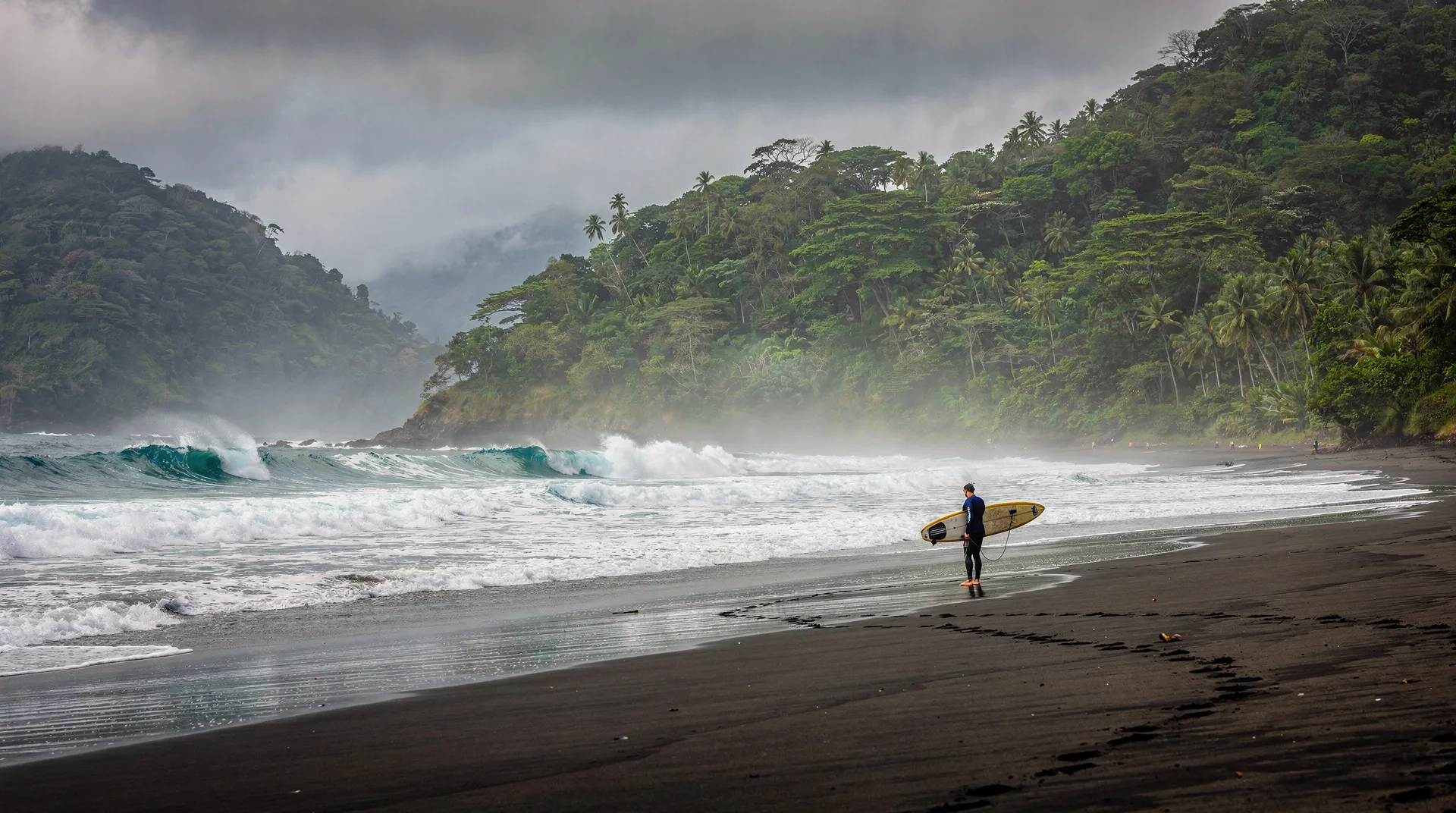
Dominical — a raw surf town where the southern Pacific starts getting wild
Dominical is a small surf town between Manuel Antonio and Uvita: heavy beach break, whale watching nearby, and jungle waterfalls without resort polish.
Top experiences nearby
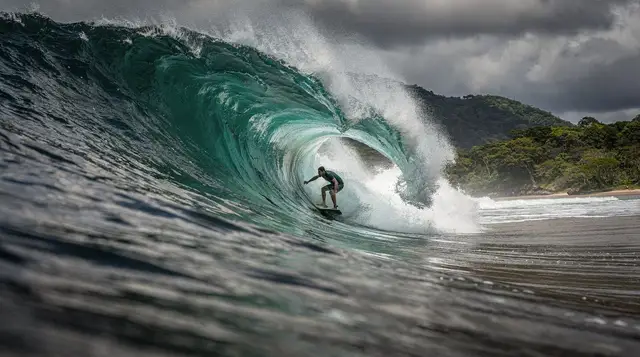
Uvita: surf some of the best waves of Costa Rica 8 days
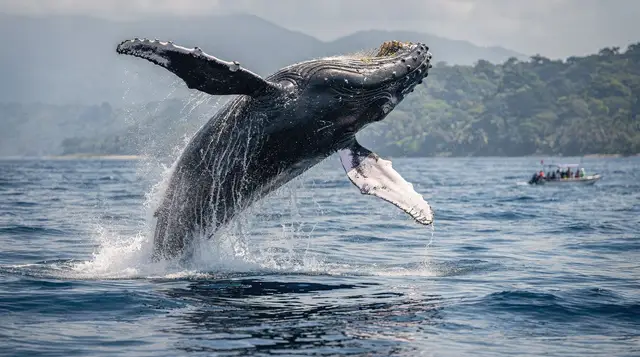
Marino Ballena: whale watching in Uvita
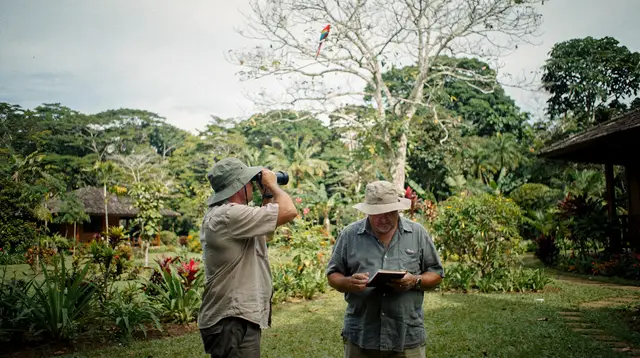
Marino Ballena: whale/dolphin watching experience
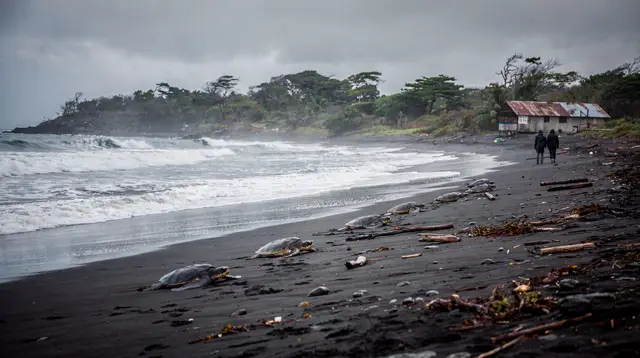
Whale watching adventure in Uvita with expert guides
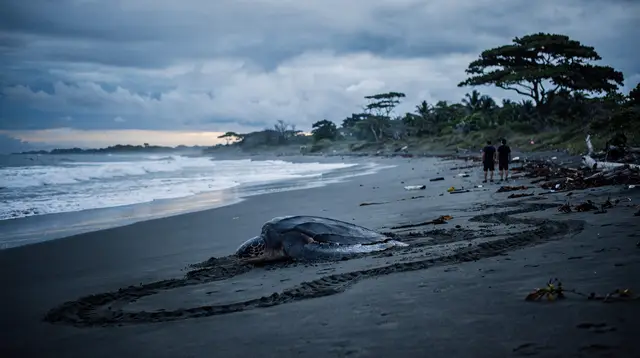
Uvita: whale & dolphin watching boat trip w/ drinks
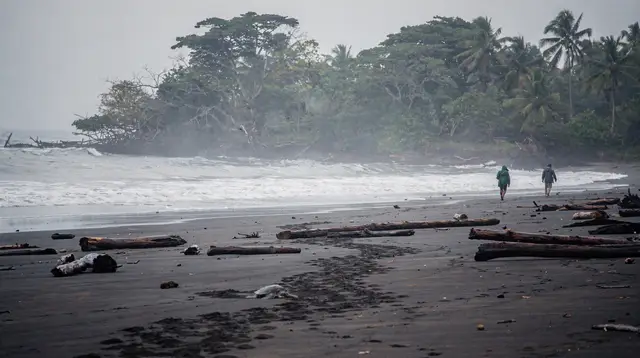
Uvita: whale watching tour in Marino Ballena
Quick facts
- Best time to visit
- December to April (dry season) for surf; August to October for whales
- Days needed
- 1 to 2 days
- Getting there
- 190 km from San José — 3.5 hours by car via the Costanera Sur highway
- Budget per day
- USD 50 to 120
The surf town that skipped the polish
Dominical is 37 kilometers south of Quepos and 20 kilometers north of Uvita, sitting where the southern Pacific coast begins to feel genuinely wild. The Costanera Sur highway brought pavement here in 2010 — before that, this was a difficult drive. Even now, the town itself has a frontier character that the resort development of Manuel Antonio never reached this far south. Buildings are functional rather than beautiful. The main street is a single unpaved road between the highway and the beach. The beach is wide, powerful, and backed by the Barú River.
This rawness is exactly the point for the travelers who seek Dominical out. The surf is heavier than Jacó, the river mouth creates a varied break with both left and right options, and the isolation from the resort cluster to the north keeps prices lower and the crowd younger. Intermediate to advanced surfers find Dominical more interesting than Tamarindo; beginners find it intimidating — and should listen to that instinct.
| Where | 190 km south of San José, between Manuel Antonio and Uvita |
| Cost | USD 50-120/day |
| Getting there | 3.5 hrs by car via Costanera Sur |
| Best time | December to April for surf; August to October for whales |
| Level | Intermediate to advanced surf; not beginner-friendly |
The surf at Dominical
Playa Dominical is a beach break with consistent year-round swell, enhanced by the Río Barú rivermouth that creates additional wave formation at the north end. Swell averages 1 to 2.5 meters in the dry season (December through April) and can reach 2.5 to 3.5 meters during large southern hemisphere swells from April through October.
The wave quality is good for intermediate surfers — fast, punchy shore break that demands quick reactions and a strong paddle. Beginners regularly get caught inside and dragged by the rip current; this is not a place to learn. The beach has visible rip channels alongside the river mouth, which experienced surfers use for easy paddle-outs but which inexperienced swimmers should avoid.
Board rentals and surf lessons run from surf shops in town at USD 20 to 35 per day rental, USD 50 to 60 per lesson. For absolute beginners, the 8-day surf camp based in Uvita provides a more complete learning environment with consistent beginner-appropriate instruction.
Uvita: surf some of the best waves of Costa Rica 8 days — from $1495Reading the break before you paddle out
The first habit worth building at Dominical is patience. Sit on the sand for a while before you get in and watch where the sets break, where the water is travelling back out to sea, and where the locals line up. The river mouth changes the shape of the beach as the seasons turn, so a spot that worked well on one trip may be a closeout on the next. Our guide to tide and surf conditions explains how tide height changes a beach break like this one, and the surf seasons by region page shows how the southern Pacific differs from the north.
If you are still building your skills, the honest move is to spend a few days elsewhere first. The beginner surf spots guide lists gentler places to learn, and the surf camps in Costa Rica overview helps you compare structured options. For a broader look at how Dominical fits among the country’s breaks, read the best surf beaches in Costa Rica and our dedicated page on Dominical and southern Pacific surf.
Respect the lineup. This is a working surf town where many of the people in the water are there every day. Wait your turn, avoid dropping in, and keep your board under control in a crowded shore break. A friendly nod and a bit of patience go a long way here, and the mood in the water tends to be relaxed when everyone plays by the same rules.
Whale watching near Dominical
Dominical is 20 kilometers north of Uvita and Marino Ballena National Park — which is the hub for whale watching along the southern Pacific coast. Two humpback whale seasons overlap here: the northern population arrives December through April; the southern population from August through October. The August-to-October window is the more dramatic, with the highest whale density in Costa Rica.
Boat tours depart from Uvita’s beach dock, easily reached from Dominical in 20 minutes by car.
Marino Ballena: whale watching in Uvita — from $80Planning around the season matters more than most visitors expect. Our Uvita whale watching season guide explains the timing in detail, and the marine life guide helps you know what else you might spot on the water besides humpbacks. If you want to understand how to behave around the animals, the wildlife watching ethics page is a useful read before you book. The Uvita whale festival recap gives a sense of how much the local community cares about the season.
ATV and jungle exploration
The hills above Dominical contain several waterfall systems accessible by ATV or on foot. Nauyaca Waterfalls — 45 minutes on horseback or 3.5 hours on foot from the trailhead near the highway — are among the best waterfalls in the southern Pacific zone: two cascades dropping into deep swimming pools in intact jungle. No organized tour operator does this well from Dominical itself, but local guides advertise near the beach.
The ATV and buggies adventure from Uvita covers similar terrain with more organized logistics.
Uvita: ATV & buggies adventure tour — from $95Whichever way you explore the hills, go with sensible expectations. Jungle trails in the southern Pacific can be muddy and slippery in the green season, so sturdy footwear and a light rain layer are worth carrying. The packing list for Costa Rica covers the basics, and the ATV tours by region guide compares what is on offer across the country if you want context before booking.
Dominicalito: the calmer cove nearby
Two kilometers south of the main beach, Dominicalito is a small horseshoe cove that offers what Playa Dominical does not: calm, protected water without the rip currents that make the main break dangerous for inexperienced swimmers. It has no real infrastructure — a few homes, a small parking area — but it’s the honest answer for travelers staying in Dominical who want to swim rather than surf, or who are traveling with kids or nervous swimmers. There is no organized tour here; it’s simply a spot to know about if the main beach looks too rough on a given day.
Staying safe in the water
Most problems at Dominical come from underestimating the ocean rather than from anything on land. Take a few minutes to read the Costa Rica beach safety guide, which explains how to recognise a rip current and what to do if one catches you. The general advice is simple: do not fight the current head-on, float or swim parallel to the shore, and signal for help early. Families should also look at the kid-safe beaches page and the best family beaches list before deciding how much time to spend on the sand here.
Leave valuables out of sight when you park near a beach, and do not leave bags unattended on the sand while you surf. The wider safety in Costa Rica page gives sensible context without exaggerating the risks.
Where to eat and drink
Dominical’s eating scene is casual to the point of being minimal. Café Mono Congo on the main street has the best coffee and solid breakfast bowls. Soda Nanyoa serves good local food at USD 5 to 8 per plate. For the social scene, Roca Verde bar is the standard late-afternoon-into-evening spot, often with live music on weekends.
Tourist trap to know: Dominical has seen some overpriced “adventure tour” operators near the beach offering waterfall trips at inflated prices. Verify costs with multiple operators before committing — typical guides charge USD 60 to 80 per person for Nauyaca, not USD 150.
Where to stay
Mid-range: Villas Rio Mar is 2 kilometers north of town and is the best-quality accommodation in the area — bungalows in a garden beside the Barú River, pool, good breakfast (USD 90 to 150). Hacienda Barú National Wildlife Refuge, 4 kilometers north, combines accommodation with a serious wildlife sanctuary — birding, canopy walks, and overnight camping options (USD 70 to 120). In town, Cabinas San Clemente is the budget standby at USD 25 to 50 for basic but adequate rooms.
Eating simply is part of the experience. If you enjoy local cooking, the guide to sodas and the best local restaurants explains what to look for, and gallo pinto and traditional dishes is a good primer before your first breakfast on the coast.
Getting there
By car from San José: 190 kilometers via the Costanera Sur highway (Route 34). The road is fully paved and usually takes 3.5 hours without traffic. From Manuel Antonio: 80 kilometers, about 90 minutes. From Quepos: 45 kilometers, about 45 minutes. There is regular bus service from San José (Terminal Alfaro) to Dominical via Quepos, about 4.5 hours total.
If you are driving, the driving in Costa Rica guide and the road conditions by region page are worth a look, and the rent a car or not comparison helps you decide whether a rental suits your route. Travelers without a car can check the shuttle services overview for the main alternatives.
Frequently asked questions about Dominical
Is Dominical surf suitable for beginners?
Not on the main beach. Playa Dominical has rip currents alongside the river mouth and a powerful shore break that is dangerous for inexperienced swimmers and surfers. Beginners should start at Sámara, Tamarindo, or Jacó. The cove beach at Dominicalito, 2 kilometers south, is calmer and more appropriate for beginners.
How does Dominical compare to Uvita?
Dominical is rawer, more surf-focused, and cheaper. Uvita is more polished, better organized for whale watching and Caño Island tours, and has more quality restaurant options. The two towns are 20 kilometers apart and easily combined — stay in Dominical for surf, use Uvita for ocean tour departures.
Is there a dangerous riptide at Dominical?
Yes. The river mouth creates powerful rip channels — visible as darker, choppy water sections moving offshore. Experienced surfers use them for easy paddle-outs; everyone else should avoid them and swim in the areas free of river influence. The beach has no permanent lifeguard. If in doubt, ask local surfers which section is safest on any given day.
What wildlife can I see around Dominical?
Hacienda Barú National Wildlife Refuge (4 km north) has scarlet macaws, toucans, monkeys, and the occasional peccary or tapir on night tours. The refuge has professional birding guides. Nauyaca Waterfalls trail passes through primary and secondary forest with howler monkeys. Marine wildlife (dolphins, humpback whales) is best seen on organized boat tours from Uvita.
Where can I swim safely near Dominical if the main beach is too rough?
Dominicalito, 2 kilometers south, is a small protected cove without the rip currents that make Playa Dominical risky for casual swimmers. It has no facilities, but it’s the local go-to answer for a calm swim. Alternatively, most mid-range accommodation around Dominical has a pool, which is the more reliable option for young kids or nervous swimmers.
How to fit Dominical into your itinerary
Dominical sits naturally as an overnight stop on the route between Manuel Antonio/Quepos to the north and Uvita and the Osa Peninsula to the south. The 12-day south Pacific deep itinerary passes through Dominical as a surf break. For surfers doing a Pacific coast circuit, the sequence Tamarindo → Jacó → Dominical → Uvita hits increasing wave power at each stage.
The 10-day Pacific surf trip is built around the same idea and shows how a surf-focused route can be paced. Because the weather shapes everything on this coast, check the best time to visit Costa Rica page and the dry season pros and cons and green season pros and cons guides before locking in dates. Many travelers who linger here end up wishing they had allowed an extra night, so leave a little slack in the schedule rather than racing south.