Best Caribbean beaches in Costa Rica
Caribbean Costa Rica beaches worth visiting?
Punta Uva, Manzanillo, Cahuita, Playa Negra.
The Caribbean coast is a different Costa Rica entirely
Most first-time visitors to Costa Rica fly into San José, head for Arenal or Manuel Antonio, and never cross the mountains to the Caribbean side. That is their loss. The Talamanca coast — the 50-kilometre stretch of coastline from Cahuita south to the Panamanian border — is the most scenically distinctive part of the country, and it operates on an entirely different cultural register than the Pacific.
The Caribbean coast here is Afro-Caribbean in culture, Creole and English in language alongside Spanish, reggae on the speakers rather than Latin pop, and rice and beans cooked in coconut milk rather than the gallo pinto of the highlands. The beaches are backed by lowland rainforest, the reefs are alive (damaged but recovering), and the vibe is slower, looser, and more authentic than anything on the Guanacaste coast.
This guide covers the best individual beaches, their swim conditions, snorkel quality, access logistics, and honest assessments of what you will and will not find.
| Where | Talamanca coast, Puerto Viejo to Manzanillo (50km) |
| Best beach for looks | Punta Uva |
| Best beach for reef | Cahuita National Park |
| Getting around | bicycle ($10/day) covers all beaches |
| Best time | February-April, or September-October dry window |
Punta Uva — the most beautiful Caribbean beach
Punta Uva is 13 km south of Puerto Viejo de Talamanca along a paved coastal road that threads through cocoa plantations and rainforest fragments. The beach is a crescent of pale golden sand backed by sea-grape trees and palms, sheltered by a headland that gives it protection from the sometimes-rough Caribbean swell. Water visibility is frequently excellent — 10-15 metres on calm days — and the offshore reef system holds healthy brain coral, sea fans, and a variety of reef fish.
There is no town at Punta Uva. There are a handful of cabinas (Punta Uva Dive and Adventure rents equipment and offers guided snorkels), one family-run soda, and Almonds and Corals eco-lodge ($120-200/night, set in the forest directly above the beach). This is precisely the point — Punta Uva has not been developed and it is the better for it.
Swimming conditions: Generally calm in the morning, with chop picking up by early afternoon. No lifeguard. Riptides are not the concern here that they are on the Pacific, but the swell can be unpredictable between November and January.
Getting there: 13 km from Puerto Viejo by paved road, cycled in 45 minutes or driven in 15 minutes. No public bus reaches Punta Uva directly; the bus from Puerto Viejo to Manzanillo stops 500 metres from the beach.
Manzanillo — wildlife refuge, reef, and end of the road
Manzanillo sits at the end of the coastal road, 15 km south of Puerto Viejo and inside the Gandoca-Manzanillo Wildlife Refuge. The village is a cluster of houses, two or three sodas, a bar, and one guesthouse (Cabinas Something Different, around $50/night). The beach itself curves in front of the village — grey-gold sand, calm water, and the distinct sound of howler monkeys in the trees behind you.
The reef off Manzanillo is one of the best snorkel sites on the Caribbean coast when conditions cooperate. Visibility depends heavily on swell and river run-off; the clearest days tend to be from February to April and again in September and October. The Manzanillo dive and snorkel scene is managed by a small number of local guides; book through Aquamor Adventures or ATEC (Asociación Talamanqueña de Ecoturismo) in Puerto Viejo.
Manzanillo and Cahuita snorkeling duo tour — from $95The trail through the Gandoca-Manzanillo refuge starts at the south end of the village beach and runs along a coast-hugging path to the Punta Mona headland — one of the most rewarding short hikes in the Caribbean lowlands. Howlers, white-faced capuchins, and occasionally ocelots use the trail. Dolphins are regularly sighted just offshore.
Cahuita — reef, culture, and the best national park beach
Cahuita National Park frames two beaches: Playa Blanca (4 km, white sand, accessed from Kelly Creek entrance) and Playa Vargas (accessed from Puerto Vargas entrance, 5 km south of town). Both are beautiful and backed by 1,000-hectare national park forest, which means sloths, raccoons, and red-billed toucans are regular beach companions.
Snorkel in Cahuita National Park: explore the reef — from $60The offshore reef at Cahuita National Park contains over 120 species of fish and 35 species of coral — though the 2005 earthquake that shifted the seabed and subsequent warming events have damaged sections significantly. The reef is recovering: recent surveys by COTERC (Caribbean Organisation for Tropical Education and Research) show improved coral cover in protected zones. The best snorkel is from Puerto Vargas, where a guided excursion takes you out by kayak to the healthier reef sections.
Cahuita National Park & snorkeling private tour — from $135Entry and fees: Kelly Creek entrance operates on a donation basis ($2-5 requested). Puerto Vargas charges a fixed $5 park fee (2026 rates). The park closes at 5pm. Both entrances have composting toilets but no lifeguards.
Town of Cahuita: A small Caribbean village with genuine local character. Kelly Creek Bar and Restaurant, Miss Edith’s (famous for Caribbean rice and beans), and Coco’s Bar are the social anchors. Stay at El Encanto B&B ($70-100), La Piscina Natural ($60-90), or splash out at Playa Negra Guesthouse ($80-130).
Playa Negra — the black sand surprise
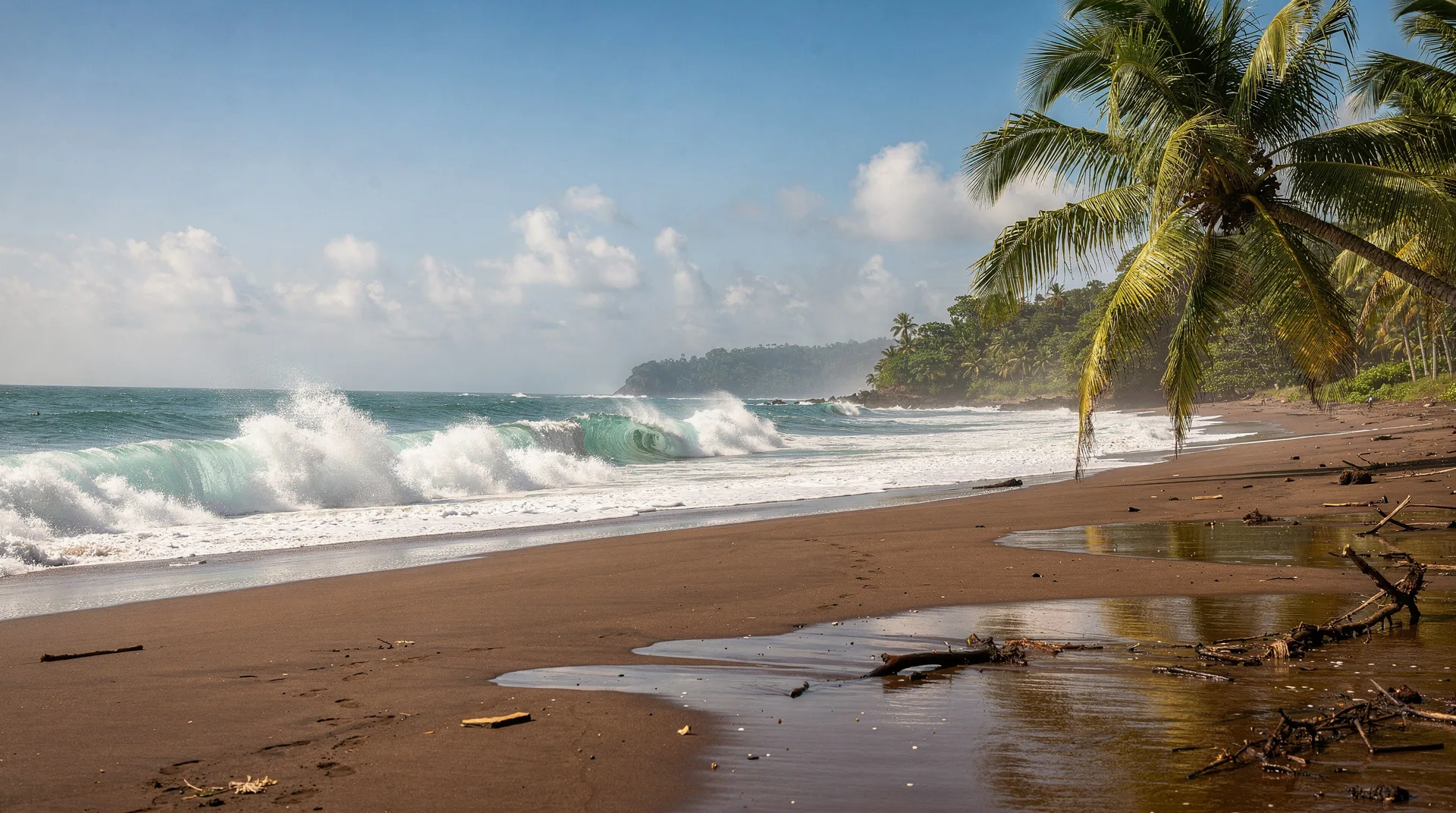
Playa Negra is 3 km northwest of Cahuita town on a side road, and it is exactly what the name suggests: a beach of dark grey-black volcanic and coral-derived sand that absorbs heat intensely under the afternoon sun. The beach faces north and receives the Caribbean swell without barrier, making it better for bodysurfing than calm swimming. It is almost never crowded.
Playa Negra is Cahuita’s surf break — a right-hand reef break that works best November to March when Caribbean swells run consistently. The surfing community here is small and local; it is not a learner spot.
Nearby food: Sobre Las Olas (on the beach, seafood) is the best option for a meal with an unobstructed ocean view.
Puerto Viejo beaches — the social hub
Puerto Viejo de Talamanca is a town first and a beach destination second. The main beach in town (Playa Puerto Viejo) is rocky, narrow, and not particularly good for swimming. The real appeal of basing yourself in Puerto Viejo is the proximity to Punta Uva and Manzanillo (both under 15 minutes by bike).
Within 5 km of town are Playa Cocles (grey sand, good surf wave, the closest beach with decent conditions) and Playa Chiquita (calmer, lined with jungle, excellent for snorkelling on the right day).
Zipline access from Puerto Viejo is available if you want to add an activity day before heading to the beaches:
Puerto Viejo Limón: best canopy tour / ziplines — from $70The best time to visit Caribbean beaches
This is where many visitors get confused: the Caribbean coast’s seasons are the inverse of the Pacific’s. When the Pacific is in its dry season (December-April), the Caribbean is often receiving rain. The best Caribbean weather windows are:
- February to April: relative dry season, calm seas, best snorkel visibility.
- September to October: a distinct Caribbean dry period when the Pacific is at its wettest. This is the secret travel window — empty beaches, excellent conditions, low prices.
The worst time for Caribbean beaches is typically November and December, when prolonged rain and rough swell combine. But even “bad” Caribbean weather often means warm showers in the morning and clearing by afternoon.
Frequently asked questions about Caribbean beaches
Do I need a car to reach Caribbean beaches?
From Puerto Viejo, you do not need a car — a bicycle ($10/day rental) reaches all beaches from Cahuita south to Manzanillo. From San José, a bus reaches Puerto Viejo (4-5 hours, around $12) via the Bribrí road. The coastal road is paved all the way to Manzanillo. If you want to explore the Gandoca-Manzanillo refuge interior, a car gives more flexibility.
Are there riptides on Caribbean beaches?
The Caribbean coast has different hazards than the Pacific. Riptides are less common but not absent. The primary risks are rough swell during November-February and the occasional strong current around reef passages at Cahuita. Swimming inside the national park boundaries (guided or within designated zones) is generally safer than open coast swimming.
Is the Caribbean coast safe for tourists?
Puerto Viejo has a higher rate of petty theft than most other Costa Rica tourist destinations — particularly bicycle theft and thefts from rental cars parked at trailheads. Lock your bike, do not leave valuables in vehicles, and stay aware at night on the less-lit road stretches south of town. The communities themselves are generally welcoming and crime against persons is rare.
Can I snorkel without a guide at Cahuita?
You can snorkel unguided at Cahuita from the Kelly Creek beach, but the reef is better accessed with a local guide who knows the safe entry points and healthier coral sections. A guided snorkel runs $55-75 and includes equipment. The Puerto Vargas entrance requires a guided boat or kayak excursion to reach the outer reef.
How do Caribbean beaches compare to Pacific beaches for families?
Caribbean beaches are generally less developed, which means fewer facilities (no rental chairs, fewer food vendors, no lifeguards). Punta Uva is excellent for families with older children (8+) who are comfortable swimmers. For families with toddlers or non-swimmers, the Pacific’s Sámara or Playa Hermosa Guanacaste have calmer, shallower water and more support infrastructure. See our best family beaches guide for a full comparison.
What is the Gandoca-Manzanillo Wildlife Refuge?
The refuge covers 9,449 hectares of beach, coral reef, lagoon, and tropical forest from Manzanillo south to the Panamanian border. Entry is free, trails are self-guided, and access is through the village of Manzanillo. The refuge protects one of the last nesting sites of the hawksbill turtle on Costa Rica’s Caribbean coast.
Food and culture along the coast
The Caribbean coast’s food culture is genuinely distinct from the rest of Costa Rica and worth building time around, not just squeezing in between beach visits. Rice and beans cooked in coconut milk (not to be confused with the Pacific-side gallo pinto) is the anchor dish, typically served alongside jerk chicken or fish in a Caribbean-spiced sauce. Miss Edith’s in Cahuita has been a fixture for decades and remains the most reliable introduction to the cuisine.
Patties (spiced meat or vegetable pastries) and pan bon (a dense, spiced sweet bread) are the classic snacks sold from small stands in Puerto Viejo and Cahuita. Reggae, calypso, and soca dominate the soundtrack at beachside bars, a reminder that this coast’s cultural roots trace to Jamaican and other West Indian labourers who arrived to build the railway in the 19th century, not to the Spanish colonial heritage that shapes the rest of the country.
Choosing a base: Puerto Viejo or Cahuita
Both villages make good bases, and the choice comes down to what you want from your days. Our Puerto Viejo destination guide covers the livelier option, with more bars, more restaurants and the shortest rides to Punta Uva and Manzanillo. The Cahuita destination guide suits travellers who want a quieter village at the edge of the national park, where the reef is the main event. If you have the time, split your stay between the two rather than choosing one.
For a closer look at the park itself, including trails and wildlife, read the Cahuita National Park guide. Snorkellers who want more detail on the reef should read the Cahuita reef snorkel guide before booking an excursion. Sloths are a regular sight along the park trails, and the where to see sloths guide explains how to spot them without disturbing them.
Planning around weather and safety
Because the Caribbean calendar runs against the Pacific one, it is worth checking the monthly detail before you fix dates. The February weather guide and the September weather guide describe the two windows that suit this coast best, and the broader best time to visit Costa Rica page puts both coasts side by side.
Swimming conditions change with the swell, so read the Costa Rica beach safety guide before you go in, and the general safety in Costa Rica guide for advice on protecting your belongings. If you are weighing a rental car against bicycles and buses, the rent a car or not guide helps you decide.
Beyond the beach
Surfers who want to compare Playa Negra with other breaks can use the best surf beaches guide. Travellers who want to pair the southern Caribbean beaches with the turtle-nesting coast further north should look at Tortuguero, and the dishes described above are part of a wider picture in the Costa Rican cuisine by region guide. If you are still deciding between coasts, the best Pacific beaches guide shows what the other side offers.
Where to fit Caribbean beaches in your itinerary
Caribbean beaches work best as a 3-4 day extension to a Pacific-focused trip rather than a stand-alone destination for first-timers. The 7-day quick Caribbean itinerary covers Tortuguero, Puerto Viejo, and Cahuita in a week. For a full east-west trip, the 14-day Caribbean and Pacific circuit gives enough time to do both coasts properly.
For the comparison between coasts, see Caribbean vs Pacific beaches. For snorkelling detail, see best snorkel beaches.