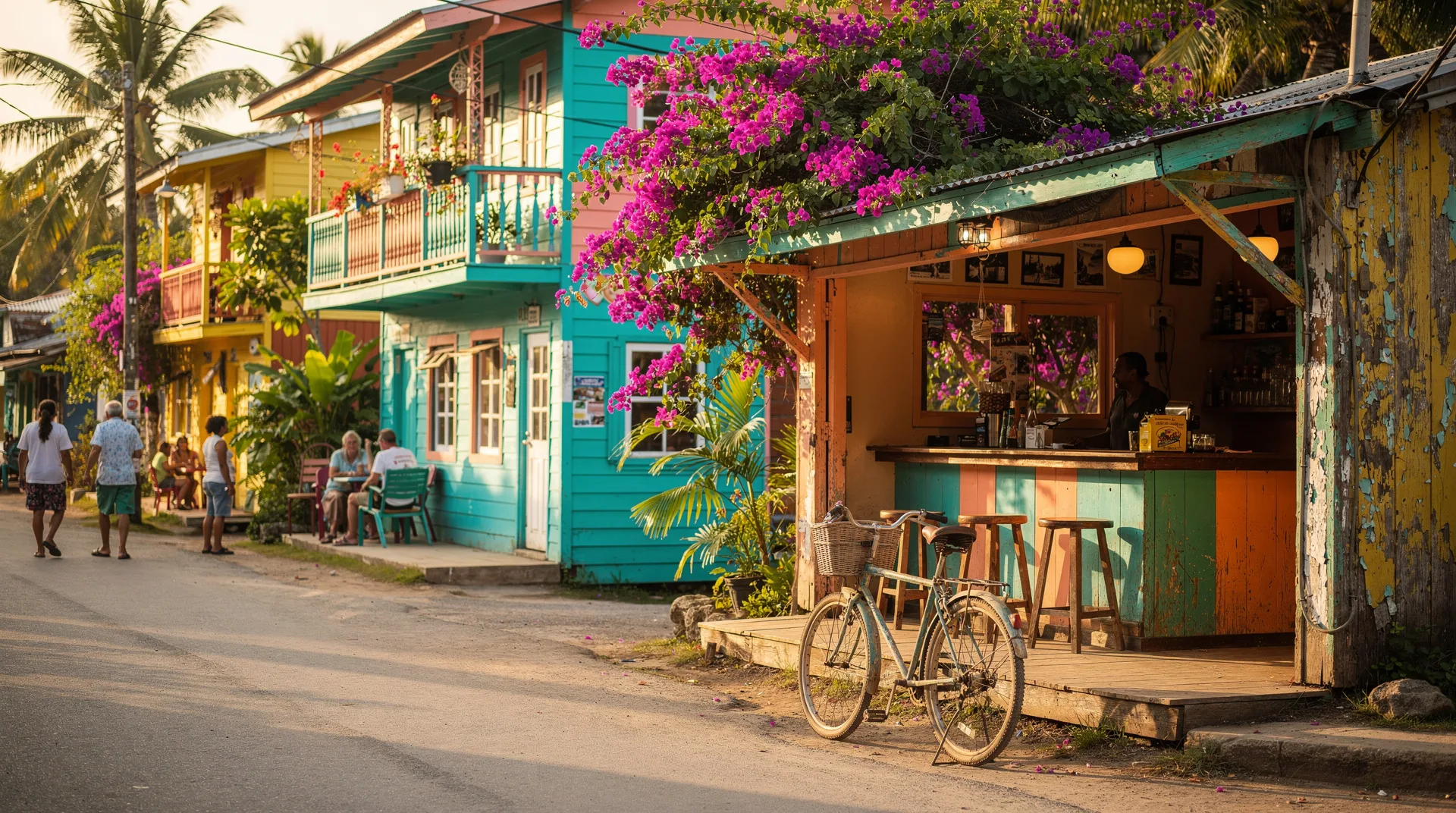
7-day Costa Rica Caribbean escape: Tortuguero, Puerto Viejo, and Cahuita
Why the Caribbean coast deserves a dedicated trip
Most Costa Rica itineraries treat the Caribbean as an add-on — three days tacked onto the end of a Pacific-focused circuit. This itinerary inverts that logic. The Caribbean coast is not a supplement to Costa Rica’s “real” experience; it’s a fundamentally different country within the same borders. The food has coconut in everything. The music is reggae and calypso. The English is Creole. The beaches are wild and reef-fringed. The sea turtles are the largest in the world.
Tortuguero is the Caribbean’s most dramatic destination — a canal town accessible only by boat or domestic flight, known for the largest green sea turtle nesting grounds in the Western Hemisphere. Puerto Viejo de Talamanca is its cultural heart — Afro-Caribbean food and music, a bicycle-culture beach town with Playa Cocles and Punta Uva within easy reach. Cahuita is the quietest of the three — a small village framing one of Costa Rica’s most accessible coral reefs.
No car is needed. The Caribbean coast is served by shuttles, public buses, and water taxis that connect these three destinations efficiently.
Total estimated budget: USD 800–2,000 per person for 7 days, excluding international flights.
At a glance
| Stat | Value |
|---|---|
| Total days | 7 |
| Best for | All traveler profiles |
| With/without car | No car — shuttles, boats, and local buses |
| Budget range | USD 80–200 per person per day |
| Best season | July–October (turtles); September–October (clearest reef) |
| Key transport | Water taxi from Pavona to Tortuguero; shuttle from San José to Puerto Viejo |
Day-by-day breakdown
Days 1–2: Tortuguero — canals and sea turtles
Tortuguero is reached by water taxi from Caño Blanco/Pavona or by the Río Frío boat from San José (via Sarapiquí). The most convenient option from San José is a pre-booked shuttle-and-boat transfer through Caribe Shuttle or a Tortuguero lodge package — typically departing San José at 7 AM and arriving in Tortuguero by noon. Cost: $35–55 per person.
Tortuguero National Park contains over 35 km of Caribbean coast beach where green sea turtles nest July through October, with peak activity in August and September. The experience of watching a 200-kg turtle haul herself up the beach, dig a nest, and lay 80–120 eggs in darkness is among the most powerful wildlife encounters in the Americas.
Day 1: arrive at your lodge, deposit luggage, and take an afternoon canal boat tour. The channels behind the village are lined with water hyacinth, heliconias, and silk cotton trees — manatees, river otters, and caiman inhabit these waters, along with kingfishers, anhingas, and tiger herons at every bend.
Tortuguero National Park: best things to do — from $95Day 2: pre-dawn turtle nesting walk (departure from lodge 8 PM to midnight, guided by a certified guide). MINAE-certified guides control all beach access; no independent turtle watching is permitted. Red-filter headlamps only. No photographs with flash.
Turtle watching in Tortuguero, Costa Rica — from $45Morning of Day 2: kayak or canoe on the secondary canals — the narrow channels where motorized boats cannot enter. This is where you’ll get your closest encounters with wildlife, including spectacled caiman that rest on fallen logs at arm’s length.
Tortuguero: turtle nesting tour in their natural habitat — from $50Stay: Mawamba Lodge (mid-range, from $120/night full-board, central, beach-side, excellent guiding) or Tortuguero Green Emerald Lodge (budget, from $70/night full-board, smaller, family-run).
Days 3–5: Puerto Viejo — culture, beaches, and Caribbean food
Take the water taxi from Tortuguero south to Limón, then a public bus (or shuttle) south to Puerto Viejo — total about 3–4 hours. Alternatively, the Caribe Shuttle runs a direct Tortuguero–Puerto Viejo transfer on request.
Puerto Viejo de Talamanca is the most culturally distinct town in Costa Rica. The Afro-Caribbean community has roots going back to Jamaican railway workers brought over in the 19th century — their descendants preserved the Creole English, the rice-and-beans cooked in coconut milk, and the music that permeates every sunset here.
Day 3: arrive, rent a bicycle ($6–8/day), and cycle south along the coastal road to Playa Cocles (3 km), Playa Chiquita (5 km), and Punta Uva (8 km). The road is flat and paved; Punta Uva is the most beautiful swimming beach on this section of coast — a small cove of calm turquoise water bordered by jungle.
Day 4: Puerto Viejo canopy tour in the morning — ziplines above the Caribbean lowland rainforest with views out to the coast.
Puerto Viejo Limón: best canopy tour / ziplines — from $70Afternoon: Gandoca-Manzanillo Wildlife Refuge — cycle or take a taxi 14 km south to Manzanillo, the last village before the Panama border. The refuge’s beach has a snorkeling reef accessible from shore (bring your own mask or rent in Manzanillo for $5–8). The beach at Manzanillo feels genuinely remote.
Evening: dinner in Puerto Viejo. Miss Lidia’s on the main road cooks the most authentic rice and beans in town — slow-cooked coconut rice with stewed chicken, fried plantain, and pati (spiced Creole pastry). Under $10 per plate.
Day 5: night wildlife tour in the Caribbean rainforest — tree frogs (red-eyed, leaf, glass frog species), sleeping birds, sloths, and kinkajous are the targets. Caribbean lowland forest has some of the richest nocturnal fauna in the country.
Puerto Viejo: nature & wildlife night tour in tropical forest — from $45Stay: Jacaranda Hotel (mid-range, from $75/night, lush gardens, pool, central) or Casa Zen Guesthouse (budget, from $35/dorm, excellent community vibe, popular with backpackers).
Days 6–7: Cahuita — reef snorkeling and village life
Cahuita is 13 km north of Puerto Viejo — a 20-minute bus ride ($0.75) or a 10-minute taxi ($8). It’s a small village at the edge of Cahuita National Park, home to one of Costa Rica’s most accessible coral reefs — you can snorkel it from shore without a boat.
Day 6: Cahuita National Park morning trail walk followed by reef snorkeling. Enter at the Kelly Creek entrance (donation-based entry — contribute what you can, suggested $10). The 8-km trail through the park runs along the coast, passing cacao trees, coconut palms, and jungle where sloths, howler monkeys, and capuchins are routinely spotted. The reef section at the end of the trail (Punta Cahuita) is the best snorkeling spot — brain coral, parrotfish, sergeant majors, and occasional sea turtles.
Cahuita NP: snorkeling & wildlife hike (certified guide) — from $75If sloths are the priority rather than the reef, a dedicated visit to the Cahuita sloth sanctuary rescue center is a worthwhile half-day add-on and works well as a rainy-morning alternative to the beach.
Cahuita sloth sanctuary rescue center visit — from $65Day 7: morning market in Cahuita village (the Saturday market has local coconut products, cacao, and Caribbean spices). Before leaving, walk the Black Beach (Playa Negra) north of the village — a long dark-sand beach with gentle waves and a very different feel from the park side.
Return to San José by shuttle or public bus: Cahuita–San José via Limón by Mepe bus runs $12 and takes about 3.5–4 hours. Shuttle services cost $35–45 and are faster and more comfortable.
Stay: Alby Lodge (mid-range, from $85/night, beautiful gardens, near the park entrance) or Bungalows Aché (budget, from $50/night, quiet, recommended by long-term visitors).
Cost breakdown
| Category | Per person (budget) | Per person (mid-range) |
|---|---|---|
| Accommodation (7 nights) | $280–400 | $500–800 |
| Food ($15–35/day) | $105–245 | $200–350 |
| Activities (tours, park fees) | $150–250 | $200–350 |
| Transport (shuttles, buses) | $120–180 | $120–180 |
| Total per person | $655–1,075 | $1,020–1,680 |
When to go
The Caribbean coast’s seasons are the reverse of the Pacific. The main dry season on the Caribbean is roughly July through September — when the Pacific is at its rainiest, the Caribbean often has calm, sunny mornings. September and October are traditionally the clearest months for Cahuita reef snorkeling.
July through October is also the peak green turtle nesting season in Tortuguero — the combination of clear Caribbean weather and peak turtle activity makes July–August the best window for this specific itinerary.
December through April is the Pacific’s dry season but the Caribbean’s rainiest period. Tortuguero is still operational, Puerto Viejo is enjoyable, and Cahuita reef can be good — but expect more rain than a July visit. The Christmas–New Year period brings higher accommodation prices even on the Caribbean.
Avoid October’s peak rainfall if possible: the final weeks of October bring the Caribbean’s heaviest rains and some tours in Tortuguero reduce frequency.
Frequently asked questions about the Caribbean route
Do I need a car for this Caribbean itinerary?
No. This route is specifically designed without a rental car. Tortuguero is not accessible by road at all. Puerto Viejo and Cahuita are connected by excellent public buses and shuttle services. The bicycle rental in Puerto Viejo covers all the beach hopping on Day 3 and 4.
Can I see sea turtles outside July–October in Tortuguero?
Green turtles are the species with the July–October peak. Hawksbill turtles nest year-round in smaller numbers. Leatherback turtles (the world’s largest) nest February–July, peaking March–May. The turtle watching experience is available in some form throughout most of the year, but July–October is the highest density.
How do I get from Tortuguero to Puerto Viejo?
The standard route: water taxi from Tortuguero to Caño Blanco/Pavona (shared collective boat, $10–15, 2–3 hours on the river), then ground transport to Limón, then public bus south to Puerto Viejo. The Caribe Shuttle operates a direct Tortuguero–Puerto Viejo service (arrange through your lodge). Total time: 3–5 hours depending on connections.
Is Cahuita reef safe to snorkel without a guide?
Yes, from the Kelly Creek entrance. The reef section at Punta Cahuita is accessible by trail and the snorkeling is from shore — no guide required. However, a certified snorkel guide improves the experience significantly by pointing out species and safe entry points. Currents can be stronger around the point — don’t snorkel past the visible coral garden into open water without local advice.
What’s the food scene like in Puerto Viejo?
It’s the best in the Caribbean coast. Miss Lidia’s, Soda Tamara, and the stalls at the Saturday market serve authentic Afro-Caribbean food. The Soda Shekina is excellent for patacones and ceviche. For upscale, Restaurant Stashu’s Con Fusion does creative Caribbean fusion with good presentation. Food costs are lower than the Pacific side — a proper meal runs $8–14 at local sodas.
Is the Caribbean corridor safe for solo women travelers?
Puerto Viejo has a reputation for nightlife and occasional petty theft — standard urban precautions apply (don’t walk alone at night, lock hostel lockers). Cahuita is significantly more relaxed and safe. Tortuguero is extremely safe — it’s a small village with no road access. Overall, the Caribbean corridor is welcoming and well-traveled by solo women, with a better safety record than some Pacific party towns.
Can I extend this route to Panama?
Yes. The border at Sixaola–Guabito (2 hours south of Puerto Viejo) is a straightforward pedestrian crossing into Panama. From there, bus service connects to Almirante and the boat to Bocas del Toro — a popular Caribbean island destination. If you have 10 days rather than 7, a 2–3 day Panama extension from Puerto Viejo is a natural addition.
Getting there: the logistics of the Caribbean coast
The Caribbean coast is one of the most logistically interesting parts of Costa Rica to reach. Unlike the Pacific, which is directly accessible from San José by the well-maintained Costanera Sur highway, the Caribbean requires crossing the central mountain range via Highway 32 (the Braulio Carrillo expressway) or the older Limón highway — both with their distinct personalities.
Highway 32 through Braulio Carrillo National Park: The fastest route from San José to the Caribbean coast. It passes through a cloud forest corridor where the road drops 1,500 meters in elevation over 30 km — one of the most dramatic highway descents in Central America. Fog, rain, and slow trucks are common. The road takes 2.5–3 hours from San José to the Caribbean junction at Siquirres.
Tortuguero logistics: No road leads to Tortuguero. The village is accessible by water only — either the river taxi from Pavona (1.5–2 hours, departing at 6 AM, 11:30 AM, and 3 PM from Caño Blanco/Pavona junction) or a small charter plane from San José. Most budget travelers use the Caribe Shuttle or a lodge transfer from San José that includes the water taxi portion. Independent travelers can take the bus from San José to Cariari, then a taxi to Pavona, then the water taxi — total about 5 hours and $20–25 vs. $50 for a shuttle.
Puerto Viejo logistics: Take the Mepe bus from San José’s Gran Terminal del Caribe (Avenida 9 y Calle Central) direct to Puerto Viejo — $12 per person, 4.5 hours, departing at 6 AM, 10 AM, and 1:30 PM. The bus passes through Limón and makes stops at Cahuita (4 hours from SJ) before continuing to Puerto Viejo. If arriving from Tortuguero, the water taxi to Caño Blanco + bus or taxi to Limón + public bus to Puerto Viejo takes 3–4 hours.
Cahuita logistics: Cahuita is 13 km north of Puerto Viejo on the main coastal road. Local bus service runs every 30–45 minutes for $0.75 each way. Taxis from Puerto Viejo cost $8–10. Walking the 13 km is not practical but cycling is — the road is flat and there’s minimal shade.
Exploring beyond the main villages
Around Tortuguero: The village of Tortuguero sits between the Caribbean Sea and the main canal — it’s a one-road town (no roads, actually — all movement is by boat or on foot). The elevated “Cerro Tortuguero” hill (119 meters — modest by any standard, but genuinely elevated for a Caribbean wetland) offers a 30-minute round-trip walk with canopy views over the canal system. The Caribbean Museum in the village has a modest but informative exhibit on turtle biology and the community’s fishing history.
Around Puerto Viejo: Beyond the main beach road, the road south passes through Playa Cocles (surf break, several good restaurants and bars, 3 km from town), Playa Chiquita (residential area, quiet coves, 5 km), Punta Uva (the most beautiful beach on this section of coast, 8 km — a protected cove with turquoise water and jungle to the shore), and ends at Manzanillo (14 km, the Gandoca-Manzanillo Wildlife Refuge, excellent snorkeling, completely off the resort map). The road is flat and paved — a bicycle handles the full 14-km stretch comfortably in 45 minutes.
Around Cahuita: North of the national park’s Kelly Creek entrance, Playa Negra (Black Beach) stretches 2 km with black volcanic sand and excellent body surf. The water here is rougher than inside the park; swim with caution and check with locals about current conditions. Two kilometers further north, the community of Hone Creek connects to the main highway and has the area’s best Saturday market (local cacao, coconuts, handmade Caribbean spices).
Day trip option — Bribri Indigenous Territory: About 25 km inland from Puerto Viejo, the Bribri community of Yorkin offers guided tours of cacao cultivation and traditional medicine. The trip involves a motorized canoe up the Yorkin River and 3–4 hours with community guides. The chocolate-making demonstration is outstanding. Contact local tour operators in Puerto Viejo (Terraventuras or ATEC — the Talamanca Association for Ecotourism and Conservation) — this is one of the most ethically run community tourism experiences in Costa Rica.
What to eat on the Caribbean coast
The food on Costa Rica’s Caribbean coast is one of the best arguments for visiting. The Afro-Caribbean cuisine tradition is completely distinct from the Pacific coast’s soda culture — coconut milk, allspice, Scotch bonnet peppers, and rice cooked in the fat of the coconut rather than water.
Rice and beans (not “gallo pinto”): The signature Caribbean breakfast is rice and beans cooked together in coconut milk, served with fried plantain, egg, and a piece of chicken or fish. The distinction matters — Ticos on the Pacific coast will make gallo pinto (rice and beans mixed after separate cooking); on the Caribbean coast, the rice and beans cook together with the coconut milk from the beginning. The difference in flavor is significant.
Rondon: a slow-cooked stew of fish, yuca, plantain, dumpling, and coconut broth. It takes 4–6 hours to prepare and most sodas only make it on weekends or by advance order. When available, it is extraordinary.
Patí (or pattie): a spiced meat pastry brought by Jamaican immigrants, sold at roadside stalls throughout Puerto Viejo and Cahuita. The filling is typically minced beef with Scotch bonnet pepper and allspice. One of the most distinctively Caribbean-Costa Rican snacks available.
Pan bon: a dense, slightly sweet bread with dried fruit and spices — another legacy of the Jamaican community. Sold at bakeries in Puerto Viejo and occasionally at the Saturday market in Cahuita.
Where to eat in Puerto Viejo: Miss Lidia’s (rice and beans, traditional), Soda Tamara (fresh seafood, good patí), the Saturday market stalls (cheapest and most local). For a step up, Restaurant Stashu’s Con Fusion does creative Caribbean-influenced dishes with proper presentation.
Where to eat in Cahuita: Soda La Fe (closed Sundays, the best rice and beans in town), Restaurant Edith (famous for her whole-fried fish and coconut desserts — book ahead for dinner).
Where to eat in Tortuguero: La Casona Restaurant is the main full-service option in the village, with solid Caribbean fare at tourist prices. Your lodge’s included meals are usually the best food value in Tortuguero.
Wildlife highlights by destination
Tortuguero: green sea turtles July–October (primary focus), hawksbill turtles year-round, manatees in the canals (rare but present), spectacled caiman, green and black poison dart frogs, river otters, spider monkeys, and over 400 bird species including the rufescent tiger-heron, slaty-tailed trogon, and the great green macaw.
Puerto Viejo: sloths (three-toed, visible from the road south of town), red-eyed tree frogs on night walks, white-faced capuchins in the coastal forest, green and loggerhead sea turtles nesting on Playa Gandoca (November–April), and the rare Almonds and Corals dolphin encounter zone (spinner and bottlenose dolphins in the Gandoca estuary).
Cahuita: three-toed sloths visible in the national park trees (look up in the cecropia trees near the trail entrance), white-faced capuchins, howler monkeys, coatis, and the Caribbean coral reef with parrotfish, surgeonfish, barracuda, and sea turtles. During September–October visibility peaks, making this the best snorkeling window of the year.
Extending the trip: south to Manzanillo or across to Panama
Seven days is enough to feel the Caribbean’s distinct rhythm, but travelers with extra time consistently say the biggest regret is not lingering longer south of Puerto Viejo. Manzanillo, at the end of the coastal road inside the Gandoca-Manzanillo Wildlife Refuge, sees a fraction of the visitors that Cocles and Punta Uva do, and the snorkeling reef there is comparable to Cahuita’s without the same foot traffic. A dedicated night in Manzanillo — most travelers day-trip it instead — turns a rushed afternoon into an unhurried one.
Bird watchers in particular benefit from more time in this corridor: the Caribbean lowland forest hosts species that don’t appear on the Pacific side at all, including the great green macaw and several toucan species that favor the wetter forest structure here. The bird watching by region guide breaks down what to expect on the Caribbean side specifically versus the cloud forest or dry forest zones.
If the 10-day version of this route interests you, adding 2–3 days in Sarapiquí on the way in or out brings river rafting and a different lowland rainforest ecosystem into the mix without a major detour — Sarapiquí sits roughly between San José and the Caribbean coast on Highway 32’s northern branch. The Sarapiquí river rafting guide covers the logistics if that appeals.
Money, packing, and health practicalities
Costa Rica’s colón is the official currency, but US dollars are widely accepted along the Caribbean corridor — lodges, larger restaurants, and tour operators quote in either. Smaller sodas and local buses are colón-only, so carrying some cash matters more here than in the more card-friendly Pacific resort towns. The ATM and cash tips guide covers where to withdraw before Tortuguero specifically, since the village itself has very limited banking access — bring enough cash for the full Tortuguero leg before you take the water taxi in.
Pack for humidity rather than heat: the Caribbean lowlands run wetter and stickier than the Pacific dry corridor even in the “dry” July–September window. Quick-dry clothing, a dry bag for the boat transfers, a light rain jacket, and strong insect repellent (the canal-side lodges in Tortuguero see real mosquito activity at dusk) matter more here than sunscreen alone. The packing list for Costa Rica has the country-wide baseline; add a headlamp with a red-light setting if you plan to buy one before the turtle walk rather than borrow one from your guide.
How the Caribbean route compares to a Pacific-only trip
| This Caribbean route | Typical Pacific route (e.g. Arenal + Manuel Antonio) | |
|---|---|---|
| Transport | No car — boats, buses, shuttles | Usually a rental car |
| Vibe | Afro-Caribbean, reggae, Creole food | Mainstream Tico beach/resort culture |
| Signature wildlife | Sea turtle nesting (Tortuguero) | Sloths, squirrel monkeys (Manuel Antonio) |
| Crowds | Noticeably quieter, less developed | Busier, more tourist infrastructure |
| Best season | July–October (reverse of the Pacific) | December–April |
| Budget | Generally lower cost per day | Moderate to high depending on hotel choice |
The Caribbean vs. Pacific beaches guide and the Caribbean vs. Pacific coast trip guide go deeper into this comparison if you’re still deciding which coast — or both — belongs in your trip.
Related itineraries
For the full Costa Rica experience combining Caribbean and Pacific coasts, see the 2-week complete Caribbean and Pacific loop. For wildlife photographers who want more time at Tortuguero, the 14-day wildlife photography expedition builds a full photo-focused circuit starting with Tortuguero. For backpackers on a tight budget covering more of the country, the 21-day backpacker route includes Puerto Viejo as its final section after crossing both coasts.