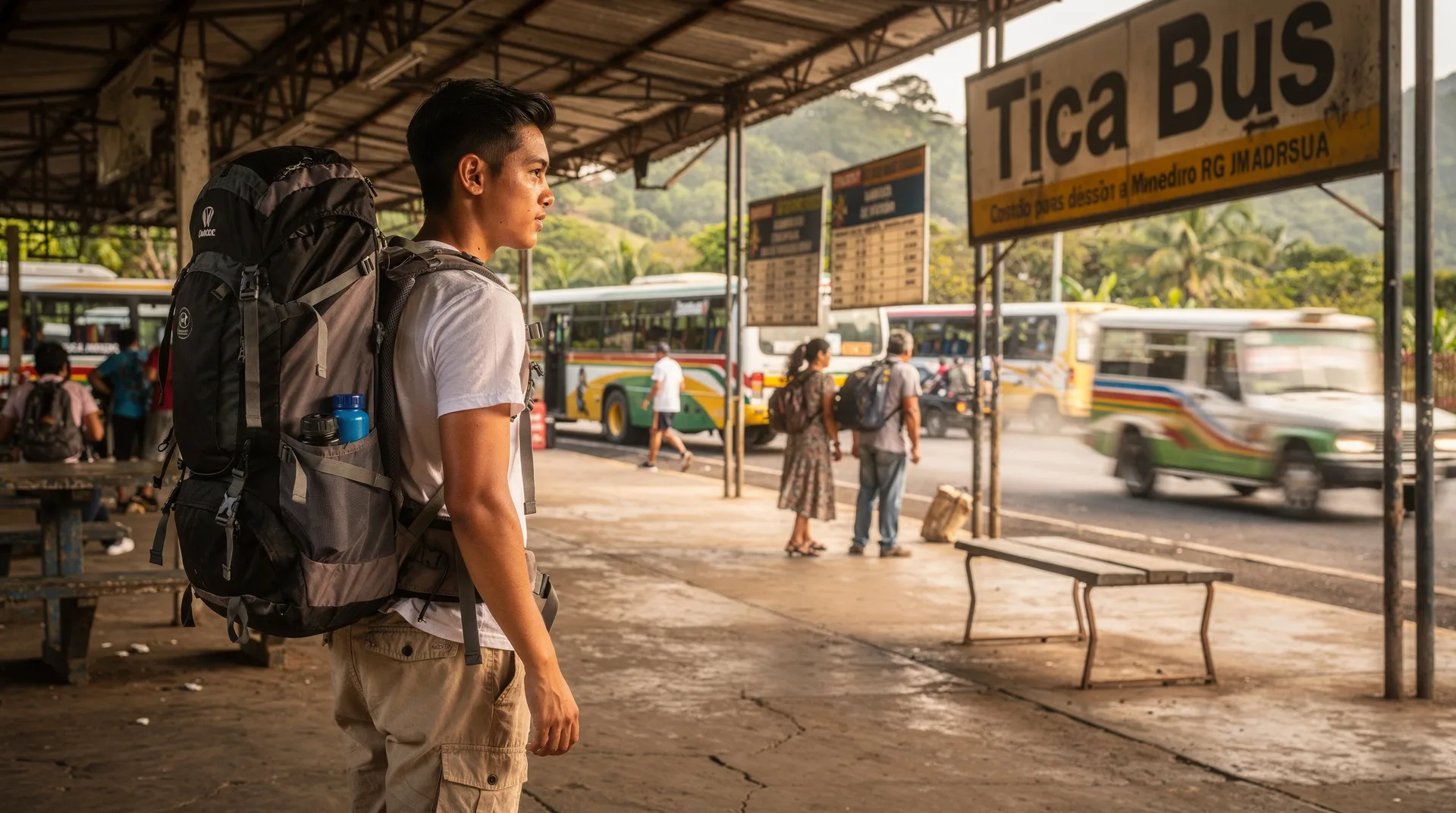
21-day Costa Rica backpacker route: no rental car needed
Costa Rica without a rental car: it’s completely doable
The conventional wisdom about Costa Rica is that you need a 4WD rental to see anything worth seeing. That’s true for several itineraries — Tortuguero, Drake Bay, and the Nicoya backroads all reward drivers. But the country’s most popular tourist corridor — San José to La Fortuna to Monteverde to Tamarindo to Manuel Antonio to Puerto Viejo — is entirely navigable by shuttle and public bus, often more comfortably than a first-time driver would manage on unfamiliar roads.
Shuttle companies (Interbus, GrayLine, Caribe Shuttle) run direct services between every major destination on this route. Public buses handle the shorter hops and city connections. And going without a car saves you $350–600 in rental fees, another $100–200 in fuel, and the considerable cognitive load of driving on roads you don’t know.
This 21-day route is designed for budget-conscious travelers who want to see the full length of Costa Rica’s tourist circuit — both Pacific and Caribbean coasts, volcano highlands, and cloud forest — without a rental car or a luxury budget.
Total estimated budget: USD 1,400–2,200 per person for 21 days, excluding international flights.
At a glance
| Stat | Value |
|---|---|
| Total days | 21 |
| Best for | Backpackers, solo travelers, budget travelers |
| With/without car | No car — buses and shuttles only |
| Budget range | USD 45–85 per person per day |
| Best season | December–April (dry, easiest travel); May–November (cheaper, wetter) |
| Transport cost | $200–350 for all shuttles and buses |
Day-by-day breakdown
Phase 1: San José (Days 1–2)
Land at SJO. San José tends to get dismissed as a transit hub, but it’s worth 2 days if you approach it correctly. Spend the first night near Parque La Sabana — the hotel district on the west side of the city is safer and closer to the good restaurants than the backpacker zone near downtown.
Day 1 afternoon: walk the Barrio Escalante neighborhood — San José’s best dining and coffee district. Stop at Cafeoteca for a specialty pourover, then explore the Mercado Central for a casado lunch at a counter soda. The Mercado is slightly overwhelming but richly local — stalls selling fresh cheese, medicinal herbs, and raw fish alongside the rice-and-beans plates.
Day 2: San José city walking tour — the National Theater (Neoclásico interior, worth the $10 entry), the Gold Museum (PreColumbian gold collection, free with student ID), and the Jade Museum (2,000 years of Mesoamerican jade, world’s largest collection). Evening: dinner at Sikwa, an indigenous Costa Rican cuisine restaurant using Cabécar and Bribrí ingredients — genuinely excellent and unlike anything in the tourist circuit.
San José: guided city tour with National Theater visit — from $45Stay: Sleep Inn (budget, from $55/night dorm, good location, secure) or Adventure Inn (private rooms from $75, rooftop, helpful staff).
Phase 2: La Fortuna (Days 3–6)
Take the direct shuttle from San José to La Fortuna — $35–45 per person, 3 hours, pick-up at your hostel. This is dramatically easier than navigating the public bus system for this leg (which involves a transfer in Ciudad Quesada and adds 2+ hours).
Shuttle services San José to La Fortuna — from $55La Fortuna gives you 4 days — the right amount for budget travelers who want to do the key experiences without rushing and without paying luxury tour-operator prices.
Day 3: arrive and walk the town. The central park is a good orientation point. Budget dinner: Soda La Hormiga (casado for $6–8), followed by a walk toward the volcano for the spectacular after-dark view of the glowing crater (on clear nights).
Day 4: La Fortuna Waterfall (entry $18) + self-guided hanging bridges. The waterfall is a 15-minute drive from town — take the local bus ($1.50 each way) or a shared taxi ($5 per person) rather than the overpriced hotel transfers. The Místico hanging bridges offer a self-guided ticket at $26 — significantly cheaper than the guided tours.
La Fortuna: Místico Arenal hanging bridges admission ticket — from $26Day 5: free or cheap day. The Arenal Ecology and Hanging Bridges Trail inside Arenal Volcano National Park is $15 entry — the cheapest way to be officially “inside” the park. The natural free hot springs at Río Chollín (under the road bridge near Tabacón, accessible on foot) are genuinely warm, genuinely free, and genuinely unpolished. Go at dusk.
Day 6: day trip to Río Celeste. The public bus to Los Chiles and a pickup from the park entrance runs about $3 each way; the 2-hour hike to the blue waterfall costs $12 park entry. This is the budget version of a tour that operators sell for $90. It requires a bit more logistics but the waterfall is equally blue.
Río Celeste National Park hike — from $95Stay: Hostel Backpacker’s Arenal (dorm from $14/night, pool, social atmosphere) or La Choza Inn (private rooms from $45, good volcano views, family-run).
Phase 3: Monteverde (Days 7–9)
Take the lake crossing shuttle from La Fortuna to Monteverde — $30–35, 3 hours, one of the great transit experiences in Costa Rica. The boat crosses Lake Arenal with the volcano behind you.
La Fortuna de Arenal: lake crossing to Monteverde — from $32Monteverde is the cloud forest heart of Costa Rica’s tourist circuit. Santa Elena village (adjacent to Monteverde) has the best budget accommodation and a good hostel scene.
Day 7: arrive, walk Santa Elena village, and buy cloud forest entry tickets in person (slightly cheaper than online for walk-in visitors at the Santa Elena Reserve). Afternoon: walk the village trails at dusk for kinkajous.
Day 8: Santa Elena Cloud Forest Reserve ($15 entry, significantly quieter than the main Monteverde reserve) in the morning. The trails are excellent and the chance of quetzal sightings is comparable to the more famous reserve at a fraction of the crowd. Afternoon: self-guided hanging bridges at Selvatura Park ($25) or the Monteverde Butterfly Farm ($18).
Day 9: morning cloud forest reserve main (Monteverde Biological Reserve, $24 entry) for the most famous trails. Afternoon: cook your own dinner at the hostel kitchen — budget tip that saves $15–20 per evening in Monteverde’s slightly-priced restaurant scene.
Stay: Hostel Camino Verde (dorm from $15, kitchen, good vibe) or Pensión Santa Elena (private rooms from $45, central, very friendly).
Phase 4: Tamarindo (Days 10–13)
From Monteverde, the shuttle to Tamarindo runs via Santa Cruz and takes about 4–5 hours ($45–55 per person). The direct Interbus service picks up at the major Santa Elena hotels.
Tamarindo at a budget level is more doable than it looks — the resort hotels on the beach are expensive, but there’s good mid-budget accommodation 2–3 blocks back.
Day 10: arrive, rent a bicycle ($10/day) and explore the beach south to Playa Langosta. The afternoon surf session is free — Tamarindo’s best beach break costs nothing to surf if you have your own board or rent one locally.
Day 11: surf lesson if needed ($60–80 for a group lesson). Afternoon: walk the Tamarindo Estuary on foot (the free coastal path along the north side of the estuary) — birds, crocodiles, and mangroves without a tour fee.
Tamarindo surf: learn and practice surfing — from $50Day 12: take the local bus to Sámara ($4, 2.5 hours via Nicoya) for a day trip — Sámara is one of Costa Rica’s quietest and safest swim beaches, an excellent contrast to Tamarindo’s busier scene. Return by late afternoon.
Day 13: final morning at Tamarindo. The Saturday market (if timing aligns) sells excellent local fruit, cheese, and tamales.
Stay: Hostel La Botella de Leche (dorm from $14, excellent social pool area, close to beach) or Hotel Zully Mar (private rooms from $55, reliable budget option, pool).
Phase 5: Manuel Antonio (Days 14–17)
Shuttle from Tamarindo to Manuel Antonio takes about 5–6 hours via Quepos ($65–75, Interbus direct service). This is a longer leg — book it in advance and use the journey time to plan your Manuel Antonio days.
Manuel Antonio is the wildlife and beach climax of the route.
Day 14: arrive, check in, and walk into Quepos town for dinner — the Quepos market and the sodas along the central avenue offer $6–8 casados that are significantly better value than the hotel-zone restaurants.
Day 15: Manuel Antonio National Park — the non-negotiable day. Book a certified guide ($25–35 per person on top of the $20 entry fee). The park is closed Tuesdays. Reserve your ticket online at least a week ahead.
Manuel Antonio NP: guided tour with entrance fee included — from $60Day 16: free beach day. Playa Biesanz (south of the park entrance, accessed via a 10-minute trail from the road) is quieter than the park beaches and free to access.
Manuel Antonio: catamaran cruise to Biesanz Bay with lunch — from $95Day 17: Damas Island kayak tour — the best budget activity in the area. Group kayak tours run $45–55 per person and deliver 3 hours of mangrove channels with crocodiles and birds.
Quepos: mangrove kayaking tour — from $60Stay: Costa Linda Hotel (private rooms from $60, good location, pool) or Wide Mouth Frog Hostel (dorm from $18, excellent hostel atmosphere, backpacker information board).
Phase 6: Puerto Viejo (Days 18–21)
From Manuel Antonio to Puerto Viejo is a full travel day — approximately 5–6 hours via San José by shuttle. The Caribe Shuttle service runs San José to Puerto Viejo via Limón ($35–45 per person). You’ll need to take the shuttle from Quepos to San José first ($25–30), then connect to the Caribbean service the same day if departing early.
Shuttle from San José to Puerto Viejo — from $65Puerto Viejo de Talamanca is Costa Rica’s Caribbean soul: Afro-Caribbean culture, reggae, the best Caribbean food in the country, and an entirely different pace from the Pacific. The town is immediately distinct — brighter colors, louder music, coconut in everything.
Day 18: arrive, eat rice and beans cooked in coconut milk at any local restaurant, and rent a bicycle ($6/day). Bicycle is the defining Puerto Viejo transport — the road south to Manzanillo is flat, paved, and passes through six beaches in 14 km.
Day 19: Cahuita National Park — 20 minutes by local bus ($0.75 each way). The park offers the best accessible coral reef snorkeling on Costa Rica’s Caribbean coast (from shore, no boat required). Entry is donation-based at the Kelly Creek entrance. Bring your own mask and fins or rent them in Cahuita village for $5–8.
Cahuita National Park: snorkel — from $55Day 20: bicycle ride to Manzanillo, the end of the road 14 km south of Puerto Viejo. The Gandoca-Manzanillo Wildlife Refuge has a snorkel-accessible reef and a beach that feels genuinely removed from tourism. Snorkel equipment rental available in Manzanillo village. Lunch at any of the small sodas on the main road.
Day 21: morning at Puerto Viejo, then shuttle back to San José (2.5 hours, $35) for the international flight. Allow at least 3.5 hours before your departure — the Limón highway can have traffic congestion and unexpected road delays.
Transport budget breakdown
| Leg | Option | Cost per person |
|---|---|---|
| SJO → La Fortuna | Direct shuttle | $35–45 |
| La Fortuna → Monteverde | Lake crossing shuttle | $30–35 |
| Monteverde → Tamarindo | Direct shuttle | $45–55 |
| Tamarindo → Manuel Antonio | Interbus direct | $65–75 |
| Manuel Antonio → San José | Shuttle | $25–30 |
| San José → Puerto Viejo | Caribe Shuttle | $35–45 |
| Puerto Viejo → San José | Return shuttle | $35–45 |
| Total transport | $270–330 |
Cost breakdown
| Category | Per person (budget) |
|---|---|
| Accommodation (21 nights, mix dorm/private) | $400–650 |
| Food ($15–30/day at sodas + self-catering) | $315–630 |
| Activities (10–12 tours and entries) | $250–400 |
| Transport (shuttles + local buses) | $270–330 |
| Total per person | $1,235–2,010 |
When to go
December through April (dry season): the best conditions for the Pacific coast sections (Tamarindo, Manuel Antonio) — sunny, predictable, and with excellent visibility for the Manuel Antonio park. The Caribbean coast (Puerto Viejo) is actually rainier in this period — the Caribbean’s seasons are inverted from the Pacific’s — but Puerto Viejo is generally enjoyable year-round.
September and October for the Caribbean: Cahuita reef is at its clearest September–October when the Caribbean experiences its brief dry window. The tradeoff is that the Pacific sections of this route get significantly wetter, making the Monteverde stay potentially very cold and wet.
May–August is the value sweet spot: green season rates are 20–30% lower than peak season, crowds are thinner at popular sites, and the veranillo (late June–early July) gives a brief dry window on the Pacific.
Frequently asked questions about this backpacker route
Can I do this route entirely by public bus (not shuttle)?
Partly. San José to La Fortuna by public bus is feasible: Transmóvil buses run from San José’s Atlántico Norte terminal, but require a transfer in Ciudad Quesada and take 4–5 hours total. La Fortuna to Monteverde by public bus (via Tilarán) takes 5+ hours. Monteverde to Tamarindo requires multiple bus changes via Santa Cruz. Manuel Antonio to San José by Tracopa bus ($12) is reliable and comfortable. Public buses save $150–200 over shuttles but add 15–20 hours of transit time over 21 days. Shuttles are worth the extra cost for the sanity they preserve.
Is Costa Rica safe for solo backpackers?
Yes, with standard urban precautions. The main risks are petty theft in San José (particularly near the Coca-Cola terminal and downtown markets) and bag theft on beaches. Keep electronics out of sight on beaches, use hostel lockers, and avoid walking in downtown San José after dark. The main tourist route (La Fortuna, Monteverde, Tamarindo, Manuel Antonio, Puerto Viejo) is among the safest in Central America.
How should I book shuttles in advance?
Interbus and GrayLine both have online booking systems. Caribe Shuttle is essential for the Caribbean coast connections. Book at least 3–5 days ahead during December–April high season; last-minute bookings are often possible in May–November. Your hostel’s front desk can book shuttles on your behalf for a small fee.
What if I want to extend to more Caribbean beach time?
Spend an extra 2–3 days in the Cahuita and Manzanillo area rather than rushing south from Puerto Viejo. The Gandoca-Manzanillo refuge is excellent for snorkeling, the beaches around Punta Uva are among the Caribbean’s most beautiful, and the pace of the area rewards extra time. This is the most commonly extended section of the route.
Is 21 days enough to cover this whole route comfortably?
Yes, with breathing room. The route as described leaves most travel days with arrival time by midday and full activity days. Some travelers compress it to 18 days by spending 1 fewer night in Tamarindo and 1 fewer in San José. We recommend against compressing below 18 days — the connections are manageable but the cumulative shuttle days feel like a lot if you’re moving every 2–3 days.
Hostel and budget accommodation guide
Costa Rica’s hostel network on the main tourist circuit is strong — you’ll find quality options at every destination on this route. Here’s what to expect:
San José: The Selina chain operates a good hostel in the Barrio Escalante area — co-working spaces, private rooms from $45, dorms from $20. Adventure Inn on the west side of the city is a more traditional option with helpful staff and a rooftop bar.
La Fortuna: Backpacker’s Arenal is the main hostel, with volcano views from the pool area and a social scene centered on the evening activity board. Dorms from $14. Private rooms from $40. Hostel Los Lagos has its own hot springs on-site — a budget-hotel hybrid at $55–80/night that justifies the premium for a soaking session included in the room rate.
Monteverde: Hostel Camino Verde is the best-located budget option in Santa Elena — walking distance to the cloud forest entrance ticket office and the restaurants. Dorms from $15, private rooms from $48. The shared kitchen saves $15–20 per evening compared to eating out every night.
Tamarindo: La Botella de Leche is the social hub of Tamarindo’s backpacker scene — good pool, beach bar, and a noticeboard for surf lesson discounts and tour group formation. Dorms from $14. For slightly more space, Hostel Loma Brava is 5 minutes from the beach with air conditioning and $18 dorms.
Manuel Antonio / Quepos: Wide Mouth Frog Hostel in Quepos is the local institution — a garden setting with a pool, good common kitchen, and proximity to the local bus stop for the park. Dorms from $18. Hotel Costa Linda in the hotel zone is a step up — private rooms from $60 with air conditioning.
Puerto Viejo: Casa Zen has been the backpacker’s choice for years — good community kitchen, bike rentals available at the front desk, and a calm garden setting away from the main road noise. Dorms from $12. Rocking J’s (3 km south at Playa Cocles) is the more social, party-oriented option with dorms in tented hammock structures — unusual, social, and memorable.
Safety and practical tips for the full 21-day circuit
Cash and ATMs: Budget travelers should carry USD cash as backup — not all rural areas have accessible ATMs and the Nicoya Peninsula in particular has fewer banking options. ATMs in Monteverde and Tamarindo frequently run out of cash during peak season weekends. The BAC Credomatic and Promerica banks are most reliable for foreign cards with reasonable fees ($5–8 per withdrawal).
SIM card: Buy a Kolbi SIM at the SJO airport on arrival — it’s the most affordable local network with good coverage across the main tourist corridor. Load $20–30 of data for 21 days; you’ll use 2–4 GB typically. Alternative: Airalo international eSIM works before arrival and avoids the airport queue.
Luggage strategy: A 40–50L backpack handles 21 days in Costa Rica comfortably — you’ll do laundry at hostels every 5–7 days (typically $4–6 per load). Avoid large wheeled suitcases: they’re impractical on hostel stairs, river crossings, and gravel roads. A small daypack (15–20L) clips to the front for day hikes and tours.
Health: Tap water is safe to drink throughout the main tourist circuit — Costa Rica has one of Latin America’s most reliable municipal water systems. San José, La Fortuna, Monteverde, Tamarindo, and Manuel Antonio all have safe tap water. Puerto Viejo and more rural areas: check with your hostel. Anti-diarrheal medication and rehydration salts are worth having in your kit.
Related itineraries
For the same circuit with more flexibility and fewer transfers, see the 2-week complete Caribbean and Pacific loop — a car-based 14-day version that covers similar ground with more spontaneity. For surfers wanting to extend the Tamarindo section into a full surf circuit, the 10-day Pacific surf trip adds Nosara and Santa Teresa. For budget travelers who want to focus exclusively on the Caribbean coast in less time and less money, the 7-day quick Caribbean route covers Tortuguero to Cahuita at an even tighter budget.