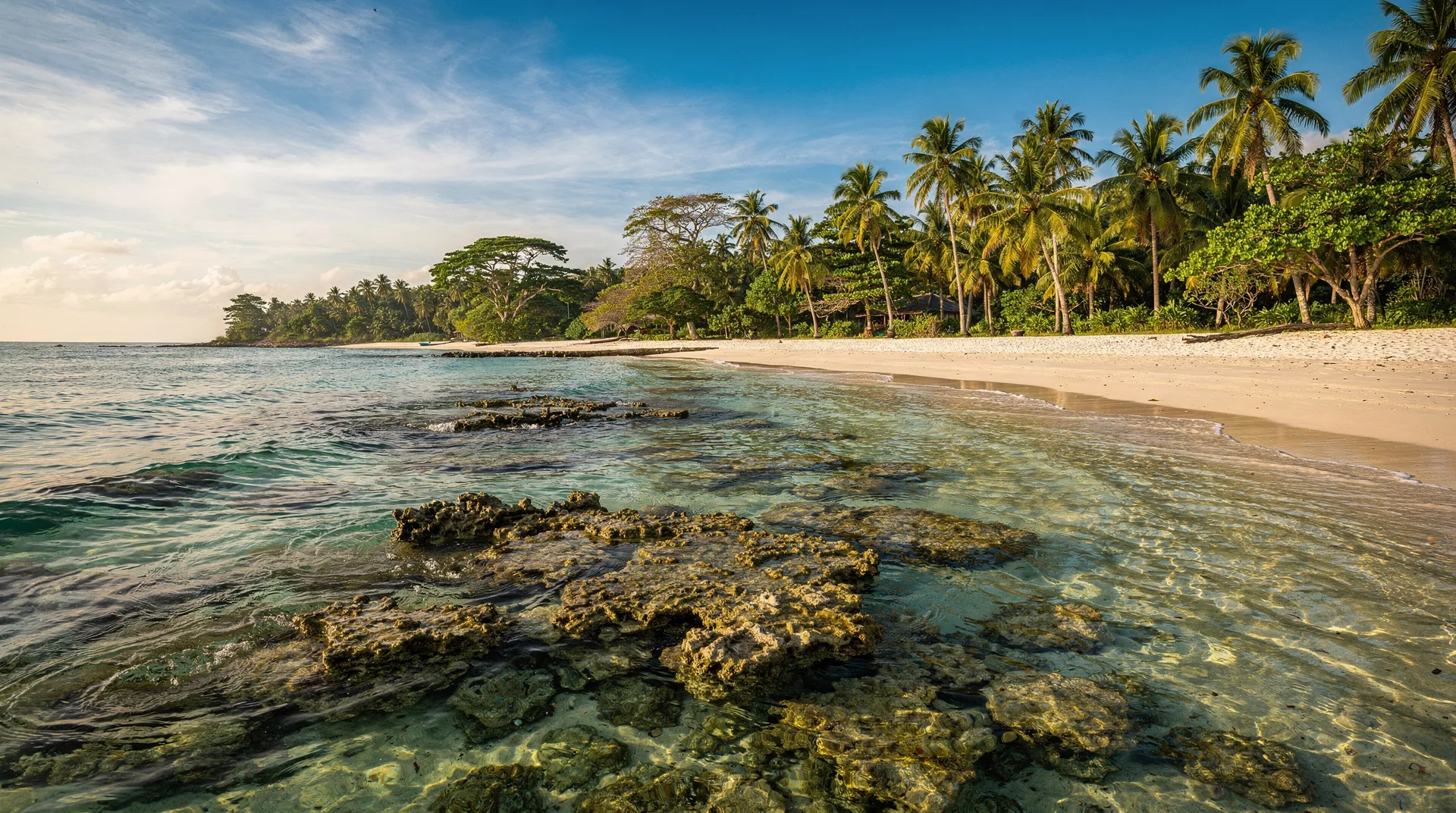
Cahuita — Caribbean reef, sloths, and slow living on the Limón coast
Plan your trip to Cahuita: snorkel the best reef in Costa Rica, spot sloths, and enjoy authentic Caribbean culture. Honest 2026 guide.
Top experiences nearby
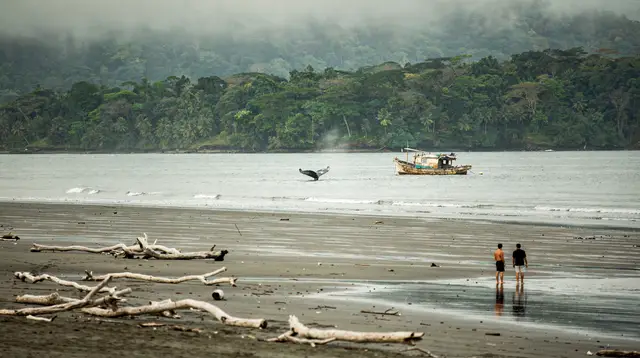
Cahuita National Park & snorkeling private tour
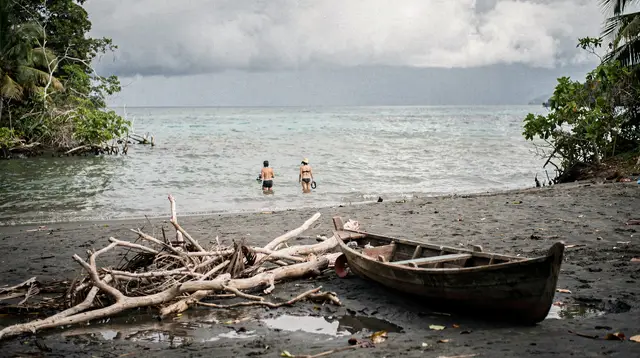
Snorkel in Cahuita National Park: explore the reef
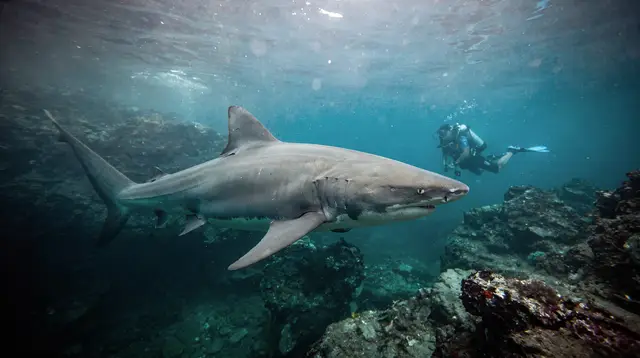
Cahuita National Park: snorkel
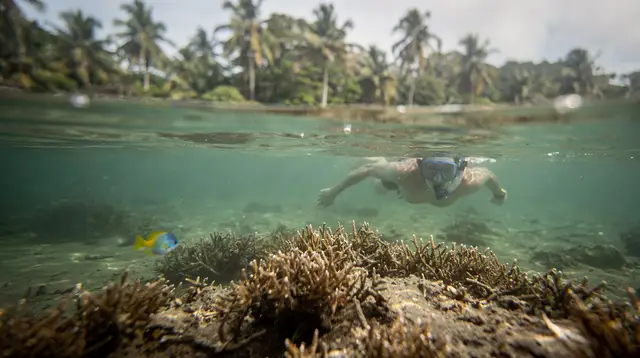
Cahuita NP: snorkeling & wildlife hike (certified guide)
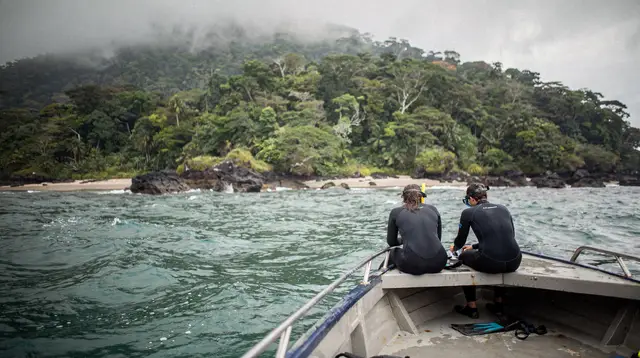
Licensed two-hour snorkeling adventure Cahuita NP
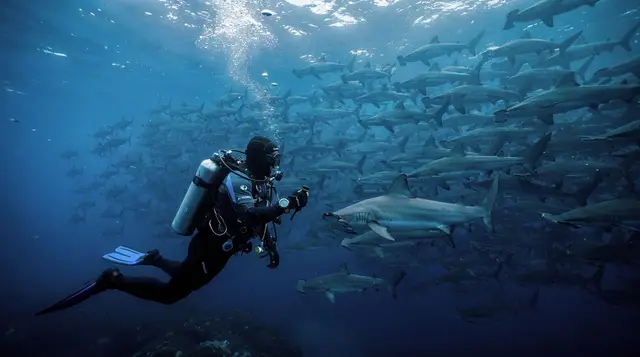
Cahuita NP guided hike with snorkel and lunch
Quick facts
- Best time to visit
- September to October (Caribbean dry window) and February to April
- Days needed
- 2 days
- Getting there
- 43 km south of Puerto Limón — 4.5 hours by bus or car from San José
- Budget per day
- USD 45 to 100
Where the reef meets the rainforest
Cahuita occupies a narrow strip of Caribbean coast about 43 kilometers south of Puerto Limón, sandwiched between one of the best-preserved coral reefs in Costa Rica and a rainforest so thick that sloths hang from the almond trees along the beach path. It is a small town — one main dirt road, a handful of sodas, guesthouses painted in Rasta colors — and that smallness is the point. Unlike Puerto Viejo, which has grown into a proper party destination, Cahuita moves at its own pace. People come here to snorkel, to spot wildlife without effort, and to eat Caribbean cooking that bears no resemblance to the rice-and-beans you get on the Pacific side.
The town sits at the northern edge of Cahuita National Park, which protects 600 hectares of coastal rainforest and 240 hectares of coral reef. The park entry at the Kelly Creek station, right in town, is donation-based — genuinely one of the few places in Costa Rica where you decide what to pay. The other entry at Puerto Vargas, 8 kilometers south, has a fixed fee.
| Where | 43 km south of Puerto Limón, Caribbean coast |
| Cost | USD 45-100/day; park entry donation-based (Kelly Creek) |
| Getting there | 4-4.5 hrs by bus or car from San José |
| Best time | Sept-Oct and Feb-Apr (Caribbean dry windows) |
| Days needed | 2 days |
Snorkeling the Cahuita reef
The coral reef at Cahuita is the largest on Costa Rica’s Caribbean coast. It suffered significant bleaching during the warm El Niño years of the late 1990s and again in 2015-2016, but recovery has been visible. Brain corals, sea fans, and elkhorn patches support a vivid mix of parrotfish, angelfish, barracuda, and the occasional hawksbill turtle. Visibility runs from 4 to 12 meters depending on rainfall and swell — the Caribbean side never has the crystal clarity of Belize or the Bay Islands, but the fish density more than compensates.
The reef is accessible from the beach inside the national park, but snorkeling with a guide is a better experience. A licensed guide knows which sections of the reef are healthiest, reads the current, and spots species that most visitors swim past without noticing.
Snorkel in Cahuita National Park: explore the reef — from $60For a shorter, more budget-friendly reef session, the 90-minute format works well as an add-on to a park hike.
Cahuita National Park: snorkel — from $55If you want the full combination — guided snorkel plus a wildlife walk through the park forest — the certified guide tours cover both and typically run four hours.
Cahuita NP: snorkeling & wildlife hike (certified guide) — from $75One useful tip: snorkeling is best in the morning before afternoon winds build the swell. The Puerto Vargas section of the reef, about 8 kilometers south of town, is often less disturbed than the reef directly off the Kelly Creek entrance.
Wildlife in the national park
The trail through Cahuita National Park follows the shoreline from Kelly Creek south toward Puerto Vargas. It is flat, easy, and genuinely rewarding for wildlife. Howler monkeys call from the canopy from first light. White-faced capuchins work the palm trees beside the beach path. Coatis amble across the trail with characteristic confidence. Green iguanas freeze on branches just above eye level.
Sloths, both two-toed and three-toed, live in the cecropia and almendro trees. They are present year-round but easiest to spot in the dry season (Feb–Apr on the Caribbean side) when leaves thin and movement is more visible. The Sloth Sanctuary north of Cahuita — a rescue center — offers a guided visit if you want guaranteed sloth encounters at close range.
Cahuita sloth and wildlife sanctuary half-day tour — from $65The Cahuita park beach itself — Playa Blanca, inside the Kelly Creek section — is calm, swimmable, and fringed with almond trees. It is significantly less crowded than the beaches at Manuel Antonio or Jacó and has no beach vendors.
Making the most of your wildlife mornings
Wildlife here rewards patience more than speed. Walk slowly, stop often, and look up: most of what you will see is in the canopy or tucked against a trunk. If sloths are the main goal, our guide to where to see sloths in Costa Rica explains how to read the trees and why the animals look so still. The trail is also a good place to learn the differences between the primates you hear and see, and the monkey species of Costa Rica is a handy companion before you set out.
Keep a respectful distance from every animal, never feed them, and keep your voice low. The principles in wildlife watching ethics apply on this trail as much as anywhere. If you want to bring a camera, wildlife photography tips covers how to shoot in the dim light under the canopy, and nocturnal wildlife is worth reading if you are curious about what wakes up after dark. For the broader picture of what lives across the country, the Costa Rica wildlife overview puts Cahuita in context.
The combined reef and wildlife tour
For visitors who want to cover the reef and the forest in a single day without managing logistics themselves, guided half-day hikes with snorkeling and lunch are available. These combine the Kelly Creek trail, a reef snorkel, and a meal — efficient for travelers connecting from Tortuguero or planning to continue to Puerto Viejo.
Cahuita NP guided hike with snorkel and lunch — from $85Day trips from Cahuita
Cahuita’s small-town pace makes it a natural base for exploring the wider Caribbean coast without changing hotels every night. The Sloth Sanctuary, about 20 minutes north on the road to Puerto Limón, runs a rescue and rehabilitation program for both two-toed and three-toed sloths and offers boat-based canal tours through the surrounding wetland alongside the sanctuary visit — a near-guarantee of close sloth sightings for travelers who haven’t spotted one on the national park trail. See the sanctuary CTA above for booking details.
South of town, Puerto Viejo (17 km) makes for an easy half-day or overnight extension — better restaurants, the famous Salsa Brava surf break, and a livelier evening scene than Cahuita offers. Many travelers split a Caribbean trip into two nights in Cahuita for wildlife and reef, then two more in Puerto Viejo for surf and nightlife, without needing a car for either leg since Mepe buses connect them directly.
North along the coast, Tortuguero is a different logistical proposition entirely — no road access, only boat or small plane from Cariari or San José — but travelers building a full 7-day Caribbean itinerary often sequence Tortuguero first (canals, turtles), then work south through Cahuita and Puerto Viejo, ending with an easier return drive to San José than the Tortuguero boat-only access allows.
For a single-base strategy, Cahuita’s central position on the coast road means it works equally well as the anchor for day trips in both directions — sanctuary and Limón-area stops to the north, Puerto Viejo’s beaches and nightlife to the south — without ever needing to pack up and change hotels. This matters more here than on the Pacific side, where destinations tend to sprawl further apart; on the Caribbean coast, everything between Puerto Limón and the Panama border sits within a two-hour drive.
Planning around the reef
If Cahuita is your first serious snorkel in Costa Rica, it helps to compare it with the other options before you commit. The best snorkel beaches in Costa Rica lists the alternatives, and snorkel vs dive: where to go helps you decide whether you want to stay at the surface at all. For a closer look at the species you might meet, the marine life guide is a good primer, and the dedicated Cahuita reef snorkel guide goes deeper on the reef itself.
Cahuita also sits inside the wider Limón province, and the Caribbean feels like a different country from the Pacific. If you are still deciding which coast suits your trip, read Caribbean vs Pacific coast trip and check best time to visit Costa Rica so your dates match the weather you want. Once you have chosen, shuttle services overview and rent a car or not will help you pick the simplest way to arrive.
Pack light, breathable clothes, a reef-friendly mindset, and your own mask if you prefer a perfect fit; the packing list has the details. Before you travel, a quick look at safety in Costa Rica and travel insurance is time well spent, especially if you plan on spending several mornings in the water.
Getting around and where to stay
Cahuita has no car traffic on its main street. You walk, or rent a bicycle from one of the guesthouses for around USD 10 per day. The main street runs from the bus stop to the Kelly Creek park entrance — a 10-minute walk.
Where to stay: Alby Lodge sits close to the park entrance and has clean bungalows surrounded by garden. El Encanto B&B is the most comfortable mid-range option, with a small pool and good breakfast. Budget travelers gravitate toward Cabinas Surf Side, which is basic but well-positioned for early park access. All three are within walking distance of the park.
Where to eat: Restaurant Colibrí does the best Caribbean cooking in town — rice and beans cooked in coconut milk, whole fried snapper, plantain tostones. Miss Edith’s is the historic name in Cahuita cuisine; she no longer cooks but her family has carried on the tradition at the same location. For lighter meals and smoothies, Sobre las Olas has a terrace over the water.
Practical matters
Weather: The Caribbean coast does not follow the Pacific dry/wet season split. Cahuita receives rain year-round, but the driest windows are September to October and February to April. Heavy rain runs September to November on the Pacific but this is exactly the Caribbean’s best weather window — worth knowing if you’re planning a late-season trip. Our Caribbean vs Pacific beaches guide explains the microclimate differences in detail.
Safety: Cahuita is safe by Costa Rica standards but petty theft from vehicles and unattended bags on the beach occurs. Keep valuables in your accommodation and never leave anything visible in a parked car. The national park trail is safe during daylight hours.
Getting there: Direct buses run from San José’s Gran Terminal del Caribe to Cahuita (about 4.5 hours, around USD 9). By car: Route 36 south from Puerto Limón, 43 kilometers. The road is paved. No 4WD required. Tortuguero to the north requires a different approach (boat from Cariari), but can be combined with Cahuita on the 7-day Caribbean itinerary.
Frequently asked questions about Cahuita
Is there an entrance fee to Cahuita National Park?
The Kelly Creek entrance (the one in town) operates on a voluntary donation system. The park asks visitors to contribute what they can — a genuine donation, not a fixed fee. The Puerto Vargas entrance, 8 kilometers south along the coast road, charges a fixed entry fee of around USD 5 per person. Both entrances access different sections of the same park.
When is the best time to visit Cahuita for snorkeling?
The best reef visibility occurs when rainfall is low and the sea is calm. On the Caribbean coast, this typically means September to October and February to April. Avoid visiting right after heavy rains, as river runoff can reduce visibility to near zero. Morning snorkeling sessions (before 10:00 AM) are generally clearer than afternoon ones.
How does Cahuita compare to Puerto Viejo?
Cahuita is quieter, cheaper, and more authentically Caribbean in feel. Puerto Viejo has better nightlife, more restaurant options, and a livelier surf scene (particularly at Salsa Brava). If you want wildlife, reef snorkeling, and a relaxed pace, Cahuita is the better choice. If you want evening options and a bigger town feel, add Puerto Viejo to your itinerary — it’s 17 kilometers south.
Can I snorkel independently without a guide?
Yes, you can enter the park and snorkel independently from the beach inside the Kelly Creek section. Gear rentals are available from local operators near the park entrance for around USD 10 to 15. However, a guide significantly improves the experience — they know the reef sections in best condition and spot marine life that most independent snorkelers miss. For a first reef visit, the guided option is recommended.
Are there sharks in the Cahuita reef?
Nurse sharks rest on the sandy bottom and are harmless. Reef sharks occasionally pass through but sightings are rare and not a safety concern. Bull sharks and other larger species are not present in the shallow reef waters.
How to fit Cahuita into your itinerary
Cahuita works well as a two-night stop on a Caribbean circuit combining Tortuguero (canals and turtles) with Puerto Viejo (surf and culture). From San José, a direct bus reaches Cahuita in 4.5 hours — no car required. Add one morning for the reef snorkel, one morning for the park trail and wildlife, and an evening at Miss Edith’s. Two nights is the right allocation.