Best snorkel beaches in Costa Rica
Where to snorkel from shore?
Manzanillo, Cahuita, Punta Uva (Caribbean reef).
Shore snorkelling vs boat snorkelling in Costa Rica
Costa Rica is a world-class snorkelling destination, but there is an important distinction that most guides gloss over: the best snorkelling requires a boat. Caño Island Biological Reserve, the Catalinas Islands, and the Bat Islands offshore Guanacaste all offer spectacular underwater environments, but they are 30-90 minutes from shore. Getting there means booking a day tour.
Shore snorkelling — wading in from a beach and swimming to a reef — is possible at only a handful of locations in Costa Rica, and they are almost all on the Caribbean coast. The Pacific coast’s visibility is lower (river sediment from the wetter landscape), and its rocky reefs tend to drop off quickly into deep water. The Caribbean coast, by contrast, has a series of fringing reefs that extend from the shoreline in relatively shallow water (1-8 metres), making them genuinely accessible on a mask and snorkel.
This guide covers the best shore snorkel sites, then addresses boat-accessed snorkel experiences for comparison.
If you are still deciding which coast suits your trip, the Caribbean versus Pacific beaches comparison puts the two side by side, and our overview of the best Caribbean beaches covers the sand, swimming and atmosphere that surround these reefs. Snorkelling is only one reason to choose a beach, so it helps to read both before you fix your base.
| Best shore snorkel | Cahuita National Park |
| Best visibility (shore) | Punta Uva, 15-20m on calm dry-season days |
| Best boat-accessed | Caño Island, 20-30m visibility |
| Gear rental | around $10-20/day at all major sites |
| Best time | Feb-Apr, or Sep-Oct Caribbean dry window |
Cahuita National Park — Costa Rica’s most accessible reef
The reef system at Cahuita National Park extends 600 metres offshore from the park’s white-sand beaches and is the most accessible coral reef in the country. You can wade into the water at Kelly Creek (the northern entrance) and snorkel directly over brain coral, sea fans, and living reef within 100 metres of the beach.
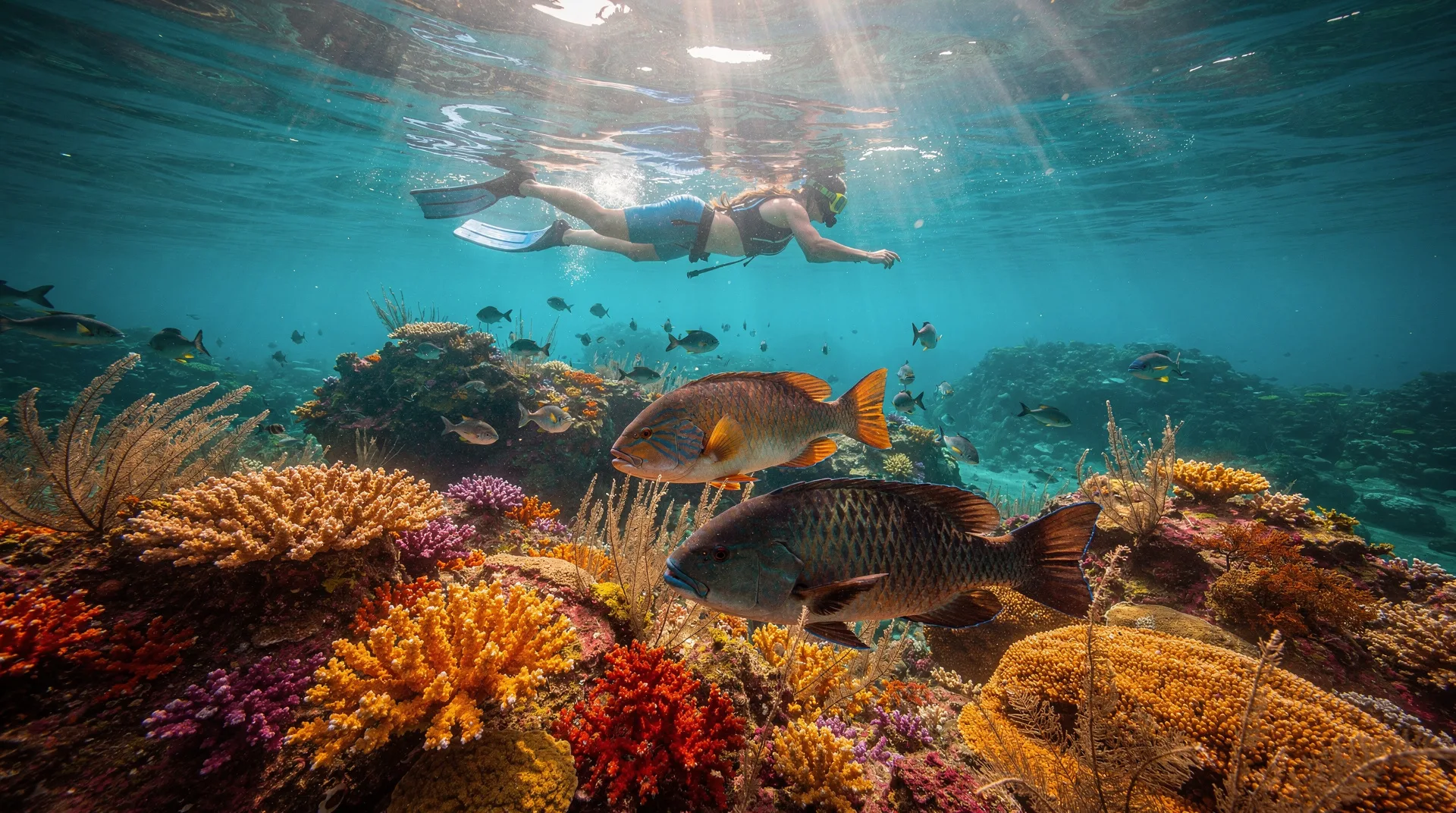
Snorkel in Cahuita National Park: explore the reef — from $60What you will see: Over 120 fish species have been catalogued on the Cahuita reef, including parrotfish, angelfish, wrasse, grunt, and snapper. Hawksbill sea turtles are frequently sighted resting on the reef or feeding on sponges. The 2005 earthquake that affected the Caribbean coast damaged sections of the reef by lifting sections of the seabed, and warming events have caused coral bleaching in isolated patches. However, the reef is recovering — recent monitoring by the Cahuita National Park office shows increased coral cover compared to 2018-2020 lows.
Guided vs self-guided: You can snorkel without a guide at Kelly Creek, but a guide significantly improves the experience. Local operators including MANT (operated by the Cahuita fishing community cooperative) and Cahuita Tours take small groups out by kayak to the better, less-degraded sections of the outer reef where visibility reaches 15+ metres on calm days.
Cahuita National Park: snorkel — from $55Conditions and timing: The best visibility at Cahuita comes February to April (dry season reduces river run-off) and again September to October. After heavy rain, river outflow from the Perezoso River can turn the water murky for 24-72 hours. Morning is consistently better than afternoon, when wind picks up.
Entry: Kelly Creek entrance is donation-based. Puerto Vargas entrance (5 km south of town) charges $5 and gives access to the southern sections of the reef.
Planning your Cahuita day: Treat the snorkel as one part of a longer visit. The park itself is worth a slow walk along the coastal trail before or after you get in the water, and our Cahuita National Park guide explains the trail, the wildlife you may meet on the way and how the two entrances differ. For a deeper look at the reef alone, the Cahuita reef snorkel guide goes into sections, entry points and what to look for. If you are choosing a base, the Cahuita destination page covers where to stay and eat.
Punta Uva — the most beautiful snorkel beach
Punta Uva is 13 km south of Puerto Viejo on the paved coastal road. The beach occupies a sheltered bay with a fringing reef that begins just 50 metres from shore. Water clarity at Punta Uva on a good day (calm, dry-season conditions) rivals Caribbean islands — 15-20 metres horizontal visibility and a visibility depth that shows the reef structure clearly.
The reef here is in better condition than Cahuita’s — slightly deeper (2-6 metres) and less affected by the 2005 earthquake. Parrotfish, trumpetfish, eagle rays, and small nurse sharks (harmless, bottom-dwelling) are regular sightings. Hawksbill turtles are seen here more frequently than almost anywhere else on the coast.
Equipment: Punta Uva Dive and Adventure rents masks, fins, and snorkels ($10-15 for the set) and offers guided snorkel sessions ($30-40 per person). The reef is navigable independently if you have experience reading reef topography and respecting the fish channels.
Getting there: A bicycle from Puerto Viejo takes 45 minutes along the paved coastal road. There is a parking area for those with cars. The Manzanillo bus from Puerto Viejo stops within 500 metres.
Because Punta Uva is so pleasant, it pays to arrive early and stay flexible. Swim first while the water is calmest, then spend the rest of the day on the sand or exploring the coast. The Puerto Viejo destination page is the best starting point for lodging, food and getting around the southern Caribbean, and it makes a natural base for visiting Punta Uva and Manzanillo on separate days.
Manzanillo and the Gandoca-Manzanillo Refuge — the wild option
Manzanillo is the end of the paved road, 15 km from Puerto Viejo, inside the Gandoca-Manzanillo Wildlife Refuge. The village is tiny and facilities are minimal, but the snorkelling from the beach at Manzanillo and at the headland of Punta Mona (accessible by boat or a 2-hour coastal trail) is among the best on the Caribbean coast.
The combined Cahuita-Manzanillo snorkel excursion is the most efficient way to see both reefs in a single day:
Manzanillo and Cahuita snorkeling duo tour — from $95Snorkelling from Manzanillo’s main beach is accessible when swells are low and the wind is calm — this is not always guaranteed. The village’s Aquamor Adventures organises guided snorkel sessions that target the better reef sections (some are only reachable by boat or kayak). The ATEC (Asociación Talamanqueña de Ecoturismo) office in Puerto Viejo can connect you with local Manzanillo guides who know the reef’s seasonal patterns.
Wildlife refuge note: The Gandoca-Manzanillo refuge is also one of the last undisturbed coral reef systems in Central America. Entry is free but you are expected to respect the no-collection rule and use reef-safe sunscreen only.
The best boat-accessed snorkel sites
If you are willing to take a boat, the underwater quality steps up significantly. These are not shore snorkel sites, but they belong in any honest Costa Rica snorkel guide.
Caño Island Biological Reserve
Caño Island, 20 km offshore from Drake Bay, has the clearest water and most intact reef system accessible to recreational snorkellers in the country. Visibility regularly reaches 20-30 metres, and the marine life roster includes white-tip reef sharks, schools of jacks, spotted eagle rays, and sea turtles. The island is accessed by boat from Drake Bay or Uvita (2-3 hour journey from Uvita), with guided snorkel tours costing $135-150 per person including park fees.
Las Catalinas Islands (Guanacaste)
The Catalinas Islands, accessible by boat from Tamarindo or Playas del Coco (30-45 minutes), offer Pacific snorkelling that is fundamentally different from the Caribbean: more current, lower visibility (5-10 metres versus 15-20 on the Caribbean coast), but the presence of large pelagic visitors — manta rays, eagle rays, and devil rays are regular sightings from December through May.
Looking beyond the beach
Snorkelling rewards people who understand what they are looking at. Before you go, the Costa Rica marine life guide helps you recognise the fish, rays and turtles you are likely to meet, and the wildlife watching ethics guide sets out how to behave around them. Safety matters just as much as curiosity: read the beach safety guide for rip currents and swell, especially if you are travelling with children.
Frequently asked questions about snorkel beaches
Do I need to bring my own snorkel gear to Costa Rica?
No — equipment rental is available at all major snorkel sites including Cahuita (multiple operators), Punta Uva (dive shop), and Manzanillo (Aquamor). Equipment quality varies; if you are sensitive to mask fit, bringing your own mask is worthwhile. Full sets rent for $10-20 per day.
Is the coral at Cahuita healthy?
The reef at Cahuita has experienced significant damage from the 2005 Caribbean earthquake, coral bleaching events, and ocean warming. However, it is recovering. The outer reef sections (accessed by kayak or guide boat) are in notably better condition than the sections immediately adjacent to Kelly Creek beach. Do not touch or stand on any coral — even dead-looking coral can have living polyps.
What is the best month for Caribbean snorkelling?
February through April for dry-season clarity. September through early October for the Caribbean “veranillo” dry window — this period is often overlooked by tourists and offers excellent conditions with far fewer visitors. Avoid November through January for snorkelling: Atlantic swell and rain reduce visibility significantly.
Are there currents at Cahuita reef?
Mild currents run along the reef at Cahuita, generally from south to north. These are manageable for competent swimmers but can be tiring for children or weak swimmers, especially if combined with swell. The guided tours position groups in calm sections and provide safety equipment.
Can I snorkel at Pacific beaches?
Shore snorkelling on the Pacific coast is limited by lower visibility and the absence of accessible fringing reefs. Manuel Antonio’s Biesanz Bay has some rocky reef accessible from shore with decent fish populations. Playa Conchal has clear water but limited reef. The best Pacific snorkel experiences require a boat — see our Caño Island guide for the top Pacific boat snorkel.
Are children safe snorkelling at Cahuita?
Children aged 8 and above who are comfortable swimmers can snorkel the Kelly Creek section of Cahuita reef with a parent and good-fitting equipment. The water is shallow (1-3 metres in sections) and the reef is visually engaging. Younger children with a life jacket and supervision can participate on calm days. A guided excursion with a local operator is recommended for families, as guides know the safest entry points and can manage the group in the water.
Is reef-safe sunscreen required?
Yes — and this is not optional. Oxybenzone and octinoxate, found in most conventional sunscreens, are proven coral killers. Cahuita National Park rangers enforce the reef-safe rule (zinc oxide-based products only) inside park boundaries. Buy reef-safe sunscreen in San José (most pharmacies and supermarkets now carry options) or bring it from home. Options include mineral sunscreens from Badger, Stream2Sea, and Raw Love.
Photography and marine life etiquette while snorkelling
Reef contact — even brief, accidental fin or hand contact — can kill coral polyps that took years to grow, so buoyancy and body awareness matter as much in snorkelling as in diving. Keep a horizontal position, use your fins rather than grabbing at rock or coral to steady yourself, and never stand on reef structure even in shallow water.
If you’re bringing an underwater camera or phone housing, resist the urge to chase turtles or rays for a closer shot — Hawksbill turtles at Punta Uva and Manzanillo are habituated to snorkellers at a respectful distance but will dive and disappear if crowded. Guided excursions at Cahuita and Manzanillo typically include a briefing on these points; solo snorkellers should apply the same standard even without a guide watching.
Where to fit snorkelling in your itinerary
Caribbean snorkelling fits naturally into the 7-day Caribbean itinerary with a base in Puerto Viejo and 2-night stop in Cahuita. For a combined Pacific-Caribbean trip with snorkelling on both coasts, the 14-day circuit covers Cahuita and includes Caño Island or the Catalinas.
For diving rather than snorkelling, see our Catalinas Islands diving guide and snorkel vs dive guide.