Catalinas Islands diving: complete guide
What's at Las Catalinas?
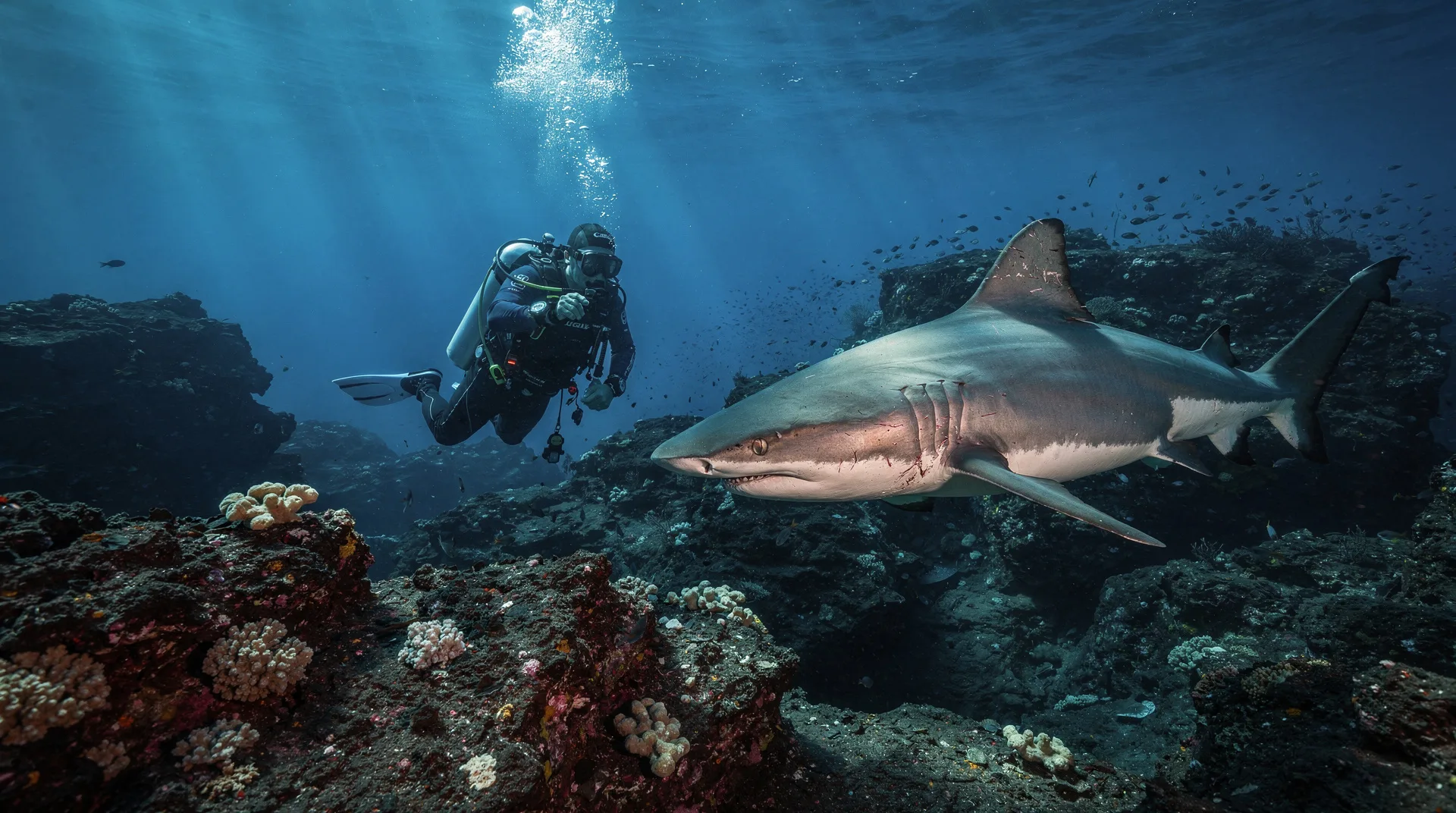
Manta rays, eagle rays, devil rays Dec-May; bull sharks possible at the deeper sites.
Why Las Catalinas punch above their weight
Las Catalinas Islands — often written Islas Catalinas and not to be confused with the pedestrian village of Las Catalinas — are a cluster of uninhabited volcanic rocks sitting roughly 6 km off the Guanacaste coast, between Playa Flamingo and Playas del Coco. Despite being modest in size, they have earned a reputation among experienced divers as one of Central America’s most reliable spots for large pelagic encounters.
The combination of Pacific currents, seamount topography, and seasonal nutrient upwelling creates conditions that draw rays and sharks with remarkable consistency. Dive boats depart daily from Tamarindo, Playas del Coco, and Playa Flamingo — all within 30-45 minutes by rigid inflatable.
This guide covers everything: the dive sites, the marine life calendar, what certifications you need, real operator reviews, and how to fit a Catalinas day trip into a broader Guanacaste itinerary.
The marine life calendar
Understanding seasonal patterns at Las Catalinas is the key to booking the right dates.
December to May: peak ray season
This is the window most divers target. The cool Papagayo winds drive nutrient upwelling off Guanacaste’s coast, and the thermocline rises, concentrating marine life near the surface and at cleaning stations.
Manta rays (Mobula birostris) are the headline act. Groups of 3-12 mantas are reliably sighted from December through May, often performing barrel rolls at cleaning stations where the endemic hogfish and king angelfish pick parasites from their gill slits. Mantas at Las Catalinas are ocean mantas — wingspan up to 5 metres — not reef mantas.
Eagle rays (Aetobatus narinari) are present year-round but school in larger formations during this dry-season window. Pairs and trios gliding over sandy rubble bottom at The Wall site are an almost guaranteed sighting from January to March.
Devil rays (Mobula mobular) aggregate in the shallower sections during the same window, sometimes in schools of hundreds. A school of devil rays rolling at the surface as your boat arrives is one of those Costa Rica moments that resets your sense of scale.
Bull sharks (Carcharhinus leucas) are possible at Las Catalinas year-round at depth — particularly at the deeper northern sites — but regular sightings require heading north to Bat Islands for reliable encounters.
June to November: green season trade-offs
Surface conditions can be rougher, and visibility tends to drop to 8-15 m versus the 20-25 m achievable in dry season. However, water temperature stays at 28-29°C, wetsuits are optional for confident swimmers, and dive boats are rarely crowded. Manta ray encounters become less predictable, but large schools of fish — jacks, snappers, surgeonfish — are spectacular from August onward.
The dive sites
The Wall (La Pared)
The most-visited site. A vertical basalt wall dropping from 5 m to 25 m, covered in orange cup corals, sea fans, and scattered hydroids. This is where cleaning stations attract the manta and eagle rays. Maximum depth 25 m, suitable for Open Water certified divers. Visibility here averages 15-22 m in dry season.
The Garden (El Jardín)
A gentler site on the island’s sheltered eastern flank. Coral heads at 8-16 m host moray eels, porcupinefish, seahorses, and the occasional green turtle. Excellent for Open Water divers and those wanting a calmer, shallower second dive. Surge is minimal.
Deep site: Northern Pinnacles
Advanced territory — depths reaching 30-35 m, strong currents, and cold thermoclines. This is where bull shark sightings are most reported. An Advanced Open Water certification is the minimum; Nitrox is available from most operators and extends bottom time meaningfully.
Snorkeling zone
Organised snorkel tours also visit Las Catalinas — typically anchoring at El Jardín or a protected cove near the islands. Visibility in the top 3-5 metres is often clear enough for eagle ray and turtle sightings without a tank. See our snorkel vs dive comparison if you are undecided on which format to book.
Certifications and prerequisites
| Site | Minimum cert | Notes |
|---|---|---|
| El Jardín | None (snorkel) or Open Water | Calm, 8-16 m |
| La Pared | Open Water | 25 m max, possible surge |
| Northern Pinnacles | Advanced Open Water | Depth 30-35 m, currents |
For discover scuba (try-dive) participants, operators keep participants at La Pared shallow section or El Jardín. PADI, SSI, and CMAS cards are all accepted by Guanacaste operators.
Operators and real prices
Rich Coast Diving (Playas del Coco)
One of Guanacaste’s longest-established dive centres, with an excellent safety record. Full-day two-dive trips to Las Catalinas depart at 7:00am and return by 1:00pm. Price: $135-145 for two dives including equipment, DM guide, and light lunch. Nitrox fills available for an extra $10-15.
Ocotal Diving (Playa El Ocotal, near Coco)
Based at the quiet cove of El Ocotal, Ocotal Diving runs small-group trips (max 8 divers) that feel more personal than larger operators. They are known for particularly knowledgeable dive masters who specialise in ray behaviour. Price: $140-155 for a two-dive trip.
Diveconcepts (Playa Flamingo)
Closer to Las Catalinas than Coco-based operators, Diveconcepts offers a shorter boat ride (20-25 min). They also run combination trips pairing Las Catalinas with nearby sites in Playa Flamingo’s bay. Price: $135-150.
Booking via GetYourGuide
If you prefer pre-booking before arrival — especially useful in high season (Dec-Mar) when trips fill quickly — two verified options:
Tamarindo: discover scuba diving at Catalina Islands — from $135 Flamingo & Tamarindo: snorkeling at Las Catalinas Islands — from $95The scuba option is a discover scuba or certified diver trip; the snorkel option suits non-divers or those bringing the family.
Getting to Las Catalinas Islands
The departure point determines the boat journey time:
- Playas del Coco: 30-40 min by panga (rigid inflatable). Dozens of operators depart here.
- Playa Flamingo: 20-25 min. Fewer operators but direct.
- Tamarindo: 40-50 min. Operators from Tamarindo include the longer ride in the price.
- Papagayo Peninsula (Four Seasons / Andaz): private charters available, 25-30 min.
From Liberia (LIR airport), any of these departure points is 45-75 minutes by road. Rent a 4WD if you plan to combine the dive trip with beach-hopping in Guanacaste.
Water conditions: what to expect
| Month | Vis | Temp | Currents | Rays |
|---|---|---|---|---|
| Jan–Mar | 18-25 m | 26°C | Moderate | Excellent |
| Apr–May | 15-22 m | 27°C | Light-Moderate | Good |
| Jun–Aug | 10-18 m | 28-29°C | Variable | Fair |
| Sep–Nov | 8-15 m | 29°C | Variable | Poor-Fair |
| Dec | 15-20 m | 26°C | Moderate | Good |
Water temperature at depth drops into thermoclines — 22-24°C at 25 m in dry season. A 3 mm shorty is fine for most divers; a 5 mm full suit is more comfortable at the deeper Northern Pinnacles site.
Fitting Las Catalinas into a Guanacaste trip
Most visitors combine a Catalinas dive trip with 2-3 nights in Playas del Coco or Playa Flamingo. If you are staying in Tamarindo, a 5:30am transfer gets you to Coco in time for the 7:00am departure — long day but doable.
For those on a 7-day Guanacaste itinerary, placing the dive day on day 2 or 3 makes sense: if you get seasick on rough days, you will want to know the weather pattern before committing.
Keen divers often pair Las Catalinas with a separate trip to see bull sharks — read our Bat Islands guide for the logistics of combining both.
Frequently asked questions about diving at Las Catalinas
Do I need an advanced certification for Las Catalinas?
For the standard two-dive trip covering La Pared and El Jardín, Open Water is sufficient. If you want to visit the Northern Pinnacles and maximise your chances of bull shark encounters, Advanced Open Water is required. Most operator websites let you select your certification level when booking.
Can I do Las Catalinas as a try-dive (discover scuba) without certification?
Yes. All major operators offer introductory discover scuba dives at the shallower sections of La Pared. Maximum depth is kept to 12 m, and a dive master stays with you throughout. No experience needed, but you should be comfortable in open water.
How rough is the boat ride?
In dry season (Dec-Apr) the sea is typically calm, and seasickness is not a significant issue for most people. During green season (May-Nov), choppier conditions are common. Take a motion sickness tablet the night before if you are prone to nausea.
Is it worth going in rainy season (green season)?
Yes, with adjusted expectations. You lose the guaranteed manta ray encounters and some visibility, but you gain cheaper prices, smaller groups, and warmer water. The fish populations are excellent year-round.
What equipment do operators provide?
All operators provide BCD, regulator, wetsuit, mask, fins, and computer as standard. Underwater cameras can sometimes be rented for an extra $20-30. Bring your certification card (physical or digital) and your dive log if you have it.
Are there operators based on-site at the islands?
No. The Catalinas Islands are uninhabited. All trips depart from the mainland. There are no facilities on the islands themselves.
How does Las Catalinas compare to Caño Island?
Las Catalinas is primarily a pelagic experience — rays, sharks, open water action. Caño Island has more reef diversity, better coral structures, and is excellent for snorkelling and shallower dives. Many divers who spend a week in Costa Rica do both.
What non-divers can still do
Las Catalinas isn’t exclusively a scuba destination. Snorkel tours from Tamarindo and Playa Flamingo cover the same waters at a fraction of the cost and commitment, and the eagle rays and turtles are frequently visible in the top few metres without a tank. For travelling groups where only some members dive, a combined boat that offers both scuba and snorkel — check with the operator before booking — is the practical way to keep everyone on the same trip rather than splitting the day.
Flamingo & Tamarindo: snorkeling at Las Catalinas Islands — from $95Related guides
For divers planning a fuller underwater Costa Rica trip, these guides complete the picture. Caño Island snorkeling covers the Osa Peninsula’s best reef site. Bat Islands is the advanced companion trip north of Las Catalinas, famous for bull shark aggregations in rainy season. Our marine life overview lists every species you might encounter across both Pacific and Caribbean coasts. And if you haven’t decided between diving and snorkelling yet, the snorkel vs dive comparison lays out the costs and conditions side by side.