Playas del Coco — Guanacaste's dive hub with an honest nightlife scene
Playas del Coco is Guanacaste's most accessible dive base: Papagayo reefs, sunset sailing, and a real Tico town alongside the tourist strip.
Top experiences nearby
Quick facts
- Best time to visit
- December to April (dry season)
- Days needed
- 1 to 2 days
- Getting there
- 35 km from Liberia airport — 30 minutes by car or taxi
- Budget per day
- USD 70 to 150
The real Guanacaste town that tourists discovered
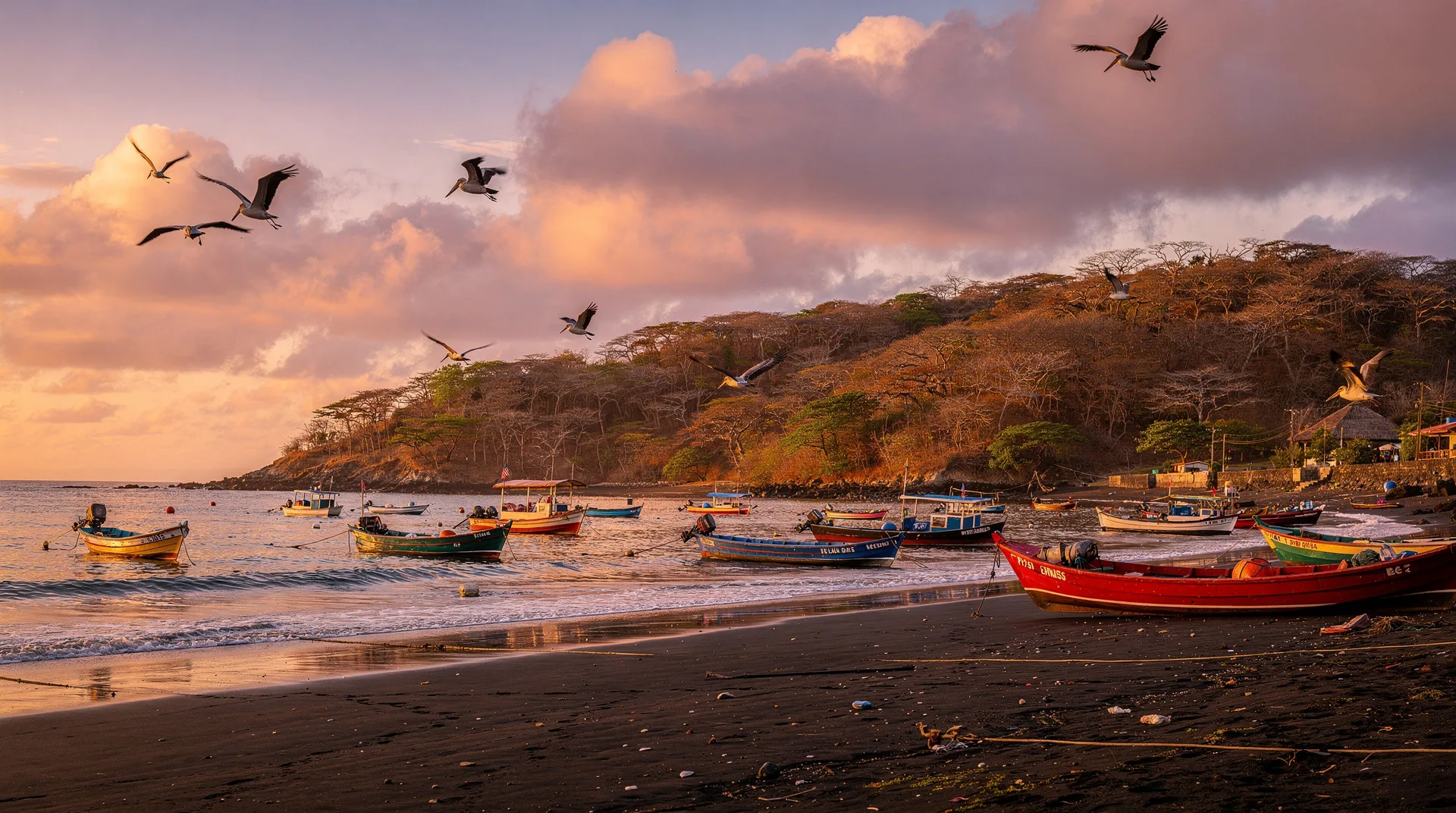
Playas del Coco (everyone calls it just “Coco”) is the oldest tourist beach in Guanacaste and the most lived-in. Unlike the resort developments of Papagayo to the north or the upscale enclave of Playa Flamingo to the south, Coco grew around an existing fishing village. The result is a town with a genuine main street (the street ends at the beach), Tico families mixing with tourist-oriented businesses, and a bar scene that runs late enough to have a real nightlife reputation in Guanacaste.
The beach itself is grey volcanic sand — not the white powder of Conchal or Flamingo — and the water is murky in the wet season when rivers dump sediment. The draw is not the beach. It’s the proximity to Liberia airport (35 kilometers, 30 minutes), the access to world-class dive sites in the Papagayo Gulf, and the honest character of a town that existed before the resort industry arrived.
Diving from Coco: the Papagayo advantage
Coco is the best-positioned base for diving the Papagayo Gulf, which holds some of Costa Rica’s most accessible offshore sites. The Catalinas Islands, 1 to 2 hours north by boat, are the headline attraction: manta rays, bull sharks, eagle rays, and devil rays pass through December to May. Moray eels, leopard rays, and reef fish are year-round. Water temperature averages 24 to 28°C, visibility 8 to 20 meters depending on season.
For certified divers wanting to take on two full dives in the Gulf:
Papagayo Gulf: 2 dives half-day scuba dive tour — from $135For travelers who have never dived but want to try in calm Papagayo conditions, the discover scuba format is one of the most accessible in Costa Rica — the Gulf is generally calmer than open ocean sites.
Guanacaste: discover scuba dive day in Papagayo Gulf — from $155The harder Bat Islands (Islas Murciélagos) — famous for bull shark encounters — are also accessible from Coco, but require PADI Advanced or equivalent certification and a significant boat ride (2.5 to 3 hours each way). Most dive operators in Coco run Bat Islands trips in the dry season only, and a handful extend into the wet-season bull shark aggregation window (June–October) for experienced divers willing to accept lower visibility in exchange for the higher shark density.
Diving season at a glance
Dive conditions in the Papagayo Gulf shift meaningfully through the year, and it’s worth timing a Coco trip around what you actually want to see:
| Months | Visibility | Highlights |
|---|---|---|
| Dec–May | 15–20 m (best) | Manta rays, calmest seas, Bat Islands trips run reliably |
| Jun–Oct | 8–12 m | Bull sharks aggregate at Bat Islands; fewer boats, lower prices |
| Oct–Nov | Lowest (river runoff) | Beach conditions weakest; some operators reduce schedules |
For a full breakdown of where to dive across Costa Rica’s coasts and how the sites compare, see our snorkel vs dive guide and Costa Rica marine life guide.
Sunset sailing and snorkeling cruises
The sunset cruise from Coco’s beach is a reliable daily event — the Gulf of Papagayo provides dramatic light and the boat operators know exactly where to anchor for snorkeling. These trips are well-suited for non-divers who want an ocean experience without the commitment of a full dive course.
Playas del Coco: sunset sailing and snorkeling tour — from $95ATV tours into the Guanacaste hills
For dry-land activity, the ATV trails around Coco access the volcanic hills above town where the views over the Pacific are excellent. The private ATV format allows you to set your own pace and avoid the group tour convoy feel.
Coco Beach: private ATV adventure 4-hour — from $140Jetski and watersports in Papagayo
The Gulf of Papagayo’s calm protected waters make it suitable for jetski rental without the ocean swell that affects more exposed beaches. Operators along the Papagayo shoreline north of Coco offer rental by the hour.
Jetski rental in Gulf of Papagayo — from $95Beach safety and swimming conditions
Coco’s bay is generally calm for swimming close to shore, but boat traffic is heavier here than at quieter Guanacaste beaches — stay alert near the panga anchorage area, particularly at midday when tour boats are loading and unloading. Water quality can decline after heavy rain in the wet season as runoff enters the bay. Our general Costa Rica beach safety guide covers rip currents and flag systems that apply coastwide.
The town and nightlife
Coco’s main street is about 400 meters from the plaza to the beach. The plaza sees local families in the evening; closer to the beach, the bar scene kicks in. Zi Lounge is the most recognized bar — outdoor, loud, busy Thursday through Sunday. Coconutz Sports Bar is the place for sports viewing with USD 3 beers and functioning air conditioning. Z7 is the late-night option that runs until 2:00 AM on weekends.
Where to eat: Soda Teresita on the main street is the best-value local food in town — casados and fried fish at USD 5 to 8. Citrus has better cooking at mid-range prices. Papagayo Seafood Restaurant is the upmarket choice, with fresh catches and good ceviche.
Coco also has one of the larger year-round expat and retiree communities in Guanacaste, drawn by the airport proximity and lower property prices relative to Flamingo or Tamarindo. This shows up in the town’s rhythm — more long-term rentals, more Spanish-English bilingual signage, and a slower off-season than the purely tourist-driven beaches nearby. Anyone weighing a longer stay or a property purchase should read our Costa Rica property guide before making decisions based on a short visit.
Tourist trap warning: The beach vendors near the parking area charge inflated prices for water and snacks. Walk one block inland to any soda and prices drop by 50 percent. For more common Guanacaste tourist traps, see our honest tourist traps guide.
Choosing between diving, snorkeling and a sunset cruise
The three ocean options in Coco suit different travelers, and it helps to decide before you arrive rather than at a tour desk. Certified divers will want the Catalinas first; the Catalinas Islands diving guide explains what the sites offer and who they suit. Travelers who have never dived can try the discover format, which keeps the commitment small, while anyone who simply wants to float over a reef and watch the light change will be happiest on the sunset cruise. If you are undecided between the water-based options, the snorkel beaches guide gives a wider view of where else in the country snorkeling works well.
Families and mixed-ability groups often split the day: the divers go out in the morning, and everyone meets again for the evening boat. That rhythm suits Coco well, because the town is compact and nothing is far from the beach. For children, check the kid-safe beaches guide before deciding how much time to spend on this particular shoreline.
Slowing down: what to do between boat trips
Dive and cruise days leave long gaps, and Coco is a good place to fill them without a plan. Walk the main street early, before the heat builds, and watch the fishing boats and the pangas working the bay. Spend an hour at the plaza in the evening when local families gather; it is the quickest way to feel the town as something more than a tourist strip. Order a casado at a soda, sit down, and let the afternoon pass.
If you want to see more of the coast without committing to a long drive, the nearby beaches make easy half-day outings. The Guanacaste beach guide compares them, and Playa Hermosa and Brasilito are natural choices when you want a different style of beach from Coco’s working-town shoreline. Anyone interested in the wider region can also read about Las Catalinas, a very different kind of place from Coco, and the Nicoya Peninsula beaches for ideas further afield.
Practical notes before you commit
A few habits make a stay in Coco smoother. Bring reef-safe sun protection and a hat for boat days, since the Gulf offers little shade once you are out on the water. Keep cash and cards separate, and read our money and currency guide and ATM and cash tips so you are not caught short at a small soda or a dive shop. Tipping boat crews and guides is normal; the tipping culture guide explains what to expect. If you are renting a car, the rent a car or not guide helps you decide whether you need one for a stay centered on the town and its bay, and travel insurance is worth sorting out before any dive trip.
Finally, be realistic about the seasons. The dry months bring the calmest water and the most reliable boat schedules, while the green season is quieter and cheaper but less predictable at sea. The Guanacaste vs southern Pacific guide is a useful companion if you are still choosing a coast, and the best time to visit guide lays out the wider calendar.
Where to stay
Mid-range: Hotel Villa Casa Blanca is well-run and comfortable, with a pool and close beach access (USD 80 to 120 per night). Rancho Armadillo Estate offers villa-style rooms with a pool and ocean views above town (USD 120 to 180). Budget: Hostal Pato Loco on the main street is the backpacker standard — dormitories at USD 15 to 20, basic but clean.
Getting there
From Liberia (LIR) airport: 35 kilometers, 30 minutes by taxi (USD 30 to 40) or rental car. From San José (SJO): 290 kilometers, about 4.5 hours by car via the Interamericana Norte. Shared shuttles (GrayLine, Interbus) run from San José and major Guanacaste hotels for USD 50 to 65 per person. Our airport choice guide compares LIR vs SJO for different Guanacaste itineraries.
Frequently asked questions about Playas del Coco
Is Coco beach actually good for swimming?
It is swimmable, but not exceptional. The grey sand and variable water clarity mean it ranks below Playa Hermosa, Conchal, or Flamingo for pure beach quality. Most visitors use Coco primarily as a base for boat-based activities rather than for beach time.
What is the best dive operation in Coco?
Rich Coast Diving and Rocket Frog Divers are the most frequently recommended operators for reliability, safety record, and local reef knowledge. Both run PADI certification courses and day trips to the Catalinas and Bat Islands. Confirm that your operator provides dive insurance (DAN or equivalent) and that their boats have oxygen on board — not all budget operators do.
How does Coco compare to Flamingo for a base?
Coco is cheaper, livelier, and closer to Liberia airport. Flamingo is quieter, has a better beach, and is more upscale. Divers favor Coco for Catalinas access; sailfish and marlin anglers often prefer Flamingo’s sportfishing fleet. Both can serve as bases for the same Papagayo dive sites.
Is there crime in Coco?
Coco has a higher crime rate than most Guanacaste beach towns — bag snatching and rental car break-ins are documented. Do not leave anything visible in a parked car (this applies across Costa Rica, but particularly here). The bar area at night is safe if you are reasonably aware; predatory practices from touts outside some bars have been reported. Use common sense.
How to fit Playas del Coco into your itinerary
Coco works best as a 1 to 2-night stop immediately after landing at Liberia airport — it eliminates the need for a long transfer after an international flight. From Coco, the 5-day Guanacaste itinerary extends north toward Flamingo and the Rincón de la Vieja area. For divers, two mornings of diving plus an afternoon sunset cruise covers the main activities efficiently.