Costa Rican cuisine: what to eat, where to eat it
What is Costa Rican cuisine?
Gallo pinto, casado, ceviche, plantain, palmito heart — fresh, simple, Caribbean+Spanish roots.
Costa Rican food rewards travellers who seek out sodas and markets over resort buffets — this guide covers the essential dishes, honest pricing, and exactly where to eat them at their best.
| Signature dish | Gallo pinto (rice and black beans, Salsa Lizano) |
| Cheapest good meal | Casado at a soda, around $5–8 |
| Best coffee | Specialty cafés in San José, not hotel buffets |
| Meal times | Lunch 11:30am–2pm is the busiest, fullest menu window |
| Avoid | ”Gourmet soda” tourist restaurants charging $25–40 for a basic casado |
Eating in Costa Rica: what to expect
Costa Rican food does not aspire to complexity. It does not try to dazzle. What it offers instead is something harder to find in tourist-heavy destinations: genuinely fresh ingredients, prepared honestly, with a warmth of service that reflects the Pura Vida ethos better than any marketing slogan.
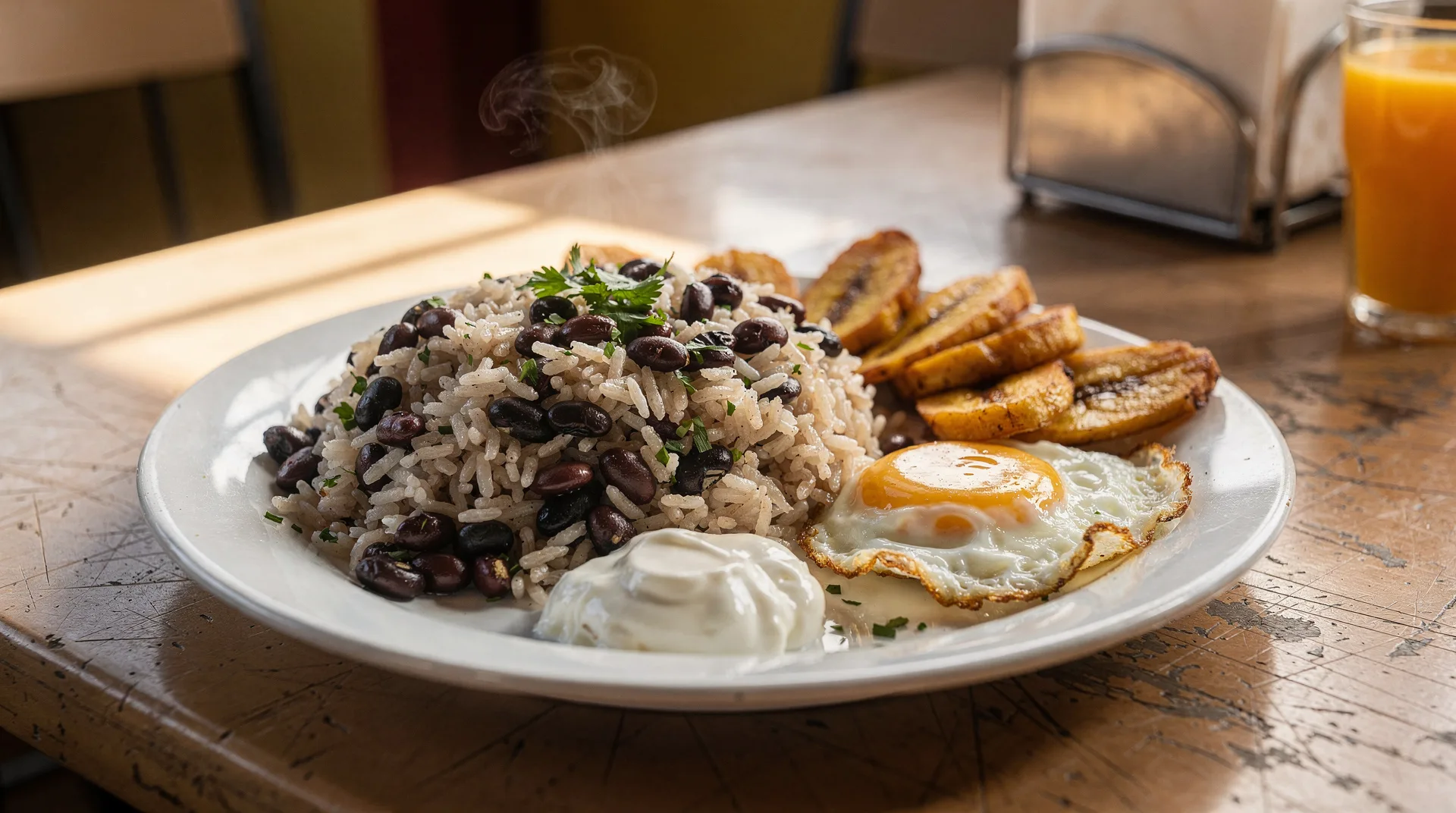
The foundation of Costa Rican cuisine is the bean and rice combination, transformed daily into gallo pinto (beans and rice cooked together with cilantro, onion, and the distinctly Costa Rican Salsa Lizano) and served at virtually every meal from breakfast to dinner. Around that core, the cuisine builds outward: grilled meats, fried fish, pickled vegetables, slow-cooked black beans, ripe plantain, heart of palm salads, and ceviche made with fish or shrimp marinated in citrus.
The Spanish colonial influence is evident in the rice-and-bean base and the stewed meat preparations. The Caribbean coast added coconut milk, jerk-style spicing, and African-influenced cooking techniques. The Pacific coast, particularly around Guanacaste, draws on pre-Columbian Chorotega tradition with maize-based preparations. And the Central Valley — where San José sits and where the bulk of the population lives — maintains the most conservative, ingredient-forward style.
This guide covers the essential dishes, where to find them at their best, what to pay, and what to avoid.
The essential dishes
Gallo pinto
The national dish. Rice and black or red beans cooked together with cilantro, onion, sweet pepper, and Salsa Lizano — a thin, slightly sweet, slightly spiced condiment that is to Costa Rica what Worcestershire sauce is to England. Gallo pinto is traditionally served at breakfast with eggs (scrambled or fried), sour cream, and corn tortillas. It also appears at dinner as a side dish.
The name translates literally as “spotted rooster,” a reference to the speckled appearance of the rice and beans. Every Tico family has their version. At sodas (see below), gallo pinto is typically available from 6am.
Where to try it: Any soda in the country. For standout versions in San José, Soda La Casita in the Mercado Central area and Soda Tapia on Calle 42 are the classic references. See the gallo pinto and traditional dishes guide for the full breakdown.
Casado
The casado is Costa Rica’s lunch institution. The word means “married man” — a historical reference to the kind of complete, balanced plate that a married man would eat at home. In practice it is the cheapest and most nutritious meal you will eat in the country.
A typical casado includes: rice, black beans, a small salad (cabbage, tomato, vinaigrette), a protein (your choice of grilled chicken, beef picadillo, fish fillet, pork, or occasionally shrimp), fried sweet plantain (maduro), and sometimes a small portion of pasta or potato.
Price: $5–8 at a soda, $10–15 at a mid-range restaurant. Do not pay more than $15 for a casado — if you are, you are not eating at an authentic establishment.
Ceviche
Costa Rican ceviche is distinct from Peruvian ceviche — it is lighter, less fiery, and the marinade is primarily citrus without the tiger’s milk intensity of the Andean version. Fresh corvina (sea bass), tilapia, or shrimp are most commonly used. The fish is marinated in lime juice until the acid denatures the proteins (effectively “cooking” the fish chemically), then mixed with onion, sweet pepper, cilantro, and sometimes a touch of hot sauce.
Where to try it: Coastal towns. Quepos has an excellent ceviche scene around the central market. In San José, the Mercado Central has stalls serving corvina ceviche for $4–5 a cup. In Cahuita and Puerto Viejo, ceviche often incorporates Caribbean spicing.
Price: $4–8 for a generous portion at a market or soda; $12–18 at a seafood restaurant.
Plantain preparations
Costa Rica uses plantain at every stage of ripeness in dramatically different ways:
- Patacones: Green plantain sliced, fried once, smashed flat, then fried again — the equivalent of thick, crispy chips. Served with black bean dip or guacamole. Found everywhere.
- Maduro: Ripe (yellow-black) plantain, pan-fried until caramelised and soft. Sweet, slightly sticky, served as a side dish with casado.
- Chifles: Very thin fried green plantain chips, similar to potato crisps.
Palmito (heart of palm)
Costa Rica is one of the world’s major producers of hearts of palm, harvested from the pejibaye palm (a multi-stemmed variety that can be harvested sustainably without killing the tree). Fresh palmito, sliced thin and dressed with lime and oil, is the quintessential salad here — cleaner and more delicate than the canned version sold internationally. If your salad comes with fresh palmito rather than canned, you are eating at a good place.
Pejibaye (the fruit of the same palm) is also worth seeking out — a boiled orange fruit with a dry, starchy texture somewhere between squash and potato. Sold from roadside stalls in the Central Valley, typically eaten with mayonnaise.
Sopa negra
Black bean soup: whole beans slow-cooked with herbs, served with a poached egg floating in the bowl and a garnish of sour cream and cilantro. Deeply flavoured, earthy, and warming. A standard opening to a lunch at any traditional restaurant.
Olla de carne
A stew of beef with yuca, plantain, corn, and root vegetables — slow-cooked until the broth is rich and everything is tender. This is the Sunday lunch dish in Costa Rican households, but sodas serve it regularly. Not photogenic, but profoundly satisfying.
Seafood
Costa Rica has two coasts. The seafood is excellent on both, but different.
Pacific: Corvina (sea bass), dorado (mahi-mahi), pargo (red snapper), and jumbo shrimp from the Gulf of Nicoya. The best preparations are simple — grilled over charcoal, with garlic butter and a squeeze of lime. Quepos and Jacó are particularly strong for Pacific fish.
Caribbean: Red snapper, grouper, and the distinctive Caribbean preparation with coconut milk and plantain. Cahuita and Puerto Viejo have the Caribbean’s best fish restaurants — look for the simple wooden-plank places near the beach, not the tourist-facing establishments on the main drag.
Shrimp from Guanacaste (Nicoya Gulf) is among the best in Central America. Order it grilled, not fried.
Price ranges: Market fish taco or ceviche: $3–6. Grilled fish plate at a soda or coastal restaurant: $10–15. Upscale seafood restaurant: $20–35 for a main. Do not pay $40+ for fish at a beach-side restaurant unless it comes with a significant view and service premium you want to pay for.
Coffee
Costa Rica is a world-class coffee producer. The Central Valley, around Alajuela and Heredia, produces some of the most prized coffee in the world — bright, clean, with fruit acidity and notes of honey. The country was one of the first to ban production of lower-quality robusta beans, mandating arabica-only cultivation.
The problem is that much of the excellent coffee is exported. The coffee served at many standard sodas and mid-range hotels is domestic commercial grade — adequate but not representative of what the country actually produces. For quality coffee, seek out specialty cafes (the urban scene in San José has several excellent ones) or visit one of the coffee plantation tours.
San José: coffee production tour and tasting — from $75The coffee tours comparison guide covers Doka Estate, Café Britt, and Hacienda Alsacia with honest assessments of what each offers and at what price.
Alajuela: coffee plantation guided tour with tasting — from $60Snacks and street food
Empanadas: Corn flour pastry filled with cheese, black bean, or potato. Sold from carts and market stalls for about $1 each.
Tortillas con queso: Thick corn tortillas with fresh cheese, cooked on a comal. A Guanacaste specialty; Chorotega tradition.
Arroz con leche: Rice pudding with cinnamon and sugar — the most common Costa Rican dessert, appearing at every soda.
Tres leches cake: Three-milk cake (whole milk, condensed milk, cream) soaked until dense and moist. Found at bakeries and as a dessert at mid-range restaurants. Worth ordering.
Chifrijo: A bar snack specific to San José — a bowl layered with rice, beans, chicharrones (fried pork rinds), avocado, pico de gallo, and ceviche. Found at Tico sports bars, usually for about $6–8.
What to avoid
Overpriced “gourmet soda” restaurants near major tourist sites are not sodas — they are restaurants using soda aesthetics to charge $25–40 for a casado that should cost $8. If a menu does not list prices, ask before ordering.
Chain coffee shops (the usual international suspects) in airport terminals and malls serve mediocre coffee in a country that produces extraordinary coffee. Walk past them and find the nearest specialty roaster or café.
All-inclusive resort food in Costa Rica is, almost without exception, the least interesting way to eat in the country. The “Costa Rican traditional dishes” night at a resort buffet is a pale imitation. Make an effort to eat at least one meal per day off the resort.
“Sustainable seafood” menus at tourist restaurants in coastal areas sometimes include species caught in ways that are anything but. If you are concerned, ask whether the shrimp is from aquaculture (check if it’s Nicoya Gulf shrimp) versus industrial trawl.
Pairing meals with the rest of your trip
Food is easiest to enjoy when it fits the route rather than competing with it. Coastal stops such as Quepos, Jacó and Tamarindo are natural places to build a day around fresh fish, while the Caribbean towns of Cahuita and Puerto Viejo are where the coconut-based cooking described above is at its best. In La Fortuna, a soda lunch after a morning at the volcano is a far better value than the hotel restaurant. If you are planning how to move between these regions, the rent a car or not guide helps you decide how much freedom you will have to detour for a good meal.
Budget-conscious travellers should read money and currency before arriving, since small sodas and market stalls often prefer cash. The tipping culture guide explains what is expected at restaurants, and the honest look at tourist traps is a useful companion when you are deciding which restaurants to skip.
Eating well in San José specifically
If your trip includes any time in the capital, San José is genuinely worth a dedicated food day rather than a single meal en route to somewhere else. Barrio Escalante, east of downtown, has become the city’s most interesting food neighbourhood — specialty coffee, small-plate restaurants, and a farmers’ market that draws a mostly local crowd rather than tourists. The Mercado Central downtown remains the single best value-for-money food experience in the city: ceviche stalls, casado counters, and fresh juice stands operating in a building that has barely changed its layout in decades. Between the two, a single day in San José can cover the full range from $2 street snacks to a proper sit-down tasting menu.
Reading a menu and ordering with confidence
A few practical habits make ordering easier even without fluent Spanish. Menus at genuine sodas are often handwritten or photocopied and change daily based on what is fresh — if nothing is posted outside, ask “¿Qué hay hoy?” (“what’s there today?”) rather than expecting a fixed menu. “Casado” alone gets you the standard plate with whatever protein is offered; naming your protein choice (pollo, res, pescado, cerdo) narrows it down.
Portions at sodas are generous and refills of rice, beans, and coffee are often free or nearly so — it is not necessary to over-order. Tipping is not expected at sodas (service is not usually included and prices are already modest); at sit-down restaurants, a 10% service charge is typically already added to the bill by law, so an additional tip is a bonus rather than an obligation.
The historical and cultural roots
The Chorotega people of Guanacaste have maintained food traditions centred on maize, beans, and squash — the “three sisters” of Mesoamerican agriculture — since well before Spanish colonisation. Traditional Chorotega pottery, still made in the Santa Cruz area, depicts these food traditions. The community of Guatil is the centre of Chorotega ceramic tradition today.
The Caribbean coast’s food culture reflects its entirely different history. The communities of Limón Province descend primarily from Afro-Caribbean workers brought to build the railroad in the 1880s, and later from Jamaican and other Caribbean island immigrants. The food — jerk seasoning, rice and beans cooked in coconut milk (different from the Pacific gallo pinto), fried fish with coconut sauce — reflects this heritage directly.
The Costa Rica cuisine by region guide maps these regional differences in detail.
Frequently asked questions about Costa Rican food
Is Costa Rican food spicy?
Not traditionally. The base cuisine is mild. Hot sauce (Salsa Lizano, Tabasco, or local bottled options) is always on the table at sodas and restaurants, allowing individuals to add heat. Caribbean coast dishes may be spicier. Generally: if you are sensitive to heat, you will eat comfortably throughout the country without special requests.
Is vegetarian food available?
Yes, with moderate effort. Most sodas can prepare a vegetarian casado (omitting the meat and adding an additional vegetable portion or cheese). In Nosara, Santa Teresa, Manuel Antonio, and Monteverde — tourism-heavy destinations with significant wellness communities — vegetarian and vegan menus are common. In rural areas, the default assumption is that customers eat meat, and menu flexibility may be limited.
What is Salsa Lizano and where can I buy it?
Salsa Lizano is Costa Rica’s most iconic condiment — a thin, slightly sweet, slightly smoky sauce made from vegetables and spices. It is the defining flavour of gallo pinto and the house sauce at virtually every soda. Bottles are available at supermarkets throughout the country for about $3–4, and it is airport-legal to fly home with it. Buy several bottles.
Can I drink the tap water?
In San José and most major urban and tourist areas, tap water in Costa Rica is potable and safe to drink. It is treated and tested by AyA (the national water utility). In very remote rural areas or after major rainfall events, bottled water is the safer choice. Most restaurants in tourist areas serve filtered water even where tap water is safe.
What is the meal schedule in Costa Rica?
Breakfast (desayuno) runs 6am–9am. The main meal is lunch (almuerzo), typically 11:30am–2pm — this is when sodas are busiest and the casado menu is at its fullest. Dinner (cena) is lighter and later, usually 6pm–9pm. Many sodas close by 5–6pm; dinner options narrow significantly in smaller towns after 8pm.
Is street food safe to eat?
Generally yes, with normal common-sense precautions. Street carts and market stalls selling empanadas, patacones, or fresh fruit in busy, high-turnover locations are typically safe — high customer volume means ingredients don’t sit around. Apply the standard travel rule: if a stall has a steady stream of local customers, that is a better safety signal than any certificate on the wall. Freshly cut fruit from a cart with visible ice and a clean cutting surface is generally fine in tourist and urban areas; be more cautious in remote areas with no consistent customer turnover.
Related guides
The gallo pinto and traditional dishes guide focuses specifically on the most iconic Costa Rican foods and the best places to try them by destination. The sodas and local restaurants guide tells you what to look for in a genuine soda versus a tourist-facing imitation. And if coffee is your primary interest, the coffee tours comparison walks through the plantation options in detail. For how the essential dishes covered here differ from coast to coast, see the Costa Rican cuisine by region guide.