Hiking Cerro Chirripó: permits, trail, and what to expect
Permit and accommodation for Chirripó?
SINAC permit + Crestones Base Lodge mandatory; book months ahead.
Why Chirripó is unlike any other hike in Costa Rica
Cerro Chirripó is the highest peak in Costa Rica at 3,820 metres and the second-highest in all of Central America. The hike to the summit and back requires genuine physical fitness, at least two days (most people take three), and a permit-and-lodge booking system that is strictly limited and frequently sold out months in advance. This is not a casual trail add-on — it is the defining multi-day trek of the country, and the experience at the summit — sub-alpine páramo, glacial lakes, and views over two oceans on clear days — is entirely unlike anything else Costa Rica offers.
| Distance | ~14.5 km one-way, 2,500m elevation gain |
| Permit | SINAC, book ~90 days ahead, sells out in hours |
| Cost | Around $18/day entry + $40–45/night lodge |
| Duration | 2–3 days minimum |
| Best season | Dry season (Dec–Apr) for clearest views |
The volcano is technically a stratovolcano but has no active crater and is not classified as volcanically active. Its high-altitude ecosystem — the Chirripó Páramo — evolved in the cold, windy conditions above the treeline and contains plants more commonly found in the Colombian Andes than in tropical Central America. Deer, pumas, tapirs, and resplendent quetzals inhabit the lower forest zones.
Planning this hike requires patience with the booking system and advance preparation measured in months, not days. Here is everything you need to know.
The permit system: SINAC reservations explained
Chirripó National Park is managed by SINAC (the national system of conservation areas) under a daily quota system. Permits are strictly limited to 40 people per day during peak season (December-April) and 25 people per day during green season (May-November). These quotas sell out quickly — often within hours of the booking window opening.
How to book:
- Create an account at the SINAC online reservation platform: sinac.go.cr
- Reservations open approximately 90 days before the desired hiking date
- Book simultaneously: the SINAC park entry permit AND the Crestones Base Lodge (the only legal overnight accommodation on the mountain — see below)
- Payment is made online by credit card
Permit costs (2026 approximate):
- Park entry permit: $18 per day
- Crestones Base Lodge bed + meals: approximately $40-45 per night (includes dinner, breakfast, and lunch box for summit day)
Honest warning: The booking system is competitive. Popular dates in January, February, March, and during Semana Santa (Easter week) sell out in hours. The system occasionally crashes when dates open. Set a calendar reminder, have your payment details ready, and be prepared to try multiple times.
If you cannot book independently, a handful of licensed operators maintain permit allocations or run guided 3-day expeditions with logistics managed for you.
Cerro Chirripó tour: ascent to land of eternal waters — from $595The trail: San Gerardo de Rivas to the summit
The standard Chirripó trailhead is at San Gerardo de Rivas, a small village in the Pérez Zeledón canton approximately 4.5 hours from San José by vehicle (via San Isidro de El General). The trail to Crestones Base Lodge covers approximately 14.5 km with 2,500 metres of elevation gain. Most hikers take 7-10 hours on this ascent.
Trail stages
Stage 1 (km 0-8): Trailhead to Refugio Llano Bonito (abandoned ranger station) Dense oak and pine forest, steady gradient. This section is well-shaded and contains most of the wildlife — tapir tracks are sometimes visible in mud, and quetzal sightings are possible in the upper forest zone (600-2,000 m). There is a water source at km 8 (Río Talari).
Stage 2 (km 8-14.5): Refugio Llano Bonito to Crestones Base Lodge The forest gives way to páramo at around 2,900 metres. The trail becomes steeper and more exposed. Weather changes rapidly in this section — clear blue sky can become sleet in 20 minutes. Crestones Base Lodge sits at 3,400 metres and is visible from several kilometers out. The final approach involves boulder fields and a steep rocky gully.
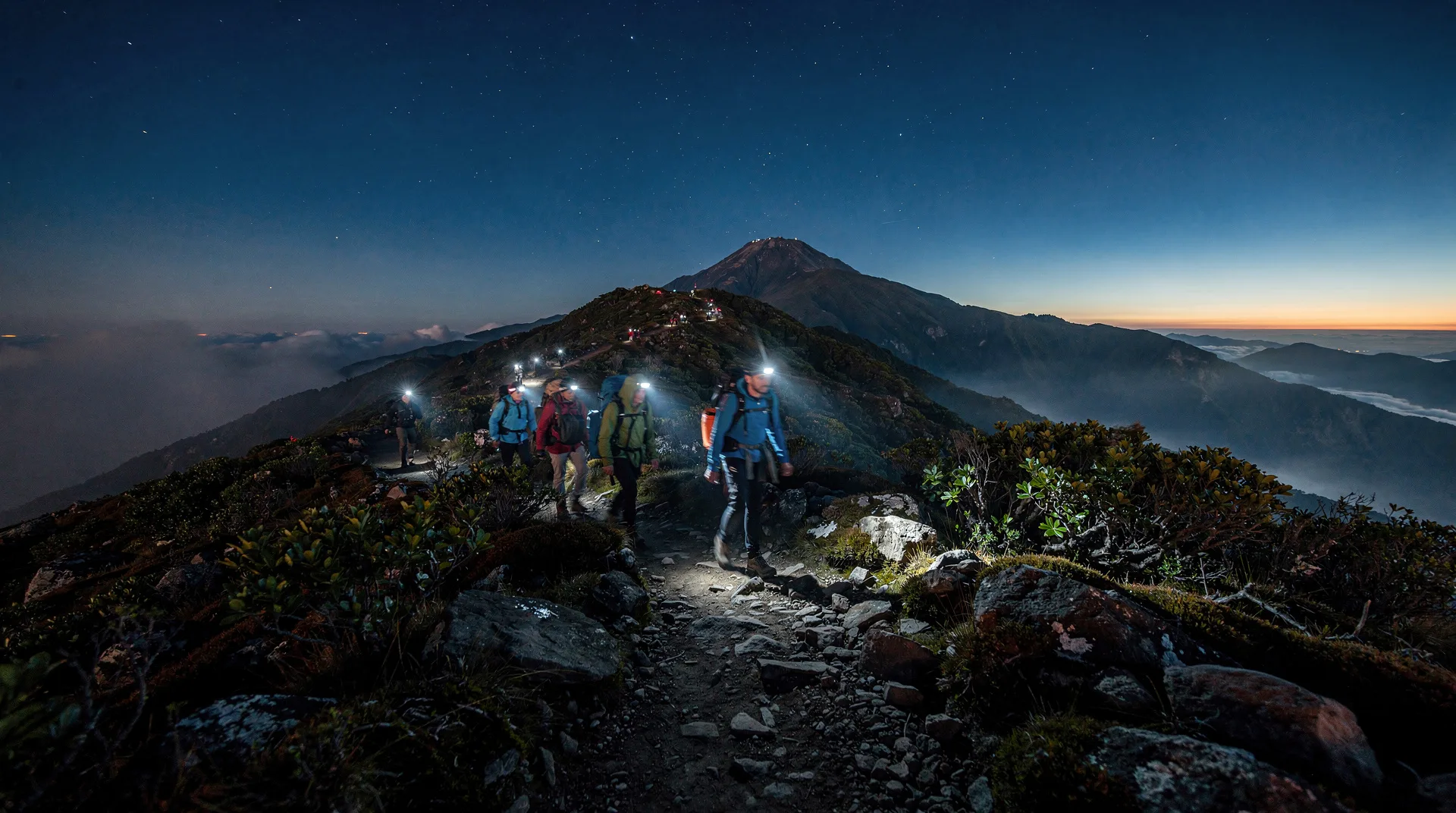
Stage 3 (summit day, km 14.5-19 round trip from lodge): Most hikers wake at 3-4am and start the summit push before dawn. From the lodge, the summit of Chirripó is approximately 4.5 km — a 1.5-2 hour climb in darkness. Dawn at 3,820 metres, watching the sun rise over the Pacific and Caribbean simultaneously on a clear day, is the payoff for everything.
Crestones Base Lodge: your only legal option
Camping is prohibited in Chirripó National Park. The only legal overnight option is Crestones Base Lodge, a government-managed facility at 3,400 metres. It has dormitory-style bunk rooms (no private rooms), shared toilets, and a kitchen that provides three meals per day (dinner on arrival, breakfast and a packed lunch on summit day, dinner and breakfast on descent day).
The lodge is basic but functional — warm sleeping bags and pillows are provided. Electricity is solar-generated and limited. Hot water is not guaranteed. Cell signal is absent.
Pack for cold nights. Temperatures at 3,400 metres average 2-8°C overnight year-round and can drop below zero with wind chill. Bring a proper sleeping base layer, gloves, and a hat — the lodge bags are warm enough for most conditions but not for those who run cold.
Physical preparation: be honest with yourself
The Chirripó hike is genuinely demanding. 2,500 metres of elevation gain in a single day (the ascent stage) requires a level of fitness that most casual hikers underestimate. Altitude effects become noticeable above 3,000 metres, adding fatigue and shortness of breath to already tired legs.
Minimum preparation if you are not already a regular hiker:
- 8-10 weeks of regular training (hiking with a loaded pack, stair climbing)
- At least one training hike of 20+ km with 1,000+ metres elevation gain
- Cardiovascular fitness to sustain 8+ hours of activity
Signs you may be underprepared:
- You cannot comfortably hike 15 km on flat ground
- You have never hiked at altitude
- You are planning to do this with a heavy pack that you haven’t trained with
Many people complete Chirripó without incident, but the rescue log at the park is long. Rangers make evacuation calls when hikers cannot continue — and these situations are preventable with honest self-assessment. The trail is closed to hikers who arrive at the trailhead after a certain hour (check current rules with SINAC) because insufficient time to reach the lodge safely by dark is a common cause of emergency calls.
When to hike: dry season vs green season
Dry season (December-April): Clearest summit views, best weather reliability, most demand (permits sell out fastest). January-March is peak period. Mornings are typically clear, afternoons can bring afternoon thunderstorms even in dry season.
Green season (May-November): More cloud, more rain, fewer permits available (lower quota), significantly cheaper. October and November are the wettest months and summit visibility is often poor. June, July, and early August are considered the green-season sweet spot — SINAC has more available slots, and the lower forest zone is extraordinarily lush with waterfalls running full.
Shoulder periods (late April-May, November): Best compromise — improving or fading weather, more available permits than peak months, lower prices in San Gerardo accommodation.
Getting to San Gerardo de Rivas
San Gerardo de Rivas is the gateway village, 11 km above San Isidro de El General. From San José, the drive takes approximately 4-4.5 hours via the Pan-American Highway south through San Isidro. There is no public bus that goes directly to the trailhead — you will need a vehicle or a shared transfer from San Isidro. Several hostels in San Gerardo de Rivas offer trailhead transfers and pre-hike accommodation.
Plan to arrive in San Gerardo the afternoon before your permit day, rest well, eat a proper dinner, and start hiking early (most people aim for a 5-6am departure to ensure reaching the lodge before dark).
For the broader context of the surrounding region, see our Cerro Chirripó destination guide.
If you are building the trek into a longer southern trip, the Pérez Zeledón destination page covers the valley around San Isidro, and our guide to Chirripó National Park goes deeper on the park itself. Anyone driving should read driving in Costa Rica and road conditions by region first, and those who would rather not drive can compare options in our shuttle services overview and the rent a car or not guide.
Accommodation in San Gerardo de Rivas: before and after
San Gerardo de Rivas has a small cluster of hostels, cabinas, and one or two comfortable guesthouses catering almost exclusively to hikers. Options range from basic dormitories at the Chirripó Hostel (approximately $18 per bunk) to private rooms at Casa Mariposa or El Pelicano (approximately $50-80 per room). All are simple, clean, and oriented around early wake-ups.
Most hikers arrive the day before their permit and depart the afternoon after their descent — so a minimum two-night stay in San Gerardo framing the Crestones Lodge nights is the standard structure. Confirm all accommodation in advance for peak season months.
Local sodas in San Gerardo serve hearty pre-hike dinners and early breakfasts. The soda next to the ranger station is a popular gathering point the evening before permit days — you’ll meet other hikers, get informal trail conditions updates, and confirm start times.
Altitude sickness: recognizing and managing
Altitude sickness can occur at Chirripó elevations even in otherwise fit individuals. The ascent from 1,300 m (trailhead) to 3,400 m (lodge) happens in a single day, which is a rapid gain that some bodies struggle to adapt to. Common symptoms include:
- Headache (especially behind the eyes)
- Nausea or loss of appetite
- Fatigue disproportionate to physical effort
- Dizziness or lightheadedness
- Disturbed sleep
Mild symptoms are common and usually resolve with rest, hydration, and an acclimatization night at the lodge. Severe symptoms — confusion, inability to walk straight, chest tightness, or vomiting — are signs of high-altitude pulmonary or cerebral edema and require immediate descent.
The most important prevention strategy is adequate hydration throughout the day. Drink more water than you think you need, even if you don’t feel thirsty. Avoid alcohol the night before and during the hike. Some hikers use acetazolamide (Diamox) as a prophylactic — consult a physician before your trip if considering this option.
Equipment checklist: what to carry vs what the lodge provides
The Crestones Base Lodge provides: sleeping bags, pillows, blankets, three meals (dinner/breakfast/lunch box), and cooking stove for boiling water. You do not need to carry camping equipment.
Essential to carry (in your daypack for summit day, full pack for ascent):
- Waterproof hiking boots with ankle support
- Trekking poles (2 strongly recommended for descents)
- Headlamp with spare batteries (summit push starts 3-4am)
- Warm mid-layer (fleece or down jacket)
- Waterproof rain jacket and pants
- Thermal base layers for overnight
- Wool or synthetic hat and gloves (cold and wind chill at 3,400-3,820 m)
- Sunscreen SPF50+ and lip balm with UV protection
- Sunglasses with UV protection
- Water capacity for 2-3 litres minimum
- Snacks for the ascent (energy bars, nuts, chocolate)
- Basic first aid kit (blister treatment is the most common need)
- Passport or ID (required for park registration at the ranger station)
Do not bring:
- Heavy SLR cameras (unless you are a dedicated photographer — a good phone is sufficient for most)
- More than 1 book (weight matters on the ascent)
- Cotton base layers (they retain moisture and become cold when wet)
The páramo: what grows above the treeline
Above 3,000 metres on Chirripó, the forest gives way to páramo — a high-altitude ecosystem characteristic of the northern Andes that has its southernmost extensions in Costa Rica’s Talamanca range. The páramo is dominated by bunchgrasses (Festuca), small shrubs, and cushion plants adapted to cold, wind, and ultraviolet radiation.
The Chirripó páramo contains plant communities found nowhere else in Central America — high-altitude endemics that have evolved in isolation from lowland populations over tens of thousands of years. Several orchid species, unique to the Talamanca highlands, bloom during the dry season in rocky outcrops above the treeline.
The glacial lakes of the Valle de los Lagos (accessible from Crestones Lodge) are remnants of the last glacial maximum, when Chirripó was glaciated. These tarns — small mountain lakes sitting in glacially carved cirques — are found nowhere else in Central America south of Guatemala and are a remarkable legacy of Pleistocene climate.
Wildlife above the treeline is sparse but includes spectacled bear (elusive — the only bear species in South and Central America) and the Chirripó salamander, a miniature amphibian endemic to this single mountain system. Birds in the páramo include the Chirripó brush-finch and the volcano junco — both highland endemics visible from the main trail.
If a multi-day trek is more than you want
Not every traveller who is drawn to Chirripó has the weeks of training, the flexible dates or the appetite for dormitory bunks at altitude. That is a perfectly reasonable conclusion, and Costa Rica has plenty of gentler ways to get into the mountains. A guided day on foot out of the capital, such as a one-day guided hike starting from San José — from $95 , gives you a taste of trail walking without the permit race or the overnight cold.
For a softer introduction to highland scenery, the Poás volcano guide and the Irazú volcano guide are easy half-day outings, and the quetzal watching guide shows how to enjoy the Talamanca cloud forest at a relaxed pace. If you want to understand what separates these forests from the lowland jungle, read cloud forest vs rainforest. Packing for cold, wet mountain weather is covered in the packing list, and the travel insurance guide is worth reading before any high-altitude trek, since evacuation calls are exactly the situation cover is meant for.
Frequently asked questions about hiking Chirripó
Can I do Chirripó without a guide?
Yes — the trail is marked, and independent hikers are the majority. A guide is not mandatory. However, first-time visitors and those unfamiliar with high-altitude trekking benefit significantly from a guide who knows the trail conditions and weather patterns. The GYG-listed guided expedition includes transport, permits, and full logistics.
How hard is the Chirripó hike really?
It is harder than most people expect. The 14.5 km ascent with 2,500 m elevation gain typically takes 7-10 hours for fit hikers. Add altitude effects above 2,500 m, and the final 2 km to the lodge can feel disproportionately difficult. The summit push (3-4 hours round trip before breakfast) is the most demanding aerobic effort most tropical visitors have experienced. Take it seriously.
What is the best 3-day itinerary for Chirripó?
Day 1: Drive from San José, arrive San Gerardo de Rivas by mid-afternoon, rest and acclimatize. Day 2: 5am start, ascend to Crestones Base Lodge (7-9 hours), rest and acclimatize at 3,400 m. Day 3: 3:30am summit push, return to lodge for breakfast, descend to trailhead by mid-afternoon, drive to San Isidro or continue south.
Is Chirripó safe?
The trail itself is well-maintained and not technically difficult (no ropes or scrambling required). The main safety risks are: weather deterioration (thunder and lightning are serious above treeline), hypothermia (inadequate clothing at elevation), and overestimating fitness (becoming too slow to reach the lodge before dark). Following the park’s start time rules and packing proper cold-weather gear mitigates most risks.
Are there other peaks to climb from the base lodge?
Yes. From Crestones Base Lodge, several other peaks in the Chirripó massif are accessible on day 2 after your summit push: Cerro Ventisqueros (3,812 m), Cerro Las Crestones (the iconic rock formation behind the lodge), and the Valle de los Lagos (a high-altitude lake district at 3,600 m). A rest day at the lodge is well spent exploring these alternatives.
What gear is essential?
Waterproof hiking boots, trekking poles (descending the rocky lower section in wet conditions is treacherous without them), warm base layers, fleece, rain jacket, gloves, hat, headlamp with spare batteries, 2-3 litres of water capacity, sunscreen and lip balm (UV is intense at elevation), and basic first aid. The lodge provides sleeping bags and pillows. Do not bring unnecessary weight — every kilogram matters at high altitude.
How does Chirripó compare to other Costa Rica volcano hikes?
It is in a different category entirely. Poás and Irazú are drive-up, short-walk viewpoints suitable for any fitness level, done in a few hours. Chirripó is a multi-day, high-altitude trek with genuine physical demands and no vehicle access whatsoever. Our best volcanoes in Costa Rica guide and Arenal vs Poás vs Irazú comparison cover the easier options if Chirripó’s demands don’t match your trip.
Can I combine Chirripó with San Gerardo de Dota?
Yes, and it’s a natural pairing. San Gerardo de Dota, roughly an hour north of San Isidro de El General, shares the Talamanca cloud forest ecosystem and is the country’s best quetzal-watching valley. Many hikers spend 1-2 nights there either before or after the Chirripó trek to acclimatize partially to altitude and add excellent birding to the trip. See our San Gerardo de Dota cloud forest guide for logistics.
Related guides
Chirripó sits within a larger network of high-altitude destinations in southern Costa Rica. Our San Gerardo de Dota cloud forest guide covers the remarkable bird-watching valley just an hour north. For the geology behind Costa Rica’s peaks, read our understanding Costa Rica’s volcanic activity guide. For a comparison with day-hike options at other volcanoes, see our best volcanoes in Costa Rica guide.