Irazú Volcano National Park: craters, dual-coast views, and the Orosi Valley circuit
What's the best time of day to visit Irazú Volcano?
Arrive between 7am and 9am for the clearest conditions. Cloud cover typically builds from 10am onwards and the crater often disappears into mist by early afternoon. On exceptional dry-season mornings, you can see both the Pacific and Caribbean coasts simultaneously from the summit — but only before the clouds arrive.
Costa Rica’s highest accessible volcano
Irazú Volcano stands at 3,432m — the highest point in the Cordillera Central and one of the most visited volcanoes in the country. Unlike Poás, which requires advance SINAC reservations, Irazú operates on a simpler first-come, first-served system. The park entrance is located about 55km from San José near Cartago, and the road from the capital passes through some of the most productive agricultural land in Costa Rica — flower farms, potato fields, strawberry greenhouses, and dairy pastures climbing through the cloud belt.
| Where | 55km from San José, near Cartago |
| Cost | around $15 per adult, no advance reservation needed |
| Time needed | 2-3 hours for all three craters |
| Best time | 7am-9am, before cloud builds |
| Getting there | 80-90 minutes by car from San José |
The most recent major eruption was in 1994. Irazú’s most famous eruption occurred in 1963 when ash fell on San José on the day US President John F. Kennedy arrived on a state visit — an irony that Tico tour guides love to mention. The ash layer from that eruption is still visible in road cuts along the approach road.
The park contains five craters in a 1,258-hectare protected area. The two main craters — Diego de la Haya and the principal crater — are accessible from the paved viewing area. A third, the Playa Hermosa crater, holds the park’s small but photogenic crater lake.
The dual-coast view: when and how
The ability to see both the Pacific Ocean (to the west) and the Caribbean Sea (to the east) from a single point is extremely rare globally. Irazú is one of the few places on Earth where this is possible — on days of exceptional clarity, you can spot the blue line of both oceans from the summit area.
The conditions required:
- Very early morning, before 9am
- December to February (the clearest months of Costa Rica’s dry season)
- Following a cold front that has swept the atmosphere clean
- Zero cloud cover at the summit — which is not guaranteed even in dry season
Realistically, the dual-coast view is a bonus to aim for rather than a guaranteed attraction. About 20 to 30% of dry-season morning visits achieve it. The craters themselves are impressive regardless of atmospheric clarity.
The craters
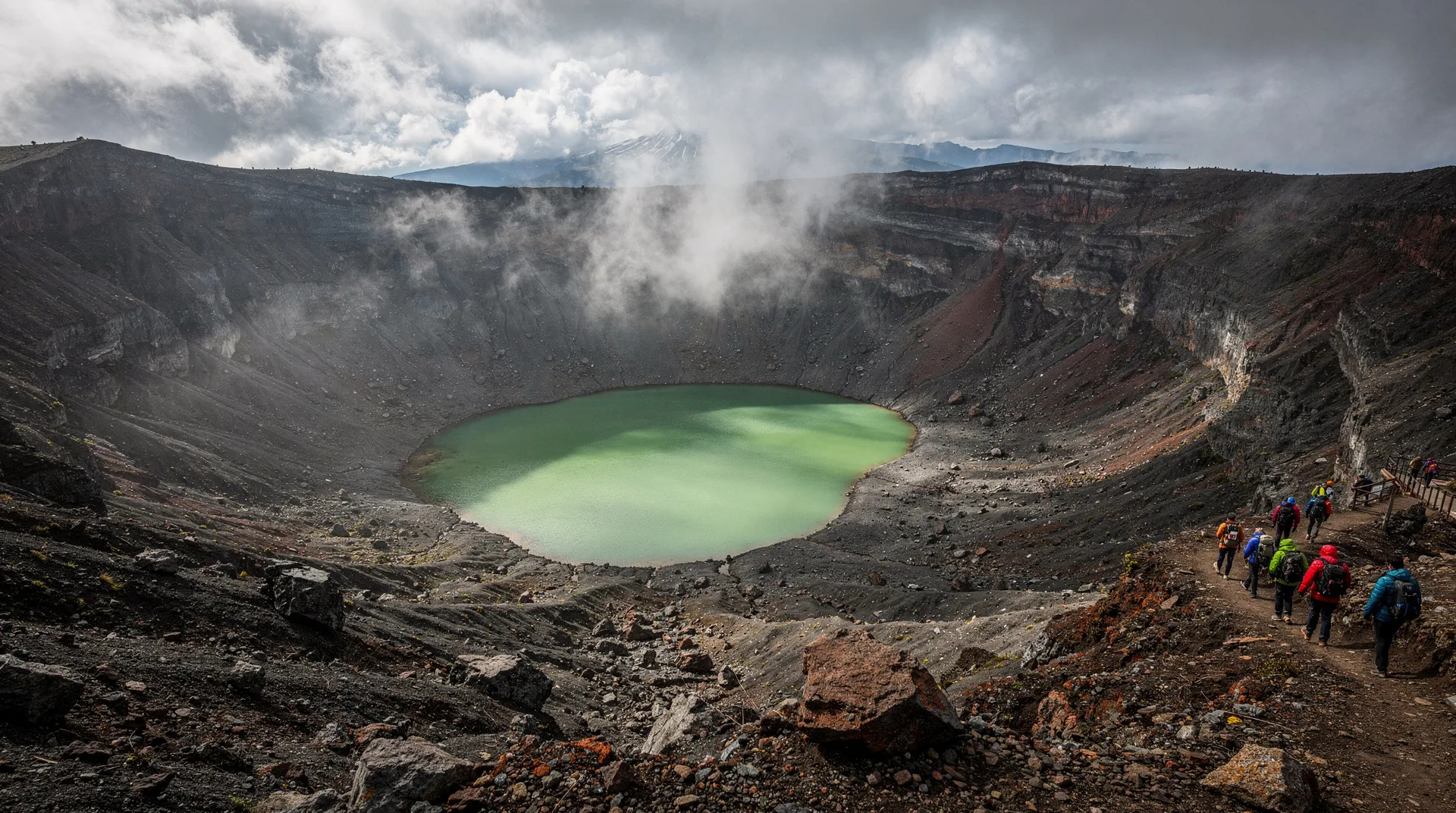
Main crater (Cráter Principal): This is what most visitors come to see. The crater measures 1,050m across and 300m deep. A green crater lake occupies the floor when Irazú is in a quiet phase — the lake’s colour varies from turquoise to grey depending on acidity and volcanic activity. A metal railing and paved viewpoint provide access on the crater rim.
Diego de la Haya crater: Located 200m east of the main crater, this smaller crater is dry and shows fumarolic activity. Its walls display striking bands of yellow sulfur deposits and grey ash. A short path connects the two viewpoints.
Playa Hermosa crater: A 15-minute walk from the main viewpoint, this older crater contains a small emerald-green lake and is often less crowded than the main viewpoint. Worth the additional walk.
San José: Irazú Volcano, Cartago city & Orosi Valley tour — from $110Entry fees and park hours
Entry fee: $15 per person (foreign nationals). Collected at the entrance kiosk — no advance reservation required.
Opening hours: 8am to 3:30pm daily. Last vehicle entry is 2:30pm. The park is open seven days a week.
Parking: Free at the summit parking area. Can fill on busy weekends — arrive early.
The approach road and what you’ll see
The drive from Cartago to the summit is 35km and takes 45 to 60 minutes on a paved mountain road. The road passes through:
- Potato and strawberry farms at mid-elevation
- Dairy farms and wind-swept pasture in the upper zone
- Cloud forest (elfin forest) near the summit — gnarled trees draped in mosses and bromeliads
Wildlife along the road and in the park includes white-tailed deer (often visible grazing roadside), various hawk species, and the yellow-thighed finch — a high-altitude specialist found almost exclusively above 2,500m.
San José: Irazú Volcano, Cartago & Orosí Valley tour — from $115The Orosi Valley circuit: combining Irazú with Cartago
Irazú is most rewarding when combined with the surrounding cultural and natural attractions of Cartago Province. The classic circuit runs:
Morning (7am arrival): Irazú crater viewpoints — two to three hours.
Mid-morning: Basílica de los Ángeles in Cartago. Costa Rica’s most important Catholic pilgrimage site, home to the venerated La Negrita (Black Madonna) figurine. The basilica was rebuilt after earthquakes and is architecturally striking. The adjacent La Negrita spring is where locals come to fill bottles with water believed to have healing properties.
Lunch: Cartago city — straightforward local sodas on the town’s main streets serve the classic arroz con pollo and casado.
Afternoon: The Orosi Valley loop — a circular drive through one of the most beautiful agricultural valleys in Costa Rica. Key stops include the Orosi church (the oldest continuously active church in Costa Rica, built in 1743), the Cachí reservoir viewpoint, and Las Ruinas de Ujarrás (ruins of a colonial church). The valley is photogenic in afternoon light.
Optional late afternoon: Río Macho forest reserve or the Tapantí National Park (20km south of Orosi) for a short waterfall hike.
From San José: Irazú Volcano crater hike and Cartago trip — from $95Guayabo National Monument: adding archaeology
Another excellent addition to an Irazú day is Guayabo National Monument, located 20km north of Turrialba and about 90 minutes from the Irazú summit. Guayabo is the largest pre-Columbian archaeological site in Costa Rica — a series of stone roads, aqueducts, burial mounds, and causeways from a civilisation that flourished here from 1000 BC to 1400 AD. The site is not as dramatic as Machu Picchu or Tikal, but the engineering sophistication of the water management system is genuinely impressive and the surrounding forest is good birding territory.
From San José: secrets of Guayabo & Irazú Volcano — from $120Sanatorio Durán: an unusual addition
One of the more offbeat attractions in the Irazú area is the abandoned Sanatorio Carlos Luis Valverde Durán, located between Cartago and the volcano entrance. Built in 1918 as a tuberculosis sanatorium and closed in 1973, the building has been taken over by the forest and is now a popular site for urban exploration and ghost tourism. SINAC has partially restored it as a visitor attraction with guided tours. Unusual, atmospheric, and genuinely interesting for the right traveller.
Irazú Volcano: Turrialba viewpoint & Sanatorio Durán tour — from $95Getting to Irazú
From San José: Take the Interamericana Highway south to Cartago (30 minutes), then follow Route 230 north toward San Juan de Chicó and the park. Total drive: 80 to 90 minutes from central San José. GPS works well on this route.
By tour operator: Most San José operators offer Irazú day tours with pickup, guide, and entrance included. Many combine with Cartago and the Orosi Valley. Prices run $80 to $120 per person.
By public bus: Buses run from Cartago to Irazú on weekends (Saturday, Sunday, and holidays) only. Check current schedules — service is limited and times change seasonally.
From Turrialba: 1.5 hours by car via the Llano Grande route. A different approach road that passes through the Turrialba Volcano area.
What to pack for the summit
Irazú’s summit sits nearly 3,000m higher than most Pacific beach towns, and the temperature swing surprises first-time visitors. Bring a fleece or light jacket even in dry season — mornings at the crater rim regularly sit at 5-12°C with wind chill adding further cooling. Closed shoes handle the paved viewpoint paths and the short walk to Playa Hermosa crater comfortably. Sunscreen still matters despite the cold: UV exposure increases with altitude, and dry-season mornings at Irazú are frequently cloudless before 9am.
Planning around the weather and the road
The mountain makes its own weather, which is why the early start matters so much. If you want to understand why the summit can be clear while the valley below is grey, or the reverse, our explanation of Costa Rica’s microclimates helps, and the best time to visit Costa Rica overview shows where Irazú fits in the wider seasonal picture.
For the drive itself, the driving in Costa Rica guide covers the habits worth knowing on mountain roads, and rent a car or not will help you decide whether to self-drive. If you would rather leave the road to someone else, the shuttle services overview explains the alternatives to a rental.
Photography and reading the volcano
The crater walls, the sulfur-stained slopes and the shifting colour of the lake reward patience. Our volcano photography tips cover how to handle low light, mist and wind at the rim. To put what you see into context, understanding Costa Rica’s volcanic activity explains what fumaroles and a changing lake colour can tell you. A warm layer and a rain shell belong in your bag, and the packing list for Costa Rica is a useful check before you leave San José.
Irazú vs Poás: choosing your Central Valley volcano day
Both Poás and Irazú are reachable as a single day trip from San José, but they suit different priorities. Poás requires an advance SINAC reservation and delivers one of the most dramatic active crater lakes in Central America; Irazú needs no reservation, sits higher, and offers the rare dual-coast view alongside a natural pairing with the Cartago cultural circuit. Our full Arenal vs Poás vs Irazú comparison breaks down access rules, crater characteristics, and which to pick if you only have time for one.
Best time to visit
December to February: The clearest months. Dry-season mornings at Irazú are frequently superb, with dramatic volcanic landscapes in sharp relief. This is when the dual-coast view is most achievable.
March to April: Still good, but transitioning to green season. Afternoon clouds build more quickly.
May to November: Rainy season mornings can still be clear, but afternoon visits are almost always foggy. A 7am arrival in June or July can still produce excellent views — do not write off Irazú entirely in green season.
Frequently asked questions about Irazú Volcano National Park
How does Irazú compare to Poás for a first-time visitor?
Poás has the more dramatic crater lake and the reservation system ensures a less crowded experience, but it requires advance booking. Irazú is higher and offers the potential dual-coast view, doesn’t need advance reservations, and pairs more naturally with the Cartago cultural circuit. Both are excellent — if you have time for only one volcano day trip from San José, Poás wins on the crater lake alone; Irazú wins on the overall circuit experience.
What is the weather like at 3,432m?
Cold. Bring a fleece or jacket regardless of season. Temperatures at the summit routinely run 5 to 12°C, with windchill adding further cooling. Afternoons with rain and wind can feel genuinely cold by tropical standards. The approach road passes from tropical heat to near-alpine conditions in under an hour.
Can I walk to multiple craters in one visit?
Yes. The main crater, Diego de la Haya, and Playa Hermosa are all accessible on marked paths within a 30-minute walking radius of the car park. A single visit of 2 to 3 hours is enough to see all three without rushing.
Is Irazú currently active?
Irazú is classified as an active volcano under permanent OVSICORI monitoring. The most recent activity was seismic — the surface shows ongoing fumarole activity. The 2020s have seen low-level unrest but no significant eruptions. OVSICORI bulletins are published weekly and available online.
Are there any facilities at the park?
A small café and souvenir shop operate near the entrance during opening hours. Toilets are available. There is no accommodation inside or immediately adjacent to the park — Cartago (35km away) and Turrialba (45km) are the nearest lodging options.
Do I need a guide to visit Irazú?
No. The park is straightforward to visit independently — paved paths connect the three crater viewpoints, signage is clear, and the entrance kiosk sells tickets directly with no reservation required. A guide adds value mainly for the Orosi Valley cultural circuit (Basílica history, Guayabo archaeology) rather than for the crater viewpoints themselves.
Renting a car vs joining a tour for Irazú
Both work well, and the choice depends more on what else you want to see that day than on Irazú itself. A rental car gives you the flexibility to arrive at 7am (essential for the clearest views) and to structure your own Orosi Valley loop afterward at whatever pace you like — useful if you want to linger at the Cachí reservoir or spend extra time in Cartago.
A guided tour removes the navigation stress on unfamiliar mountain roads and typically bundles Irazú with Cartago and Orosi in a single fixed-price day, which suits travellers without an international driving permit or those uncomfortable with Costa Rica’s occasionally aggressive local driving style. Neither option requires the advance planning that Poás demands.
Where to fit Irazú in your itinerary
Irazú belongs naturally in a Central Valley and Cartago cultural circuit. It pairs with the Cartago and Orosi Valley destination guide and works as either a standalone day trip from San José or a morning stop before continuing south toward Turrialba for Pacuare River rafting. See the best volcanoes in Costa Rica guide for a comparison of all accessible volcanic parks, and the coffee tours comparison if you want to add a coffee or cacao experience to the circuit.