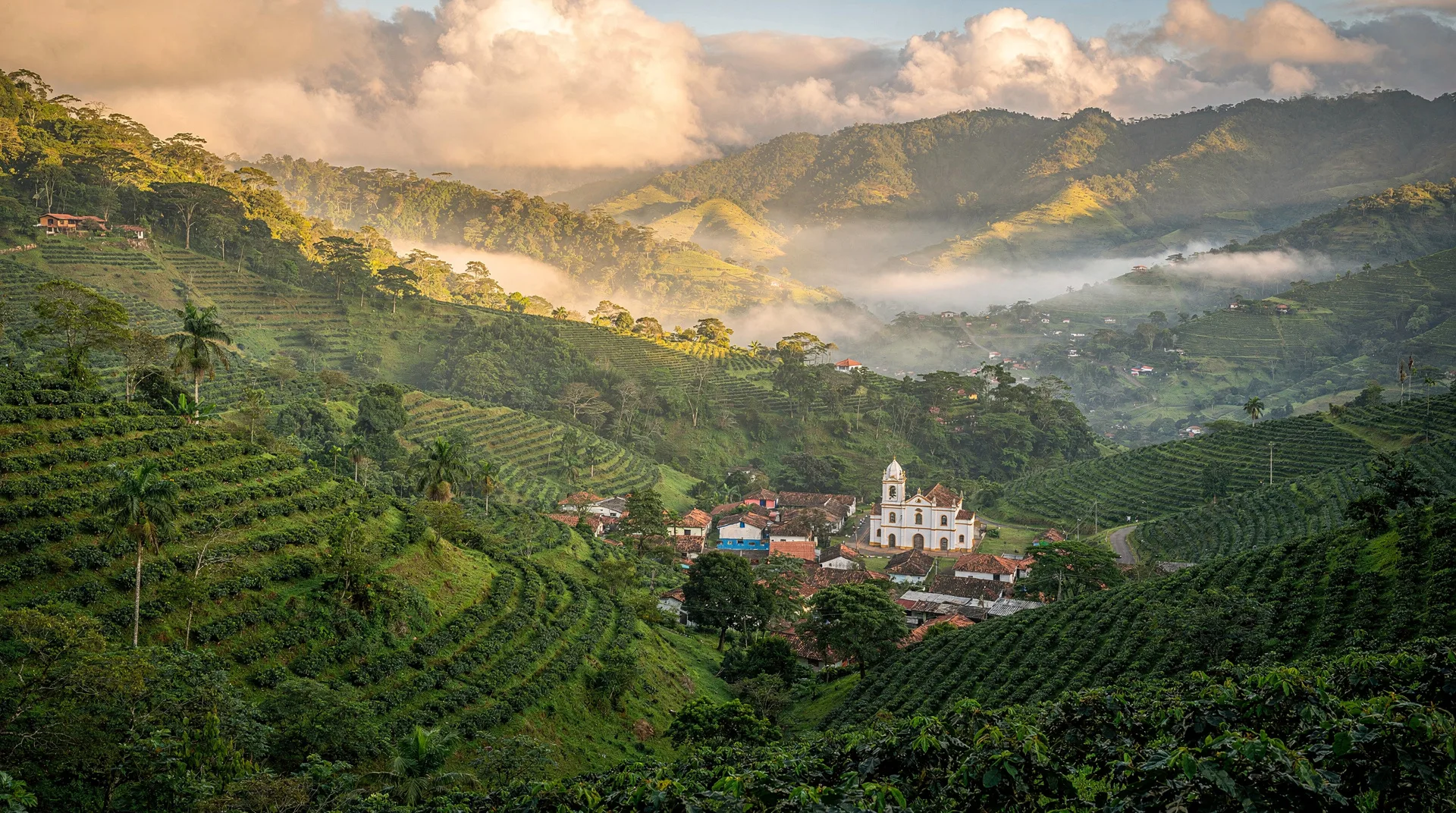
Cartago and the Orosi Valley — Costa Rica's colonial heart in a volcano landscape
Cartago combines Costa Rica's colonial capital with Irazú Volcano and the scenic Orosi Valley. A rewarding full-day trip from San José or Turrialba.
Top experiences nearby
Quick facts
- Best time to visit
- Year-round; December to April best for Irazú crater views
- Days needed
- 1 day
- Getting there
- 22 km from San José — 30 minutes by car or frequent bus
- Budget per day
- USD 60 to 130
The volcano, the ruins, and the green valley
Cartago was Costa Rica’s capital for 300 years before a 1910 earthquake destroyed most of the city and prompted the shift to San José. What remains tells two stories at once: the colonial heritage visible in the Basílica de Nuestra Señora de los Ángeles and the Las Ruinas church site, and the volcanic landscape of Irazú rising 3,432 meters above the city — the highest volcano in Costa Rica and the one with the most accessible crater. For Costa Rica’s other great volcano day trip, see the Poás Volcano guide.
A day trip that combines Cartago city, the Irazú Volcano, and the Orosi Valley loop covers three completely different landscape types within 70 kilometers — a density of experience that represents Central Valley travel at its most efficient.
| Where | 22 km southeast of San José |
| Cost | USD 60-130/day |
| Getting there | 30 min by car or frequent bus from San José |
| Best time | December to April for clearest Irazú crater views |
| Days needed | 1 day |
Irazú Volcano from Cartago
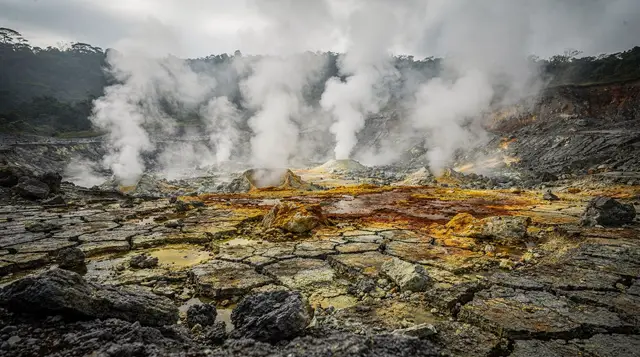
Irazú’s crater is a lunarscape of grey ash, sulfurous gas vents, and an acid green lake in the main crater that has appeared and disappeared multiple times over the decades — currently absent but periodically returning with rainfall. The view from the crater rim on a clear morning extends to both coasts: the Pacific to the west and the Caribbean to the east. This dual-coast view is meteorologically rare and requires being at the summit before 9:00 AM, before clouds typically obscure the lower ridges.
The full Irazú, Cartago, and Orosi Valley day tour from San José is the most efficient structure for first-timers — a guide, transport, and a well-sequenced route that hits all three zones in a single day.
San José: Irazú Volcano, Cartago city & Orosi Valley tour — from $110An alternative format with slightly different routing covers the same core sites.
San José: Irazú Volcano, Cartago & Orosí Valley tour — from $115For a more focused volcanic experience that extends to Turrialba Volcano and includes the historic Sanatorio Durán (a tuberculosis sanatorium turned atmospheric ruin), the combined tour is one of the more unusual options in the Central Valley.
Irazú Volcano: Turrialba viewpoint & Sanatorio Durán tour — from $95For those who want the crater hike specifically, the direct crater hike from San José is a worthwhile standalone activity.
From San José: Irazú Volcano crater hike and Cartago trip — from $95The Basílica de Nuestra Señora de los Ángeles
Cartago’s Basílica is the most important religious site in Costa Rica. The original church was repeatedly destroyed by earthquakes; the current Byzantine-influenced structure dates to 1926 and holds La Negrita — a small black stone figurine of the Virgin Mary, said to have been found on the site in 1635. The statue draws pilgrims from across Costa Rica and Central America; August 2 is the pilgrimage day when hundreds of thousands walk from San José to Cartago on foot.
The interior of the Basilica is worth a 30-minute visit for the wall of crutches and medical devices left as ex-votos by pilgrims who believe they were healed through the intercession of La Negrita. This is genuine living religion, not tourist spectacle.
Las Ruinas and Cartago city
Las Ruinas (officially the Parroquia de Santiago Apóstol) is the photogenic roofless colonial church ruin in the central plaza — preserved as a reminder of the 1910 earthquake rather than rebuilt. The site is a small garden today. Cartago city itself is functional rather than beautiful; the interest is in the history and the surrounding landscape rather than in the streets themselves.
The Orosi Valley loop
The Orosi Valley is 14 kilometers south of Cartago — a scenic winding road descends from the highlands into a green agricultural valley where coffee and bananas grow below the ruins of a Spanish colonial church (Ujarrás, the oldest church in Costa Rica, 1693). The valley has hot springs at Orosi village (Los Patios hot springs, USD 8 entry), a waterfall system accessible from Río Macho, and the Tapantí National Park at the valley’s southern end — one of the wettest environments in Costa Rica and excellent for birding.
The drive around the valley loop takes about 2 hours without stopping; a full half-day is needed to stop at the Ujarrás ruins, the Orosi hot springs, and the Tapantí entrance.
Coffee in the Central Valley highlands
The Cartago province highlands produce some of Costa Rica’s best coffee — the altitude (1,400 to 1,800 meters) creates the slow cherry development that yields the complex acids prized by specialty roasters. Several farms in the area around Cartago offer tours less crowded and more authentic than the Doka and Britt estates near Alajuela. Ask locally for recommendations; the tourist infrastructure here is less organized than the San José coffee tour options. From Cartago heading east, Turrialba is 50 kilometers — a logical extension for travelers wanting to combine the cultural circuit with Pacuare River rafting.
Guayabo and the deeper archaeological detour
For travelers with an extra half-day rather than rushing back to San José, the Guayabo National Monument — 20 kilometers north of Turrialba, itself about an hour east of the Orosi Valley — is the largest known pre-Columbian settlement site in Costa Rica, with stone-paved roads, aqueducts, and ceremonial mounds dating from roughly 800 BCE to 1400 CE.
It rarely appears on the standard Irazú-Cartago-Orosi day tour itinerary because it sits further out, but combining it with a Turrialba overnight and Pacuare River rafting the following day turns this into a genuinely rewarding two-day extension rather than a rushed single day. Admission is around $10, with the 3-kilometer trail through the ruins taking 2-3 hours.
Reading the volcanic landscape
Irazú is easier to appreciate when you know what you are looking at. The ash, the gas vents and the bare slopes are the visible result of the same forces covered in the guide to Costa Rica’s volcanic activity. If photography matters to you, the volcano photography tips explain how to handle haze, bright rock and shifting cloud, and the Arenal vs Poás vs Irazú comparison helps you decide how this crater fits with the other volcano days you may be planning.
Weather up on the ridge changes quickly, and the valley below can be sunny while the summit sits in cloud. The microclimates guide explains why, and the December and February weather guides show what the dry months tend to feel like. Bring layers, because the highlands are noticeably cooler than San José.
Pacing the day
The most common mistake is trying to give every stop equal time. Treat Irazú as the early, weather-dependent stop and everything else as flexible. Once the crater is done, the Basílica, Las Ruinas and the valley loop can each stretch or shrink depending on how you feel. A slow lunch at a local spot suits the Central Valley well; the guide to sodas explains what to expect from these small family-run restaurants, and the overview of gallo pinto and traditional dishes gives you something to look for on the menu.
Travelers who like to move at their own pace often ask whether they need a car. The rent a car or not guide weighs the options, driving in Costa Rica covers what the roads are like, and the shuttle services overview is useful if you would rather leave the driving to someone else. A guided tour removes the logistics entirely and lets you spend the morning looking at the crater instead of the road.
Cartago as part of a longer trip
Because Cartago sits so close to the capital, it slots easily into a wider route. If you are arriving or leaving through the city, the airport to destination transfers guide helps you plan the first or last day. For a gentle introduction to the country, the 10 days from Arenal to Monteverde to Manuel Antonio itinerary and the 7 days from Arenal to Manuel Antonio itinerary both begin near the Central Valley, so a Cartago day can sit at the start before the longer drives. Travelers heading toward the Caribbean can pair it with the 7-day quick Caribbean itinerary, and the two weeks of Caribbean, Pacific and volcanoes route suits those who want volcano days built into a longer trip. Cartago also borders Limón province and San José province, so the province hubs are good places to keep exploring.
If you want something quieter after a busy city day, Heredia province and Alajuela province offer more of the highland scenery, and the best time to visit Costa Rica guide will help you choose the season that suits you.
Getting there
By car from San José: 22 kilometers via Route 2 (the Autopista Florencio del Castillo or the old road through Curridabat). Traffic can be significant in the morning — allow 45 minutes at peak hours. By bus: very frequent service from San José’s Cartago terminal (Avenida Central, Calle 13) — buses run every 15 minutes, fare around USD 0.80, journey 45 to 60 minutes. From Cartago to Irazú: local buses run from Cartago center to the national park on weekends and holidays (check current schedule). A taxi from Cartago to Irazú costs USD 25 to 35 one-way.
Frequently asked questions about Cartago and the Orosi Valley
What is the best time of day to visit Irazú Volcano?
Arrive at the crater rim between 7:30 AM and 9:00 AM for the best chance of clear views. By 10:00 AM, clouds typically develop and obscure the lower valleys. The dual-coast view (Pacific and Caribbean simultaneously) requires the clearest conditions and is most likely in the dry season (December through April). The park opens at 8:00 AM.
Can I visit Cartago by public transport?
Yes — it is one of the easiest Central Valley day trips from San José without a car. Frequent buses from San José’s Cartago terminal reach the city center in 45 to 60 minutes. From the Cartago bus terminal, taxis reach the Basílica in 10 minutes. For Irazú, public buses run on weekends from Cartago’s central market; confirm current schedule locally. The Orosi Valley loop requires either a car or a guided tour.
Is Irazú active?
Irazú is classified as an active volcano. The last significant eruption occurred from 1963 to 1965, coinciding with President Kennedy’s visit to Costa Rica (resulting in ash falling on San José). Since then, it has shown periodic fumarolic activity but no eruptions. Turrialba Volcano (30 km northeast) has been more recently active and access is periodically restricted; check current status before planning a Turrialba visit. For a full overview of Costa Rica’s accessible volcanoes, the best volcanoes in Costa Rica guide compares Irazú, Poás, Arenal, Tenorio, and Rincón de la Vieja.
Can I swim in the Orosi hot springs?
Yes. Los Patios hot springs in Orosi village have thermal pools fed by natural volcanic sources, with entry around USD 8 per person. The facilities are basic but clean. Los Balnearios de Orosi, nearby, offer a larger facility with multiple pools at a similar price. Both are significantly cheaper and less commercialized than the Arenal hot spring resorts.
Is Sanatorio Durán open to visitors?
Sanatorio Durán, a derelict tuberculosis sanatorium from the early 20th century on the slopes of Irazú, has been closed and reopened periodically. It operates as a guided tour attraction and has a reputation as one of Costa Rica’s most photogenic abandoned buildings. Confirm current access with the tour operators who include it in their Irazú itineraries — it is sometimes accessible only with advance booking.
Is Guayabo National Monument worth adding to the trip?
For travelers with archaeology or pre-Columbian history interest, yes, but it requires treating it as a separate excursion rather than folding it into the standard Irazú-Orosi day. Guayabo sits 20 km north of Turrialba, itself roughly an hour past the Orosi Valley, so a same-day combination with Irazú means a very long day. Pairing it with a Turrialba overnight and Pacuare rafting the next day makes for a better-paced two-day extension.
How to fit Cartago and the Orosi Valley into your itinerary
A single day from San José covers everything comfortably: Irazú crater at 8:00 AM, Cartago Basílica and Las Ruinas by 11:00 AM, the Orosi Valley loop in the afternoon. This can be self-driven or done on an organized tour from San José. The combination also works as a transit day if you are moving between San José and Turrialba — both are in the same direction and the Orosi Valley sits directly on the route.