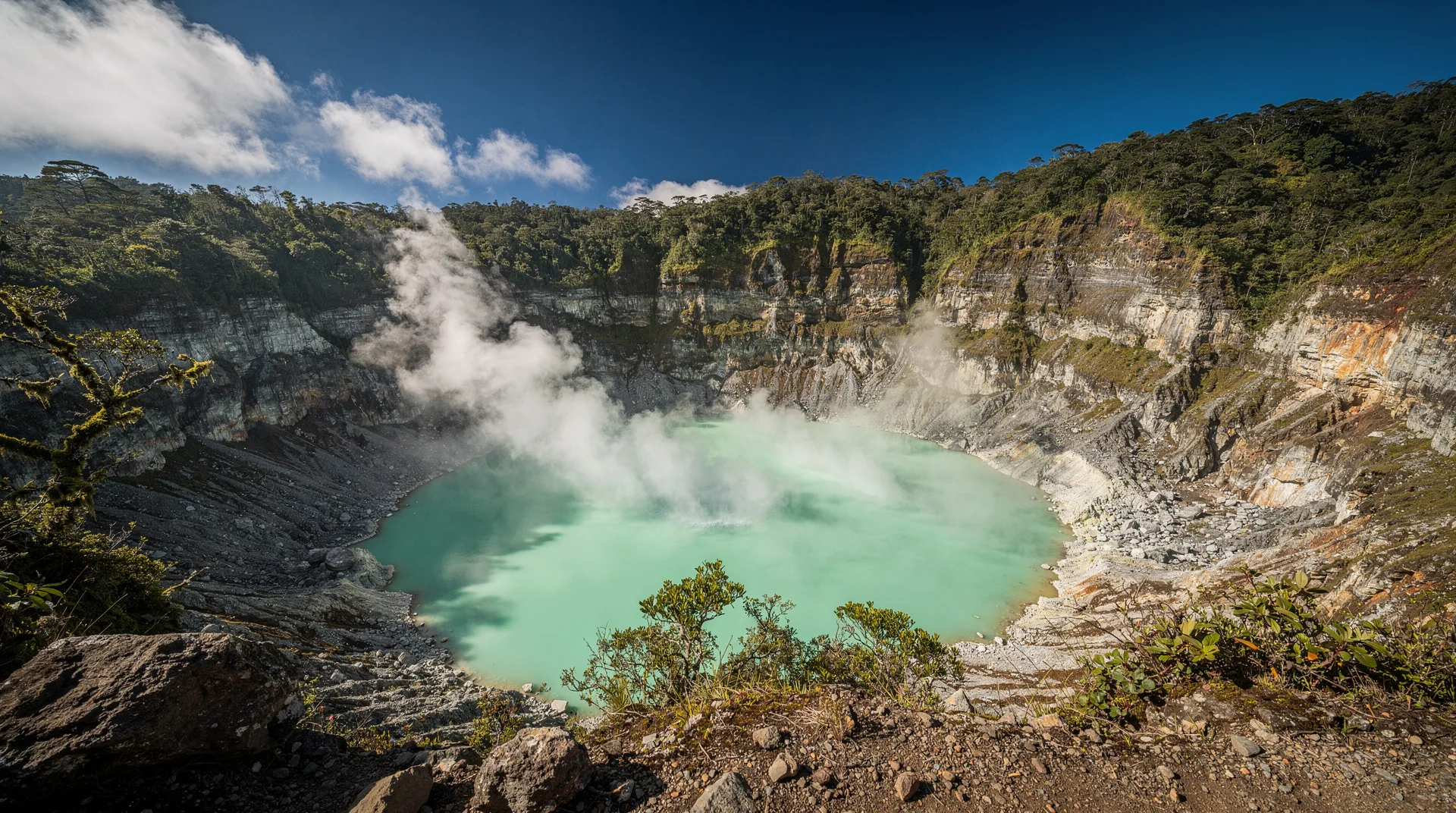
Poás Volcano National Park: crater reservations, La Paz Waterfall, and visitor tips
Do I need a reservation for Poás Volcano National Park?
Yes, and it is strict. SINAC requires advance online reservations for specific one-hour time slots. Available slots open four weeks in advance and fill quickly during peak season. Walk-up entry is not permitted. Book at sinacweb.sinac.go.cr well ahead of your visit date.
The most visited volcano in Central America
Poás Volcano sits just 37km north of San José, making it the most accessible major volcano in the country. On a clear day, the drive from the capital takes about 90 minutes — through strawberry farms, cloud forest, and coffee plantations that climb the flanks of the Cordillera Central before reaching the park entrance at 2,600m elevation.
| Where | 37km north of San José, Alajuela highlands |
| Cost | around $15/person entry, reservation required |
| Time needed | half-day; full day combined with La Paz or coffee |
| Getting there | ~90 min drive, or tour with pickup |
| Best time | first morning slot (7-8am), December-April |
The crater is one of the largest active volcanic craters in the world — roughly 1.5km wide and 300m deep. Inside it, a hyperacidic turquoise crater lake (Laguna Caliente) has a pH close to zero, making it one of the most acidic bodies of water on Earth. The lake periodically erupts in phreatic (steam and acid) explosions, ejecting sulfuric acid aerosols and ash.
The 2017 eruption was the most significant in decades. Phreatic explosions in April 2017 sent ash and volcanic material 1km into the air, and the park was closed for 16 months for safety assessment. When it reopened in September 2018, SINAC implemented the current reservation system and strict time-limit protocol — visitors now enter in timed batches with a 20-minute maximum at the crater viewpoint.
This system sounds restrictive but has actually improved the experience. Smaller crowds at the viewpoint, a calmer atmosphere, and the knowledge that the park is actively monitored make the visit feel safer and more rewarding.
The reservation system: how it works
Step 1: Visit sinacweb.sinac.go.cr (the official SINAC reservation portal).
Step 2: Select Volcán Poás and choose a date. Available time slots are released four weeks in advance.
Step 3: Choose a 1-hour arrival window. Up to 50 visitors are permitted per slot.
Step 4: Pay the entry fee online (credit/debit card required).
Step 5: Print or save your reservation confirmation. Rangers check it at the entrance — no digital glitches allowed, so screenshot it.
Entry fee: $15 per person (foreign nationals), payable online at time of booking.
Peak period warning: December through April (dry season), weekends, and US school holidays fill up weeks in advance. During Costa Rica’s Holy Week (Semana Santa) and Christmas week, slots can be booked solid more than a month out. Set a calendar reminder to book four weeks from your target date.
What to expect at the crater
From the park entrance, a 1.3km paved path leads to the main crater viewpoint. The walk takes 20 to 30 minutes at a moderate pace. The forest along the path transitions from cloud forest near the entrance to increasingly sparse, wind-battered vegetation near the summit.
At the viewpoint: A railing overlooks the crater from the north rim. On a clear day, the turquoise/grey crater lake is visible below and the scale of the caldera — 1.5km across — is genuinely impressive. On foggy days (very common in the afternoon), you may see nothing. This is not a fringe scenario: the park sits in a cloud belt, and morning visits are dramatically more likely to offer clear views.
Fumarole activity: The crater rim shows continuous fumarole venting. On days of higher activity, sulfurous gas wafts toward the viewpoint. The park provides no gas masks, but most visitors do not experience significant discomfort. Those with respiratory conditions or sulfur sensitivity should check OVSICORI’s volcanic activity reports before visiting.
The 20-minute rule: Rangers are strict about the time limit at the viewpoint. This is not arbitrary — prolonged acid aerosol exposure is a health risk. Twenty minutes is genuinely enough to see and photograph the crater.
Botos Lake (Laguna Botos): A second, cold water lake formed in an older inactive crater is accessible via a separate 2km trail from the main viewpoint. This trail passes through elfin cloud forest and is botanically beautiful. It is less visited than the main crater trail — a good option if you want more time in the park without standing in the viewpoint queue.
Poás Volcano active crater, La Paz Waterfall & birdwatching — from $140Combining Poás with La Paz Waterfall Gardens
The road from San José to Poás passes near La Paz Waterfall Gardens Nature Park — a private attraction on the eastern slope of Poás Volcano that combines a series of five spectacular waterfalls with a butterfly observatory, hummingbird garden, treetop walk, jaguar and puma rescue centre, and one of the most impressive bird of prey facilities in Central America.
La Paz is not cheap (entrance around $45 adults) but it is extremely well-maintained and genuinely impressive. The Peace Lodge within the property is one of the most photographed hotels in Costa Rica. Combining Poás crater (morning) with La Paz (afternoon) makes a very full and rewarding day trip from San José.
Poás Volcano, coffee plantation & La Paz Waterfall Gardens — from $130Combining Poás with coffee farm tours
The Alajuela highlands around Poás are prime Arabica coffee-growing territory. Several excellent coffee farms offer tours that pair naturally with a Poás crater visit.
Café Doka Estate: A fourth-generation family farm on the road to Poás, offering 2.5 hour tours through cultivation, wet-processing, drying, and cupping. One of the most genuine coffee experiences in the Central Valley.
Britt Coffee: A more polished, theatrical production targeting tour groups — less intimate than Doka but covers the coffee story effectively.
Hacienda Alsacia (Starbucks Research Farm): A working coffee research station operated by Starbucks at high altitude on Poás. Tours available by reservation. A unique combination of corporate and agricultural that is more interesting than it sounds.
The standard day-trip formula — morning Poás crater visit, mid-morning coffee tour, La Paz Waterfall afternoon — covers three distinct experiences and returns to San José by 6pm.
San José: Poás Volcano, La Paz Waterfall & coffee tasting — from $125Best time to visit for a clear crater view
The cardinal rule: visit in the morning, as early as possible. Book the first or second time slot of the day (7am or 8am arrivals). By 10am, clouds frequently roll over the summit and the crater disappears into fog. Afternoon visits almost always result in zero visibility.
December to April: Best overall conditions. Lower humidity, less cloud cover, and the highest probability of a clear crater view. Even in dry season, late mornings can cloud over — morning bookings remain essential.
May to November: More frequent cloud and rain, but morning visits can still be clear. The forest along the trail is lush and vibrant. Fewer visitors mean quieter viewpoints, though this is partly mitigated by the reservation system.
Avoid: Days immediately after heavy rain when volcanic gas dispersion can be more concentrated. OVSICORI (Observatorio Vulcanológico y Sismológico de Costa Rica) publishes daily activity bulletins — worth checking the morning of your visit.
From San José: Poás Volcano, Café Doka and La Paz Waterfalls — from $135Poás vs Irazú vs Arenal: which volcano to visit
| Volcano | Distance from San José | Crater access | Best for |
|---|---|---|---|
| Poás | ~90 min | reservation required, 20-min viewpoint limit | active crater lake, day trip from capital |
| Irazú | ~90 min | walk-up, no reservation needed | dramatic multi-colour crater, fewer crowds |
| Arenal | ~3 hrs | no crater access (dormant since 2010) | hot springs, adventure activities, scenery |
If you only have one day near San José and want an active volcanic crater without pre-booking hassle, Irazú is the simpler alternative. Poás rewards the extra planning with a genuinely striking hyperacidic lake. See the full best volcanoes in Costa Rica comparison, or the dedicated Poás vs Irazú vs Arenal guide, for a deeper breakdown.
What to pack for the summit
Even in dry season, the crater rim is cold and often windy — bring a light jacket or fleece regardless of how warm San José feels that morning. Closed shoes are sensible for the paved but occasionally slick path. Sunscreen matters despite the cool air, since UV exposure is higher at 2,600m. If you have a respiratory condition or are sensitive to sulfur, check OVSICORI’s activity bulletin before booking, and consider a mask for the viewpoint on higher-activity days. Cash is useful for the small café near the entrance, since card acceptance can be inconsistent.
Getting to Poás
By car: The most flexible option. Highway 1 north from San José to Alajuela, then follow Route 712 through Poasito to the park entrance. GPS works well on this route. The road is paved throughout. Drive time: 75 to 90 minutes from San José.
By tour operator: Multiple operators run Poás day trips from San José hotels, with pickup, guide, entrance, and often La Paz or coffee included. Prices range from $80 to $140 per person. This is the easiest option for non-drivers.
By public bus: Buses run from Alajuela to the park on weekends and Sundays (only). Service is limited and infrequent — check current schedules, as this route has changed over the years.
Coffee farm tour, Poás Volcano Park and La Paz Waterfall — from $130Frequently asked questions about Poás Volcano National Park
What if the crater is foggy when I arrive?
You can wait at the viewpoint for up to 20 minutes in hope of a brief clearing. Fog at these altitudes moves fast — sometimes a two-minute window reveals the full crater. If no clearing comes, the Botos Lake trail and the cloud forest walk are still rewarding. The park does not offer refunds for poor weather conditions.
Is Poás dangerous to visit?
The reservation and time-limit system specifically manages the health risk from volcanic gas exposure. During periods of increased activity, the park temporarily closes — SINAC posts these closures on their social media and website within hours. As long as you check activity reports on the day of your visit, the risk for healthy visitors is well-managed.
How high is the park? Will I feel altitude?
The crater viewpoint sits at approximately 2,600m. People who live at sea level may notice mild breathlessness during the uphill sections of the trail. The walk is not strenuous enough for altitude sickness to be a significant concern for typical visitors.
Is there food at the park?
A small café near the park entrance serves coffee, snacks, and simple hot food. It is nothing remarkable but useful if you have an early start. Bring your own water.
What is the weather like at the top?
Cold by Costa Rican standards. Even in dry season, the summit can be 12 to 15°C and windy. Bring a light jacket. In rainy season, temperatures can drop to 8°C and rain gear becomes essential.
Where to fit Poás in your itinerary
Poás is a natural day trip from San José or a half-day stop when transiting between the capital and La Fortuna. The 7-day Arenal and Manuel Antonio itinerary often includes a Poás stop on the route north to La Fortuna. For volcano enthusiasts, compare Poás with Irazú Volcano to the east and Arenal to the northwest in our best volcanoes guide. The Central Valley’s coffee tour options pair perfectly with a Poás morning. For general trip timing, see best time to visit Costa Rica.