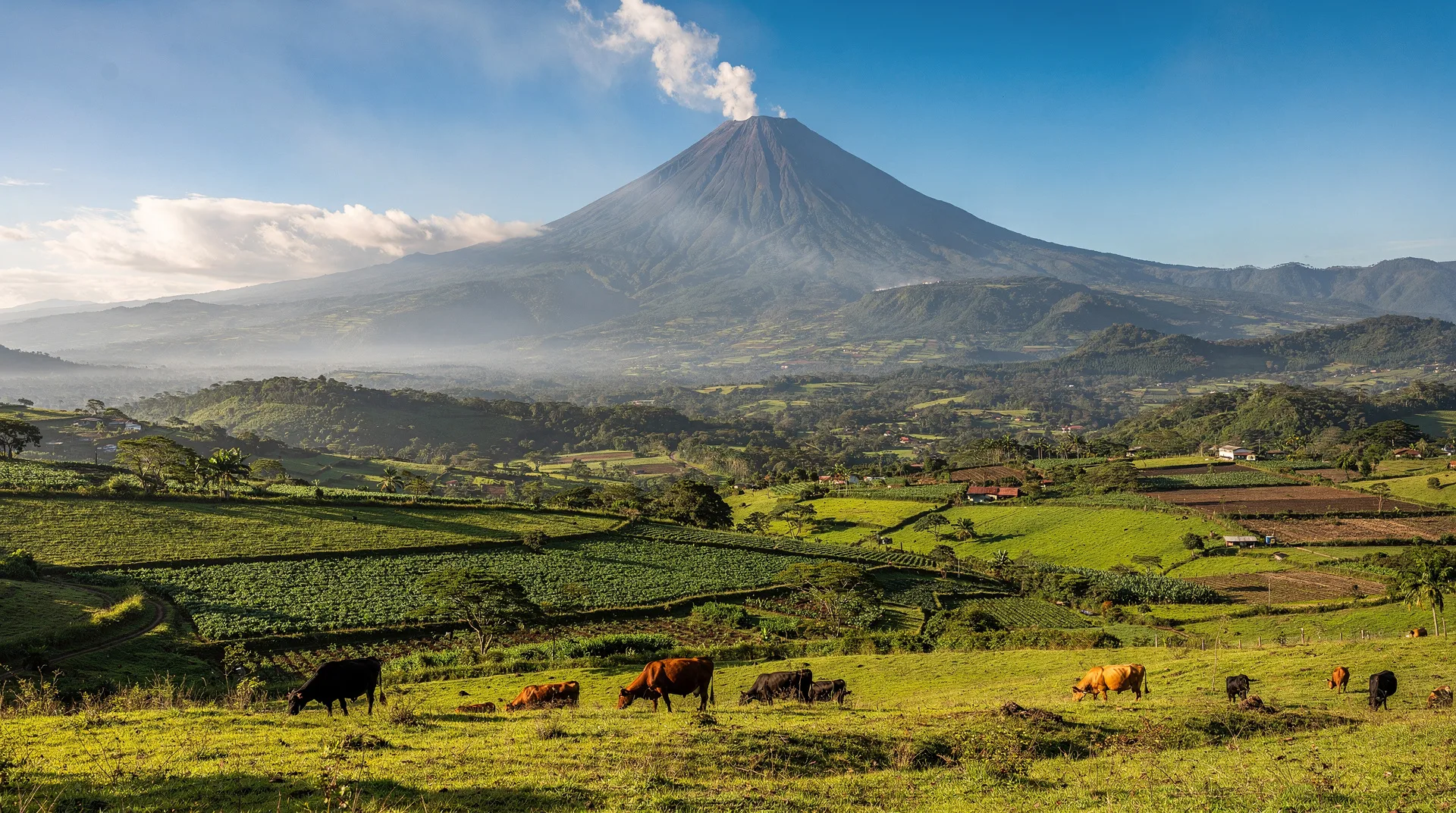
Turrialba — the home of Pacuare rafting and pre-Columbian archaeology
Turrialba is Costa Rica's white-water capital: Class III-IV Pacuare River rafting, Turrialba Volcano access, and the Guayabo archaeological monument.
Top experiences nearby
Quick facts
- Best time to visit
- Year-round for rafting; December to April for Volcano access
- Days needed
- 2 to 3 days
- Getting there
- 65 km from San José — 1.5 hours by car via Cartago
- Budget per day
- USD 70 to 160
The city where the Pacuare runs through your plans
Turrialba sits 65 kilometers east of San José in a broad agricultural valley, 622 meters above sea level, surrounded by working dairy farms, sugar cane fields, and the pineapple plantations that have made this zone Costa Rica’s pineapple capital. It is not a destination people photograph. It is a destination people use — specifically, as the launch point for the Río Pacuare, which flows north from the Turrialba highlands into Class III-IV canyon rapids that have put the river on global lists of top white-water experiences. The neighboring Cartago and Orosi Valley circuit is 50 kilometers west — an easy day-trip combination.
The city itself has a Central Valley town character — larger than most travelers expect (population around 70,000), with a market, a central plaza, and a practical infrastructure that serves the surrounding agricultural economy. The tourism industry grafted onto this is focused and specific: Pacuare rafting, Turrialba Volcano, and the Guayabo pre-Columbian monument. These three are the whole agenda; nothing is missed by being efficient.
Pacuare River rafting from Turrialba
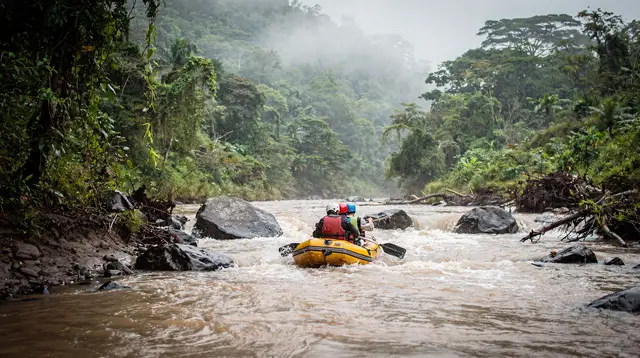
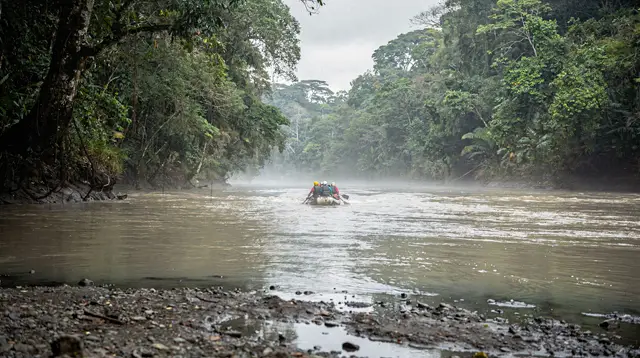
The Pacuare is the premier river rafting experience in Costa Rica and one of the most significant in Central America. The classic section runs from the Tres Equis put-in (upstream of Turrialba) to the takeout at Squirres, covering 28 kilometers of canyon through primary rainforest. The gorge has no road access along most of its length, creating a genuine wilderness experience unusual in Costa Rica. Jaguar and puma tracks are occasionally reported in the mud at the river’s edge; toucans and kingfishers are routine.
Rapid classification runs Class III with sections of IV — technically moderate to challenging, but described honestly as within the range of non-expert paddlers in normal water conditions. The river rises significantly after heavy rain and becomes more technical; operators judge conditions daily and occasionally postpone if safety requires it.
From Turrialba, the most direct rafting arrangement is through the local operator network.
Pacuare River rafting (from Turrialba) — from $120The shuttle option from La Fortuna (combining Pacuare rafting with a transfer to San José or Puerto Viejo) is a logistics solution that avoids backtracking for travelers moving between the Pacific and Caribbean zones.
La Fortuna: rafting Pacuare & shuttle to SJO or Puerto Viejo — from $140The Pacuare overnight lodge experience — camping or lodge on the riverbank with a second day of continuation — is bookable separately through operators like Ríos Tropicales and Aventuras Naturales, which have permanent riverside camps with private rooms. This format transforms the trip from a day activity into a full multi-day expedition.
Turrialba Volcano
Turrialba Volcano (3,340 meters) has been the most active of Costa Rica’s volcanoes in recent years — it erupted repeatedly between 2014 and 2019, forcing closure of the main crater and generating ash falls that occasionally reached San José. As of 2026, activity has significantly decreased and partial access has been restored for guided visits. Confirm current access status before booking. For comparison, Irazú Volcano (fully accessible, 30 km southwest) and Poás Volcano offer more reliable crater viewing when Turrialba is restricted.
The eruption has actually made the volcano more dramatic to see from a distance — the open craters and persistent fumaroles are visible from Cartago and Turrialba city on clear mornings. The trail to the viewpoint, when open, offers one of the best volcanic landscapes in the Central Valley, with the craters producing steam constantly.
Irazú Volcano: Turrialba viewpoint & Sanatorio Durán tour — from $95Guayabo National Monument
Guayabo, 18 kilometers north of Turrialba, is Costa Rica’s most important pre-Columbian archaeological site and one of the most significant in all of Central America. The site dates from approximately 1000 BC to 1400 AD and at its peak supported a population of around 10,000 people — remarkable for pre-Columbian Costa Rica. The visible remains include paved causeways, round stone foundations of buildings, water aqueducts that still function after 2,000 years, petroglyphs, and burial tombs.
The site is genuinely undervisited — most international tourists prioritize beaches and volcanoes, leaving Guayabo to local school groups and archaeology enthusiasts. The combination of intact infrastructure and forest location (the site is within a national monument and surrounded by primary forest) makes it one of the most atmospheric historical sites in Costa Rica.
Entry: USD 7 for adults. Guided tours of the site run 1.5 to 2 hours from the entrance.
Turrialba vs Sarapiquí for rafting
Both towns give access to genuine white-water within reach of San José, but the experiences differ meaningfully.
| Turrialba (Pacuare) | Sarapiquí | |
|---|---|---|
| Rapid class | III–IV, 28 km canyon | II–III (lower), III–IV (Jungle Run) |
| Scenery | Remote canyon, no road access | Lowland rainforest, more accessible banks |
| Multi-day option | Yes — riverside lodges, camping | No, day-trip only |
| Distance from San José | 1.5 hrs | 1.5–2 hrs |
The Pacuare from Turrialba is the more complete white-water experience — longer, more remote, and the only one of the two with a genuine multi-day lodge option. Sarapiquí is the better choice for travelers who also want strong birding lodges nearby or a shorter, less committing rafting day. Serious paddlers generally choose Turrialba; travelers wanting rafting as one component of a broader wildlife-and-lodge stay often prefer Sarapiquí.
Preparing for a Pacuare day
A rafting day goes better with a little preparation. Read the Pacuare River rafting guide before you book, and compare the grades in the rafting class comparison so you know what Class III and IV feel like in a boat. Wear quick-drying clothes, secure shoes that can get wet, and sun protection. Leave valuables at your hotel, and keep any phone in a waterproof pouch or at the lodge. Your guide will give a safety talk before launching, and it is worth listening to every word, because the commands you learn there are what keep the boat together in the bigger rapids.
If a single day on the river leaves you wanting more, the multi-day Pacuare expeditions guide explains how the riverside camp and lodge formats work. Travelers who like to compare rivers can also read about Reventazón rafting, another white-water option in the same part of the country.
Building a wider route around Turrialba
Turrialba rarely stands alone. Many visitors pair it with the Irazú Volcano guide and the coffee farms of the Orosi Valley, which makes a varied loop out of San José. The broader Cartago province page shows how these stops connect. If you are weighing volcanoes, the Arenal vs Poás vs Irazú comparison helps you decide how many craters one trip needs, and understanding volcanic activity explains why access at Turrialba changes from season to season.
After the river, many travelers continue north to La Fortuna for the Arenal area, or east to Puerto Viejo and the Caribbean coast. The Caribbean vs Pacific coast trip guide helps you choose a direction. A shorter 7-day quick Caribbean route is one way to include Turrialba on the way to the coast, and the 10-day eco-luxury itinerary builds a longer trip around the same river.
Getting around and staying safe
Turrialba is simple to reach, but a few planning notes help. The driving guide and the rent a car or not article cover whether a rental makes sense, and the shuttle services overview lists the alternative if you prefer not to drive. For general precautions, see safety in Costa Rica, and consider travel insurance before any adventure activity. Pack with the packing list in mind, since the valley can be wet and the nights cool. Rain affects both the river and the volcano views, so the microclimates explained guide is useful background, as is the best time to visit page for choosing your dates.
Cheese and local agriculture
The Turrialba valley produces Costa Rica’s most famous artisanal cheese — Queso Turrialba, a fresh white cow’s milk cheese protected by denomination of origin (one of the few food products in Central America with this designation). It is served across Costa Rica but produced almost entirely in this valley. Several farms near town allow visits and cheese tastings — ask at your hotel for current options.
Practical basics
Turrialba town has reliable ATMs (Banco Nacional and BAC on the central plaza) and standard wifi coverage in hotels and cafés, though it thins out at the more remote riverside lodges near the Pacuare put-in. Mobile signal from Kolbi and Movistar covers the town and most of the approach roads reliably, dropping off in the Pacuare gorge itself, where there is no coverage for most of the 28-km run — one more reason operators run the river with safety kayakers and radios rather than relying on phones. Turrialba’s elevation (622 m) keeps daytime temperatures comfortable, typically 20–28°C, though nights can be cool enough for a light layer, especially outside the peak dry months.
Where to stay
Mid-range: Hotel Casa Turire (15 km from Turrialba, on the Pacuare approach road) is a boutique hotel on a working plantation — excellent location for Pacuare access, good rooms, and a distinctive agricultural setting (USD 120 to 180). Pacuare Lodge (on the river itself, riverside access only) operates as a multi-day rafting/lodge package and is one of the best eco-lodges in Costa Rica (USD 350 to 500 per person all-inclusive, multi-night minimum). In town: Hotel Wagelia is the reliable mid-range option at USD 60 to 90. Hotel Interamericano is the budget standard at USD 35 to 55.
Getting there
By car from San José: 65 kilometers via Route 2 (Cartago direction) then east through Paraíso. About 1.5 hours without traffic. The road is fully paved. By bus: regular service from San José’s Cartago terminal connects through Cartago to Turrialba, about 2 hours total. Direct Turrialba buses run from San José’s Terminal Lumaca. For Sarapiquí in the northern Caribbean foothills, Turrialba is about 2.5 hours via the mountain roads through Guápiles.
Frequently asked questions about Turrialba
Is the Pacuare River appropriate for beginners?
The classic Pacuare section is rated Class III with sections of IV. Participants need to be reasonably fit, comfortable in water, and willing to follow guide instructions. Most operators accept participants aged 12 and older (some 14+) in normal water conditions. In high water (heavy rain periods, mainly October and November), the river becomes more technical and operators may change the rating or postpone. The operators’ judgment on this is reliable — they paddle the river daily and know when it exceeds the right difficulty level for their clients.
Do I need to book the Pacuare in advance?
Yes. High season (December through March) requires advance booking of at least 1 to 2 weeks; some weekend dates fill 4 weeks ahead. The wet season (May through November) has more availability but also more precipitation — check cancellation and postponement policies carefully.
Is Turrialba Volcano accessible for tourists?
As of 2026, limited access has been restored to the viewpoint area. Full crater access remains restricted due to residual activity. Check with operators before booking — the situation has changed multiple times since 2014 and confirmed current access is essential. The volcano is impressive even from a distance, and the surrounding agricultural landscape on the approach road is scenic regardless.
Can Guayabo and the Pacuare be combined in one day from San José?
Technically yes — Guayabo is 18 kilometers from Turrialba and the Pacuare put-in is a 30-minute drive further. A full-day Pacuare trip plus a Guayabo visit is tight but possible with very early departure (5:30 AM from San José). More comfortably, stay one night in Turrialba and split the activities across two mornings.
How to fit Turrialba into your itinerary
Turrialba works as a 2-night adventure base within a San José-based circuit. Day 1: Pacuare rafting. Day 2: Guayabo in the morning, Turrialba Volcano viewpoint in the afternoon. For travelers doing the 12-day adventure itinerary, Turrialba is the first major stop — arriving from San José, doing two days of Pacuare and Guayabo, then connecting west to La Fortuna or south toward the Osa Peninsula.