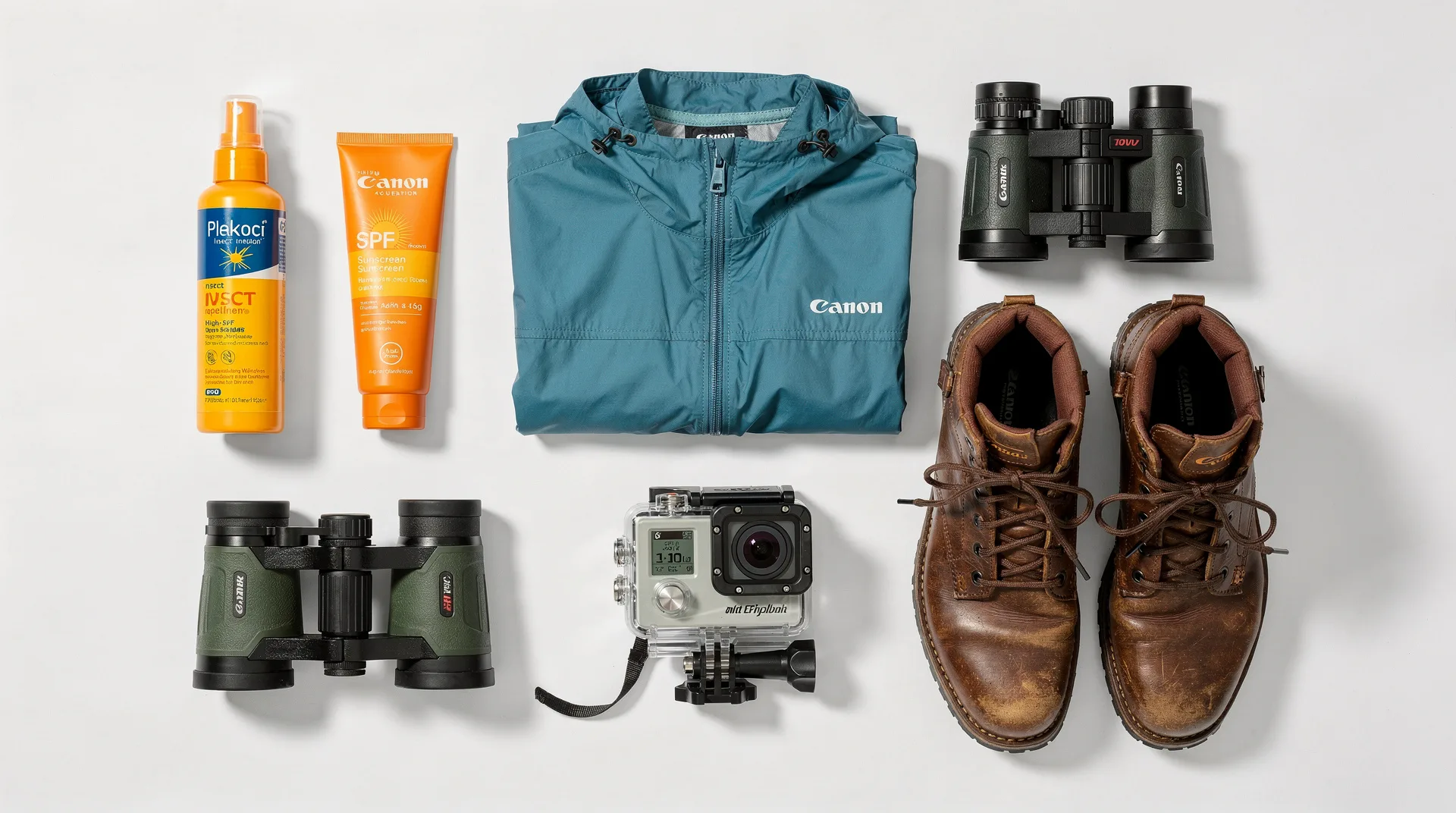
Packing list for Costa Rica: what to actually bring
What to pack for Costa Rica?
Quick-dry clothing, headlamp (Petzl Tikka), insect repellent (Sawyer Picaridin), reef-safe sunscreen (Stream2Sea), a light rain jacket, and a dry bag. Leave cotton at home.
What actually matters when packing for Costa Rica
Costa Rica is a compact country with extreme climate variation. In a single week you might go from a 32°C humid Pacific beach to a 12°C misty cloud forest in Monteverde, with a volcano crater and a river canyon in between. Most people overpack clothing and underpack the small items that actually make a difference on the ground.
This guide focuses on what experienced travellers to Costa Rica know to bring — and what they inevitably regret leaving behind. It is organised by category, with specific product recommendations where there is a genuinely better option.
| Non-negotiables | Rain jacket, headlamp, insect repellent, dry bag |
| Fabric rule | Quick-dry synthetic or merino, never cotton |
| Budget for gear | Around $100–180 for the core items if buying new |
| Cold-weather need | Only if visiting Monteverde, Chirripó, or San Gerardo de Dota |
| Buy locally? | Limited outside San José — bring specialised gear with you |
The fundamental rule: leave cotton at home
Cotton is the wrong fabric for Costa Rica. It absorbs moisture (sweat, rain, river splash) and takes hours to dry, leaving you uncomfortable and cold at higher altitudes or in air-conditioned buses. Quick-dry synthetic or merino wool fabrics are the correct choice for every item that touches your skin.
Brands worth knowing:
- Smartwool for merino base layers and socks — odour-resistant, comfortable over multiple days of hiking
- Patagonia Capilene for lightweight synthetic tops — their Cool Daily shirt is a staple for tropical trekking
- ExOfficio underwear — their quick-dry travel underwear is almost universally recommended by long-term travellers
- Columbia PFG — lighter budget option for shirts that are still sun-protective and quick-dry
One merino t-shirt washed in a sink dries by morning even in humid conditions. Three merino shirts means you never feel like you need more clothes.
Clothing: the actual list
Upper body
- 3-4 quick-dry t-shirts or lightweight button-down shirts
- 1 long-sleeve UPF-50 sun shirt (doubles as rash guard at the beach)
- 1 light fleece or midlayer jacket (for Monteverde, Chirripó, or San Gerardo de Dota — it gets genuinely cold at elevation)
- 1 packable rain jacket (see below)
Lower body
- 2 pairs of quick-dry hiking trousers or zip-off convertibles
- 1-2 pairs of board shorts or swimming trunks
- 2-3 pairs of quick-dry underwear
- 1 pair of leggings (good for bug protection on evening trails, also warm at altitude)
Rain jacket — the non-negotiable item
Even during dry season (December to April on the Pacific side), afternoon rain is possible and certain in the cloud forest. During green season (May to November), you need a rain jacket every day.
The jacket does not need to be heavy. Costa Rican rain is warm — you are not trying to stay warm, just dry enough to remain comfortable. An ultralight packable jacket (Patagonia Torrentshell, Marmot Precip, or budget option Columbia Watertight) that stuffs into its own pocket is sufficient. Under 400g, not a serious hiking waterproof.
Footwear — the most important clothing decision
This is where most visitors make mistakes:
Hiking shoes or trail runners: For most people doing a mix of walks, national parks, and some light hiking, a pair of waterproof trail runners (Salomon Speedcross, Brooks Cascadia, Hoka Speedgoat) is the most versatile choice. They handle muddy trails, protect against snake strikes better than sandals, and are light enough for daily wear.
Waterproof hiking boots: Necessary if you are doing Chirripó, multi-day trekking in Corcovado, or spending extended time at altitude in the Talamanca range. Overkill for a standard Manuel Antonio and La Fortuna itinerary.
Sandals/flip flops: Bring one pair for beach days, showers, and hostel common areas. Tevas or Chacos for anything involving water activities. Standard flip-flops are not adequate for even light trail walking in Costa Rica — the ground is uneven, slippery, and often muddy.
Do not bring: New, untested boots that need breaking in. Blisters on day two of a Corcovado hike are not something to experience.
The gear items that make the biggest difference
Headlamp (essential)
Power cuts are common in rural areas. Eco-lodges in jungle settings turn off exterior lighting at night. Arriving late at your accommodation in darkness is disorienting without a headlamp. Night tours — which are among the best wildlife experiences in Costa Rica — require one.
The Petzl Tikka is the standard recommendation: lightweight (91g), 300 lumens, runs on AAA batteries or USB rechargeable version available. Budget around $30-40. A headlamp is more practical than a flashlight because it keeps both hands free for grabbing tree branches, camera, or your partner.
Dry bag (essential for beach and water activities)
A dry bag protects your electronics, passport, and cash during:
- River crossings (common on the Osa Peninsula and some jungle hikes)
- Boat trips (Tortuguero canals, whale-watching excursions, Caño Island snorkel)
- Beach days where you want to bring your phone for photos
- Unexpected rain during a tour
The Sea to Summit Lightweight Dry Sack (10-20 litre) or the Earth Pak dry bag (with phone window) are good options. Even a dry bag that costs $15 will protect a $1,000 camera. Bring one.
Insect repellent — get the right type
Standard DEET products work, but Picaridin is increasingly recommended by tropical medicine professionals. It is equally effective against mosquitoes (including those that carry dengue and Zika), less harsh on plastic gear and sunscreen, and does not have DEET’s characteristic chemical smell.
Sawyer Premium Insect Repellent with 20% Picaridin is the top choice used by field biologists in Central America. Available in lotion or spray. Apply before any forest activity, especially at dawn and dusk.
Where to use it: any forest trail, Tortuguero and Caribbean lowlands (dengue is present), jungle lodges, wetland areas like Caño Negro, and anywhere near standing water.
Where you don’t need it: beach during midday, urban San José, swimming pools.
Bring your own — Picaridin products are available in Costa Rica but expensive in pharmacies and not always stocked in smaller towns.
Reef-safe sunscreen
Conventional sunscreens containing oxybenzone and octinoxate damage coral reef ecosystems. Costa Rica has some coral reef you might actually want to snorkel — Cahuita National Park reef, Caño Island — and several marine reserves explicitly prohibit non-reef-safe sunscreen.
Stream2Sea and Badger Mineral Sunscreen are the most recommended reef-safe options that actually work in tropical conditions. Sun Bum also offers reef-safe formulas. SPF 50 minimum.
UPF clothing — long-sleeve sun shirts — is more effective than sunscreen for extended water activities and reduces how much product you need.
If snorkelling is on your list, the reef at Cahuita is the place where this rule matters most. A guided option such as a snorkel trip over the Cahuita reef — from $60 is a good moment to use your sun shirt and a dry bag, and our Cahuita reef snorkel guide and best snorkel beaches guide explain what the water is like before you go.
Universal power adapter and portable charger
Costa Rica uses standard US-type plugs (Type A and B, 120V 60Hz). If you are coming from Europe or the UK, you need a universal adapter. From North America and most of Central America, no adapter needed.
A portable power bank (minimum 20,000 mAh) is useful for long travel days, national park visits where you cannot charge, and any time you are deep in a tour without access to a socket.
First aid kit: what to include
Most lodges and tour operators carry basic first aid equipment. Your personal kit should cover:
- Blister treatment (Compeed patches, athletic tape)
- Ibuprofen or paracetamol
- Oral rehydration salts (for heat exhaustion or digestive issues)
- Antidiarrheal medication (Imodium)
- Antihistamine for insect bites and mild allergic reactions
- Antiseptic wipes and a few adhesive bandages
- Water purification tablets (for very remote areas without potable water)
Water from the tap is safe to drink in most of urban Costa Rica. In rural and remote areas, stick to bottled or filtered water.
What not to bring
- Multiple pairs of jeans: Heavy, slow to dry, hot in the lowlands. One pair maximum if you must.
- Expensive jewellery: Theft risk, impractical for outdoor activities.
- More than 7 items of clothing: You can wash and dry clothes in 24 hours. Packing for every possible outfit creates a bag too heavy to carry comfortably.
- A bulky DSLR if you’re not a photographer: A modern smartphone camera produces excellent wildlife and landscape photos. The DSLR is a theft target in your car and adds significant bag weight.
- Toilet paper in large quantities: Available everywhere, including in most national park restrooms.
Packing for specific Costa Rica experiences
For the Osa Peninsula and Corcovado
Read the Corcovado National Park guide alongside this list, and see Drake Bay if your lodge is on that side of the peninsula. Add: rubber boots (available to rent at Drake Bay and Puerto Jiménez lodges), extra insect repellent, waterproof stuff sacks for all gear, a small medical kit with wound closure strips (cuts from trail vegetation are common).
For Tortuguero
The Tortuguero turtle nesting guide explains the rules on the beach at night, which is why the light you carry matters. Add: red-light mode headlamp or red cellophane to cover your headlamp (required for turtle nesting beach visits — white light disturbs nesting females).
For Chirripó
The hiking Cerro Chirripó guide covers the climb itself; the cold at the top is the reason for this kit. Add: full sleeping bag (Crestones Base Lodge provides blankets but it gets near-freezing), warm hat and gloves, trekking poles, serious boots with ankle support.
For beach-focused trips
Minimise: hiking boots, fleece, rain jacket (dry season only). Maximise: rash guards, reef-safe sunscreen, dry bag, board shorts.
Useful items that seem unusual but earn their place
Ziplock bags — for keeping documents dry, separating wet swimwear, and protecting electronics. Bring more than you think you need.
Carabiner clip — for attaching your dry bag to a boat railing, clipping your water bottle to your pack, or hanging gear in your tent or eco-lodge.
Swimwear that dries fast — compression-liner boardshorts or athletic swimwear dry in 2-3 hours versus 8+ hours for thick board shorts with lining.
A bandana or Buff — for sun protection on open boats, for cooling with river water, and as a dust mask on gravel roads.
Booking activities to suit your gear
The best Costa Rica experiences are active ones. A guided tour of Arenal volcano, a national park hike, or a whale-watching expedition are all gear-relevant — knowing what to wear and what to protect makes these experiences significantly better.
La Fortuna: waterfall, Arenal Volcano and hot springs tour — from $95For the Arenal side of a trip, the La Fortuna destination page and the Arenal Volcano National Park guide help you decide what goes in the day bag. A swimsuit, a quick-dry towel and a dry bag are the useful extras for any hot springs visit, and the hot springs day pass guide shows how those days usually work.
Frequently asked questions about packing for Costa Rica
Do I need a 4-season sleeping bag for Costa Rica?
Only if you are hiking Chirripó or staying at very high altitude. For eco-lodges in the lowlands, Monteverde, and most standard destinations, your accommodation provides bedding. A light sleeping bag liner is useful for budget hostel travel.
Can I buy gear in Costa Rica if I forget something?
San José has a Walmart equivalent (PriceSmart), Decathlon (in major cities), and outdoor shops. Availability of specialised hiking gear outside San José is limited — do not rely on finding Petzl headlamps or Sawyer insect repellent in a small town pharmacy.
How should I pack to avoid car break-ins?
Use a bag that does not look like a camera bag. Keep your main bag in the hotel safe when going to the beach. Use a dry bag at the beach so your car bag (containing passport and cash) stays at the hotel.
Is it worth bringing a high-quality camera to Costa Rica?
Absolutely. The wildlife photography opportunities — sloths, toucans, humpback whales, monkeys, poison dart frogs — are extraordinary. A mid-range mirrorless camera with a 150-600mm zoom lens is what most wildlife photographers use. If bringing expensive gear, include it on your travel insurance and never leave it in a vehicle.
What medicine should I pack for Costa Rica?
Routine medication, antidiarrheal, antihistamine, and pain relief as noted above. Prescription antimalarials are not recommended for standard Costa Rica tourist routes — malaria risk is very low in all tourist areas. Dengue has no pharmaceutical prevention; insect repellent is your protection.
Can I rent gear in Costa Rica?
Some items: hiking boots can be rented at Chirripó trailhead towns. Snorkelling gear is provided by most dive and snorkel operators. Surfboards are rented everywhere on both coasts. General camping and trekking gear rental is less common — it is more reliable to bring your own.
Packing for the whole trip versus checking a bag
Most experienced Costa Rica travellers carry-on only, even for two-week trips — the climate variety is handled by layering and quick-dry rewashing rather than volume. A 40-45 litre backpack or a mid-size soft duffel is more practical than a hard-shell suitcase, since many eco-lodges and boat transfers involve carrying your own bag over uneven ground, docks, or unpaved paths where wheels are useless.
If you’re travelling with a family or bringing photography gear that pushes you into checked luggage, budget extra time at San José’s airport (SJO) for arrivals, and see the family travel tips guide for what to add for young children specifically. Connectivity gear — an eSIM or local SIM — is also worth sorting before departure; the eSIM and internet guide covers the options.
Related guides
Packing decisions are shaped by when you travel and where you go. See the microclimates explained guide to understand temperature differences between Pacific, Caribbean, cloud forest, and highland zones. The best time to visit Costa Rica guide affects whether you need a heavy rain jacket or just a light packable one. For solo and family-specific considerations, the safety guide and family travel tips fill in the rest.