Palo Verde National Park: Costa Rica's best wetland birding in the dry season
Best time for Palo Verde wetlands?
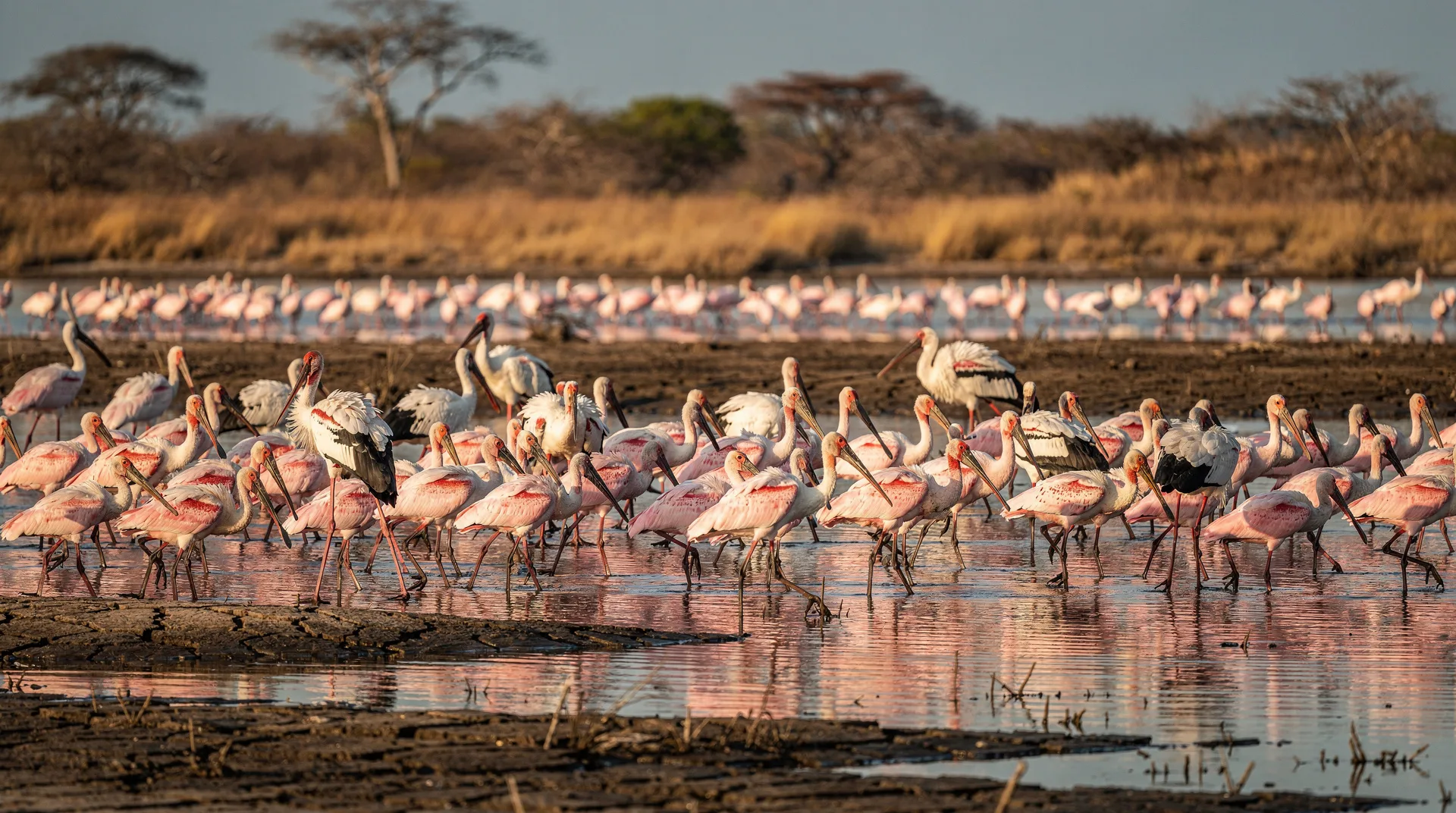
December to March, firmly. As the dry season progresses, the wetlands shrink and waterbirds concentrate onto fewer and fewer water bodies, dramatically increasing the density and variety of species visible from a single boat position. Migratory shorebirds from North America are also present in peak numbers. By April–May, rain returns and birds disperse across a much larger area.
A seasonal wetland that becomes a birding spectacle
Palo Verde National Park protects 19,800 hectares of wetlands, limestone outcrops, and tropical dry forest in the lower Tempisque River basin of Guanacaste Province. The park is not famous with casual tourists — there are no hot springs, no volcanoes, no surf breaks, no luxury eco-lodges adjacent to the entrance. What it has is extraordinary: one of the highest concentrations of waterbirds in the western hemisphere during the dry season, when the park’s seasonal wetlands contract and bird populations compress into a shrinking aquatic habitat.
The Río Tempisque and its associated lagoons, marshes, and seasonally flooded forest provide critical breeding and wintering habitat for hundreds of species. During peak dry season, a two-hour boat tour on the Tempisque can produce sightings of herons, egrets, ibises, spoonbills, jacanas, limpkins, wood storks, anhingas, cormorants, kingfishers, and an extraordinary array of shorebirds in the shallows — all in plain sight, often at close range from the boat.
The OTS (Organisation for Tropical Studies) operates the Palo Verde Research Station within the park — one of the most important tropical ecology research facilities in Latin America. This institutional presence has produced some of the most detailed long-term data on tropical dry forest and wetland ecology anywhere in the Americas.
| Where | Tempisque basin, Guanacaste, near Bagaces |
| Entry fee | Around $15 per person (foreign nationals) |
| Best time | December–March, peaking January–March |
| Getting there | ~1–1.5hrs from Liberia, 3.5–4hrs from San José |
| Hours | 8am–5pm daily |
Why the dry season transforms the birding
The mechanism is simple: as the dry season progresses, the wetland water level drops. Birds that would normally spread across a huge flooded area concentrate onto the remaining water bodies. What was a 500-hectare flooded marsh in November becomes a 50-hectare pool in March — with the same number of birds squeezed into a tenth of the space.
The result is breathtaking. A single position on the Río Tempisque in February or March might reveal:
- Hundreds of wood storks nesting in adjacent trees
- Roseate spoonbills in large flocks (their pink coloration is unmistakable)
- Bare-throated tiger herons fishing from every exposed bank
- White ibises and glossy ibises in mixed flocks of thousands
- Jabiru storks — the largest flying bird in the Americas — wading in the shallows
- Black-bellied whistling ducks in rafts on the open water
- Northern jacanas picking their way across floating vegetation
- Multiple kingfisher species hunting from exposed branches
Bird counts at Palo Verde during peak dry season regularly exceed 300 species in a single day — some of the highest single-day totals recorded anywhere in Costa Rica.
The Río Tempisque boat tour
The standard Palo Verde experience is a combination of a jungle boat tour on the Río Tempisque and surrounding lagoons, typically paired with a cultural stop in the pottery village of Guatil.
The boat tour typically runs 2 to 2.5 hours, departing from Palo Verde ranger station or from Las Juntas/Cañas. Guides navigate through the wetland channels, stopping at productive bird-viewing positions. Large crocodiles are a regular feature — American crocs can reach 4m and are frequently visible on the banks or floating in the channels.
Beyond birds and crocodiles, the Tempisque boat tour often produces:
- Howler monkey troops in the riparian forest
- White-faced capuchin monkeys foraging along the waterline
- Ctenosaur (black spiny-tailed iguana) basking on exposed limestone
- White-nosed coatis washing food in the river shallows
- The spectacular Jesus Christ lizard (basilisk) running across water surfaces Palo Verde & Guatil: jungle boat tour, pottery & lunch — from $130
Guatil: the pottery village
The village of Guatil, located about 20km from the park on the road through Santa Cruz, is one of the last places in Costa Rica where the traditional Chorotega pottery technique is practiced by indigenous descendants. The Chorotega were the dominant pre-Columbian culture of Guanacaste — their pottery, characterised by geometric designs in black, white, and orange-red, is one of Costa Rica’s most significant indigenous art traditions.
Women in Guatil still use traditional coiling techniques (no pottery wheel), natural clay dug from local deposits, and wood-fired kilns to produce pieces that are genuine cultural artifacts rather than mass-produced tourist souvenirs. A visit to Guatil’s cooperative workshops gives context to the indigenous heritage of Guanacaste that few travellers access. Pieces are available for purchase directly from the artisans.
The Palo Verde tour package from most Guanacaste operators combines the Tempisque boat tour with a Guatil pottery workshop visit and lunch — a full-day experience that covers ecology, culture, and cuisine in one circuit.
Wildlife beyond waterbirds
While the bird spectacle dominates Palo Verde’s reputation, the park also supports:
Mammals: White-tailed deer are extraordinarily common — the dry forest edges adjacent to the wetlands support large populations that are easily visible from the boat and from the park roads. Baird’s tapirs inhabit the denser forest sections and have been documented at the water’s edge at dawn. Jaguars are present but rarely seen by casual visitors.
Reptiles: The American crocodile aggregation on the Tempisque is one of the best in Costa Rica. Spectacled caimans also inhabit the wetlands alongside their larger relatives. Iguanas, both green and black spiny-tailed, are abundant throughout the dry forest sections.
Dry forest specialties: The limestone outcrops within the park support a unique microhabitat with plant species adapted to the rocky, well-drained terrain — creating visual drama alongside the wetland contrast. Cave systems within the limestone have been documented but are not open to general visitors.
Entry fees and logistics
Entry fee: $15 per person (foreign nationals).
Park access: The park is administered through the Area de Conservación Tempisque. The main entrance is near the Palo Verde ranger station, accessible from Bagaces (on the Panamerican Highway) via a gravel road that can be rough in rainy season.
Opening hours: 8am to 5pm daily.
OTS Research Station: The research station is open to day visitors but focuses on scientific programming. Some operators arrange visits to include a station briefing.
Getting to Palo Verde
From Liberia: 65km south on Highway 1 to Bagaces, then east on the road toward the park. Total drive time about 1 to 1.5 hours.
From San José: 3.5 to 4 hours via Highway 1 to Bagaces.
From Tamarindo: 2 hours via Santa Cruz and Nicoya.
Organised tours: Most visitors access Palo Verde through tour operators based in Tamarindo, Liberia, or the Nicoya Peninsula, who handle transport, entrance, and the boat tour logistics. Independent visits are possible for drivers comfortable with gravel roads.
Making the most of the boat and the trail
Birds at close range reward patience more than speed. Sit still, let your guide choose where to hold the boat, and resist the urge to keep moving to the next flock. If you carry a long lens, our wildlife photography tips cover the basics of working from a moving boat, and the wildlife watching ethics guide explains why keeping a respectful distance from nesting colonies matters. Dry-season light is harsh by midday, so early departures usually give softer light and more active birds.
The monkeys you spot along the riverbank are covered in more detail in our monkey species guide, and the park’s broader context sits within the Costa Rica wildlife overview. If the nocturnal side of the dry forest appeals, read the nocturnal wildlife guide before deciding whether to arrange an evening outing with a licensed guide.
Planning around the dry season and the road
The same dry weather that concentrates the birds also makes the access road easier, which is one more reason the dry season pros and cons tilt in Palo Verde’s favour. For choosing the wider timing of your trip, the best time to visit Costa Rica guide puts this park in a national context. If you plan to self-drive, read driving in Costa Rica and the road conditions by region overview, and weigh up whether you need a rental car at all. A hat, sun protection, and binoculars matter more here than almost anywhere else; the packing list covers the rest.
A different kind of boat day from Tamarindo
If you are based on the coast and the Tempisque trip feels like too long a day, a shorter water-based outing can still give you herons, egrets, and other waterbirds in a mangrove setting. A guided estuary boat trip near Tamarindo — from $45 is a lighter alternative, though it does not match the concentration of wildlife that Palo Verde offers at the height of the dry season. The Tamarindo destination page lists other ways to fill your time on that stretch of coast, and Carara National Park is another birding option if you later head down the Pacific side.
Combining Palo Verde with other Guanacaste parks
A logical Guanacaste northern circuit combines:
Day 1: Rincón de la Vieja (Las Pailas volcanic features, wildlife)
Day 2: Santa Rosa National Park (La Casona history, dry forest birding)
Day 3: Palo Verde (Tempisque boat tour, waterbird spectacle, Guatil pottery)
This three-day circuit from a Liberia base covers the volcanic, historical, and ecological highlights of northern Guanacaste with minimal driving distances.
Best time to visit by month
| Month | Conditions |
|---|---|
| December | Good — wetlands beginning to dry, migrants arriving |
| January | Excellent — peak bird density building |
| February | Peak season — highest bird concentrations |
| March | Peak season — dry, concentrated birds |
| April | Good but declining — early rains begin |
| May–October | Wetlands flood — birds disperse, lower density viewing |
| November | Transitional — first dry period, migrants beginning to arrive |
Frequently asked questions about Palo Verde National Park
Is Palo Verde good for non-birders?
Honestly, Palo Verde’s primary appeal is ornithological. The crocodile sightings, mammal encounters (deer, monkeys, coatis), and cultural visit to Guatil give non-birders enough content for a satisfying half-day. But if birds are of no interest, you will likely prefer Rincón de la Vieja or Santa Rosa for the Guanacaste day-trip slot.
Can I see jabiru storks at Palo Verde?
Yes, though they are not guaranteed. The jabiru (Jabiru mycteria) is the largest flying bird in the Western Hemisphere — standing 1.5m tall with a wingspan exceeding 2.5m. Small numbers inhabit the lower Tempisque basin. January and February are the most reliable months for jabiru sightings at Palo Verde; they disperse during the wet season.
How many species of birds have been recorded in the park?
Over 300 species have been documented in Palo Verde, including approximately 40 species of waterbirds during peak dry season. The total species list for the broader Tempisque basin exceeds 400.
Is there accommodation inside the park?
The OTS Research Station has simple accommodation available to researchers and educational groups by prior arrangement. There is no commercial hotel inside the park. The nearest accommodation options are in Bagaces, Liberia, or Nicoya town.
What is the difference between Palo Verde and Caño Negro?
Both are important wetland birding sites. Caño Negro is further north (near the Nicaraguan border) and focuses on the Caño Negro Lagoon and Río Frío river system. Palo Verde is in the Tempisque basin, closer to Liberia and the main Guanacaste tourism circuit. Both are excellent; Caño Negro is more remote and better for certain species (Nicaraguan cracid, snail kite). Serious birders visiting Guanacaste should try to include both.
Where to fit Palo Verde in your itinerary
Palo Verde belongs in the northern Guanacaste section of a circuit — typically an add-on to Liberia as a base or a day from a beach resort. The 5-day Guanacaste resort itinerary has room for Palo Verde as a birding day alongside a Rincón de la Vieja volcano day. For a comprehensive birding circuit of Costa Rica, see the bird watching itineraries guide which maps the best sequence for covering all major habitats. Compare northern Guanacaste parks in our bird watching by region overview.
Palo Verde versus the other Guanacaste parks
Travellers with limited time in Guanacaste often have to choose between Palo Verde, Rincón de la Vieja, and Santa Rosa for a single day-trip slot. The honest distinction: Rincón de la Vieja is the volcanic-landscape choice (mud pots, fumaroles, hot rivers), Santa Rosa is the history-and-dry-forest choice (La Casona, extensive hiking), and Palo Verde is unambiguously the wildlife-and-birding choice.
If you can only fit one and birds genuinely interest you, Palo Verde in the January–March window outperforms the other two for sheer density of sightings. Serious birders with more time should also consider Caño Negro further north, which produces species Palo Verde doesn’t, particularly snail kite and Nicaraguan grackle.