Bird watching itineraries in Costa Rica: Carara to Monteverde
Best birding itinerary?
Carara → Sarapiquí → San Gerardo de Dota → Monteverde — covers 600+ species.
Why Costa Rica is the world’s premier birding destination
| Circuit | Carara → Sarapiquí → San Gerardo de Dota → Monteverde |
| Length | 7–12 days for the core circuit |
| Species potential | 400+ with a specialist guide over 10 days |
| Guide cost | Around $80–150/day, private |
| Add-on | Osa Peninsula / Drake Bay (+2–3 days) |
| Peak season | April–June for quetzals and breeding plumage |
Costa Rica covers 0.03% of the earth’s surface. It harbours more than 950 recorded bird species — over half the bird species of all of Central America, and more than the United States and Canada combined. The reasons are well understood: the country lies at the biological crossroads between North and South America, and its extraordinary range of altitude zones — sea level to 3,800 metres within 80 kilometres — creates an equally extraordinary range of habitats, each with its own suite of specialised species.
Birders talk about “life lists” — the record of every species they have ever seen. Costa Rica has a disproportionate impact on those lists. A week in the right habitats can produce 350–500 species for an experienced birder with a good guide. For a first-time birder, the density and visibility of birds here — often habituated to limited human traffic, foraging in open areas — is revelatory.
This guide outlines the strongest birding circuit for a 7-to-12-day trip, and details the key sites for the most-wanted species.
The classic circuit: Carara → Sarapiquí → San Gerardo de Dota → Monteverde
This route is the itinerary most experienced birding guides in Costa Rica recommend for visitors who want maximum species diversity in minimum time. It covers four distinct habitat zones and produces a list that typically exceeds 400 species on a 10-day trip with a specialist guide.
Leg 1: Carara National Park (1–2 days)
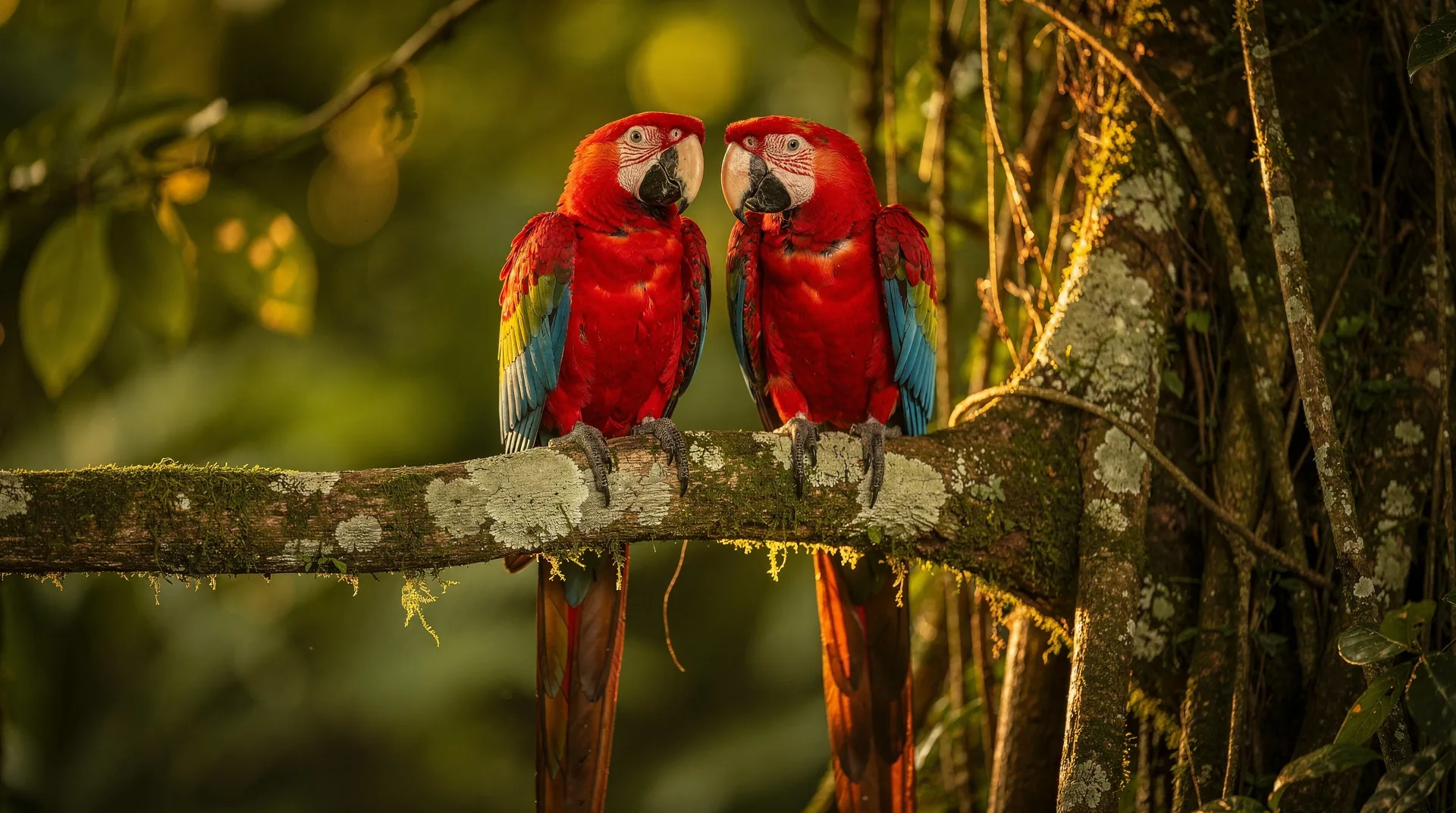
Why Carara: Carara sits at the transition zone between the dry Guanacaste forests and the humid Pacific forests — a phenomenon known as a “transitional zone,” and one of the most species-rich habitat boundaries in the country. It is also the most reliable site for scarlet macaws in Costa Rica, particularly at dawn and dusk when flocks commute between roosting and feeding areas along the Río Tárcoles.
Target species: Scarlet macaw (almost guaranteed), bare-throated tiger heron (Tárcoles riverbank), roseate spoonbill (dry season), lineated woodpecker, black-hooded antshrike, riverside wren.
Tárcoles River: The bridge over the Tárcoles on the coastal highway is one of the world’s most reliable spots for American crocodile — but birders come for the herons, kingfishers, and migrant shorebirds on the riverbanks. Arrival at first light is essential.
Carara is approximately 90 minutes from San José — the easiest starting point for a circuit beginning in the capital. The national park requires advance online reservation through SINAC.
Leg 2: Sarapiquí (2–3 days)
Why Sarapiquí: The Sarapiquí valley, on the Caribbean slope north of San José, is rainforest at its densest and most productive. The lowland Caribbean forest at sites like La Selva Biological Station and Selva Verde holds dozens of species that are difficult or impossible to find on the Pacific slope.
Target species: Sungrebe (canals and slow rivers), white-collared manakin, keel-billed toucan (reliable and spectacular), great green macaw (a critically endangered species — Sarapiquí is one of the last strongholds), snowy cotinga, and literally dozens of tanager and antbird species.
La Selva Biological Station: Run by the Organization for Tropical Studies (OTS), La Selva is a research station with 57 km of maintained trails open to day visitors and overnight guests. It is one of the most studied plots of tropical forest on earth. A full-day or multi-day visit here, ideally with a station guide, can produce 150–200 species.
Caño Negro Wildlife Refuge: Two hours northwest of Sarapiquí, Caño Negro is the country’s premier wetland birding site — a seasonally flooded freshwater lake system that hosts enormous concentrations of herons, egrets, ibis, spoonbills, anhingas, and migrant ducks. The January-to-March dry season produces the best concentrations.
Caño Negro: rivers and lagoons bird, flora and fauna tour — from $95Leg 3: San Gerardo de Dota (2–3 days)
Why San Gerardo de Dota: The Savegre Valley and the village of San Gerardo de Dota sit at 2,200 metres in the Talamanca highlands, south of San José along the Cerro de la Muerte ridge. This is the cloud forest and sub-alpine zone — a completely different bird community from the lowland sites.
Target species: Resplendent quetzal (the most-wanted bird in Costa Rica — males display April through June, but the species is present year-round), volcano junco, black-and-yellow silky-flycatcher, long-tailed silky-flycatcher, flame-throated warbler, large-footed finch, and the endemic Zeledonia (wren-thrush).
Quetzal viewing: April to June is peak season for male quetzals in full breeding plumage, with their extraordinary metre-long tail feathers. However, quetzals are visible year-round in San Gerardo de Dota — they move to lower elevations to follow fruiting trees, particularly wild avocados. The Trogon Lodge garden is one of the most reliable quetzal viewing spots on the mountain, and the birding guides based here are exceptional.
San Gerardo de Dota requires a winding 30-km descent off the Panamericana highway. The road is paved but narrow. Temperature at 2,200m can drop to 5°C at night — pack warm layers.
See the quetzal watching guide for the full breakdown of where and when to find this species.
Leg 4: Monteverde (2–3 days)
Why Monteverde: The Monteverde Cloud Forest Biological Preserve and the adjacent Santa Elena Reserve together protect one of the most accessible cloud forest habitats in the world. The birding here is excellent, though different from both the lowland Caribbean sites and the high Talamanca. Monteverde is particularly strong for hummingbirds — the Monteverde hummingbird gallery reliably shows 10+ species at feeders — and for cloud forest tanagers.
Target species: Three-wattled bellbird (March–July, when males call from emergent trees), bare-necked umbrellabird, coppery-headed emerald (Costa Rica endemic), violet sabrewing hummingbird (common at feeders), collared redstart, prong-billed barbet.
The Santa Elena Reserve, slightly higher in elevation than the main Monteverde reserve, receives fewer visitors and often produces quieter, more productive mornings. See the Monteverde vs Santa Elena guide for the trade-offs.
Monteverde and Santa Elena: cloud forest bird-watching tour — from $65Osa Peninsula and Drake Bay: the specialist extension
For those willing to add 2–3 days and a change of pace, the Osa Peninsula offers species found nowhere else in the country.
Key additions: Black-cheeked ant-tanager (endemic to Osa), Baird’s trogon, yellow-billed cotinga (rare), fiery-billed aracari, scarlet-thighed dacnis, Turquoise cotinga (local and spectacular).
Drake Bay is the operational base for birding at Corcovado’s San Pedrillo and La Leona stations. The Drake Bay bird watching tour run by local specialists is one of the best ways to access the Corcovado bird community without a full expedition.
Drake Bay: bird watching tour — from $95When to go for birding
April to June: breeding season and quetzal peak
This is when male birds are in full plumage and vocalising intensely. Quetzal tail feathers are at their longest. Bellbird calls echo through Monteverde. Mixed-species flocks form and are easier to follow. April is also still dry on the Pacific, making trail conditions good.
December to March: dry season and migrants
Boreal migrants from North America winter in Costa Rica — warblers, tanagers, and shorebirds swell the numbers significantly. Caño Negro is at its most productive as water levels drop and birds concentrate. Dry season means more open vegetation and easier viewing in Guanacaste.
July to October: green season
This period is less popular for international birders due to rain, but can be excellent. Resident species are quieter, but the rain means forest is at its most photogenic, waterfalls are full, and accommodation is cheaper. Tortuguero — accessible in any season — is outstanding for canal birding at this time.
Hiring a birding guide: why it matters
The difference between birding with and without a specialist guide in Costa Rica is the difference between hearing 50 species and seeing 15 versus hearing 400 and seeing 250. Local guides have spent years training their ears to distinguish species by call alone, and 80% of tropical forest birds are detected by sound before sight.
What to look for: A guide who has their own optics and spotting scope, who is a member of the Costa Rica bird guide association, who can produce references from previous clients, and who knows not just where to look but when and why.
Guides typically charge $80–$150 per day for a private tour. A birding guide with specialist training will almost always be at the higher end, and worth it. Your lodge can recommend local guides; alternatively, contact the Birding Club of Costa Rica for vetted names.
What to bring
- Binoculars: 8x42 is the most versatile size for tropical forest birding; 10x42 for open-country and wetland work
- Field guide: “The Birds of Costa Rica” by Garrigues and Dean is the standard reference; download Merlin (Cornell Lab) for app-based identification and sound recognition
- Early mornings: The best birding is 5:30am–9am without exception; plan activities accordingly
- Neutral clothing: Olive, brown, or grey; avoid white and bright colours
- Waterproof binocular harness: if you are birding in any volume of rain, a neck strap alone will destroy your back and neck over a week
Frequently asked questions about birding in Costa Rica
Is it possible to see 400+ species in one week?
With a dedicated specialist guide, starting at La Selva in Sarapiquí and covering multiple habitat zones including Cerro de la Muerte and Carara, an experienced birder can approach 400 species in 7 days. For casual birders without specialist focus, 150–250 is a more realistic week total and still exceptional by any global standard.
Do I need to be an expert birder to enjoy this?
Absolutely not. The density and size of Costa Rican birds make them accessible even to first-time birders. Toucans, macaws, tanagers, and hummingbirds are reliably seen and immediately identifiable without experience. A good guide will calibrate their approach to your level of knowledge.
What is the resplendent quetzal and why is it so significant?
The resplendent quetzal (Pharomachrus mocinno) is arguably the most visually spectacular bird in the Americas. The male has iridescent green plumage, a red breast, and in breeding season, tail feathers that can exceed one metre in length. It was sacred to Mesoamerican civilisations — the Aztec and Maya associated it with Quetzalcoatl and used its feathers in royal regalia. In Costa Rica, San Gerardo de Dota and Monteverde are the most reliable sites.
Are binoculars essential?
Yes. Binoculars are not optional for meaningful birding. Tropical forest birds often sit in the canopy 20–30 metres above the trail. Even species perched in the open are far more rewarding when magnified. Borrowing from a guide is possible but suboptimal — bring your own or rent from a Monteverde gear shop.
Can I combine birding with other activities?
Yes — Costa Rica’s birding destinations are also the country’s most beautiful. Carara pairs with the Tárcoles crocodile tours. Sarapiquí has excellent river rafting. San Gerardo de Dota is paired naturally with Chiripó hiking (for the extremely fit). Monteverde combines with cloud forest night tours and canopy walks. None of these sites requires you to be a single-purpose birder.
What time of year should I absolutely avoid for birding?
There is no truly bad time for birding in Costa Rica — different seasons produce different advantages. The only caveat is that the Pacific coast is very wet May through November, making trails muddy and vegetation dense. But even then, Caribbean slope sites like La Selva and Sarapiquí receive more consistent sunshine on a relative basis.
Related guides
The quetzal watching guide drills into the single most-wanted species in detail — where exactly, what time of day, and which guides. The bird watching by region guide maps the full spectrum of habitat zones and what you can expect in each. For those combining wildlife photography with birding, the wildlife photography tips guide covers the technical gear and ethical approach.
Going deeper on each leg
Each stop on the circuit has its own detailed guide, and reading them before you fix your dates pays off. For the first leg, the Carara National Park guide explains how the park works and why dawn matters so much for the macaw flocks. For the lowlands, the Sarapiquí destination page covers where to base yourself, and the Caño Negro destination page is worth reading if you plan the wetland detour.
At altitude, the San Gerardo de Dota destination page and the San Gerardo de Dota cloud forest guide describe the valley in more detail than a circuit overview can. For the last leg, the Monteverde destination page helps you choose where to stay and how to split your mornings between reserves.
Combining birding with the rest of your trip
Birding mornings end early, which leaves the rest of the day free. The wildlife watching ethics guide is worth a read before you go, because the best birding etiquette is the same as the best wildlife etiquette: keep your distance, keep your voice low, and never use playback to lure a bird out of cover. After dark, the nocturnal wildlife guide shows how to turn a lodge stay into an evening of owls, frogs and other night life.
If you are building a longer trip around the circuit, the 14-day wildlife photography itinerary shows how another route links several of the same habitats. Because the legs are far apart, the driving in Costa Rica guide and the guide to renting a car or not will help you decide how to handle the transfer days. If you are still choosing dates, the best time to visit guide puts the seasonal trade-offs above into the wider context of a whole trip.
Circuit at a glance
| Leg | Days | Base | Headline species |
|---|---|---|---|
| 1. Carara | 1–2 | Tárcoles / Jacó | Scarlet macaw, bare-throated tiger heron |
| 2. Sarapiquí | 2–3 | Puerto Viejo de Sarapiquí | Great green macaw, sungrebe, keel-billed toucan |
| 3. San Gerardo de Dota | 2–3 | Savegre Valley | Resplendent quetzal, silky-flycatchers |
| 4. Monteverde | 2–3 | Santa Elena | Three-wattled bellbird, hummingbirds |
| Optional: Osa/Drake Bay | +2–3 | Drake Bay | Black-cheeked ant-tanager, yellow-billed cotinga |
Driving between legs adds up fast on this circuit and is worth planning for explicitly. Carara to Sarapiquí is roughly 4-5 hours via San José, since there’s no direct route avoiding the capital. Sarapiquí to San Gerardo de Dota is a similarly long day, crossing back past San José and up onto the Cerro de la Muerte ridge — budget a full travel day with no birding rather than trying to fit in a stop. San Gerardo de Dota to Monteverde, by contrast, is a shorter and more scenic transition through the Central Valley. Building in these transfer days explicitly, rather than treating them as “free” extra birding time, is what separates itineraries that work from itineraries that leave everyone exhausted.
Adjusting the circuit for shorter trips
Not every visitor has 10-12 days. For a 5-6 day trip, drop Sarapiquí and focus on Carara → San Gerardo de Dota → Monteverde — this keeps driving distances shorter and still covers three distinct habitat zones (Pacific transition forest, high cloud forest, mid-elevation cloud forest). For a 7-day trip with children or non-birding travel companions, Carara and Monteverde alone, paired with Manuel Antonio for beach time, gives strong birding without the long highland transfers. Serious listers with 14+ days should add the Osa Peninsula extension in full, ideally with an overnight at Sirena station inside Corcovado for species unavailable anywhere else in the country.
a guided nature and wildlife tour from Arenal to Río Celeste — from $15