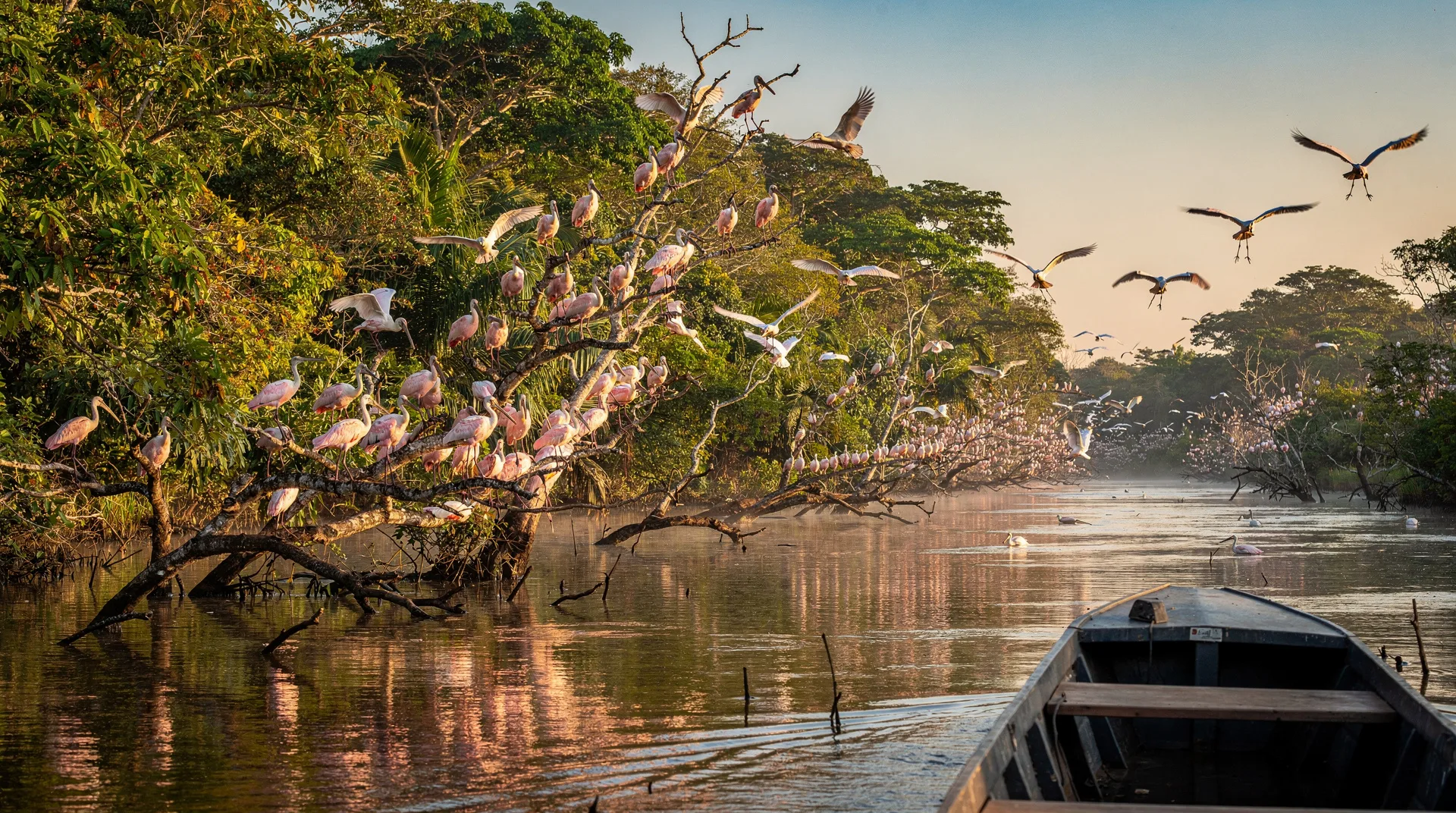
Caño Negro Wildlife Refuge: the forgotten wetland
Caño Negro National Wildlife Refuge — Costa Rica's most underrated birding destination. Spectacled caimans, jabiru storks, roseate spoonbills, and river otters.
Top experiences nearby
La Fortuna: waterfall, Arenal Volcano and hot springs tour
La Fortuna: Arenal Volcano, lunch & hot springs morning tour
From La Fortuna: Arenal Volcano & hot springs afternoon tour
La Fortuna: Arenal Volcano rainforest night tour
From La Fortuna: Mistico Arenal hanging bridges park tour

Costa Rica: Mistico hanging bridges guided tour
Quick facts
- Best time to visit
- December – March (dry season, wildlife concentrated)
- Days needed
- 1-2 days
- Getting there
- 4 hrs from San José via Ciudad Quesada; 2.5 hrs from La Fortuna
- Budget per day
- $80-150 per person including accommodation and boat tour
The wetland that Costa Rica forgot to promote
Caño Negro is the kind of destination that serious wildlife travellers discover by accident and then tell nobody else about. Located 25 kilometres south of the Nicaraguan border in the Northern Zone of Alajuela province, the Caño Negro National Wildlife Refuge protects 9,969 hectares of seasonally flooded wetlands, river channels, oxbow lakes, and gallery forest that constitute one of the most important waterbird habitats in Central America.
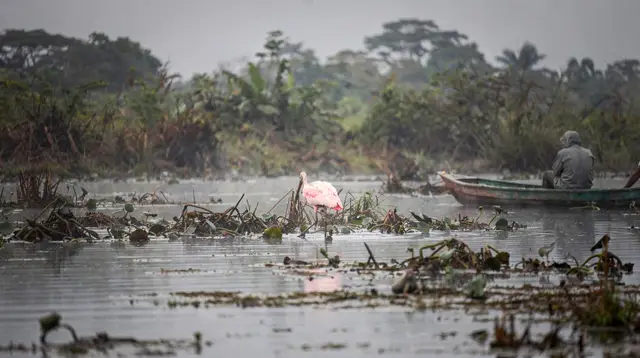
During the dry season (December through March), the Río Frío floods recede and water concentrates in the permanent lagoon system — drawing extraordinary numbers of migratory and resident waterbirds to a relatively small area. Jabiru storks, the largest flying birds in the Americas, nest here in significant numbers (Costa Rica’s largest jabiru nesting colony). Roseate spoonbills wade through the shallows in groups that turn the water pink at a distance. Anhinga, neotropical cormorant, three species of ibis, and virtually all of Costa Rica’s herons and egrets are reliably present.
The refuge also holds the highest concentration of spectacled caimans in Costa Rica — dozens may be visible on a single morning boat tour, sunning on riverbanks or floating motionless with just their heads above the waterline. River otters, known locally as nutrias, are seen more frequently here than almost anywhere else in the country.
| Where | Northern Zone, 25 km from the Nicaraguan border |
| Cost | $80-150/person/day incl. lodge and boat tour |
| Getting there | 4 hrs from San José; 2.5 hrs from La Fortuna |
| Best time | December to March (dry season, wildlife concentrated) |
| Days needed | 1-2 days |
Why Caño Negro is undervisited
The honest answer is logistics. The refuge sits at the end of a 20-kilometre paved road from Los Chiles, itself 4 hours north of San José via Route 35 and Ciudad Quesada. From La Fortuna, the drive is 2.5 hours — manageable for a day trip but long enough to deter casual visitors who have hot springs and volcanoes on their doorstep.
There are no large resort hotels, no ziplines, and no curated tourist experience. The village of Caño Negro has a handful of small family-run lodges and a single restaurant. The boat tours are run by local guides who have worked the river their entire lives and know exactly where to find the caiman concentration, the spoonbill feeding spots, and the Jesus Christ lizard sprinting on water that provides the best photographs of the morning.
This is precisely why serious wildlife watchers prize it.
The boat tour experience
All wildlife viewing at Caño Negro is done by flat-bottomed boat on the Río Frío and its associated channels. Tours depart in the early morning (around 6-7am) and last 3-4 hours, covering 15-20 kilometres of waterway at a quiet drift speed that allows wildlife to remain calm and accessible.
Caño Negro: rivers and lagoons bird, flora and fauna tour — from $95 runs guided river and lagoon tours covering birds, flora, and fauna along the complete Caño Negro waterway system. The guides are bilingual and expert at spotting species that most visitors would never locate independently — keel-billed motmots perched motionless in gallery forest, caiman hatchlings in the reed margins, and the distinctive silhouette of a resting jabiru stork against the morning sky.
Beyond birds and reptiles, the boat tour regularly encounters white-faced capuchin monkeys, howler monkeys (always loud in the early morning), striped basilisks, green iguanas, freshwater turtles, and — particularly from December through March — large concentrations of migrant songbirds from North America using the refuge as a wintering ground. Over 300 bird species have been recorded within refuge boundaries.
Fishing at Caño Negro
Caño Negro has been a fishing destination for Ticos for generations. The Río Frío holds excellent populations of guapote (rainbow bass, a Central American cichlid), mojarra, and Atlantic snook during the tidal cycle. The lagoon system hosts tarpon from June through August, when coastal fish move inland during flooding cycles.
Fishing here requires a SINAC sport-fishing permit (obtainable in Los Chiles, around $15 per day). Several local guides offer half-day fishing trips with equipment provided — rates are around $60-80 per person. Ask at Hotel de Campo or the Caño Negro Natural Lodge for current guide availability.
Accommodation and practical access
Caño Negro village has two primary accommodation options for visitors who want to stay overnight:
Caño Negro Natural Lodge is the most established option — a simple but comfortable lodge with a pool, open-air restaurant serving local food (the casado with freshwater fish is excellent), and in-house boat tour coordination. Rooms run $70-120 per night (2026), including breakfast.
Hotel de Campo Caño Negro offers a similar experience at slightly lower prices, with a strong reputation among repeat-visit birders who appreciate the guides’ detailed knowledge of seasonal bird movements.
For day visitors from La Fortuna, the timing works as follows: depart La Fortuna by 5am to arrive in time for the 6:30am departure of the optimal morning tour, returning to La Fortuna by early afternoon. The road from La Fortuna via Upala is entirely paved and in reasonable condition.
From San José, the standard route is the Pan-American Highway north to Ciudad Quesada (1.5 hours), then Route 35 north to Los Chiles (2 hours), then the Caño Negro road south (30 minutes). Total: approximately 4 hours. The Los Chiles road passes through vast pineapple and papaya plantations on the flat Northern Zone floor — scenically monotonous but fast on smooth asphalt.
What to bring and when to visit
Optimal months: December through March. The dry season drops water levels and concentrates wildlife into the permanent lagoon system. Bird density is highest January through February when the lakes are at their lowest.
Rainy season caveats: May through November, the entire area floods dramatically — the permanent lagoon expands to cover most of the refuge. Boat tours still operate but wildlife is dispersed across a much larger water body, reducing sighting density. The flooding does bring extraordinary atmospheric scenery and dramatically increases the number of herons and wading birds using the expanded habitat.
What to pack: Binoculars are essential (10x42 recommended for scanning open water). A camera with a 300mm or longer lens makes the most of the caiman and bird close approaches. Waterproof bags for camera gear — morning mist can be heavy. Lightweight long-sleeved clothing (mosquitoes are active, particularly at dusk). Reef-safe insect repellent. Hat and polarised sunglasses for glare reduction on water.
Photographing and watching wildlife from the boat
A boat at drift speed is a very different platform from a forest trail. You sit low, the guide holds position near a bank, and the animals mostly ignore you. That rewards patience over gear. If you are new to this kind of shooting, the wildlife photography tips guide covers settings and approach, and the wildlife watching ethics guide explains why a good guide keeps the engine off and the distance respectful around nesting birds. Ask your guide to linger rather than chase; the best frames at Caño Negro usually come from waiting.
For the birds specifically, the bird watching by region guide places the refuge within the wider country, and the bird watching itineraries page shows how birders string wetlands, cloud forest, and coast together. Mammals and reptiles are a bonus: the Costa Rica wildlife overview and the monkey species guide help you put names to what the guide points out, and the nocturnal wildlife guide explains why the quiet hours around dawn feel so alive on the water.
Building Caño Negro into a wider route
Most travellers reach the refuge as one stop in a longer loop. Staying in La Fortuna works well, and the Arenal Volcano National Park guide helps you decide what else deserves a day. If you would rather soak after an early start, a volcano visit with lunch and hot springs — from $120 makes a relaxed contrast to a morning on the river, and the Arenal hot springs overview compares your options.
Longer itineraries place the wetlands alongside other ecosystems. The 7 days Arenal and Manuel Antonio route and the 14 days wildlife photography itinerary both show where a northern wetland day can fit, while the 10 days Arenal, Monteverde, and Manuel Antonio plan suits travellers who want cloud forest as well. Heading toward the Caribbean afterwards, Tortuguero and its national park guide are the natural wildlife follow-up, and the Sarapiquí valley sits in between. For the drive itself, the driving in Costa Rica and road conditions by region guides are worth a read, and the best time to visit Costa Rica page helps you weigh the dry and green seasons against the rest of your trip.
How Caño Negro compares to the rest of the Northern Zone
Most visitors to Alajuela province never make it past La Fortuna’s volcano and hot-spring circuit, and Caño Negro’s relative obscurity is precisely why the wildlife density holds up. Unlike the Místico hanging bridges or the volcano viewpoints — both excellent, both busy — a Caño Negro boat tour rarely shares the water with more than one or two other boats even in peak season. The trade-off is obvious: no infrastructure, no polished visitor center, a long drive on both legs of the trip.
For travelers who have already done La Fortuna’s headline activities and are weighing whether a wildlife-focused day is worth the detour, the honest comparison is this: Caño Negro delivers a more concentrated, more reliable wildlife experience per hour on the water than almost any other single activity in the Northern Zone, but it demands the most driving time relative to payoff. Birders and serious wildlife photographers should treat it as close to mandatory; general travelers on a tight schedule can reasonably skip it in favor of more activities closer to La Fortuna itself.
Frequently asked questions about Caño Negro
Can I visit Caño Negro without booking in advance?
During the low season (May-November), walk-in boat tours are usually available through village operators. December through March, it is advisable to book at least a few days ahead — the best guides fill up with advance reservations, especially on weekends when Tico visitors arrive from San José and La Fortuna.
Is Caño Negro worth the drive from La Fortuna?
For travellers with a serious interest in birds or wildlife photography, yes — it is one of the best decisions you can make in the Arenal area. For travellers focused primarily on Arenal Volcano, hot springs, and adventure sports, it is a significant detour. The 2.5-hour drive from La Fortuna is mostly flat and easy; the question is whether wildlife wetlands excite you more than volcanic activities.
How does Caño Negro compare to Tortuguero for wildlife?
Both are exceptional — different experiences. Tortuguero (Limón province) is a full canal ecosystem accessible only by boat or plane, with sea turtle watching as the headline attraction. Caño Negro is a wetland system you can reach by car, focused primarily on waterbirds and caimans. Tortuguero requires 2-3 days minimum; Caño Negro can be covered thoroughly in a single day. Serious birders should include both.
Are there venomous snakes to worry about?
The Caño Negro area does have fer-de-lance, bushmasters, and coral snakes — as do all tropical lowland areas of Costa Rica. The boat tour eliminates most snake encounter risk; the paths through vegetation in the village and around the lodges require normal trail vigilance. Wear boots (not sandals) if walking on any uncleared vegetation, and step over rather than on logs.
Can I combine Caño Negro with the Arenal hanging bridges?
Yes, though not in the same morning — they’re on opposite sides of a busy travel day. A common pattern is to do the Místico hanging bridges walk one morning while based in La Fortuna, then dedicate a full separate day to Caño Negro given the 2.5-hour drive each way. Trying to combine both in one day means arriving at Caño Negro too late for the best morning wildlife activity.
Where to go next
From Caño Negro, return to La Fortuna for volcano activities or continue north to Los Chiles for the boat crossing to Nicaragua (San Carlos). Heading south, Heredia province and the Sarapiquí river valley offer complementary birding and rafting in a different ecosystem. The guide to birding by region covers the full Costa Rica birding circuit.