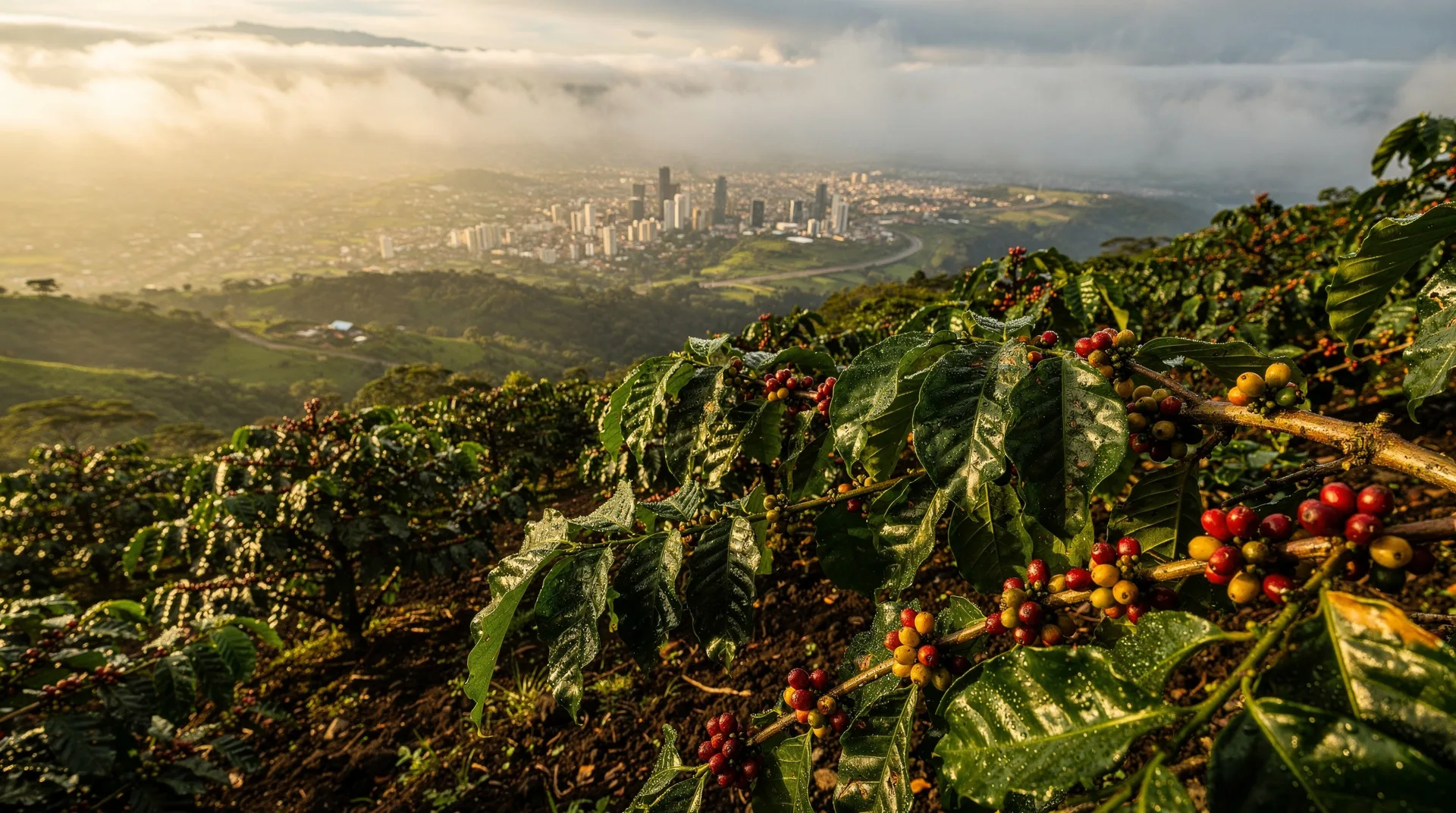
Heredia province travel guide
Heredia province — from the leafy university city in the Central Valley to Braulio Carrillo cloud forest and the wild Sarapiquí rafting corridor.
Top experiences nearby
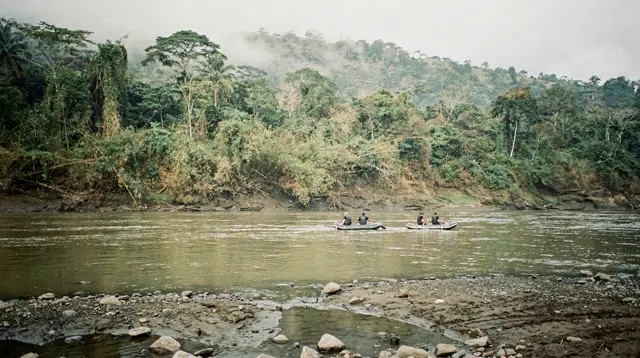
Sarapiqui River Rafting
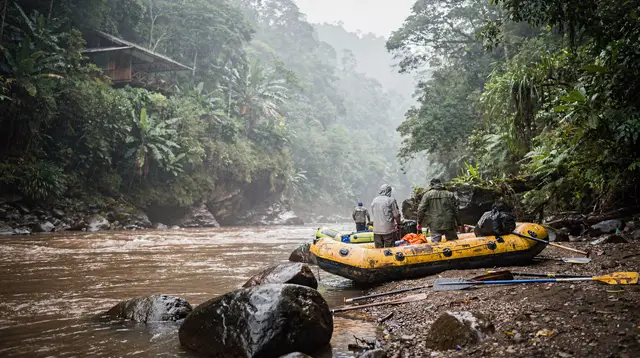
Rafting Class 3-4 "Jungle Run": Río Sarapiquí
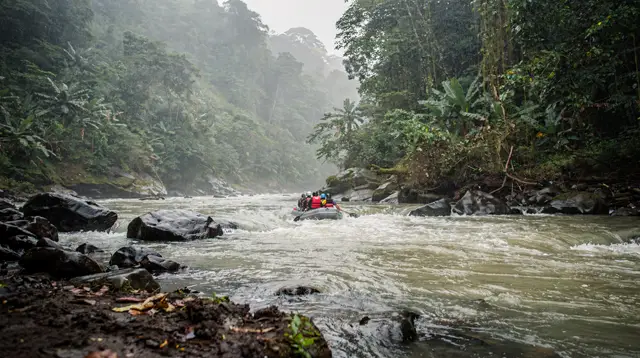
Arenal: rafting Sarapiqui River day tour Class II-III
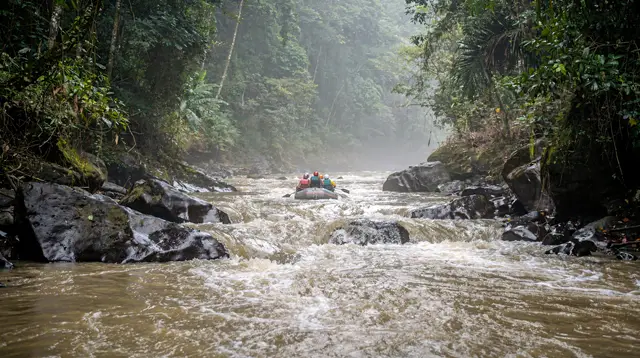
La Fortuna/Arenal: rafting Class III & IV at Sarapiquí River
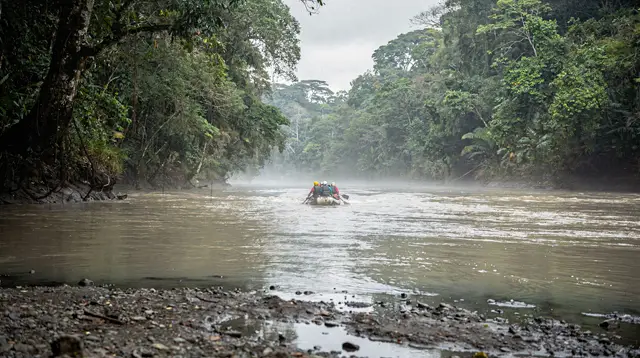
La Fortuna: Sarapiqui rafting to San José
Quick facts
- Cities and regions
- Heredia city, Sarapiquí, San Isidro, Barva, Santo Domingo
- Best time to visit
- December – April (dry); Sarapiquí rivers run well year-round
- Getting there
- Heredia city is 12 km north of San José; Sarapiquí is 80 km via Braulio Carrillo
- Days needed
- Half-day in Heredia city; 1-2 days for Sarapiquí
From the university city to the Caribbean foothills
Heredia province is one of Costa Rica’s smallest provinces — just 2,657 square kilometres — but it punches above its size in variety. The western portion is dominated by Heredia city, a clean, compact university town 12 kilometres north of San José that functions largely as a bedroom community for the capital. The eastern half is a different world entirely: the province drops off the Braulio Carrillo mountains into the hot, steamy Caribbean lowlands, where the Sarapiquí River drains southward through banana plantations, pineapple fields, and patches of primary rainforest before joining the San Juan River on the Nicaraguan border.
This geographical divide makes Heredia province an interesting transit corridor as much as a destination in its own right. For travellers driving from San José toward La Fortuna via the northern route, or heading to Tortuguero via the Puerto Viejo de Sarapiquí junction, Heredia is a constant presence — the Braulio Carrillo National Park, bisected by Route 32 (the Guápiles Highway), is the green tunnel you drive through to reach the Caribbean.
| Where | Central Valley (Heredia city) to Caribbean lowlands (Sarapiquí) |
| Best for | Rafting, birding, coffee day trips, transit to La Fortuna/Tortuguero |
| Getting there | Heredia city 12km north of San José; Sarapiquí 80km via Route 32 |
| Cost | Around $40-60/half-day coffee/culture tour; rafting from around $85-110 |
| Best time | December-April dry; Sarapiquí rivers raftable year-round |
Heredia city: the city of flowers
Heredia city (officially La Ciudad de las Flores — the city of flowers, for its tradition of ornamental gardens) is a pleasant half-day stop rather than a multi-day destination. Its well-preserved central park is anchored by an 1897 colonial church and the Fortín de Heredia — a circular stone tower built in 1876, the only remaining example of military architecture from Costa Rica’s republican era, though its original purpose and the correct story behind its crenellated roof remain contested among historians.
The National University (Universidad Nacional) campus gives the city a youthful energy. The streets around the university are lined with inexpensive sodas — family-run restaurants serving the traditional casado (rice, beans, fried plantain, salad, protein) for under $5. Heredia makes a good base for travellers who want a quieter alternative to San José’s centro for a first or last night.
The highland suburb of Barva, 5 kilometres above the city, has a beautifully preserved colonial church square that is arguably more attractive than the city centre and worth the short drive.
Braulio Carrillo National Park
Braulio Carrillo National Park covers 47,638 hectares of cloud forest, premontane forest, and lowland rainforest on the Atlantic watershed of the Barva and Cacho Negro volcanoes. The park is genuinely wild — it is one of the largest and least-visited national parks in the Central Valley region, and species counts here are among the highest in Costa Rica. More than 500 bird species have been recorded.
The main access for visitors is via Route 32, the Guápiles Highway, which bisects the park. Several trailheads depart from the highway in both the Zurquí and Quebrada González sectors. Trails are moderately maintained; some require crossing streams. A waterfall hike in the Quebrada González sector is the most popular short option (around 3 km return, 1.5 hours).
A canopy zip-line tour operates within the park concession near San José, offering a faster way to experience the forest canopy without a long hike. From the Zurquí entrance, the park begins immediately at the northern edge of the metropolitan area — you go from San José suburban sprawl to primary cloud forest within 15 minutes of driving.
Making the most of a forest morning
Early starts matter more than anything else here. Cloud forest is quietest and most rewarding at first light, and the mist often lifts later in the morning. Bring a rain jacket even in the dry months, wear shoes with real grip for muddy and stream-crossing sections, and carry water and a snack, since the trailheads along the highway have little in the way of services. If you are keen on birds, the bird watching by region guide explains how to read the forest, and the wildlife photography tips help if you want to bring home more than a blur of green. Visitors who are new to dense forest will also find the cloud forest versus rainforest guide a useful primer on why the two habitats feel so different underfoot.
Treat the wildlife with care: keep your distance, never feed animals, and stay on the trail. The wildlife watching ethics guide sets out the habits that keep both visitors and animals safe.
Coffee country around Barva and Santo Domingo
Heredia’s western highlands, above the city toward Barva and Santo Domingo, sit inside Costa Rica’s classic coffee belt — volcanic soil, elevation around 1,100-1,400 metres, and the microclimate that produces some of the country’s most awarded beans. Several family-run beneficios (processing mills) around Barva offer tours covering the full cycle from cherry to cup, usually 90 minutes to 2 hours, with a tasting at the end. It is a lower-key, less touristed alternative to the bigger coffee estates near Alajuela and Poás, and pairs naturally with a Barva church-square visit. See the coffee tours comparison guide for how the Heredia estates stack up against Alajuela’s better-known operations.
Sarapiquí: rainforest, rivers, and wildlife
Sarapiquí is the most compelling reason to venture into Heredia province for most travellers. The Sarapiquí River runs roughly 90 kilometres from its cloud-forest headwaters in Braulio Carrillo down through the Caribbean lowland foothills before joining the San Juan. It offers two distinct rafting experiences:
Class II-III (upper section near Chilamate) is a family-friendly introduction to Costa Rican whitewater — the current is lively, the scenery is excellent (riverside primary forest, frequent bird sightings, and an occasional caiman sunning on a sandbar), and participants need no prior experience. Duration is typically 3-4 hours on the water.
Class III-IV “Jungle Run” (lower section toward La Virgen) is a different proposition: sustained rapids, faster water, and more demanding paddling requiring basic team coordination. Sarapiqui River Rafting — from $90 runs guided trips on the Sarapiquí with hotel pick-up from Heredia and San José included. For the more demanding Class III-IV Jungle Run section, Rafting Class 3-4 "Jungle Run": Río Sarapiquí — from $95 offers the full experience.
Beyond rafting, Sarapiquí valley is an exceptional destination for:
Bird watching — the Caribbean lowland species here are different from the Pacific and Central Valley birds. Look for keel-billed toucans (not the yellow-throated toucans of the highlands), green ibis, northern jacana, and, with luck, the great green macaw — one of the rarest macaws in Central America, with a significant breeding population in this valley.
Wildlife reserves — La Selva Biological Station (operated by the Organization for Tropical Studies) is one of the most studied tropical research stations in the world. Day visitor access is permitted; guided walks with a naturalist depart from the reception at 6am and 1:30pm. Book in advance at ots.ac.cr. CATIE (Centro Agronómico Tropical de Investigación y Enseñanza) near Turrialba also takes day visitors for botanical garden tours.
Heliconia Island — a private riverside botanical garden near La Virgen, open to day visitors, featuring extraordinary collections of heliconias, ornamental gingers, bromeliads, and flowering trees. An excellent counterpoint to a morning of rafting.
Building Heredia into a wider trip
Because the province sits right beside the capital, it slots easily into the start or end of a longer journey. A common pattern is to spend the first night near the airport, drift through coffee country the next morning, and then continue north toward the volcano country around La Fortuna. The 7 days Arenal and Manuel Antonio itinerary and the 10 days Arenal, Monteverde and Manuel Antonio itinerary both begin in the Central Valley and show how a short Heredia stop can fit before the headline sights.
If the Caribbean is on your list, the 7 days quick Caribbean itinerary pairs naturally with a night or two in Sarapiquí, and the Tortuguero National Park guide explains what waits at the end of the water-taxi route. For a bigger picture of how the coasts differ, the Caribbean versus Pacific coast trip guide helps you decide how much time to give each side.
Choosing a rafting trip
Match the section to the group. Mixed-age families and first-timers are usually happiest on the gentler stretch, where there is time to look around, while confident paddlers who want a workout should ask about the faster lower section. If you are comparing rivers across the country, the Sarapiquí river rafting guide goes deeper on this valley, and the Pacuare river rafting guide shows what a longer, more remote day on the water looks like. Whichever you pick, listen carefully to the safety briefing and follow your guide’s instructions, because the river’s character changes with recent rain.
Packing and practical notes
Lowland Sarapiquí is hot and humid, while the highlands above Heredia city and Barva can feel noticeably cooler, so layers are the sensible answer. Quick-drying clothes, insect repellent, sun protection and a dry bag for valuables all earn their place. The packing list guide covers the full kit, the safety guide covers sensible precautions such as not leaving valuables visible in a parked car, and the travel insurance guide is worth reading before any adventure activity.
Getting around
Heredia city is served by frequent buses from San José’s Coca-Cola terminal and directly from the Heredia bus terminal in front of the Parque Central (every 10 minutes, $1, 30 minutes). For Sarapiquí, direct buses run from San José’s Gran Terminal del Caribe to Puerto Viejo de Sarapiquí (the river town, not to be confused with Puerto Viejo de Talamanca on the Caribbean coast) — the journey takes about 2 hours via the Braulio Carrillo shortcut.
By car, the Braulio Carrillo highway (Route 32) from San José to Puerto Viejo de Sarapiquí takes 1.5-2 hours depending on traffic. The road is well-maintained but includes a long mountain tunnel and a steep descent on the Caribbean slope — drive carefully in rain.
From Sarapiquí, the road continues east into Limón province toward the Caribbean coast — a less-travelled route through banana plantation lowlands. Heading west from Heredia city leads to Alajuela province and SJO airport (20 minutes). The transport guide covers road conditions on all Central Valley routes in detail.
Frequently asked questions about Heredia province
What is the difference between Puerto Viejo de Sarapiquí and Puerto Viejo de Talamanca?
They share a name but are completely different places. Puerto Viejo de Sarapiquí (in Heredia province) is a small river town on the Sarapiquí River, primarily associated with rafting, bird watching, and banana plantation country — not a beach destination at all. Puerto Viejo de Talamanca (in Limón province) is a Caribbean beach town known for its Afro-Costa Rican culture, reggae music, surf, and coral reef snorkelling. When booking tours or shuttles, always specify the full name.
How challenging is the Sarapiquí whitewater rafting?
The standard Class II-III section is appropriate for adults and children over 12 with no experience. You will get wet, the rapids are genuine, but guides manage the difficult lines. The Class III-IV Jungle Run section requires paddlers to contribute meaningfully to the boat; it is more physically demanding and not appropriate for very young children. Both options are guided by certified professionals.
Is Braulio Carrillo National Park good for wildlife viewing?
Yes, particularly for birds and botanical diversity, but the forest is dense and wildlife is less visible than in more open habitats like Caño Negro or Manuel Antonio. The park is more rewarding for birdwatchers who know what to look for than for casual visitors expecting to encounter mammals on the trail. The best wildlife viewing is in the early morning (6-8am) at the Quebrada González sector. Common sightings include collared peccaries, keel-billed toucans, and mixed tanager flocks.
Can I do Sarapiquí as a day trip from San José, or should I stay overnight?
Rafting alone works well as a day trip — most operators include San José or Heredia hotel pickup and return you by early evening. Staying overnight (1-2 nights) is worth it if you want to add La Selva Biological Station, Heliconia Island, or a serious birding morning, since the best wildlife activity is at dawn, before day-trip transport arrives.
Is Heredia city worth a stop if I am not doing Sarapiquí?
As a standalone destination, only if you have a spare half-day and want a quieter alternative to San José’s centro — the colonial church, Fortín, and Barva square are pleasant but not essential viewing. Most travellers are better served treating Heredia as a coffee-country add-on or a transit point rather than a dedicated stop.
Where to go next
From Heredia province, the most natural transitions are Sarapiquí for a dedicated river and rainforest stay, La Fortuna heading west via the Northern Highway (Route 4), Tortuguero heading east via the Río Frío water taxi connection from Puerto Viejo de Sarapiquí, and San José province back to the capital.