Cahuita reef snorkeling: what to expect in 2026
Cahuita reef condition?
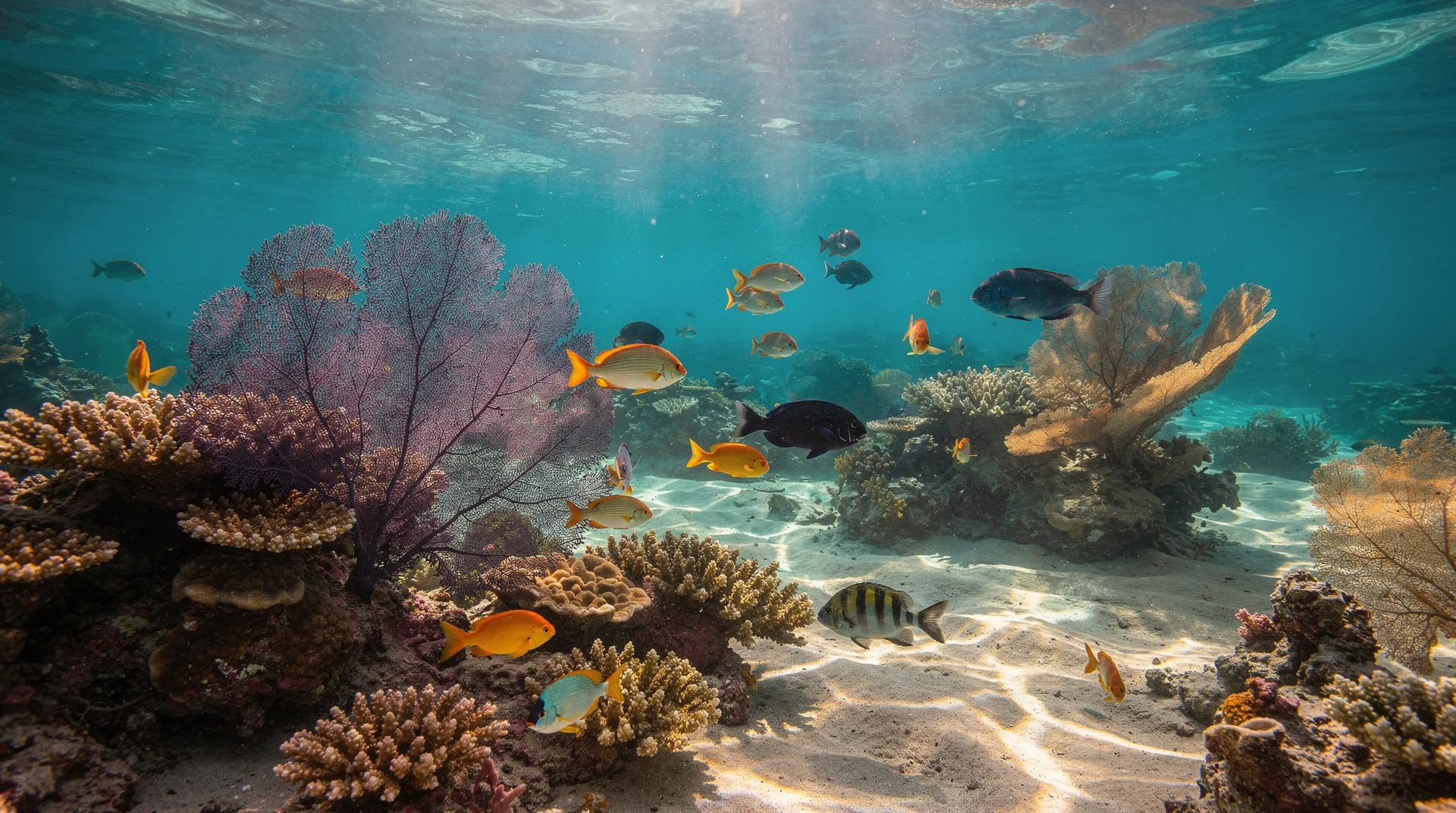
Bleached but reviving since 2018; brain coral + parrotfish + occasional eagle ray.
| Where | Punta Cahuita headland, Cahuita National Park |
| Cost | Around $55–95 per person depending on tour length |
| Time needed | 1.5–3 hours on the water |
| Depth | 1–6 m, suitable for weak swimmers with fins |
| Best time | September–October (best visibility); December–March can be windy |
The real state of Cahuita’s coral reef
Cahuita National Park protects the largest living coral reef on Costa Rica’s Caribbean coast — and for years, it was also among the most damaged. The 1991 earthquake that devastated Limón Province tilted the reef, exposing sections to air and killing vast swaths of coral. Subsequent El Niño events, agricultural runoff from banana plantations inland, and increased sediment from deforestation compounded the damage.
The honest picture in 2026: Cahuita’s reef has been recovering since active protection measures and river management began around 2015-2018. It is not the pristine Caribbean reef of promotional photography. Brain coral domes (Diploria labyrinthiformis) are the most intact structure — some exceeding 2 metres diameter — and the fish community has rebounded strongly. Parrotfish, sergeant majors, snappers, and needlefish are abundant. Eagle ray sightings are reported weekly. But if you’ve snorkelled in Belize, Bonaire, or Caño Island on Costa Rica’s Pacific side, you will notice the difference in coral coverage.
This is not a reason to skip Cahuita — it is a reason to visit it with accurate expectations. At $55-85 per person, it’s one of Costa Rica’s most affordable snorkelling experiences, the national park setting is beautiful, and the fish population is genuinely impressive. Just don’t expect a pristine untouched reef.
Inside Cahuita National Park
Two entry points, two experiences
Cahuita National Park has two visitor entry points, and they differ significantly:
Kelly Creek entrance (donation-based): The southern entrance at the town of Cahuita. Entry is by voluntary donation — most visitors pay 1,000-2,000 CRC (roughly $2-4). This entrance accesses the coastal trail that winds along the beach toward Punta Cahuita, the headland where the reef is located. It’s a 4 km walk to the best snorkeling zone.
Puerto Vargas entrance: A fixed-fee entrance ($17 for foreign nationals as of 2026) located 4 km east of town by road. This entrance is closer to the main snorkeling zone and has parking, bathrooms, and picnic facilities.
For snorkeling tours, the operator will handle entry logistics — you typically depart by boat from the town beach rather than walking in from either entrance.
The reef zone
The reef extends from Punta Cahuita headland northward for approximately 600 m. The best snorkeling depth is 1-6 m — this is a shallow reef, accessible even to weak swimmers. The boat anchor zone is managed carefully by SINAC rangers; operators use mooring buoys to avoid reef damage.
Marine life: what you’ll realistically see
Almost certain sightings
- Parrotfish (several species): The most visually dramatic fish on the reef. Large males of the stoplight and rainbow parrotfish flash electric blue and green. Their feeding scars on dead coral are visible throughout the reef.
- French grunt and bluestriped grunt: Schooling in dense, slow-moving formations under coral overhangs.
- Spotted moray eels: Usually tucked into crevices with just the head visible. Non-threatening if you don’t reach into holes.
- Needlefish: Long, silver, surface-swimming. They look alarming but are harmless.
- Sergeant majors: The black-striped yellow fish that are everywhere in the Caribbean reef system.
Likely sightings
- Brain coral formations: Large Diploria domes with their distinctive labyrinthine grooves are the reef’s most photogenic feature and one of the clearest signs of recovery.
- Sea fans and sea rods: The soft coral community is healthy in sections, with fans reaching 60-80 cm span.
- Spotted drum (juvenile): One of the Caribbean’s most distinctive juveniles — black and white, with a disproportionately long dorsal fin.
- Smooth trunkfish: Polka-dotted, box-shaped, and comically slow. Usually solitary.
Occasional encounters
- Eagle rays: Weekly sightings reported, typically gliding along the reef edge at 4-8 m. No particular season — present year-round.
- Green sea turtles: Cahuita National Park has nesting turtles on the beach (mainly leatherback and green); underwater sightings while snorkeling are possible but not guaranteed.
- Nurse sharks: Resting under coral ledges. Completely harmless and unfazed by snorkellers at a respectful distance.
- Hawksbill turtle: Less common than green turtles but present in the reef zone.
Operators and real prices
Guided snorkel tours: the better option
Independent snorkelling (swimming in from the beach at Puerto Vargas) is technically possible, but the guided boat-based tours are consistently better. You reach the reef faster, the guide knows the best formations, and the boat provides a rest platform when you need it.
What to pay (2026):
- 1.5-hour basic snorkel tour: $55-65 per person
- 3-hour reef snorkel with guide and equipment: $65-80 per person
- Full-day combo (Cahuita + Manzanillo or hike + snorkel): $75-95 per person
Compare this to Caño Island ($135-145) or Catalinas diving ($135-155) — Cahuita is clearly the budget-conscious option and still worthwhile.
Snorkel in Cahuita National Park: explore the reef — from $60 Cahuita National Park: snorkel — from $55For those wanting a combined hike and snorkel experience with a certified local guide:
Cahuita NP: snorkeling & wildlife hike (certified guide) — from $75And for a back-to-back Cahuita and Manzanillo tour (two distinct reef zones in one day):
Manzanillo and Cahuita snorkeling duo tour — from $95Local operators to know
Most guides operating in the park are Afro-Caribbean Cahuiteños who have worked the reef for years. They are not dive instructors in the formal PADI sense, but they know the reef formations intimately. Names you’ll see at the docks: Roberto’s Tours, Willie’s Tours, and Cahuita Tours are long-established and recommended by independent travellers consistently.
Best time to snorkel Cahuita
The Caribbean coast of Costa Rica operates on a different seasonal clock to the Pacific. The “dry season” and “rainy season” labels from Guanacaste do not translate directly.
September and October: the best window
This is the Caribbean coast’s relative dry season — counterintuitive for visitors used to Pacific seasonality. September-October brings the calmest waters, best visibility (8-15 m on good days), and lowest rainfall. The reef is at its most accessible.
December to March: good but can be windy
Trade winds create choppy conditions in the Caribbean during peak Pacific dry season. Visibility varies. This is still a viable snorkelling window but check daily conditions with your operator before booking.
April to August: variable
April-June and July-August can both bring long calm spells interrupted by brief squalls. Visibility varies from 5-12 m. The reef is alive and worth visiting, but be flexible on dates if conditions are poor on your first choice day.
Cahuita National Park wildlife beyond the reef
The park’s 1,067 hectares include coastal forest as well as the marine zone. The 4 km Kelly Creek trail to Punta Cahuita is a world-class wildlife walk: three-toed sloths in the cecropia trees are almost guaranteed, howler monkeys pass overhead in troops, and coati families forage on the beach. White-faced capuchin monkeys are the most habituated and bold — be aware they will inspect your backpack if left unattended.
A combined snorkel-and-hike day — arriving at Kelly Creek early (7:00am) for the hike, then taking a boat-based snorkel tour at mid-morning when visibility is typically at its best — makes for the most complete Cahuita National Park experience. This is the itinerary covered by the certified hike + snorkel tours listed above.
Cahuita vs Manzanillo: which reef?
Manzanillo is 13 km south of Cahuita, inside the Refugio Nacional de Vida Silvestre Gandoca-Manzanillo. The reef here is considered by local guides to be in slightly better condition than Cahuita — fewer banana plantation impacts, less visited, and with marginally higher fish density. However, reaching Manzanillo requires either a 4WD drive on a rough road or a boat.
The practical answer for most visitors: Cahuita is easier to access and still excellent. If you have 2+ nights in the area, consider doing Cahuita on day 1 and Manzanillo on day 2 with a combo tour. See the Cahuita-Manzanillo duo option above.
Combining Cahuita with a Caribbean itinerary
Cahuita is most often combined with Puerto Viejo on a Caribbean loop. A 7-day Caribbean itinerary might look like: Tortuguero (2 nights, turtles) → Cahuita (2 nights, reef + sloth) → Puerto Viejo (2 nights, beach + culture). This loop makes sense year-round but is best September-October for wildlife. See our 7-day Caribbean itinerary for the full logistics.
Frequently asked questions about Cahuita reef snorkeling
Do I need to be a strong swimmer for Cahuita reef?
No. The reef zone is 1-6 m deep — shallower than most Caribbean snorkel sites. Life vests are available from guides for non-swimmers. That said, fins are necessary to navigate the current near the reef edge, and basic confidence in open water makes the experience much more enjoyable.
Is it safe to snorkel independently without a guide?
The park allows independent snorkelling from the Puerto Vargas beach. However, without a guide, you are less likely to find the best coral formations, and there is no boat to rest on. The organised tours offer better access and equipment for a modest cost.
What should I bring?
Reef-safe sunscreen (regular sunscreen kills coral and is not permitted in the park), a rash guard or light wetsuit top for protection against the sun, and a dry bag for your camera. Most operators provide masks, fins, and snorkels.
Can I see turtles while snorkeling?
Underwater turtle sightings are possible but not guaranteed. Cahuita has nesting beach turtles (especially leatherback March-July), and green turtles feed in the reef zone. Eagle rays are more commonly reported by snorkellers than turtles.
Is the coral dead at Cahuita?
No — the reef suffered significant bleaching, particularly after the 1991 earthquake and subsequent El Niño events, but it is actively recovering. Brain coral structures and some branching corals have survived and new growth is visible. The fish population has recovered faster than the coral and is genuinely impressive.
How do I get to Cahuita from San José?
San José to Cahuita is 4-4.5 hours by car or public bus (direct buses run twice daily from the Gran Terminal del Caribe). The Costanera highway via Limón is the main route. A rental car gives more flexibility; 4WD is not required for this route.
Planning the rest of your Cahuita stay
The reef is only one part of the park, so it helps to read the Cahuita National Park guide alongside this page. It covers the forest trail and the two entrances in more depth, and it will help you decide how to split your time between the water and the walk. If you are building a wider route through Limón Province, the park pairs naturally with the turtle-nesting coast to the north; our Tortuguero turtle nesting guide and the Tortuguero destination page explain how that stop fits in.
Timing matters more here than on the Pacific side. The September weather guide and the October weather guide explain why the Caribbean calms down when the Pacific turns wet, and the best time to visit Costa Rica overview puts both coasts side by side. If you are still deciding which coast deserves your limited days, the Caribbean vs Pacific coast trip comparison is the right place to start.
Snorkelling well also means behaving well. Keep your fins off the coral, never stand on it, and give turtles and rays room; the wildlife watching ethics guide sets out the habits that keep a recovering reef recovering. Along the forest trail, the where to see sloths guide will help you spot the animals in the canopy rather than walking past them.
A few practical details round out the trip. The packing list covers the small items that make a day on the water easier, and the beach safety guide is worth a read before you swim anywhere without a guide. For getting to the coast, compare renting a car with the options in the shuttle services overview, and see the best snorkel beaches in Costa Rica if you want to compare Cahuita with other sites across the country.
Related guides
The Puerto Viejo guide covers everything else to do on the Caribbean coast once you’ve ticked off the reef. Our snorkel vs dive comparison helps you decide whether Cahuita’s snorkelling or Caño Island’s deeper diving better suits your trip. The Costa Rica marine life guide explains the full species list — Pacific and Caribbean — that you might encounter across both coasts.
How Cahuita compares to Costa Rica’s other reef and dive sites
Setting honest expectations means comparing Cahuita to its actual alternatives, not to an idealized Caribbean reef. Caño Island on the Pacific side offers noticeably better visibility and coral coverage, but costs roughly double ($135-145 versus $55-95) and requires a much longer boat transfer from Uvita or Drake Bay. The Catalina Islands near Guanacaste, popular for diving rather than snorkelling, sit in a similar higher price bracket.
Cahuita’s genuine advantage is accessibility and value: it’s the only major reef snorkel site in the country reachable directly from a walkable Caribbean town, with no long boat transfer and a price point that makes it an easy half-day add-on rather than a dedicated excursion. If reef quality is your only criterion, Caño Island wins outright. If convenience, budget, and combining reef time with a genuinely excellent rainforest trail matter more, Cahuita is the better trip.
Equipment and conditions to expect
Most operators supply mask, fins, snorkel, and a life vest for weaker swimmers, but quality varies between the informal local operators at the town dock. If you have your own well-fitting mask, bringing it is worth the extra bag space — a leaking rental mask ruins more snorkel trips than any marine life issue.
Water temperature runs a comfortable 27-29°C year-round, so a wetsuit is not necessary for warmth, though a thin rash guard protects against sun and against the light coral scrapes that can happen in the shallower 1-2m sections near the headland. Currents near the reef edge are mild but noticeable — fins are genuinely useful here, not just for show, since swimming against even a light current without them tires out non-strong swimmers quickly.
a private snorkel tour of Cahuita’s reef — from $135