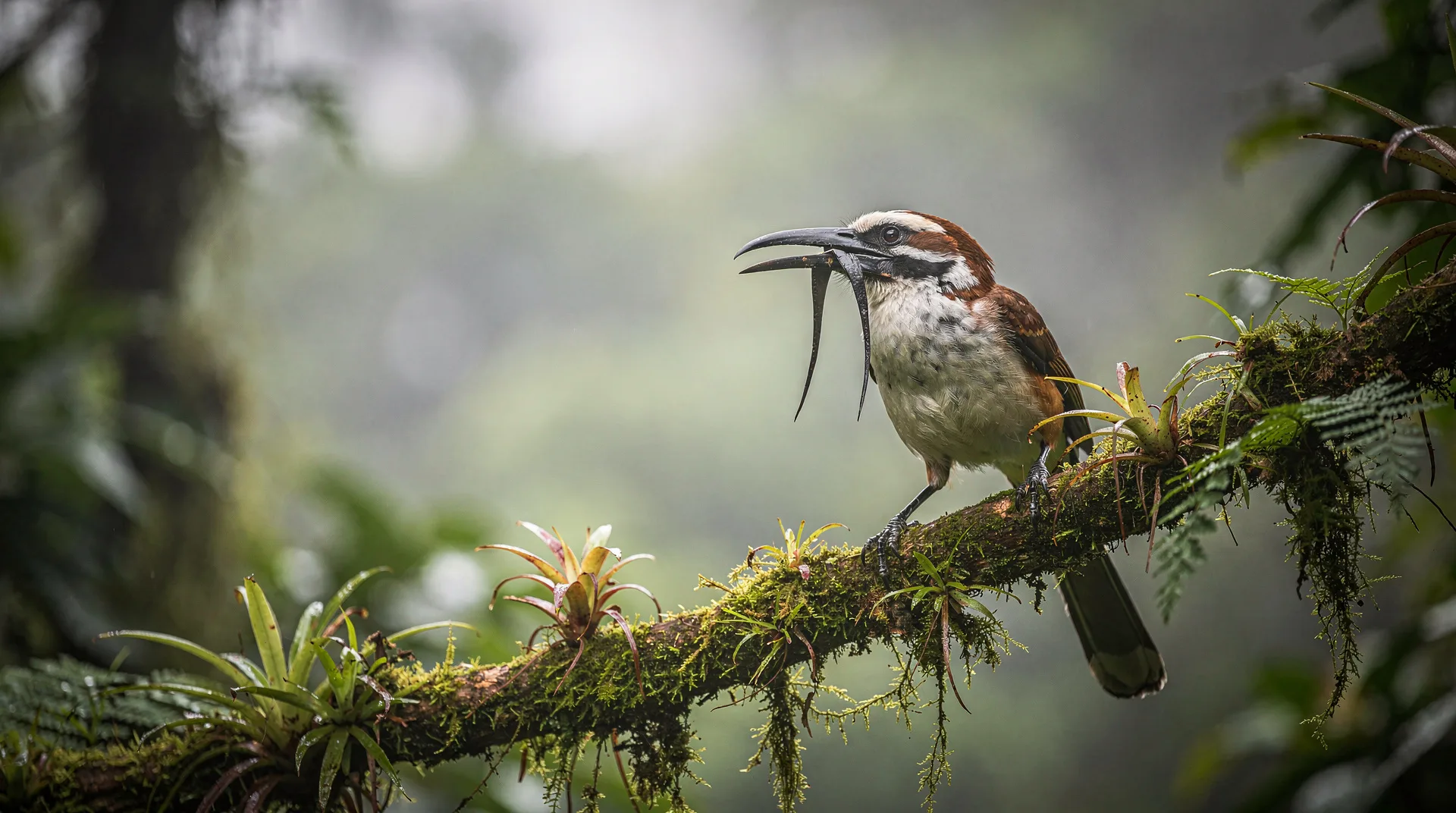
Curi-Cancha Reserve: the quieter side of Monteverde
Why pick Curi-Cancha?
Smaller crowds, reliable quetzal sightings, mixed primary/secondary forest.
Curi-Cancha is the reserve serious birders quietly recommend over the famous Monteverde reserve next door — smaller crowds, capped visitor numbers, and guides who track individual quetzal nests by memory. This guide covers what to expect, when to go, and how it fits alongside Monteverde’s other reserves.
| Where | 2 km from Santa Elena town, Monteverde zone |
| Cost | Around $55–65 per person for a guided tour with entry |
| Time needed | 2.5–3 hours guided; half-day with hummingbird feeders |
| Best for | Reliable quetzal sightings, smaller groups |
| Best time | February–June for quetzal nesting, peaking March–April |
What makes Curi-Cancha different from Monteverde’s other reserves
The Monteverde zone has three main cloud forest reserves competing for visitor attention: the world-famous Monteverde Cloud Forest Biological Reserve, the community-owned Santa Elena Reserve, and Curi-Cancha. Of the three, Curi-Cancha is the least known outside birding and wildlife-watching circles — and that relative obscurity is its strongest selling point.
Curi-Cancha (whose name derives from the Bribri indigenous language — “curi” meaning gold and “cancha” meaning place, roughly translating as “place of gold”) is a private reserve protecting approximately 80 hectares of mixed primary and secondary cloud forest on the Monteverde ridge. It is operated as a conservation project that combines scientific research with low-impact ecotourism. Daily visitor numbers are capped at far lower levels than either the Monteverde or Santa Elena reserve, and the guided experience is correspondingly more attentive.
The reserve has developed a strong reputation among birders — particularly for reliable resplendent quetzal sightings during the February-June nesting season. Multiple resident guide families have worked the trails for decades and know individual quetzal nest sites and behavioural patterns with extraordinary precision. On a good morning in March or April, it is not unusual to observe quetzal pairs at close range for extended periods.
The wildlife: what you can realistically expect
Resplendent quetzal
The resplendent quetzal is the signature species of cloud forest ecosystems in Mesoamerica. The male — with iridescent emerald plumage, a crimson belly, and tail feathers extending up to 65 cm — is considered one of the most spectacular birds in the Western Hemisphere. Curi-Cancha’s smaller size and lower visitor pressure means birds are less disturbed, and guide knowledge of nest sites is intimate.
Peak season for quetzals in Curi-Cancha runs February through June, peaking in March-May when breeding pairs are actively using nests in the secondary forest zone. Outside this window, quetzals are present but more difficult to locate, as they move to lower elevations to feed on fruiting trees.
Other birds
Curi-Cancha’s bird list, while shorter than the major reserves, is impressive for its size. Species regularly observed include: three-wattled bellbird (heard before seen — one of the loudest bird calls in the Americas), emerald toucanet, golden-browed chlorophonia, prong-billed barbet, black-faced solitaire, and multiple species of hummingbird including the violet sabrewing, the largest hummingbird in Costa Rica.
The hummingbird feeders maintained near the reserve entrance produce reliable, intimate sightings — eight or more species can be observed feeding simultaneously during active periods. For photographers, this is one of the most accessible multi-species hummingbird encounter points in the country.
Mammals and other wildlife
Howler monkeys, white-faced capuchins, and coatis are regularly observed. Three-toed sloths are present in the secondary forest and more findable here than in the primary forest zones. The reserve’s smaller size and intimate trail system means guides are more likely to spend focused time with individual animal sightings rather than moving the group along quickly.
The mixed primary and secondary forest habitat is itself an asset — secondary forest regeneration creates edge habitat and fruit-tree diversity that supports higher bird and small mammal density than pure primary forest in some seasons. The transition zones between forest types are particularly productive.
Monteverde: cloud forest guided tour (Curi-Cancha) — from $65Trails and terrain
Curi-Cancha has approximately 4 km of maintained trails across three main circuits. The terrain ranges from flat paths through secondary forest near the entrance to steeper routes penetrating primary cloud forest in the upper sections of the reserve. None of the trails require technical skill — the main challenge is mud, which is seasonal and variable. Rubber boots can be borrowed at the entrance.
Main trail options:
- Loop 1 (1.2 km, ~45 min): Entrance zone through mixed secondary forest, including the hummingbird feeder area and several reliable quetzal feeding trees. Suitable for all fitness levels.
- Loop 2 (2.1 km, ~1.5 hrs): Extends into primary forest on the ridge. Steeper in sections. Good for bellbird and toucanet sightings.
- Combined circuit (full trail, ~3 hrs guided): Incorporates all trail sections and allows the guide to adjust based on current wildlife reports.
There is an observation platform at the upper section of the reserve that provides canopy-level views — effective for spotting quetzals and bellbirds that spend time in the canopy above the trail.
Guided tours: the best way to visit
Curi-Cancha is designed around guided visits. Independent hiking is possible but the wildlife experience without a guide is significantly diminished — cloud forest animals are cryptic, and finding quetzals without knowing current nest locations is largely luck.
Morning tours (starting at 7am) are the best option for birding and wildlife. The reserve offers:
- Morning 3-hour guided tour with entry: ~$65 per person (includes reserve entry and guide)
- Afternoon 2.5-hour guided tour with entry: ~$55 per person
- Night walk (6pm-8pm): ~$35 per person
Group sizes are small by design — maximum 8-10 per guide. This is a real advantage over the larger groups common at the Monteverde reserve, where 20+ person groups can overwhelm wildlife sightings.
Monteverde: cloud forest and butterfly farm full-day tour — from $95Alternatively, the Monteverde-based tour below visits both cloud forest zones and the butterfly farm, giving a good complementary experience:
Entry and practical logistics
Entry fee: Approximately $15-18 (without guide; guided tour rates above include entry) Opening hours: 7am-5pm (morning tours) and 5:30pm for night walk Location: Approximately 2 km from Santa Elena town center; 4 km from the Monteverde reserve entrance Getting there: Taxi from Santa Elena (~$5), or walk from town (30 minutes uphill). The reserve is on the same road as the Monteverde reserve but branches left before reaching it. Booking: Reserve spots through the Curi-Cancha website or at the entrance. Advance booking is recommended during peak season (January-April) and for groups.
Bring rubber boots (can be rented at entrance for ~$2), a rain jacket, binoculars, and insect repellent. Our packing list for Costa Rica covers the rest of the kit, and the microclimates guide explains why the ridge feels so different from the lowlands. Temperatures in the cloud forest range from 15-22°C. The reserve is at approximately 1,550 metres elevation.
Cash vs card: The reserve entrance accepts card payment for entry and guided tours, but carrying some cash (colones or small-denomination USD) is worth it for boot rental, tips, and the small snack stand near the entrance, which sometimes only takes cash. Restrooms are available at the entrance building only — there are none on the trail system itself, so plan accordingly before setting out on the 3-hour combined circuit.
Seasonal wildlife calendar at Curi-Cancha
| Period | Quetzal reliability | General wildlife | Trail conditions |
|---|---|---|---|
| Dec–Jan | Moderate | Good, drier trails | Best footing of the year |
| Feb–Apr | High (peak nesting) | Excellent — displays, active nests | Dry, easy walking |
| May–Jun | High, tapering | Excellent, amphibians increasing | Occasional afternoon rain |
| Jul–Sep | Low (birds at lower elevation) | Good for frogs, insects | Muddier, boots essential |
| Oct–Nov | Low | Good, quieter trails | Wettest period, fewer visitors |
The takeaway for trip planning: if quetzals are the priority, build your Monteverde stop around February–May specifically rather than treating “cloud forest season” as one undifferentiated block. Outside that window, Curi-Cancha remains a good reserve for general cloud forest wildlife and the hummingbird feeders, just not the quetzal-focused experience it’s best known for.
How Curi-Cancha fits into a Monteverde itinerary
For visitors with 2-3 days in the Monteverde zone, a sensible strategy is:
Day 1 morning: Monteverde Cloud Forest Biological Reserve (primary forest depth, bigger ecosystem) Day 1 afternoon: Ziplines or hanging bridges for a change of pace Day 2 morning: Curi-Cancha Reserve (smaller crowds, quetzal focus, hummingbirds) Day 2 afternoon/evening: Night walk at Santa Elena or Monteverde reserve
This combination gives you exposure to the three complementary cloud forest environments without repetition. Our Monteverde destination guide has a full day-by-day planning breakdown.
If quetzal sightings are your primary goal and you only have one morning, choose Curi-Cancha over the main Monteverde reserve — smaller groups, better guide-to-bird-knowledge ratio, and less human traffic around nesting areas.
For the afternoon slot, our Monteverde ziplines guide compares the cable courses, and the Selvatura Park guide covers a single-site option that combines bridges and other attractions. If you are arriving from the Arenal side, the La Fortuna destination page explains how that stop fits before Monteverde, and the 10-day Arenal, Monteverde and Manuel Antonio itinerary shows where a Curi-Cancha morning slots into a longer route.
The butterfly garden connection
Several Curi-Cancha tour packages combine the reserve with Monteverde’s famous butterfly garden and insectarium. The butterfly garden houses species from across Costa Rica in walk-through enclosures, including the stunning blue morpho and glasswing species. The combination makes for a full morning of wildlife: cloud forest birds and mammals first, followed by the insect diversity of the butterfly complex. See our butterflies and frogs guide for what to expect.
Night walk at Curi-Cancha: a different forest after dark
Curi-Cancha’s night walk operates from approximately 5:30pm for 2 hours and reveals a completely different community of animals than the daytime visit. The cloud forest at night is active with species that remain hidden during daylight:
Glass frogs are the signature nighttime find — transparent-bellied frogs that cling to leaves over streams, their internal organs visible through the ventral skin. The Reticulated Glass Frog (Hyalinobatrachium valerioi) is the most commonly seen in the Monteverde zone. Guides use red-light headlamps to approach without disturbing them.
Kinkajous are the most charismatic nighttime mammal — honey bears that move through the canopy feeding on fruits, their eyes catching the guide’s flashlight beam in the upper branches. Porcupines and two-toed sloths (more active at night than during the day) are also regularly observed.
Sleeping birds: Finding a trogon or motmot asleep on a branch — close enough to observe their plumage in detail — is a night walk highlight that reverses the typical bird-watching dynamic. Owls are present but require patience.
Tree frogs: The cloud forest after rain produces an extraordinary amphibian chorus. Red-eyed tree frogs (Agalychnis callidryas) are present in Monteverde’s lower zones; the cloud forest hosts different species, including the Monteverde palm pit viper — a small venomous snake worth viewing carefully from a safe distance.
The night walk is worth the additional cost and time even for visitors who have done daytime birding — the animal community is substantially different, and the experience of being in cloud forest after dark is atmospherically distinct.
If the night walk appeals to you, our nocturnal wildlife guide explains what to expect across the country and how to behave around animals that are easily stressed by light. The same principles are laid out in the wildlife watching ethics guide, which is worth a read before any guided encounter.
Epiphytes: what you’ll see covering every branch
The epiphyte density at Curi-Cancha is extraordinary even by cloud forest standards. An epiphyte is a plant that grows on another plant without deriving nutrients from it — using the host plant purely as a physical substrate. Cloud forest trees in the Monteverde zone support as many as 30 or 40 distinct epiphyte species on a single trunk and branch system.
Orchids: Costa Rica has more than 1,500 orchid species, and the Monteverde zone contains exceptional diversity. Most cloud forest orchids are small and subtle — the spectacular floor orchids of tourism brochures are more common at lower elevations. In the cloud forest, look for miniature orchids growing directly on bark, often in patches 2-3 cm wide.
Bromeliads: The tank bromeliads (Tillandsia and related genera) that fill every horizontal surface of cloud forest trees are ecological microcosms — each “tank” (the central cup formed by the leaves) holds water and supports its own community of micro-organisms, mosquito larvae, tree frog eggs, small crustaceans, and insects.
Ferns: Cloud forest ferns range from ground-level species to tree-mounted filmy ferns so thin they are translucent — only one or two cells thick, these extraordinary plants live on mist condensation alone and require permanently high humidity to survive.
Mosses and liverworts: The moss cover on branches can exceed 5 centimetres thickness in old-growth sections — spongy, water-retaining, and supporting further plant communities growing within it. The sound of the cloud forest in rain — a constant drip amplified by thousands of moss-covered surfaces releasing water — is one of its defining sensory experiences.
How to read the cloud forest: patterns that help you find wildlife
Most visitors enter a cloud forest reserve and walk without knowing what to look for, then wonder why they saw less wildlife than expected. A few observational patterns significantly improve encounter rates:
Follow the fruiting trees: Both quetzals and toucans are nomadic frugivores — they move through the forest following fruit availability. Wild avocado (Lauraceae), wild fig (Ficus), and palmito heart palm are key fruiting species. If your guide stops under a fruiting tree and waits — this is deliberate strategy, not dawdling.
Listen before you look: The three-wattled bellbird’s call carries 1 km and announces its own location. The keel-billed toucan has a distinctive tree-frog-like call. Learn 3-4 species calls before your visit using Merlin Bird ID (free app from Cornell) — you’ll double your encounter rate.
Low-light areas hold sleeping animals: Sloths, snakes, and certain frog species choose locations with specific light and temperature conditions. Guides scan different microhabitats than casual visitors do — the underside of large leaves for sleeping frogs, the crook of a branch 15-20 metres up for sloths.
Morning vs afternoon wildlife windows: The first 2-3 hours after dawn are the most active period for birds. Mid-morning to early afternoon (10am-2pm) is quieter. Activity picks up again 2-3 hours before dusk as species prepare for night.
Rain brings out frogs and snakes: Counter-intuitively, a light rain during your visit increases herpetological encounter rates significantly. Many frog species are most active during or immediately after rain events. Guides sometimes specifically recommend the afternoon tours in green season for frog diversity.
Photography at Curi-Cancha: practical setup
The cloud forest presents specific photographic challenges. Light levels are consistently low — even on clear days, the canopy filters light to levels that require higher ISO settings or longer exposures than most casual photographers anticipate. A few practical tips:
For bird photography: A telephoto lens of at least 300mm equivalent is necessary for most bird shots at distance. At the hummingbird feeders, a 100-200mm lens is adequate. Set ISO to auto with a ceiling of 3200 — modern cameras handle this well, and sharp at ISO 3200 beats blurry at ISO 800.
For epiphyte detail photography: A macro lens or close-focusing capability is transformative for orchid and fern photographs. The diversity of miniature worlds on a single branch rewards time and a steady hand.
For quetzal photography: Quetzals move quickly when disturbed and sit still when comfortable. A guide who knows nest sites will get you into position — once positioned, patience (10-20 minutes of stillness) produces better results than chasing. A 400-600mm equivalent lens reproduces the tail feather detail that makes quetzal photographs iconic. For broader technique, see our wildlife photography tips.
For atmosphere: Don’t ignore the mist. The cloud forest in mist — a beam of light through the canopy, a branch silhouetted against grey fog — is a photographic subject in its own right. Wide-angle lenses (24-35mm) are useful for these atmospheric shots.
What to wear and pack for a Curi-Cancha visit
Cloud forest conditions are consistently cool and damp, and the right layering matters more here than at almost any other Costa Rica site. Wear moisture-wicking layers rather than cotton, which stays wet once damp from mist or light rain — a light fleece or synthetic mid-layer under a waterproof shell handles the 15–22°C range comfortably through a morning that starts cold and warms slightly by midday.
Rubber boots, rentable at the entrance for around $2, are worth taking even on drier days; the trail surface holds moisture long after visible rain has stopped. Binoculars are close to essential rather than optional for a reserve built around bird sightings — if you don’t own a pair, ask whether your tour operator provides loaner binoculars, since some Monteverde-based operators do.
Comparing a Curi-Cancha morning to the main Monteverde reserve
Visitors choosing between the two reserves for a single morning are really choosing between two different experiences rather than a better-or-worse pair. The main Monteverde Cloud Forest Biological Reserve is larger, has a longer trail network, and includes the famous suspension bridge and continental divide viewpoint — genuinely worth doing for the landscape and scale even if wildlife density per hour is lower due to bigger visitor groups.
Curi-Cancha trades that scale for intimacy: smaller trail network, capped visitor numbers, and a guide-to-bird-knowledge ratio that consistently produces better sightings, particularly for quetzals. Visitors with only one morning in the Monteverde zone who prioritise wildlife encounters over trail scenery should choose Curi-Cancha; those who want the classic cloud-forest landscape experience first should start with the main reserve and add Curi-Cancha on a second day if time allows.
Frequently asked questions about Curi-Cancha Reserve
Is Curi-Cancha worth visiting if I’ve already been to the main Monteverde reserve?
Yes — for two reasons. First, Curi-Cancha’s smaller visitor numbers mean the wildlife experience is less competitive and often more intimate. Second, the secondary forest habitats at Curi-Cancha are different from the primary forest zones of the main reserve, offering species and sightings that don’t duplicate the larger reserve well. The hummingbird feeders alone justify a visit.
What is the best month to visit Curi-Cancha for quetzals?
February through May is optimal, with March-April being the peak of breeding activity when male quetzals display most actively. Outside this window, quetzals are present but less reliable. The reserve’s guides track individual nest sites and can advise on current activity at the time of booking.
Can I visit Curi-Cancha without a guide?
Yes, independent entry is available. However, the guided experience is substantially better for wildlife sightings. A guide’s ability to locate specific nest sites and individual birds produces encounters that independent hikers rarely achieve. Consider the guide an investment in the actual experience rather than an optional extra.
How does Curi-Cancha compare to Monteverde and Santa Elena in price?
Entry fees are similar across all three reserves ($15-24). Guided tour pricing is slightly lower at Curi-Cancha than at Monteverde reserve, and the smaller group sizes make it better value per person for a serious wildlife encounter. Santa Elena reserve is the cheapest option overall.
Is Curi-Cancha suitable for birding with serious equipment?
Yes — the reserve is popular with birding photographers precisely because small groups allow for unhurried time with individual birds. There is sufficient space around the hummingbird feeders to set up a telephoto lens. The guides understand birder priorities and adjust pacing accordingly. Let your guide know in advance if photography is your primary interest.
Related guides
For a broader Monteverde reserve comparison, read our Monteverde vs Santa Elena reserve guide. Our quetzal watching guide covers all the best locations in Costa Rica for resplendent quetzal sightings throughout the year. The Children’s Eternal Rainforest guide covers the vast private reserve that borders much of the Monteverde zone. For the science behind cloud forest ecosystems, our cloud forest vs rainforest guide explains the key differences. If birds are the main draw of your trip, the bird watching by region guide shows where else to go, and the San Gerardo de Dota cloud forest guide covers another strong quetzal area. For getting to Monteverde in the first place, see the driving in Costa Rica guide and the shuttle services overview.