Dry season Costa Rica: honest pros and cons
Is Costa Rica's dry season worth the higher prices?
Yes, if a reliable Pacific beach holiday is your priority and budget allows the 30-50% accommodation premium. The guaranteed sunshine, calm seas, and fully operational roads (especially in remote Osa) justify the cost for most first-time visitors. Budget-focused travellers will find green season offers 90% of the experience for significantly less.
What the dry season actually looks like on the ground
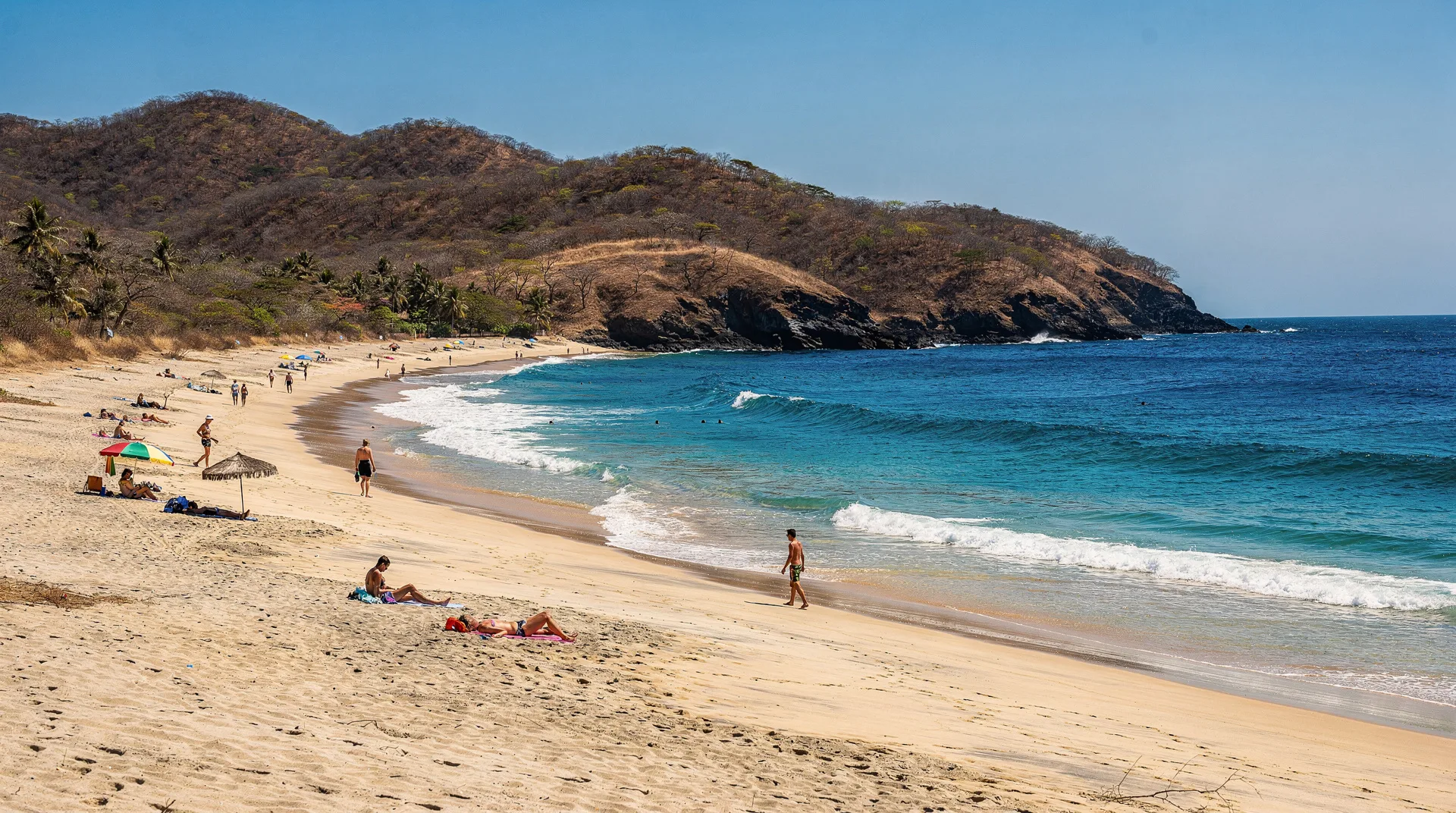
Costa Rica’s dry season runs from December through April on the Pacific coast. For the country’s two most popular regions — Guanacaste and the Central Pacific — this translates into something genuinely remarkable: five months of almost guaranteed sunshine, warm temperatures, calm Pacific seas, and weather that does not interrupt your plans.
For the Osa Peninsula and southern Pacific, the dry season also means passable roads to Corcovado and Drake Bay, operational boat tours to Caño Island, and the December-March northern humpback whale season off Marino Ballena.
But the dry season has costs, literally and figuratively. Understanding what you are paying for — and what you are giving up — is the point of this guide.
| When | December through April, Pacific coast |
| Price premium | 30-50% above green season rates |
| Best for | Guaranteed sun, first-time visitors, Corcovado access |
| Worst for | Budget travellers, crowd-averse travellers, Caribbean beach trips |
| Book ahead | Manuel Antonio entry, Poás Volcano, popular hot springs |
The concrete pros of visiting in dry season
Guaranteed Pacific coast weather
The single clearest advantage of the dry season is predictability. In Guanacaste from December through March, you can plan outdoor activities knowing with near-certainty that the weather will cooperate. On the Central Pacific (Jacó, Manuel Antonio), the same applies with slightly less rigidity — brief afternoon showers are possible in April, but rare in January-February.
This predictability matters more than it sounds. A snorkelling trip, a volcano hike, or a day at the beach is much more enjoyable when you are not working around a 3pm downpour. For families with children, for travellers who have saved a long time for this trip, or for anyone with a tight 7-10 day window, the dry season removes weather anxiety from the equation.
Calm Pacific seas and excellent water activities
Pacific ocean conditions in the dry season are typically calmer than green season. Swell is still present — Tamarindo and Nosara get consistent northwest swells — but for boat-based activities (catamaran tours, snorkelling trips, whale watching, fishing), December through April offers better stability.
Visibility for snorkelling and diving improves significantly in the dry season. Around Playa Conchal and in the waters off Caño Island, underwater visibility can reach 15-20 metres in January-March, compared to 5-10 metres after heavy green season rains stir up sediment.
Caño Island snorkelling tours are consistently rated better in the January-April window, and catamaran sunset tours off Tamarindo are dramatically more beautiful without cloud cover.
Playa Tamarindo: sunset sailing and snorkeling tour — from $95Passable roads to remote destinations
The dry season is the only reliable time to drive standard vehicles (non-4WD) to some of Costa Rica’s most extraordinary destinations. The roads to Drake Bay, around the Osa Peninsula, and along the rougher sections of the Caribbean coast become significantly more challenging in green season — sometimes impassable for ordinary rental cars.
Corcovado’s Sirena ranger station can also be partially closed in September-November due to flooding and maintenance. During the dry season, it operates at full capacity with more ranger slots available.
If Corcovado is your primary destination, the dry season is not just preferable — it is the period when the logistics are most straightforward. Our Corcovado National Park guide covers access and booking details.
The wildlife calendar works well
Dry season wildlife is not inferior to green season — it is different. In the dry season, deciduous trees lose their leaves in Guanacaste, making bird and monkey sightings significantly easier. You do not have to part vegetation to find howler monkeys; they sit in bare branches fully exposed.
Scarlet macaws at Carara National Park are spectacular in January-March when the forest thins. Marine wildlife off the Pacific coast is at its best for the December-March northern humpback season near Uvita. Sea turtles are not nesting (that peaks July-October), but Leatherback turtles nest at Playa Grande from October through February, overlapping with the early dry season.
If wildlife is the point of your trip, pair this section with our guides to bird watching by region and the monkey species of Costa Rica, and read the Uvita whale watching season guide and the Playa Grande leatherback turtle guide to time the marine encounters.
Christmas and New Year travel is straightforward
If you need to travel over the Christmas and New Year holiday period, Costa Rica is well-suited. Infrastructure is reliable, temperatures are pleasant, and the holiday atmosphere in towns like Tamarindo, La Fortuna, and Jacó is festive without being overwhelming. Just book very early — Christmas week and New Year’s week are the highest-priced days of the entire year.
The real cons of dry season travel
The price premium is substantial
This is where honesty matters. Dry season accommodation costs 30-50% more than green season rates at most mid-range and luxury properties. A lodge that charges $120 per night in October will regularly charge $170-190 in January.
For budget travellers, the impact is similar: hostels that sit at $25/night in September can hit $40/night in January. Multiply that across a 10-day trip and the dry season premium adds up to several hundred dollars for a couple.
The premium is real, and for most of Costa Rica’s popular destinations, it is non-negotiable. Hotels know January-March fills without discounts, so they do not offer them.
Tours are less affected — zipline and white-water rafting prices change minimally between seasons.
Crowds are genuine
Manuel Antonio National Park hits its 600-visitor-per-day cap on virtually every weekend and public holiday between December and March. Popular beaches in Tamarindo and Jacó get congested. The La Fortuna waterfall trail queues on busy days.
If you dislike the experience of sharing a pristine national park with hundreds of other visitors, the dry season is your worst option. The green season reduces crowds dramatically. A weekday visit to Manuel Antonio in October might see 50 visitors; the same park on a January Saturday will have 600.
The restaurant scene also reflects this. Prime spots in Tamarindo and Manuel Antonio require reservations or waits during dry season evenings. In green season, you walk in most places.
Guanacaste gets extremely hot
Guanacaste’s dry season is beautiful, but the midday heat in March-April is formidable. Temperatures regularly reach 36-38°C in the interior of Guanacaste province, and coastal towns like Liberia and Santa Cruz can feel brutal at noon. The Papagayo winds help on the coast but can make some exposed beaches uncomfortable for families with small children.
The practical implication: dry season Guanacaste works best if you structure mornings for outdoor activity, late morning for beach, and midday in shade or air conditioning. This is how locals and experienced visitors structure their days, but it requires planning.
The Caribbean is not dry season
If your itinerary includes Tortuguero, Cahuita, or Puerto Viejo, the Pacific dry season is not the Caribbean dry season. December-January on the Caribbean coast brings increased rainfall. The Caribbean’s dry windows are September-October (after the main green season) and February-March.
Visiting Tortuguero in January is still possible and worthwhile for canal wildlife, but expect wet conditions and possibly cancelled boat tours on rough days.
For the full picture of how the two coasts compare, see our Caribbean vs Pacific coast trip guide and the Tortuguero National Park guide.
Advanced booking becomes mandatory
The dry season removes flexibility. Manuel Antonio park entry sells out — you must book through SINAC at least 72 hours ahead, and often more. Volcán Poás entry requires a reservation 4 weeks ahead. Popular hot springs (Tabacón, Eco Termales) fill up. Shuttles and shared transport need advance reservations.
In green season, much of this is walk-in accessible. In dry season, travellers who plan ahead have a smooth experience; those who arrive without reservations regularly get shut out of the experiences they came for.
Rincón de la Vieja NP: Las Pailas trail — from $90Dry season region by region
Guanacaste (Tamarindo, Nosara, Liberia, Papagayo): peak condition
Guanacaste is at its most marketable in the dry season. The beaches are pristine, the sunsets are spectacular, and outdoor activities all operate without interruption. The province is also at its most expensive and most crowded. For a resort-style beach holiday, it is hard to fault. Our Guanacaste beach guide and the Tamarindo surf guide help you choose a base, and the Guanacaste destination page gives the wider context.
For adventure travellers, Rincón de la Vieja National Park is excellent in dry season — the volcanic mud pools and thermal areas are fully accessible, the trails are drier, and the overnight thermal experience at Hacienda Guachipelín works well. See our Rincón de la Vieja guide for the activity breakdown.
Central Pacific (Manuel Antonio, Jacó): reliable and busy
The Central Pacific dry season is excellent for wildlife watching in Manuel Antonio and surf learning in Jacó. The trade-off is that Manuel Antonio particularly feels its popularity in January-March. Jacó is consistently lively year-round, but the dry season crowd adds a party-town edge that suits some visitors and annoys others. Read the Manuel Antonio National Park guide before you go, and the Jacó surf guide if lessons are on your list.
Southern Pacific and Osa: best accessible window
For Corcovado, Drake Bay, and the Osa Peninsula generally, the dry season represents the most accessible and logistically straightforward window. The jungle is still extraordinary even with less rain — wildlife does not disappear, it is just slightly less concentrated around water sources. The dry-season access to Sirena station and the quality of Caño Island snorkelling make this one of the most compelling arguments for peak season travel in the southern Pacific.
Arenal and La Fortuna: good but cloud is year-round
La Fortuna and the Arenal zone are often held up as a dry season paradise, but the volcanic area is famously cloudy. Even in January, Arenal Volcano is obscured by cloud for much of the day. The best chance of seeing the cone is early morning, 6-8am, on clear nights after rain clears. Hot springs, canyoning, and hanging bridges are all excellent in dry season and the rain does not fundamentally change the experience. Our guide on how to see Arenal eruptions explains what to expect from the volcano, and the Arenal hot springs overview helps you pick a soak.
Who should definitely visit in dry season
- First-time visitors who cannot risk rain disrupting a short trip
- Families with young children who need predictable beach days
- Anyone focused on Pacific coast snorkelling, diving, or catamaran tours
- Corcovado and Osa Peninsula travellers (access is the main advantage)
- Anyone combining Guanacaste with a sun-focused beach holiday
Who should consider green season instead
- Budget-focused travellers who can save $300-600 on a 10-day trip
- Surfers seeking better swell (green season has stronger Pacific swells)
- Wildlife enthusiasts targeting turtles, southern humpbacks, or quetzals
- Caribbean coast travellers (September-October is the Caribbean’s best window)
- Travellers who prefer uncrowded national parks and spontaneous booking
Practical dry season planning by month
December: split personality
December behaves differently depending on which part of the month you visit. Early December (December 1-20) combines near-dry-season weather with prices that have not fully hit their January peak. The country is festive — Costa Rican Christmas traditions include tamales, nativity scenes, and the Zapote fair in San José around Christmas week — but tourist infrastructure is not yet overwhelmed.
From December 20 through January 2, Costa Rica experiences its most intense tourism period. Schools are out across Europe, North America, and Costa Rica itself. Prices spike to their annual maximum. Book everything — accommodation, park entry, transfers, tours — a minimum of 8 weeks ahead.
January: the reliable peak
January is the month that fully justifies all the “best time to visit” headlines. Clear skies from Guanacaste to Manuel Antonio, warm seas, wildlife active, and the entire tourism infrastructure in peak operational mode. The cost is peak pricing across the board. For first-time visitors with a generous budget who can only travel once and want certainty, January is hard to fault.
February: sweet spot of dry season
February is arguably the strongest month of the dry season for the combination of weather, availability, and pricing. Christmas crowds have thinned, prices ease slightly from January’s maximum, and conditions are just as good or better than January. The Papagayo winds are at their strongest in February-March, which suits some activities (kitesurfing, windsurfing) and requires planning for others (exposed boat tours can be rougher).
March: drying out and spring break
March maintains excellent Pacific coast conditions but adds the spring break complication. North American spring breaks (which vary by school district but mostly fall March-April) flood Manuel Antonio and Tamarindo with college-age travellers. The atmosphere shifts: noisier beach towns, fuller bars, more competition for popular tours. For families or couples seeking quiet, March requires choosing more off-the-beaten-path destinations within the Pacific coast zone.
April: the gateway month
April’s character is described in detail in our April weather guide, but in dry season context it is the month where the premium begins to break down. Weather is still largely good on the Pacific coast, but pricing is transitioning. Sophisticated travellers use April to book the same properties at 15-30% below their January rates while accepting marginally more weather variability.
Dry season vs green season: the direct comparison
| Dry season (Dec-Apr) | Green season (May-Nov) | |
|---|---|---|
| Pacific rain | Rare | Afternoon showers |
| Accommodation cost | 30-50% higher | Baseline |
| Crowds at Manuel Antonio | High, book ahead | Low, often walk-in |
| Corcovado/Osa access | Fully open | Sirena can restrict Sep-Nov |
| Surf | Weaker swells | Stronger Pacific swells |
| Caribbean coast | Wetter than Pacific dry season | Better in Sep-Oct window |
Our green season pros and cons guide covers the other half of this trade-off in full if the numbers above make you reconsider timing.
Dry season by traveller type
First-time visitors on a fixed budget of 7-10 days: Dry season removes the single biggest risk to a short trip — weather-cancelled activities. If you can only visit Costa Rica once and your dates cannot flex, paying the premium for near-guaranteed sunshine is a rational trade. Focus your budget on Guanacaste or Manuel Antonio rather than trying to cover both in a short window.
Repeat visitors who’ve already “done” the classic dry season circuit: Green season becomes increasingly attractive on a second or third trip, particularly for surfers, wildlife photographers targeting turtles or quetzals, and travellers who want to experience a quieter Manuel Antonio or Monteverde without dry season’s crowds.
Digital nomads and long-stay travellers: For anyone spending a month or more, mixing seasons is realistic — start in the tail end of dry season (March-April) and continue into the early green season (May-June), which is often the best-kept secret of Costa Rica’s calendar: still-decent weather, dropping prices, and the “veranillo” mini dry spell in parts of the country.
Photographers and wildlife specialists: The dry season favours bird photography (bare branches, better light) and marine wildlife (visibility, whale season). Green season favours turtle nesting photography and dramatic storm-light landscape shots. Neither season is objectively better for photography — it depends entirely on the subject.
What locals do differently in dry season
Costa Ricans who work in tourism structure their own lives around the same seasonal patterns that affect visitors, and a few of their habits are worth borrowing. Guides and hotel staff in Guanacaste routinely start outdoor work at dawn and take an extended midday break during the hottest hours (roughly 11am-2pm in March-April), resuming for late-afternoon activities when the heat breaks. Applying the same rhythm to your own itinerary — active mornings, shaded or air-conditioned midday, active late afternoons — makes the peak dry season heat far more manageable than trying to power through a full day of continuous activity.
Locals also tend to travel domestically in the shoulder windows either side of the dry season peak — late November and April — specifically to avoid competing with international tourism for restaurant tables, parking, and popular trail access. Visitors willing to shift their own dates by even a week or two either side of the December-February core often notice the difference in crowd levels immediately, without giving up much in the way of weather reliability. Treat “dry season” as a five-month window with real internal variation rather than a single uniform block — late January and February consistently offer the strongest balance of weather, availability, and crowd levels within it.
Getting around in dry season
Better roads do not remove the need to plan transport. Whether you rent a car or rely on shuttles is worth deciding early, because both fill up at peak times. Our guides on renting a car or not, road conditions by region and shuttle services cover the trade-offs, and the internal flights guide is useful when you want to skip a long drive between regions. If you want a ready-made route, the 7 days Arenal and Manuel Antonio itinerary fits the dry season well.
How to book dry season smart
The dry season premium is real, but it is not uniform. Within the dry season, pricing varies significantly:
By property type: Large resort hotels (Westin Playa Conchal, Andaz Papagayo, Four Seasons) hold prices throughout the dry season because they have the marketing reach to fill regardless. Smaller boutique lodges and independent eco-lodges have more volatility — they may discount January arrivals booking in October if the property is not yet full.
By day of week: Weekend rates (Friday-Sunday check-in) at Pacific beach hotels often carry a 20-30% premium over weekday rates even within the same dry season peak. Structure your itinerary around Monday-Thursday check-ins where possible.
By lead time: Counter-intuitively, booking 10-12 months ahead can sometimes yield better rates than booking 6 weeks ahead for the same dry season property. Some lodges release early-booking discounts in the 10-14 month window before the following high season. Check directly with properties you want to stay at.
By location: Guanacaste’s most remote and least-developed areas (Carrillo, Junquillal, Ocotal) see less dramatic dry season pricing premiums than Tamarindo or Conchal. If you value quiet over name-brand beach access, these areas offer legitimate dry season weather at transitional prices.
Frequently asked questions about Costa Rica’s dry season
Does it rain at all in dry season in Costa Rica?
On the Pacific coast (Guanacaste to Manuel Antonio), rain in the December-March dry season is rare — perhaps a few brief showers across the whole month. April marks the transition and sees the first green season rains arriving, usually light at first. The Caribbean coast receives more rain year-round regardless of the Pacific dry season.
Is December or January better?
Both are excellent. January is typically the driest and busiest month. December includes Christmas and New Year, which spike both prices and crowds in the final two weeks. Early December (before December 20) is often the sweet spot: dry-season weather, before the Christmas rush, with slightly lower prices.
Can I negotiate hotel prices in dry season?
Rarely for the most popular properties. Boutique eco-lodges and smaller guesthouses in less-visited areas have more flexibility. If you are booking within 1-2 weeks of arrival, some properties will discount rather than have empty rooms. But during Christmas-New Year and the core January-February peak, discounts are rare.
Is the dry season good for wildlife?
Yes, though the type of wildlife experience differs from green season. Dry season is excellent for bird watching (trees lose leaves making visibility easier), great for land mammals in general, and outstanding for marine wildlife (visibility for snorkelling and diving, northern humpback whales December-March). Sea turtle nesting, however, peaks in the green season.
Should I visit Manuel Antonio in dry season?
If Manuel Antonio is your priority, dry season weather is better but the park crowds are more intense. Book your park entry (SINAC system) at least 72 hours ahead — the park fills its daily cap of 600 visitors quickly on weekends and holidays. Visiting midweek reduces crowds significantly. The park closes every Tuesday, year-round.