October weather in Costa Rica: what you need to know
What is the weather like in Costa Rica in October?
October is statistically the wettest month on the Pacific coast — Guanacaste averages 200+ mm, the Osa Peninsula receives 300-400 mm. However, the Caribbean coast (Puerto Viejo, Cahuita) hits its annual dry window in October: some of the clearest, sunniest days of the year. Humpback whales are active off Uvita through October. Prices are at annual lows. Flexibility is essential.
October in Costa Rica: the most misunderstood month
Ask any travel agent when not to visit Costa Rica and they will probably say “October.” This is based on the Pacific coast rainfall data, which is accurate: October is the wettest month in Guanacaste, the Central Pacific, and the Osa Peninsula. Rainfall totals can be extraordinary.
But this recommendation ignores what October actually delivers for travellers who plan around it:
- The Caribbean coast (Puerto Viejo, Cahuita) has its driest, sunniest window of the year in October
- Southern hemisphere humpback whales continue to visit Marino Ballena through the month
- Accommodation prices across the country are at their annual low
- National parks on the Pacific side are quiet — genuinely, unusually quiet
- The waterfalls and rivers are spectacular
October is not for everyone. But written off entirely, it is one of Costa Rica’s great travel months for those who approach it correctly. This guide tells you what to expect and how to use it.
| Best for | Caribbean coast (Puerto Viejo/Cahuita), budget travel, wildlife |
| Avoid for | Pacific beach holidays needing reliable sun |
| Prices | Annual lows, 40-50% below January on the Pacific |
| Whales | Tail end of southern humpback season at Uvita |
| Rivers | High volume — best whitewater rafting month |
Pacific north (Guanacaste) in October: genuinely very wet
Honesty first: Guanacaste in October is at its wettest. Monthly rainfall in Liberia averages 200-250 mm, concentrated across 15-20 rain days in the month. The afternoon showers of June-August intensify into more sustained events, and some days bring all-day rain rather than the typical morning-sun-afternoon-shower pattern.
What this means practically: the beaches in Tamarindo, Playa Conchal, and Nosara are very quiet. Hotel occupancy in Guanacaste drops to 20-40% in October. Prices fall accordingly — sometimes 50% below January rates. Tour operators are available, most activities still run (surfing, horseback riding, ATV tours), but you need flexibility for weather delays.
The Rincón de la Vieja trails can be muddy and some sections close after heavy rain. The park is open but check conditions before committing to the long hiking circuit. The road to Rincón de la Vieja from Liberia can have sections affected by heavy rain, though the main access roads stay passable.
Guanacaste in October is for travellers who genuinely do not mind rain, who want to experience the green landscape of the dry forest at its peak colour, and who prioritise value. The savings are real and the experience is authentic.
If you are still weighing the region, the Guanacaste province overview and the Rincón de la Vieja National Park guide help you judge which trails and activities hold up in wet conditions.
Central Pacific (Manuel Antonio, Jacó) in October: wet but wildlife-rich
The Central Pacific in October is considerably wetter than earlier green season months. Manuel Antonio sees increased sustained rain events, and the beach experience is less reliable than in July. However, the forest wildlife inside Manuel Antonio National Park continues unchanged.
A key point: Manuel Antonio’s wildlife — sloths, monkeys, coatis, iguanas — does not care about the rain. Wildlife guides operate in the park in October with the same productivity as January, often better because there are so few visitors that animals are less stressed and more visible on the trails.
October weekdays in Manuel Antonio might see 40-80 visitors total where January weekends pack in 600. If a quiet, unhurried, wildlife-focused park experience is your priority, October delivers that in a way January cannot.
For planning the park visit itself, read the Manuel Antonio National Park guide and the Manuel Antonio destination page. If sloths are your main goal, our guide to where to see sloths explains where to look.
The Jacó area is popular for surfing in October — the Pacific swells are at their most powerful and the surf community is active. Green season surfing at Jacó and the surrounding breaks suits intermediate-to-advanced surfers comfortable with consistent, stronger waves.
Southern Pacific (Uvita, Osa Peninsula) in October: wettest and most remote
The Osa Peninsula and Corcovado area in October receives the most extreme rainfall of the year — 300-400 mm or more in some locations. Road conditions on unpaved access routes to Drake Bay and Puerto Jiménez can be genuinely difficult, sometimes requiring 4WD with real clearance or making certain routes temporarily impassable.
The Sirena ranger station in Corcovado sometimes partially closes in September-November for maintenance and due to flooding. Check with SINAC (the national parks service) before booking October Corcovado tours. If the Sirena entrance is fully operational, a day hike from Drake Bay is still possible and the wildlife is extraordinary — the wetter conditions concentrate mammals around water sources and the birding can be spectacular.
The positive news for October on the southern Pacific: southern hemisphere humpback whales are still present in the waters around Marino Ballena and Uvita through October. The August-October whale season means October can still yield good whale watching, though the season winds down toward month’s end.
Whale & dolphin watching in Uvita — from $75The Caño Island snorkelling situation in October from the southern Pacific side: conditions can be poor due to Pacific weather. Boats from Uvita or Drake Bay may experience rough seas. Check with operators before booking — October trips to Caño Island are weather-dependent.
Caribbean coast in October: the best month
This is the key October insight that most people miss: the Caribbean coast has its relative dry season in October. The north-to-south Caribbean zone (Tortuguero, Limón, Puerto Viejo, Cahuita) sees significantly reduced rainfall in September-October compared to the rest of the year.
In Puerto Viejo and Cahuita in October, expect:
- Many days of morning sunshine and minimal afternoon rain
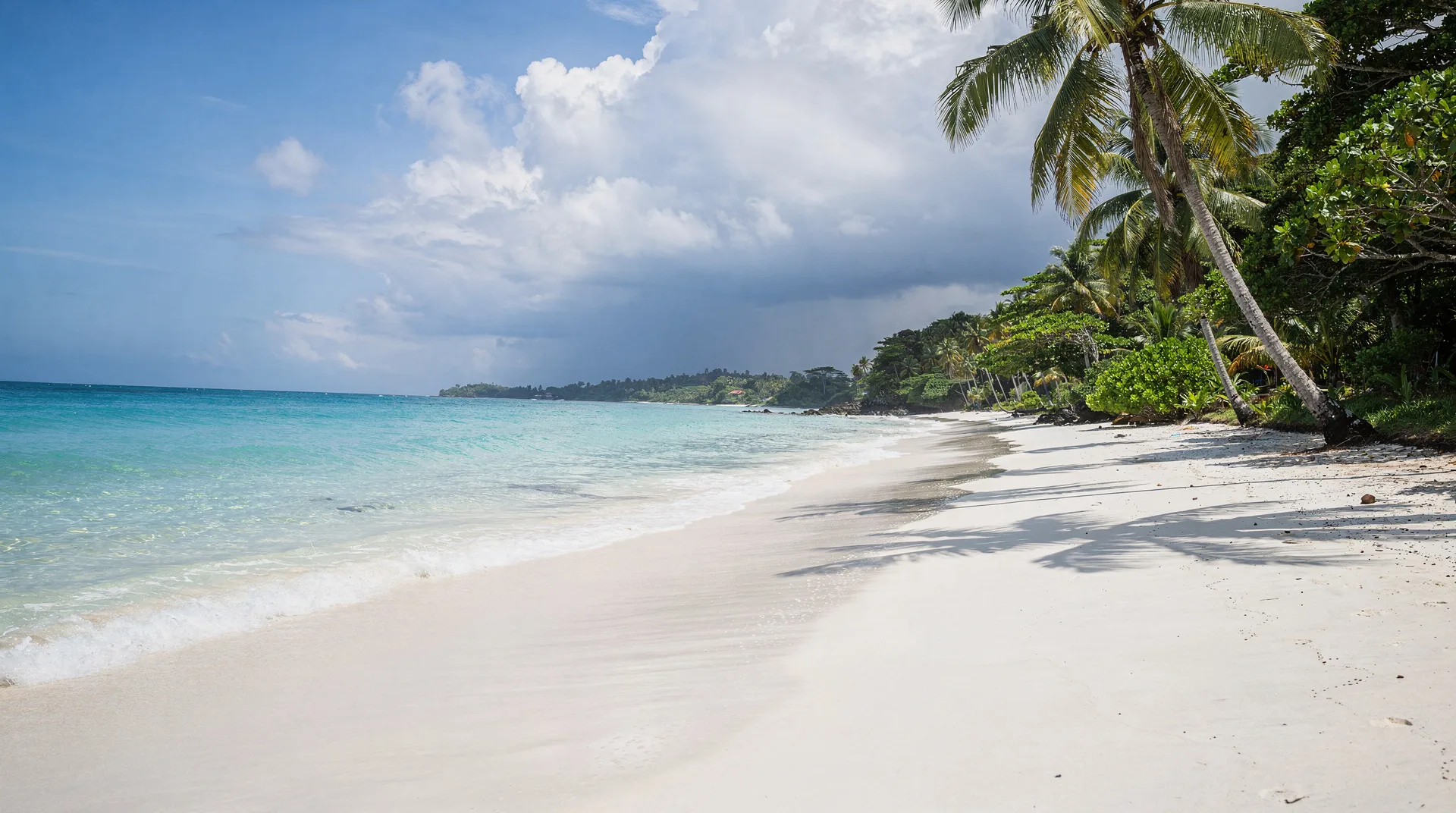
- Clear, warm weather that allows beach days at Punta Uva, Manzanillo, and Cahuita beaches
- The best snorkelling conditions of the year at Cahuita reef — visibility peaks when Pacific rain runoff is not affecting the Caribbean
- Caribbean cultural experiences (reggae festivals, local food, music) in sunny conditions
For deeper local detail, see the Puerto Viejo destination page, the Cahuita destination page and our Caribbean versus Pacific coast trip guide, which helps you decide how to split your days between the two coasts.
The contrast with the Pacific side in October is striking. The same week that has Guanacaste receiving 250 mm of rain might see Puerto Viejo with clear skies and 24°C beach temperatures.
Tortuguero in October: the canal system remains active with wildlife (caimans, herons, river turtles), the lodges are quiet and affordable, and turtle nesting season is winding down (green turtles nest through September, with stragglers into October). Boat canal tours are excellent — the rainforest is at its most dramatic. Our Tortuguero National Park guide covers how the canals and lodges work.
Cahuita NP: snorkeling & wildlife hike (certified guide) — from $75Central Valley and highlands in October
San José and the Central Valley in October are in peak rainy season. Afternoons and evenings bring regular thunderstorms. The city is functional, transport runs, and the highland day trips (Poás, Irazú, Orosi Valley) are possible — but volcano crater views are frequently obscured by cloud.
Monteverde in October is full cloud forest season. The mist is thick, waterfalls are spectacular, and the forest’s epiphyte density is at its peak. For travellers who want the most atmospheric, moody cloud forest experience rather than a clear-sky visit, October Monteverde is genuinely special.
San Gerardo de Dota in October sees continued rainfall. The quetzal nesting season (April-June) has ended, but quetzals are present year-round and the birding in the oak-cloud forest remains excellent.
Whale watching in October: the tail of southern season
August through October is the southern hemisphere humpback whale season at Marino Ballena National Park near Uvita. These whales travel from feeding grounds near Antarctica to give birth and nurse calves in Costa Rica’s warm Pacific waters. October represents the tail end of this season — whale activity is decreasing but still present.
October whale watching from Uvita has a weather caveat: the Pacific conditions can be rough, making boat rides choppier than the calmer August-September period. Reputable operators check conditions before departing and will postpone or cancel if seas are unsafe. Book with a licensed operator and maintain flexibility.
The whale festival (Festival de las Ballenas y Delfines) is usually held in September rather than October, but the whale presence continues into October. See our Uvita whale watching guide for the full season breakdown.
Accommodation and pricing in October
October is the cheapest month for accommodation in Costa Rica — typically 40-50% below January rates across Pacific coast destinations. Some properties, particularly smaller guesthouses and eco-lodges, reduce rates even further to fill rooms during the quietest month.
Budget estimates for October:
| Travel style | Daily per person |
|---|---|
| Backpacker | $38-52 |
| Mid-range | $85-120 |
| Comfort | $160-250 |
| Luxury | $300-500+ |
Luxury properties like Nayara Springs near Arenal, Lapa Rios near Puerto Jiménez, and high-end Guanacaste resorts discount less steeply (perhaps 20-30%) because their clientele is less price-sensitive. But even at luxury level, October represents real savings.
Caribbean coast accommodation in October is an interesting anomaly: some Caribbean properties actually price October higher than June-July because October is their relative dry season peak. Budget accordingly if the Caribbean is your primary destination.
October wildlife highlights
October is one of the most wildlife-dense months in Costa Rica for specific sightings:
Sea turtles winding down at Tortuguero: Green turtle nesting peaks in August-September and tapers through October. Early October still sees good nesting activity. Hawksbill turtles, which nest year-round in smaller numbers, are present. The Tortuguero National Park canal tour remains excellent for river turtles, caimans, and bird species like kingfishers, anhingas, and boat-billed herons regardless of sea turtle activity.
Olive Ridley arrivals at Ostional: The mass nesting event (arribada) at Ostional beach on the Nicoya Peninsula is at its most active from August through December, synchronised with the waning moon. October arrivals can see hundreds of thousands of Olive Ridley turtles emerging on a single night. This is one of the world’s great wildlife spectacles. Access is controlled and managed by the local ADIO community. Book through a licensed guide in Nosara or Sámara.
Humpback whales in their final weeks: The August-October southern humpback season extends into October, though whale density decreases as the month progresses. October whale watching from Uvita is possible but weather-dependent — the Pacific can be rough and operators sometimes postpone departures. Choose a flexible operator and keep plans open.
Cahuita reef at peak: The Cahuita National Park reef snorkelling in October benefits from the Caribbean dry window — visibility can reach 8-15 metres at the best sites, with healthy coral and extraordinary fish diversity. October is genuinely the best month for Cahuita reef snorkelling, though conditions vary by day.
Bird migration peak: October sees peak numbers of migrating songbirds and raptors moving through Costa Rica’s Caribbean slope. The Raptor count at Chomes and other watch points records thousands of broad-winged hawks and Swainson’s hawks in October. Caribbean-slope birding in October adds large numbers of northern migrants to the resident diversity — a birder’s bonanza.
Why October suits specific traveller types
The budget maximiser: If your goal is maximum Costa Rica experience per dollar, October is the month. You will access the same national parks, the same activities, and largely the same wildlife (in some cases more of it) for 40-50% less than January. Budget travellers who build flexible plans around October get by far the best value of any month.
The Caribbean specialist: If the Caribbean coast — Puerto Viejo’s reggae culture, Cahuita’s reef, Manzanillo’s beach, Tortuguero’s canals — is your primary interest, October is objectively the best month. The dry window makes the Caribbean distinctly more pleasant than the same region in June-July, and the October prices there are competitive with the rest of the year.
The adventure traveller who wants rivers: October’s high river volumes make the Pacuare and Sarapiquí rivers excellent for experienced rafters. Class ratings increase with volume — the Pacuare’s Class III-IV sections become genuinely committed in October. See our Pacuare River rafting guide for context on seasonal water levels.
The wildlife photographer: October’s combination of dramatic light (stormy skies create extraordinary soft light for photography), green landscape at its most saturated, full waterfalls, and active wildlife across multiple ecosystems makes it a serious landscape and wildlife photography month. The Pacific’s dramatic October skies — particularly at sunset after afternoon storms — are among the most photogenic weather patterns in the country.
Itinerary strategy for October
The best October itinerary in Costa Rica concentrates time on the Caribbean and treats the Pacific as secondary. A recommended pattern:
Days 1-2: San José (Central Valley) — transit, Orosi Valley day trip, La Paz Waterfall Gardens (spectacular with full waterfalls in October) Days 3-5: Tortuguero — final turtle stragglers, canal wildlife, quiet lodges Days 6-8: Puerto Viejo and Cahuita — Caribbean dry window, Cahuita reef snorkelling, Manzanillo beach Days 9-11: San José return via Turrialba — Pacuare River rafting (rivers are high-volume in October, excellent for experienced rafters), Irazú volcano attempt Days 12+: Optional — La Fortuna if budget allows and conditions acceptable on the Pacific side
For a shorter 7-day trip: Days 1-3: Puerto Viejo/Cahuita (Caribbean dry window) Days 4-7: La Fortuna — hot springs, canyoning, waterfalls (tolerate Pacific rain, prioritise experiences that work in wet conditions)
What to pack for October
October requires the most complete rain preparation of any month:
- Waterproof rain jacket with hood (not just a poncho)
- Waterproof bag or dry sack for electronics
- Quick-dry clothing for everything — cotton is your enemy
- Waterproof sandals or trail shoes with drainage
- A lighter layer for the Caribbean evenings (cooler than the Pacific)
- Mosquito repellent (more insects in wet season, particularly in Caribbean)
- Larger capacity on phone photography for those dramatic stormy-sky moments
Frequently asked questions about October weather in Costa Rica
Is October a bad time to visit Costa Rica?
Only for Pacific coast beach holidays with rigid weather requirements. For wildlife, budget travel, Caribbean coast, or flexible itinerary travel, October can be excellent. The key is building the trip around what October offers rather than fighting what it does not.
Does the Pacific coast flood in October?
Low-lying areas near rivers can flood in extreme October rain events. Road flooding on rural routes (particularly Osa Peninsula access roads, some Guanacaste lowland roads) can temporarily close routes. Urban areas — San José, Liberia, Jacó — have functioning drainage systems and rarely flood significantly. A 4WD vehicle is advisable for any October itinerary involving unpaved roads.
Is Corcovado accessible in October?
Partially. The La Leona and Los Patos entrances generally remain accessible, though trails are very muddy. The Sirena station has historically experienced reduced operations or temporary closures in October in some years due to trail erosion and flooding. Always call the ACT (Área de Conservación Osa) directly to confirm current access before making October Corcovado plans.
Why is the Caribbean dry in October when the Pacific is wet?
The Caribbean dry window in September-October is driven by a shift in the Inter-Tropical Convergence Zone and the Northeast trade wind pattern. When trade winds are weaker or shift direction in September-October, the Caribbean coast receives less moisture from the Caribbean Sea. Meanwhile, the Pacific is still receiving heavy rain from the westerly moisture systems. The continental divide separates these two systems, creating the opposite patterns simultaneously.
Is whale watching possible in October?
Yes, with weather caveats. The southern hemisphere humpback season runs August-October, so October is the tail end but whales are still present. Sea conditions in October on the Pacific can be rough, making some boat tours uncomfortable or unsafe. Choose experienced, licensed operators who check conditions before departure, and maintain flexibility in your schedule.