Costa Rica during the pandemic
When the planes stopped
| Border closure | March 18, 2020, 24-hour window to arrange departure |
| Visitor drop | roughly 95% year-on-year by Q2 2020 |
| Reopening | Phased from July 2020, approved-country list |
| Recovery | 2024 record: 2.1 million visitors in first six months |
| What lasted | Mutual aid networks, wildlife recovery, harder-to-find small lodges |
On March 18, 2020, Costa Rica closed its borders to non-residents. The announcement came from President Carlos Alvarado at 9pm, with a 24-hour window for anyone already in the country to arrange a flight home. Within forty-eight hours, the airports were processing the last commercial departures. The hotels were emptying. Shuttles that had been booked for weeks were being cancelled.
Tourism accounts for approximately 8% of Costa Rica’s GDP in normal years. In 2019, the country had received 3.1 million international visitors. In 2020, that number would fall to just over 1 million — and most of those arrived before March. By the second quarter of 2020, visitor arrivals had dropped by roughly 95% year-on-year.
We were in San José when the announcement came. We had arrived three days earlier on a trip that was supposed to be a research visit for itinerary updates. We left on one of the last commercial flights out on March 19, sitting in a half-empty 737 next to a Dutch family who had been on vacation in Manuel Antonio and spent forty-eight hours managing the logistics of evacuation. They were calm. Their children were less calm. The flight felt nothing like any other flight from this airport.
If you are planning a visit and want to understand how the country got from that moment to today, the best time to visit Costa Rica is a good companion read, and travel insurance in Costa Rica is worth a look given how quickly plans fell apart in 2020.
Who got stranded
Not everyone left in time. Approximately 8,000 foreign nationals were stranded in Costa Rica in the weeks following the border closure — a number the government published in April as it organized chartered repatriation flights in coordination with various embassies.
The stranded population was varied. There were tourists who had missed the 24-hour window due to logistics problems — cancelled flights, confusing information, or simple disbelief that the closure would be as complete as it was. There were long-stay travelers, digital nomads, and expats who had been living in the country informally and found themselves without a clear path to regularization. There were volunteers at NGOs whose programs had been suspended indefinitely.
The Tico response to these stranded visitors was, by most accounts, extraordinary. Airbnb hosts extended stays at no additional cost. Restaurants that were pivoting to takeaway prepared meals for guests who had no cooking facilities. The Costa Rican Tourism Institute (ICT) set up an information line in English. Hotels that were technically closed housed stranded guests until repatriation flights were arranged.
This is not surprising to anyone who has spent time in Costa Rica, but it is worth recording. We heard versions of the same story from multiple corners of the country in the following months — small gestures that, added together, kept a genuinely frightening period from becoming a humanitarian crisis for the people caught outside their home countries when the borders shut.
What Ticos did when tourism stopped
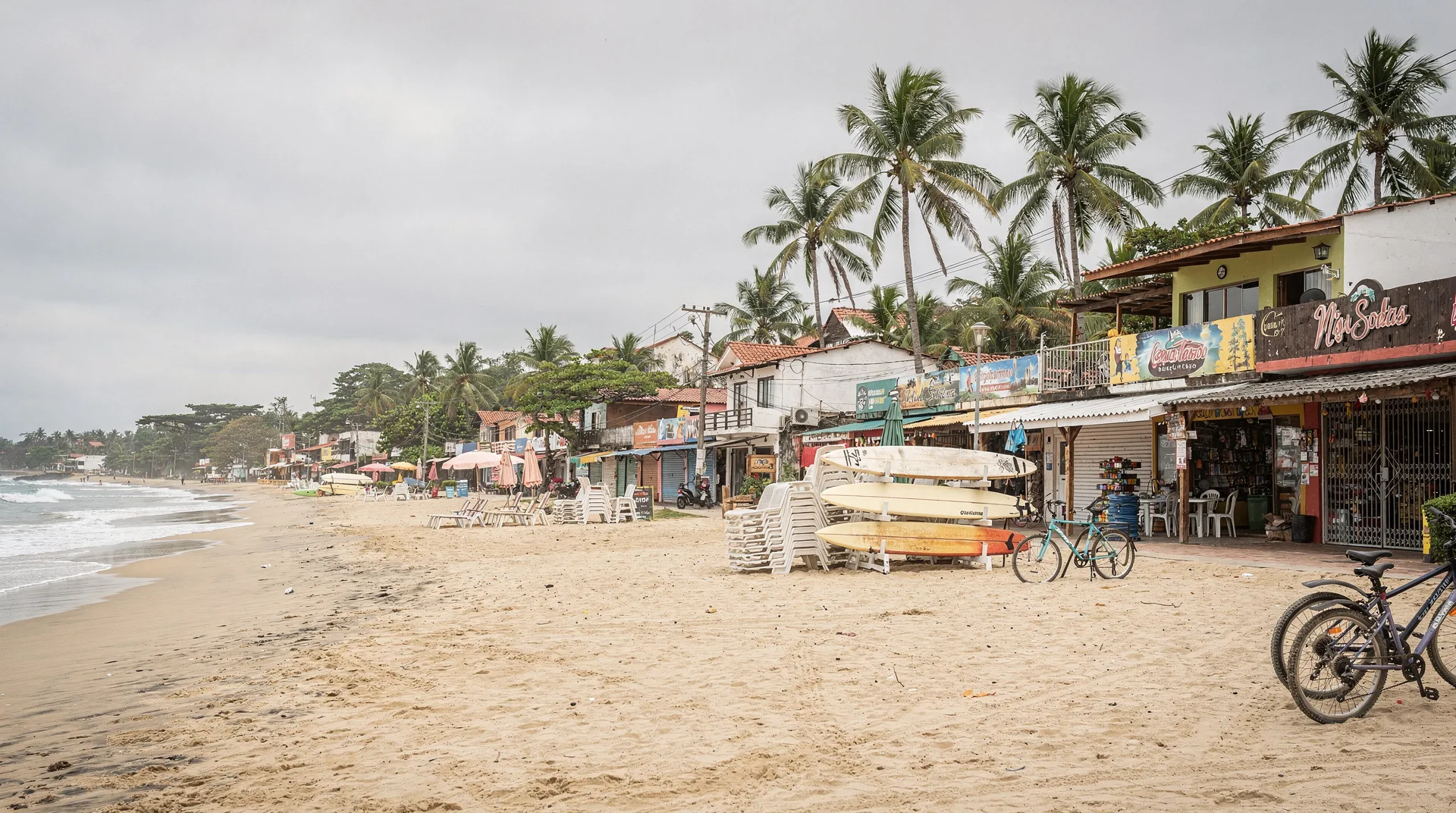
The communities most dependent on tourism — La Fortuna, Tamarindo, Manuel Antonio, Monteverde, Drake Bay — faced an economic shock with no precedent in living memory. A significant portion of the workforce in these areas had no income from one week to the next.
The government’s response included a temporary unemployment program — Bono Proteger — that provided approximately $220 per month to workers displaced by the crisis. This covered roughly half of a typical hotel worker’s monthly earnings in these towns. It was better than nothing. It was not enough.
What filled the gap, in part, was community mutual aid of a kind that the tourism economy had perhaps obscured. Fishing communities in the Golfo Dulce began distributing catches to inland families. Agricultural communities in the central valley expanded their support networks. Urban vegetable gardens appeared in Barrio Escalante in San José. The informal solidarity networks that exist underneath the tourism-facing economy became visible.
Some operators used the closure to make improvements they had been postponing for years. Trail maintenance at several private reserves that had been deferred due to operational demands during high season was completed. One Drake Bay lodge owner we spoke to in late 2020 described the closure period as “the best thing that ever happened to the property” in terms of infrastructure — they had rebuilt their boat dock, repainted every cabin, and hired a local botanist to create trail signage for the first time.
Places like this are still worth the trip for the birdlife alone, and Drake Bay remains one of the better bases on the Osa Peninsula. If you go, a guided bird-watching outing in the Drake Bay area — from $95 is a good way to put money directly into the local guiding community that struggled most during the closure.
The wildlife response
The reduction in human activity produced documented changes in wildlife behavior that the scientific community, still studying them, found significant.
Scarlet macaws were observed in numbers at Carara National Park at distances from visitors that would have been unusual during the tourist season. Sea turtle nesting success rates at Tortuguero improved in 2020 relative to previous years. On the Nicoya Peninsula, olive ridley turtles were observed using beaches that had been marginal nesting sites in recent years.
The phenomenon was not unique to Costa Rica — it was documented globally — but in a country where biodiversity conservation depends heavily on the economics that tourism provides, it generated complicated feelings. The wildlife benefited from the human absence. The conservation programs that protect that wildlife depend on the income that the humans bring. That tension did not resolve cleanly.
For readers who want to see these places for themselves, our guides to Carara National Park, the Tortuguero turtle nesting season and Costa Rica’s wildlife overview explain what to look for, and wildlife watching ethics covers how to behave around animals that have, in some places, grown used to quieter surroundings.
The political response
Costa Rica’s handling of the pandemic in its first phase — roughly March through June 2020 — was widely praised internationally. President Alvarado’s government implemented mask mandates, movement restrictions, and contact tracing systems faster than most of the region. The public health system, while strained, did not collapse in the first wave.
The decision on when and how to reopen tourism became intensely debated. The ICT and the Ministry of Tourism pushed for gradual reopening. Epidemiologists pushed for caution. Hotel and tour operator associations argued that delay was destroying livelihoods. The government ultimately began a phased reopening in July 2020 — not for all nationalities, but for a list of approved countries with lower infection rates.
That phased reopening, the “responsible tourism” program, became a model that other Central American countries studied. It was not without criticism — the approved country list changed frequently, creating planning uncertainty for operators — but it allowed some portion of tourism to resume while the major European and North American markets remained effectively closed. We wrote a fuller account of exactly what changed as those restrictions lifted in reopening borders: what changed in 2021.
What we’d say to someone reading this in 2026
We wrote this in May 2020, when the outcome of the pandemic was genuinely uncertain and Costa Rica’s tourism industry was facing an existential moment. Six years later, the tourism numbers have recovered — 2024 saw a record 2.1 million visitors in the first six months — and the physical evidence of the shutdown has largely been erased.
What remains is less visible. Some of the small operators who lost their businesses in 2020 did not come back. Some of the properties that were sold during the crisis were acquired by larger corporate groups. The Tico-owned lodge that you book through a personal recommendation is, in some corners of the country, a bit harder to find than it was in 2019.
The mutual aid networks that emerged in 2020, however, also remain — quieter, less visible, but real. And the wildlife? By most measures, it is still there, still abundant, still extraordinary. That, at least, the pandemic did not take.
Prices did not stay where they were in 2020, either — see our 2023 affordability comparison and our eco-tourism in Costa Rica post-2020 for how the recovery reshaped both cost and the sustainability conversation. If the pandemic-era experiment with remote work life in the country stuck with you, our digital nomad visa guide covers what that actually looks like now.
For thoughts on supporting the local economy when you travel now, see our companion piece on how to support local tourism after COVID.
Drake Bay: bird watching tour — from $95