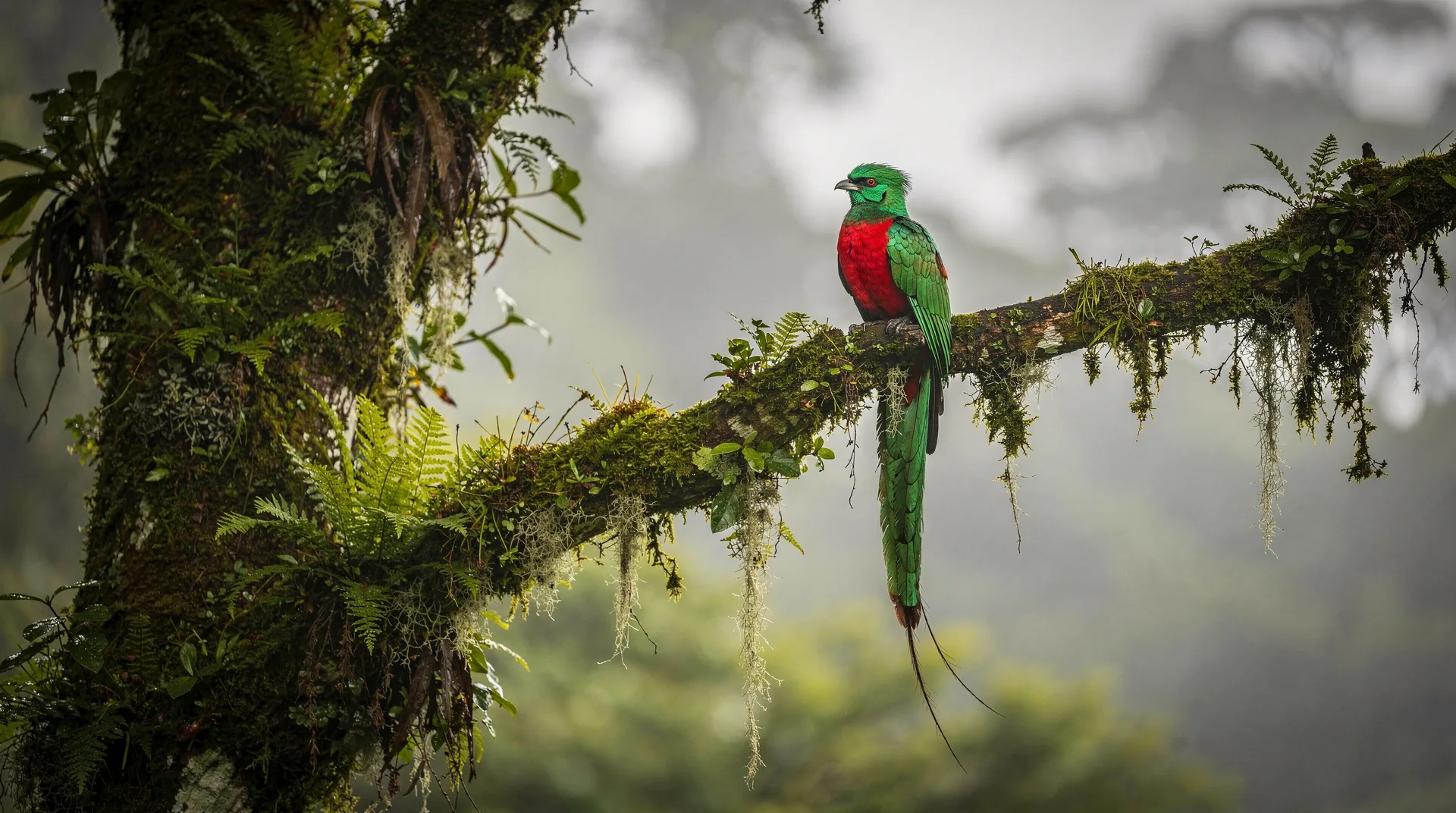
San Gerardo de Dota: Costa Rica's quetzal valley
San Gerardo de Dota — Costa Rica's top quetzal-watching destination. Cold, misty cloud forest, the Savegre River, and some of the country's finest birding.
Top experiences nearby
From San José: Pacuare River white water rafting day trip
Pacuare River full-day rafting adventure from San José
San Jose: Sarapiqui Class 2&3 rafting adventure
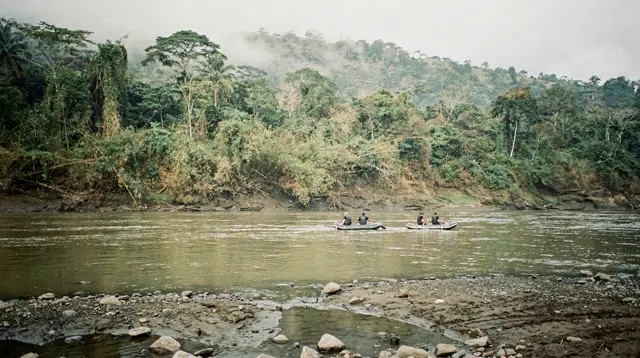
San Jose: Sarapiqui Class 3&4 rafting to La Fortuna
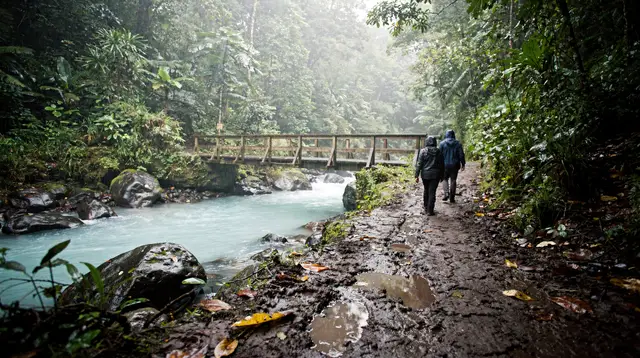
San Jose: Manuel Antonio National Park tour
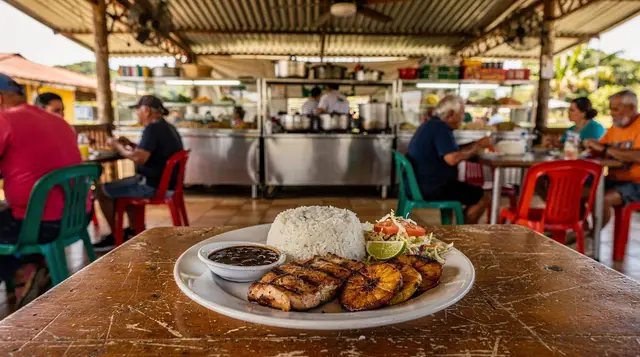
San José: guided city tour with National Theater visit
Quick facts
- Best time to visit
- April – June (quetzal nesting peak); March – July overall
- Days needed
- 1-2 days
- Getting there
- 2.5 hrs from San José via Pan-American Highway; 80 km
- Budget per day
- $60-120 for lodging; guided birding tours $50-90 per person
The valley where the quetzal still nests
At 2,200 metres in the Talamanca range, cut by the cold, clear Savegre River and draped in oak-dominated cloud forest, San Gerardo de Dota is the most reliably productive quetzal-watching site in Costa Rica — and arguably in all of Central America. The resplendent quetzal, worshipped by the Maya as a deity and now a near-mythological symbol of freedom and beauty, nests in the wild avocado trees (Persea spp.) that line the valley floor each spring, bringing male birds into clear, repeated view as they make their feeding flights at dawn and dusk.
The valley is not a conventional tourist destination. There is no beach, no volcano, no zipline, and no resort infrastructure. What it has is an uncrowded, authentically rural Costa Rican mountain community, some of the cleanest river water in the country, rainbow trout introduced from California streams in the 1950s and now woven into local culinary identity, and — if you are here in April or May on a clear morning — a male quetzal with 60-centimetre tail feathers hovering in an avocado tree ten metres from where you are standing.
The quetzal: when and where to see it
The resplendent quetzal is not rare at San Gerardo de Dota during breeding season — it is predictable. Male birds are recognisable from 200 metres by the iridescent green of their back and the crimson of their chest, amplified in April through June when the elongated upper tail coverts (the “tail feathers” that are actually back feathers extending beyond the true tail) reach their full breeding-season length of 60-90 centimetres.
Peak nesting period: April through June. During this window, males make frequent food runs to wild avocado trees in the lower valley, following a regular circuit that local guides have mapped over decades. Arriving at a known feeding tree before dawn and waiting quietly produces consistent encounters. Females are less flamboyant but equally visible near nest cavities — excavated directly into rotting oak branches.
Secondary window: March through early July. Quetzals are present and viewable but feeding activity is less predictable before April. Outside this window (August through February), the birds move to higher elevations in the Talamanca range and sightings at San Gerardo become sporadic.
Where exactly: The best quetzal trees are on the valley floor between the small hamlet of El Empalme on the Pan-American Highway and the Savegre Hotel, approximately 9 kilometres of switchback road below the highway. Your lodge will know the current active trees; ask the night before your dawn walk.
A note on guided tours: San Gerardo de Dota has no direct GetYourGuide products as of 2026 — it is one of the few destinations in Costa Rica where the most rewarding tours are booked directly through local operators. The Savegre Hotel, Trogon Lodge, and Miriam’s Lodge all have in-house birding guides who charge $50-90 per person for 3-4 hour dawn tours. These are genuinely among the best birding guides in Costa Rica for Talamanca cloud-forest species; they know individual birds and nest locations by memory. Book your guide at the same time you book your room.
For birding tours that combine San Gerardo de Dota with other highland areas as part of a multi-day itinerary, see the quetzal watching guide and the bird watching by region guide for circuit planning. The 14-day wildlife photography itinerary specifically includes San Gerardo de Dota as a key stop alongside Sarapiquí, Monteverde, and Drake Bay.
Beyond the quetzal: what else lives here
San Gerardo de Dota is exceptional for the full Talamanca cloud-forest bird community, not just the flagship species. In a single morning walk in the valley, a visitor can reasonably expect:
Trogons and quetzals — the prized family, with black-throated trogon and elegant trogon also present alongside the resplendent quetzal.
Hummingbirds — the valley has exceptional diversity: magnificent hummingbird (the second largest in the world), scintillant hummingbird (one of the smallest), volcano hummingbird (endemic to Costa Rica and western Panama above 2,000 m), and fiery-throated hummingbird.
Tanagers — flame-colored tanager, spangle-cheeked tanager, sooty-capped bush-tanager, and large-footed finch (a ground sparrow endemic to the Talamanca range) are all common in the oak forest understorey.
Raptors — barred forest-falcon, black-and-chestnut eagle, and the extraordinary black hawk-eagle have all been recorded in the valley.
Mammals — the valley holds Baird’s tapir (occasionally seen crossing the river at dawn), highland porcupines, and the long-tailed weasel. Black-bellied slender salamanders in the leaf litter for the herpetologically inclined.
The Savegre River and trout
The Savegre River rises in the Chirripó massif and runs cold and clear through San Gerardo de Dota before dropping into warmer lowlands. It is one of the cleanest rivers in Central America — water quality monitoring by CATIE (Tropical Agriculture Research and Education Centre) consistently records excellent chemical and biological indicators.
Rainbow trout were introduced to the valley rivers in the 1950s and are now an important local food source and a modest fishing attraction. Several lodges maintain their own trout ponds stocked from river fry; the Savegre Hotel’s restaurant serves trout from its own pond, typically prepared simply in butter and garlic. Fishing in the river requires a MINAET sport-fishing licence ($15/day, available from the ranger station) and is best during the dry season (December through April) when river levels are lower.
San Gerardo de Dota vs Monteverde for quetzals
Both destinations are legitimate quetzal sites, but they suit different trips and different seasons.
| San Gerardo de Dota | Monteverde | |
|---|---|---|
| Quetzal reliability | Highest, April–June nesting | Good, but generally lower success rate |
| Elevation / climate | 2,200 m, cold nights (8–12°C) | 1,400 m, cool and misty |
| Crowd level | Low, no mass tourism | High, established tourist circuit |
| Other activities | Trout fishing, highland hiking | Ziplines, hanging bridges, night walks |
| Distance from San José | 2.5 hrs | 3–3.5 hrs |
Committed birders who want the highest-probability quetzal encounter and don’t mind a quiet, activity-light valley should choose San Gerardo de Dota, ideally April through June. Travelers who want quetzals as one stop among several activities — with more restaurants, tour options, and infrastructure — tend to prefer Monteverde, especially outside nesting season when San Gerardo’s sighting rates drop.
Hiking beyond the quetzal trees
The valley has several trails beyond the dawn quetzal walks that reward a longer stay. The Savegre Hotel’s private reserve maintains a network of well-marked trails through primary oak forest along the river, ranging from an easy 45-minute loop to a more demanding half-day circuit that climbs toward the ridge for views back down the valley. Trogon Lodge’s trails follow the river through secondary and primary forest with several waterfall viewpoints. None of these require a guide, though hiring one (arranged through your lodge, typically $25–40 for a half day) sharply increases the number of species and mammals you notice versus walking alone — local guides know individual territories and calls that are invisible to a first-time visitor.
Accommodation: cold nights, warm beds
The valley has several small lodges that cater almost exclusively to birders and hikers. All have some version of a wood-burning stove or fireplace — temperatures drop to 8-12°C at night, year-round, and cold evenings are the norm rather than the exception at 2,200 metres.
Savegre Hotel Natural Reserve and Spa is the most established property — a cluster of wooden cabins in a garden property with a natural private forest reserve of 340 hectares adjacent to the hotel grounds. Guided birding tours, a reasonable restaurant (trout a specialty), and a small library of regional bird field guides make this the default choice for serious birders. Rooms run $120-180 per night (2026), including breakfast.
Trogon Lodge (officially affiliated with Costa Rica Expeditions) is a well-regarded mid-range option with a strong in-house guide operation and good views of the active quetzal territory. Rooms $90-130.
Miriam’s Quetzales offers the most personal experience — a small family-run guesthouse where Doña Miriam Alfaro’s decades of knowledge of the valley are deployed enthusiastically in evening conversations about where the quetzals were seen that day. Budget-friendly at $55-80 per room.
Photography notes
For photographers, the practical challenge at San Gerardo de Dota is light, not access: the valley’s dawn and dusk feeding windows coincide with low, often diffuse light under cloud cover, so a fast lens (f/4 or wider) and a willingness to push ISO matters more here than at open, sunlit destinations. Quetzals typically perch 8–15 metres up in avocado trees, so a 400mm-equivalent reach (or a teleconverter) makes a meaningful difference over a standard 200mm zoom. Local guides know which specific trees have active feeding circuits on a given week and will position you accordingly — arriving without a guide and searching independently rarely produces usable images in the time available.
Whatever lens you carry, the quality of the encounter depends on how you behave around the birds. Stay on the paths, keep your voice low, never play recordings to pull a bird closer, and give nesting cavities a wide berth. The wildlife watching ethics guide covers the habits that keep the valley’s quetzals returning to the same trees, and the wildlife photography tips guide goes deeper on gear and technique for low-light forest work.
Why the cloud forest feels different here
Visitors who come from the lowland rainforests or the coast often expect the same experience, and it is not. The oak forest of the Talamanca highlands is cooler, quieter and more layered with moss and epiphytes than the steamy lowland jungle, and the birds are different too. The cloud forest vs rainforest difference guide explains what changes with altitude, and the microclimates explained guide helps you understand why a morning of clear sky can turn to mist within an hour. Plan around that rhythm: early starts, a long break in the middle of the day by the lodge stove, and a second short walk as the light returns.
Getting here
San Gerardo de Dota is 80 kilometres from San José via the Pan-American Highway south (Route 2). The turn-off at El Empalme is clearly marked (km 80); from the highway, the road descends 9 kilometres on a narrow switchback to the valley floor. The descent requires care — steep grades and blind corners on single-lane asphalt. Total drive time from San José: 2.5 hours.
There is no public bus to San Gerardo de Dota — the valley road is too steep and narrow for the standard interprovincial buses. Take a San Isidro-bound bus from San José’s Terminal Alfaro to El Empalme ($3.50, 2 hours), then arrange a taxi down from the highway junction ($15, booked in advance through your lodge).
By car from Cerro Chirripó access (San Gerardo de Rivas), allow 1.5 hours via San Isidro de El General.
Whether to drive yourself is the main decision. The valley road rewards a confident driver with the freedom to start before dawn, but it is steep and often misty. Read the driving in Costa Rica guide and the road conditions by region guide before you commit, and compare the options in rent a car or not. If you would rather not drive at all, the shuttle services overview shows what private and shared transfers exist, and your lodge can usually help with the last stretch down from the highway.
Many travellers spend a night in the capital on either side of the valley. If you have a spare half day in San José, a guided city walk that takes in the National Theatre — from $45 is an easy way to use the time before or after the mountain drive.
Practical considerations
Temperature: Year-round cold by Costa Rican standards — 12-18°C during the day, 8-12°C at night. Bring layers (fleece + light jacket), warm socks, and something waterproof. This is not beach weather.
Rain: The valley receives rain throughout the year, with the heaviest months October through December. Cloud and mist are present on most mornings; the best birding windows are the brief clear patches at dawn and dusk rather than extended sunny periods.
Altitude sickness: At 2,200 metres, San Gerardo is unlikely to cause significant altitude symptoms in most visitors. Some people notice mild breathlessness on the first day. Drink water, move at a comfortable pace, and rest if needed.
What to pack: layers matter more than anything else here. The packing list for Costa Rica covers the basics, but add a warm hat, gloves for pre-dawn walks and binoculars you are comfortable holding for a long time. Cash is also worth planning ahead; see the ATM and cash tips guide for where to withdraw before you leave the main towns.
Safety and cover: the valley itself is calm, but mountain roads and wet trails justify a sensible approach. The safety in Costa Rica guide and the travel insurance guide are worth a read before a trip with a long drive and early-morning walks.
Frequently asked questions about San Gerardo de Dota
Can I see quetzals on a day trip from San José?
Technically yes, but barely. The drive from San José takes 2.5 hours, which means departing by 4am to arrive for the pre-dawn window. Without an overnight stay, you arrive at first light, have 2-3 hours of peak birding, then must begin the return journey. Most quetzal observers strongly recommend at least one night — the two-day visitor who can watch both sunrise windows sees dramatically more than the day-tripper.
Are quetzals guaranteed?
No wildlife encounter is guaranteed. During peak nesting season (April-June), experienced local guides succeed in finding male quetzals on the majority of morning tours — 80-90% of visits with a knowledgeable guide produce close quetzal sightings. Outside the nesting season, success rates drop and sightings become less reliable. March and July-August are intermediate periods.
What is the best alternative if I miss quetzal season?
San Gerardo de Dota’s other highland specialties are present year-round. The volcano hummingbird, the large-footed finch, the flame-colored tanager, and the full assemblage of Talamanca cloud-forest species make the valley worthwhile for committed birders in any month. Monteverde is the alternative quetzal site in a different season (see the quetzal watching guide).
Is San Gerardo de Dota suitable for children?
For families with children who have genuine interest in wildlife or birding, the valley is excellent — the small scale, the friendly community, and the dramatic quetzal encounters create memorable experiences for young naturalists. The valley road and lodge grounds are safe and accessible. Young children who are not interested in birds will find it very quiet.
Building the valley into a longer trip
San Gerardo works best as a short, quiet interlude rather than the centrepiece of a two-week route. The best time to visit Costa Rica guide helps you slot the nesting window into your wider dates, and the family travel tips guide is useful if you are bringing children who will need things to do once the birds go quiet.
If you want to climb higher after the valley, the Chirripó National Park guide and the hiking Cerro Chirripó guide describe the country’s highest trek, which shares the same Talamanca range. For something very different in the same mountains, the Savegre River rafting guide covers the river that runs through the valley further downstream.
When the cold and stillness have had their effect, many travellers want a change of pace. A day of white-water rafting on the Pacuare River from San José — from $130 is a high-energy contrast, and for a warm-weather finish a day trip to Manuel Antonio from San José — from $130 trades oak forest for rainforest and beach. Both are options for the days around your valley stay, not part of it.
If cloud forest is the draw, the Monteverde vs Santa Elena reserve guide helps you pick between the better-known reserves, and the 10-day Arenal, Monteverde and Manuel Antonio itinerary shows how a highland stop can sit within a classic route.
Where to go next
From San Gerardo de Dota, the most natural continuation is south to Pérez Zeledón (45 minutes) and the approaches to Cerro Chirripó — the valley and the mountain pair naturally as a two-destination highland circuit within San José province. North, return to the Pan-American Highway for San José (2.5 hours) or continue north toward Cartago province.