March weather in Costa Rica: the complete guide
March in Costa Rica?
Hottest dry-season month; still peak prices, intense sun, excellent Osa and Guanacaste conditions.
What March actually feels like across Costa Rica
March is the closing chapter of Costa Rica’s dry season and arguably the hottest month of the year on the Pacific coast. The landscape in Guanacaste reaches its most extreme — parched, golden, dust-dry — while the ocean stays calm and visibility for diving and snorkelling peaks. It is genuinely excellent for wildlife because the reduced forest cover forces animals into the open, and water sources concentrate both fauna and keen observers around them.
The complexity of March comes from two directions: heat and timing. The heat is real — midday temperatures in Guanacaste can touch 37-40°C in March, which is uncomfortable for inland hiking if you are not acclimatised. And timing matters because Semana Santa (Easter week) typically falls in late March or early April, creating a domestic travel surge that pushes beach hotel prices to their annual peak and floods popular beaches with Costa Rican families on holiday. This guide helps you navigate both.
| Rainfall | Near-zero on the Pacific; 80-120mm Caribbean |
| Temperatures | 30-40°C Pacific coast; 22-28°C Central Valley |
| Crowds | High through mid-March, peaking again at Semana Santa |
| Best for | Guanacaste beaches, Osa/Corcovado access, diving visibility |
| Watch for | Late March/early April Semana Santa price spike |
Pacific north (Guanacaste): peak heat, minimal rain
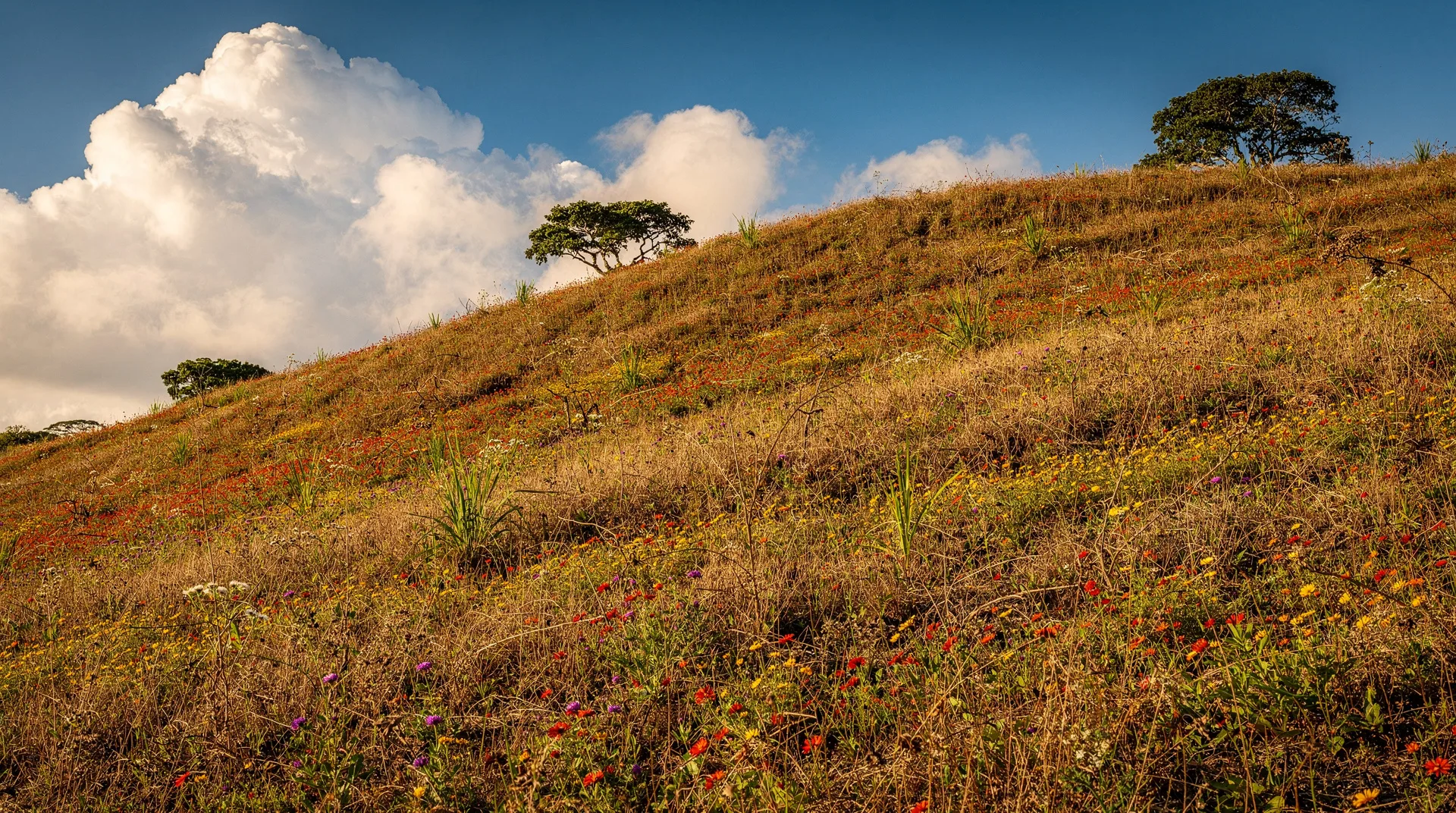
Rainfall in Guanacaste in March is often measured in single digits for the entire month — sometimes zero. The Pacific is calm, the skies are cloudless from around 7am to late afternoon, and the light is intensely bright. This is the month when the dry forest landscape reaches its most dramatic visual state: trees have largely shed their leaves, dry riverbeds cut across the land, and the golden hills behind Liberia contrast sharply with the deep blue Pacific.
Beach towns and resorts — Tamarindo, Playa Conchal, Nosara, Sámara, Playas del Coco, Papagayo — are still at peak capacity. The crowd intensity begins to thin slightly in mid-March as North American spring break finishes, but Semana Santa (which falls in late March in 2026) immediately replaces one crowd with another. Costa Rican families travel heavily during Semana Santa, and beach properties book out months ahead for this window.
The heat is worth planning around. Mornings (5:30-10am) are the best time for outdoor activities in Guanacaste in March — wildlife walks, hiking in Rincón de la Vieja National Park, snorkelling trips before the wind picks up. By 11am-3pm, the heat index in direct sun can feel overwhelming. Afternoons are better spent near water or under shade.
Rincón de la Vieja is one of the best day trips from Liberia or the Guanacaste coast in March. The volcanic thermal areas (boiling mud pools, fumaroles) are fascinating, the Oropendola waterfall is in reduced but still accessible flow, and wildlife is concentrated near the river corridors. The park’s Las Pailas trail is largely flat and achievable even in the heat if you start early.
Guanacaste: 5-in-1 Rincón de la Vieja adventure day pass — from $120Pacific central (Quepos, Jacó, Manuel Antonio): hot and dry
Manuel Antonio in March is textbook dry season. Rainfall drops to near-zero and temperatures settle at 30-34°C during the day. The forest canopy is still reasonably green (this zone gets more year-round moisture than Guanacaste), which means wildlife is present but requires more patience to spot than in the deciduous dry forests of Guanacaste.
Manuel Antonio National Park continues operating at peak demand. The visitor cap still applies, and SINAC bookings fill for weekends and holidays — plan to reserve your entry 7-10 days ahead through the dry season period. The park is closed every Tuesday.
Wildlife highlights for March in Manuel Antonio: squirrel monkeys (the rarest of Costa Rica’s four monkey species, endemic to the Pacific coast) are reliably seen on the main beach trail. White-faced capuchins, sloths, coatis, and scarlet macaws are all active. Offshore, humpback whale watching from Quepos is in its final weeks — the December-March northern hemisphere season wraps up by late March.
Manuel Antonio Park: guided walking tour with a naturalist — from $65Carara National Park, between Jacó and Manuel Antonio, remains one of the most reliable places in Costa Rica to see scarlet macaws. March coincides with nesting season, and dawn visits to the park entrance area (before 7am) frequently produce sightings of macaws flying between forest patches. This is a free or low-cost activity that does not require a guide.
Pacific south (Uvita, Drake Bay, Osa Peninsula): final weeks of whale watching
March is an excellent month for the southern Pacific and Osa Peninsula, with two time-sensitive reasons to visit earlier rather than later in the month:
Humpback whale watching ends. The December-March northern hemisphere humpback season concludes by late March. Early March still offers good whale activity off Uvita and Marino Ballena. If whale watching is on your list, plan for the first two weeks of March rather than the last.
Corcovado is fully open and accessible. The roads to Drake Bay and Puerto Jiménez are at their driest in March, and Corcovado’s Sirena Station is fully operational. The March heat can make the full-day hike to Sirena challenging, but the jungle provides shade and wildlife sightings (tapirs, peccaries, scarlet macaws, anteaters) are exceptional. Pre-booking a guide with a reputable operator is required for Corcovado day visits.
Drake Bay: Corcovado NP and Sirena Station tour — from $135Caño Island Biological Reserve maintains its excellent water clarity through March. The island’s snorkelling and diving conditions are among the best in Costa Rica at this time of year, with visibility regularly exceeding 15-20 metres and good chances of encountering whitetip reef sharks, eagle rays, and large pelagic fish.
Caribbean coast: gradual improvement through March
The Caribbean coast is in a transition through March. Puerto Viejo and Cahuita typically receive 80-120mm of rain in March (down from the wetter 100-150mm of February), and the weather pattern is more variable — some years March on the Caribbean is remarkably clear, others still deliver frequent showers. It is safer to treat March as “potentially improving” rather than “reliably dry” on the Caribbean side.
Tortuguero canals are navigable year-round and birding is consistently good. There is no turtle nesting in March (green sea turtles begin arriving around July), but the canal wildlife — crocodiles, river otters, caimans, pink river dolphins, and more than 300 bird species — is reason enough to visit. March also means fewer tourists in Tortuguero than the peak July-August turtle season, with lower lodge rates and more intimate canal tours.
One advantage of the Caribbean in March: the snorkelling reef at Cahuita National Park has improving conditions as the month progresses. Clear-weather days allow visibility of 5-10 metres through the coral gardens, which are among the most accessible reef ecosystems in Central America.
Central Valley and highlands: still clear and cool
San José, Cartago, Heredia, and Alajuela remain pleasant through March with the dry-season clarity that makes morning volcano views spectacular. The first hints of the coming green season can appear in late March — brief afternoon convection clouds build over the mountains — but sustained rain does not typically arrive until April or May in the Central Valley.
Volcán Poás continues to require SINAC advance booking (3-4 weeks ahead for weekend slots in March). The crater views in the dry season are exceptional when the wind pushes steam plumes away from the viewpoint. Volcán Irazú offers a more accessible day trip from San José and the drive through Cartago passes interesting colonial church architecture.
San Gerardo de Dota at 2,000m elevation is cold at any time of year (8-15°C days, dropping to 5°C at night in March), but the cloud forest birding is excellent and begins shifting toward the quetzal breeding season that peaks in April-June. March is a quiet month to visit San Gerardo de Dota — fewer birders means better trail access and lower accommodation rates than the April-June peak.
Semana Santa: plan around it or embrace it
Easter week (Semana Santa) is Costa Rica’s most significant domestic holiday. In 2026 it falls in late March to early April. During this week:
- Pacific beaches (Tamarindo, Manuel Antonio, Jacó, Nosara) fill with Costa Rican families
- Hotel rates reach their annual peak and availability is near-zero without advance booking
- Alcohol sales are restricted on Good Friday (Thursday evening through Saturday morning)
- Roads from San José to beach areas see significant Friday afternoon traffic
If you want to experience Semana Santa, book 3-4 months ahead and embrace the festive atmosphere — beachside music, street food, and celebrations are genuinely enjoyable. If you want to avoid it, either finish your beach time by Palm Sunday or skip to the mountains (San Gerardo de Dota, La Fortuna) where Semana Santa crowds are less intense.
What to pack for March
March’s heat is the defining factor on the Pacific coast:
- High-SPF reef-safe sunscreen — March sun at the Pacific coast is the most intense of the year; SPF 50+ and hat are non-negotiable
- Very lightweight, breathable clothing; moisture-wicking fabrics make midday heat more tolerable
- Swim clothing and water shoes — you will be in or near water often to stay cool
- A light layer for cool evenings in the Central Valley and for early morning wildlife walks in Guanacaste when temperatures are comfortable
- Hydration — drink more water than you think you need; heat and physical activity in March at lower altitudes can cause dehydration quickly
March price reality check
March is high-season pricing through mid-month, with Semana Santa adding a premium:
| Travel style | Daily budget per person |
|---|---|
| Backpacker (hostels, sodas, public bus) | $55-75 |
| Mid-range (2-3 star hotels, shared shuttles) | $130-190 |
| Comfort (4-star eco-lodges, private transfers) | $260-420 |
| Luxury (Tabacón, Nayara, Lapa Rios) | $500-900+ |
After Semana Santa (if it falls in March), prices typically begin their first significant drop toward shoulder season. Late March to mid-April can offer a useful window of improving rates before the May-June green season fully takes hold.
Should you visit Costa Rica in March?
March is excellent for Pacific coast and Osa Peninsula visits if you plan around the heat and Semana Santa. The main reasons to choose differently:
- Heat sensitivity: March midday temperatures in Guanacaste (35-40°C) are uncomfortable for extended outdoor activity. If you want to hike or explore in the afternoon, choose November or April instead.
- Whale watching: If humpback whales are a priority, target early March or shift to the August-October southern hemisphere season at Uvita.
- Budget: Green season (May-November) offers 25-40% lower accommodation rates for the same activities. The green season pros and cons guide helps calibrate expectations.
- Caribbean focus: If your trip centres on Cahuita, Puerto Viejo, or Tortuguero, September-October is your optimal window.
For visitors who want the full Pacific experience — clear seas, maximum wildlife visibility in dry forest, and the final weeks of the humpback season — March delivers. Just book early, start activities before 10am, and hydrate well.
Frequently asked questions about March weather in Costa Rica
How hot is Costa Rica in March?
March is the hottest month. Coastal lowlands in Guanacaste can reach 36-40°C at midday. Manuel Antonio and Quepos range from 30-34°C. The Central Valley (San José, Heredia) remains comfortable at 22-28°C due to altitude. Nights on the Pacific coast stay warm at 24-27°C.
Is March good for Arenal and La Fortuna?
La Fortuna and Arenal are good in March. The La Fortuna waterfall is in reduced flow but still scenic, and the surrounding forest is active with wildlife. Hot springs are less appealing in peak heat but still enjoyable in the evenings. White-water rafting on the Sarapiquí remains excellent.
Does rain come in late March?
On the Pacific coast, the first hints of the transition appear in late March and April — brief afternoon convection clouds over mountains, occasional light showers at higher elevations. But meaningful rain on the Pacific coast typically arrives in May. The dry season generally holds through March in Guanacaste and the Central Pacific.
What about Semana Santa crowds in March?
Semana Santa is the one week when Costa Rica’s beaches are dominated by domestic tourism. If your trip overlaps, book accommodation 3-4 months in advance and expect beach crowds. Alternatively, the highlands (Monteverde, San Gerardo de Dota, Chirripó area) receive far fewer Semana Santa visitors and offer a quieter alternative.
Is March good for bird watching?
March is excellent for bird watching across Costa Rica. The dry forest of Guanacaste is at maximum bird visibility due to reduced foliage. Carara National Park is particularly active with scarlet macaws and forest interior species. The bird watching by region guide covers specific sites and timing in detail.
Related guides
Our best time to visit Costa Rica guide provides the full seasonal overview. The dry season pros and cons guide sets realistic heat expectations. The April weather guide covers the transition month — Pacific still pleasant, green season beginning its approach. For Osa Peninsula planning, the Corcovado National Park guide and Drake Bay destination page have detailed logistics.
Frequently asked questions
Is March a good time to visit Costa Rica?
March is excellent for the Pacific coast and Osa Peninsula — it is the hottest, driest month. Wildlife visibility peaks as deciduous trees shed leaves and animals concentrate around water sources. Prices are still high season through mid-March; late March sees Easter week (Semana Santa), which is an expensive domestic travel surge. If budget is the priority, May or June offer 25-35% lower accommodation rates.
Where to go in Costa Rica in March?
Guanacaste (Tamarindo, Nosara, Conchal) remains ideal for beach holidays. Manuel Antonio and Quepos are excellent for wildlife. The Osa Peninsula (Drake Bay, Corcovado) is at its most accessible with dry roads. The Caribbean coast (Cahuita, Puerto Viejo) sees gradual improvement through March but remains variable. Central Valley is clear with great volcano views.
What about rain in March?
Pacific coast is near-zero rainfall — Guanacaste may receive 0-3mm the entire month. Central Pacific (Manuel Antonio, Quepos) gets perhaps 5-15mm, mostly brief afternoon showers. The Caribbean side starts improving in March but remains wetter than the Pacific, averaging 80-120mm. The Central Valley is largely clear with cool mornings.
How much does it cost in March?
March through mid-March is still high season pricing ($140-200/night mid-range). Easter week (Semana Santa, which falls in late March or early April) is one of the most expensive periods — domestic flights and beach hotels book out months ahead. After Semana Santa, prices drop noticeably toward shoulder-season rates.
What wildlife is active in March?
March is outstanding for wildlife due to reduced vegetation: white-faced capuchins, spider monkeys, pizotes, and caimans are highly visible in Guanacaste dry forest. Scarlet macaws are nesting in Carara National Park. The December-March humpback whale season wraps up at Uvita and Drake Bay — if whale watching is a priority, book early March trips rather than late March.
Is March a good month for diving and snorkelling?
Yes — March offers some of the calmest seas and clearest water of the year on the Pacific coast, particularly around Caño Island near Drake Bay and the Catalinas Islands off Guanacaste, where visibility regularly exceeds 15-20 metres. Book boat trips for morning departures, before any afternoon wind picks up.